Doing Things Wrong

Audiovox 736 Bass (1/4)

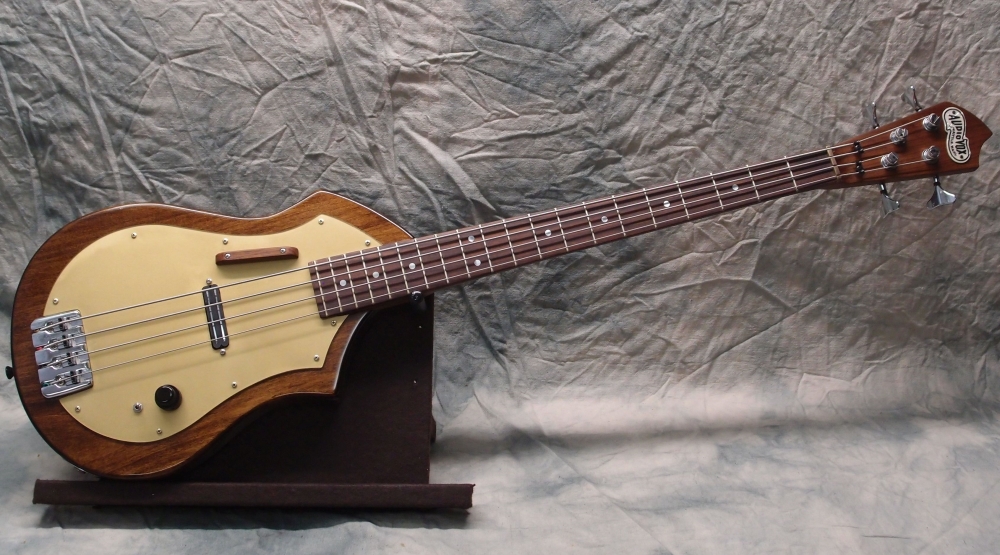
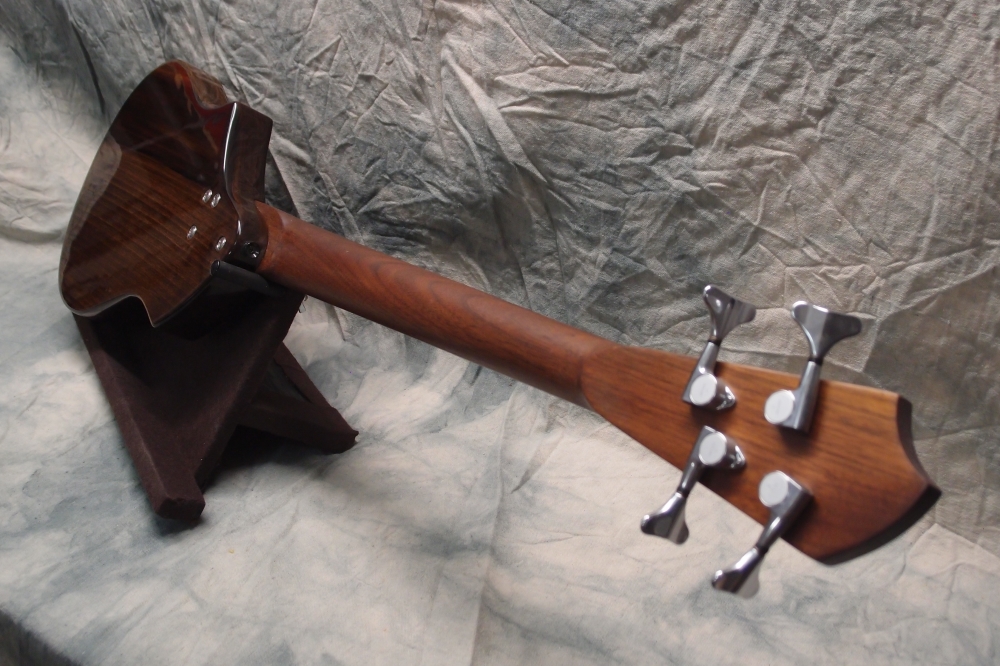
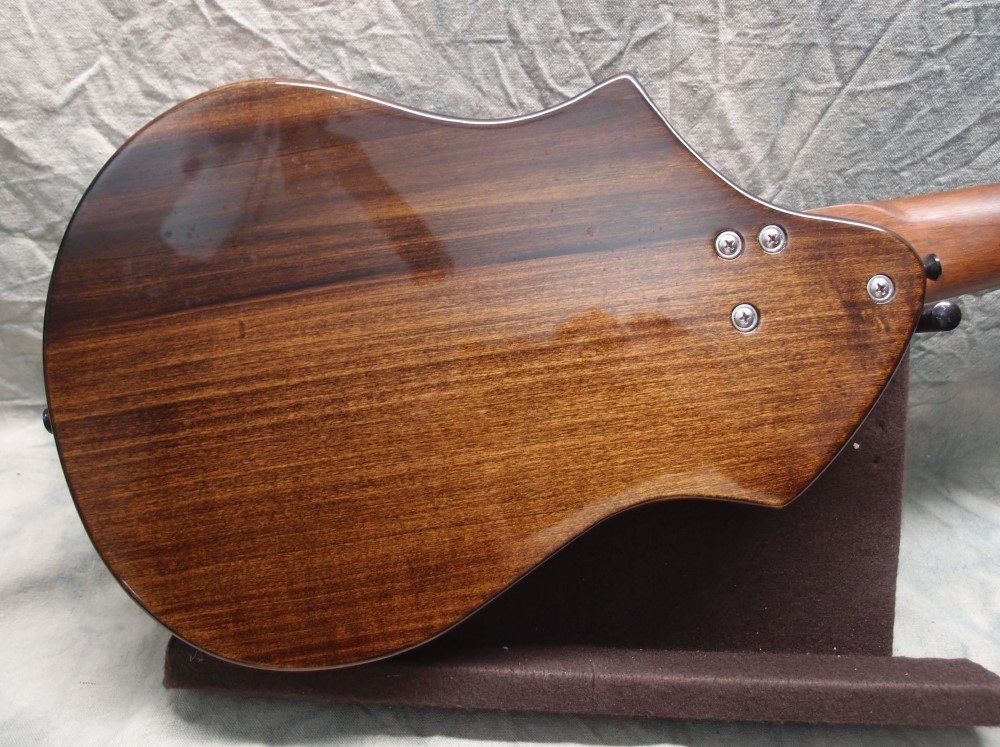
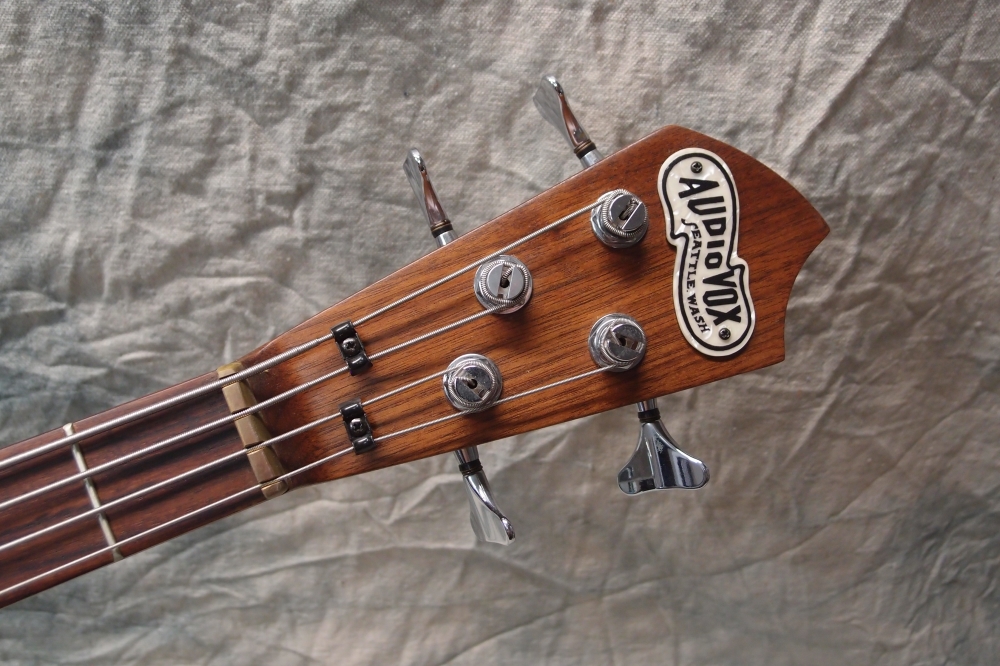
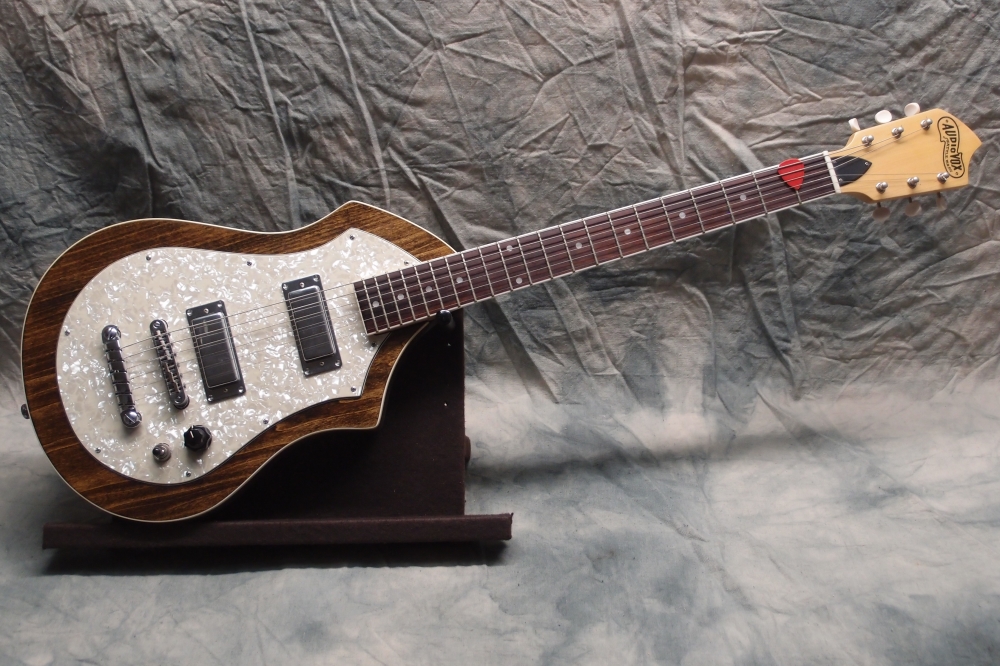
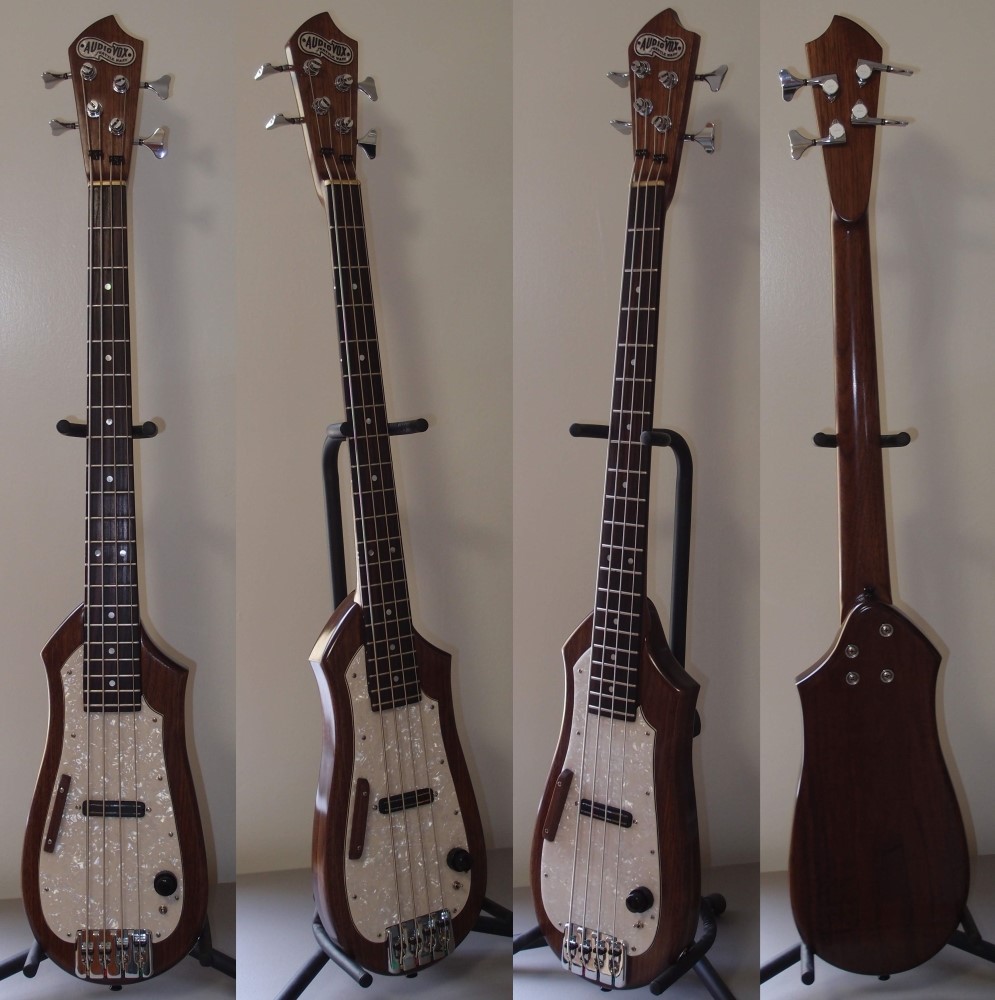
This was my first Audiovox project. Below is the original walnut body, fairly true to the original. My goal was to build the closest possible reproduction of the original Tutmarc Audiovox with modern parts. The ergonomics were very bad, much like a Steinberger. The headstock geometry is also not great, you can see how two of the tuners are reversed to make it work. These are expensive Gotoh tuners that are tight enough to work in reverse; I wouldn't try this with Chinese cheapies.
image

The finish on the original body was many many coats of Danish oil, finally polished. It took a long time, and I will never repeat it. The finish on the new body is oil-based polyurethane.

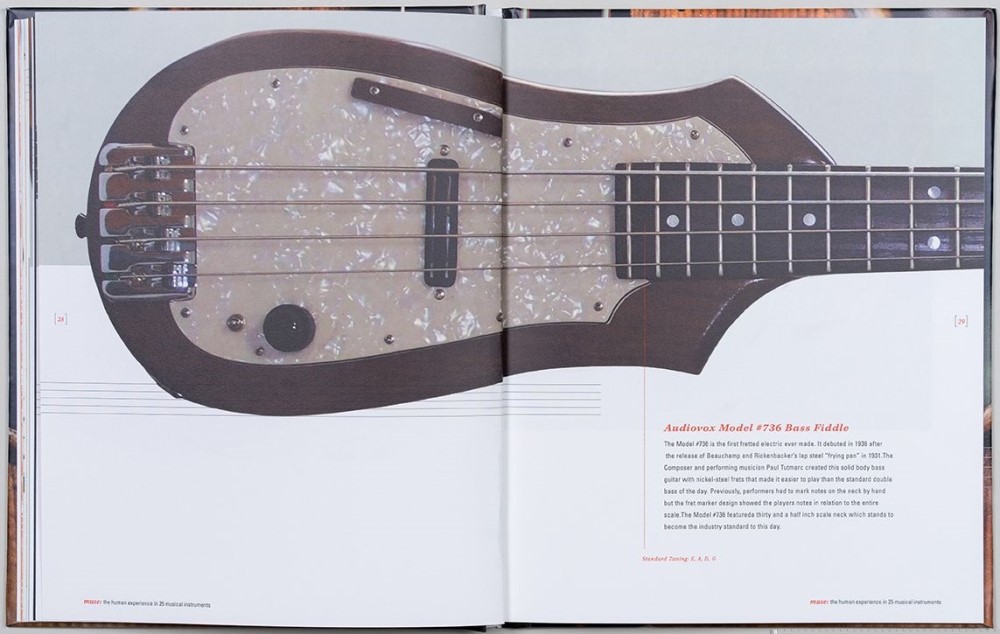
It's not like I was being completely authentic when I built this, but apparently, a few people were fooled. Here it is in a book on musical instruments, being presented as the real thing ( without my permission ! )
And here again, on a bass blog, again without permission:
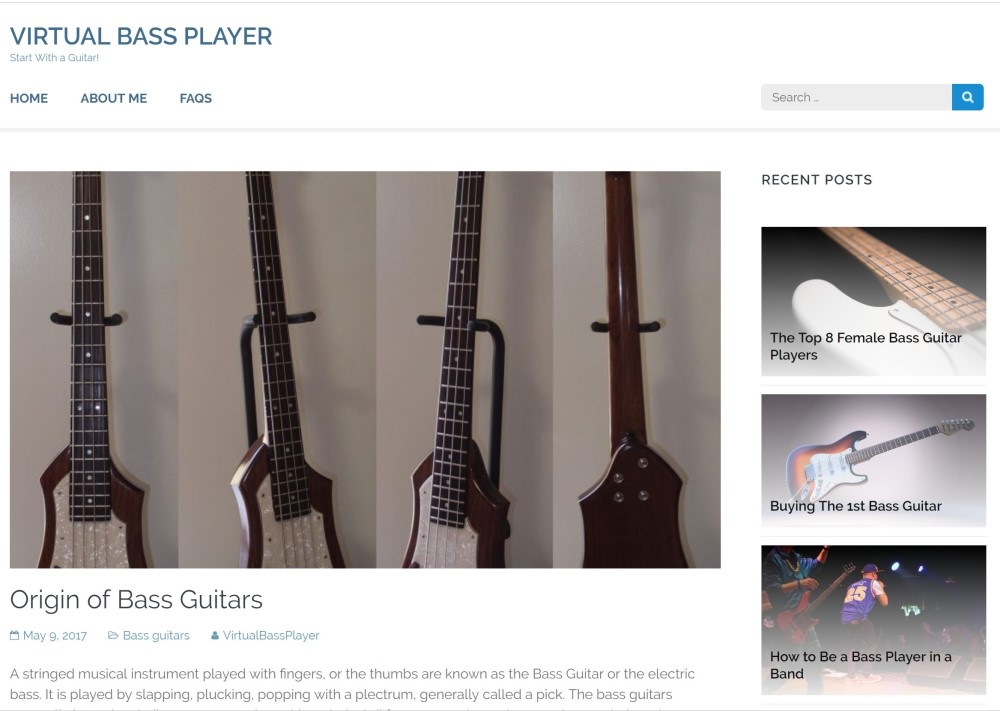
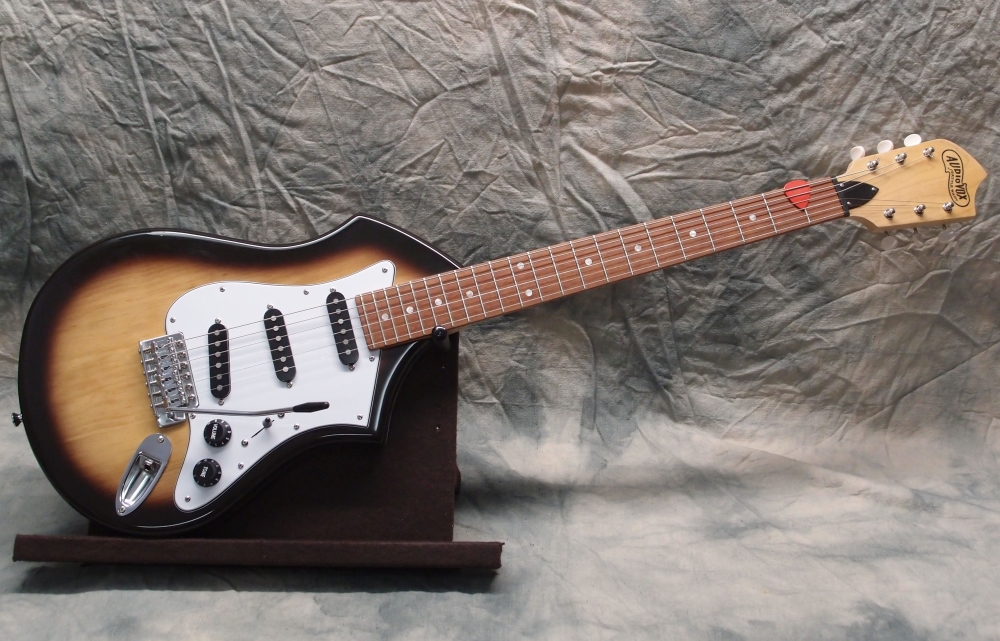
Those folks will be sorry to see the image below.
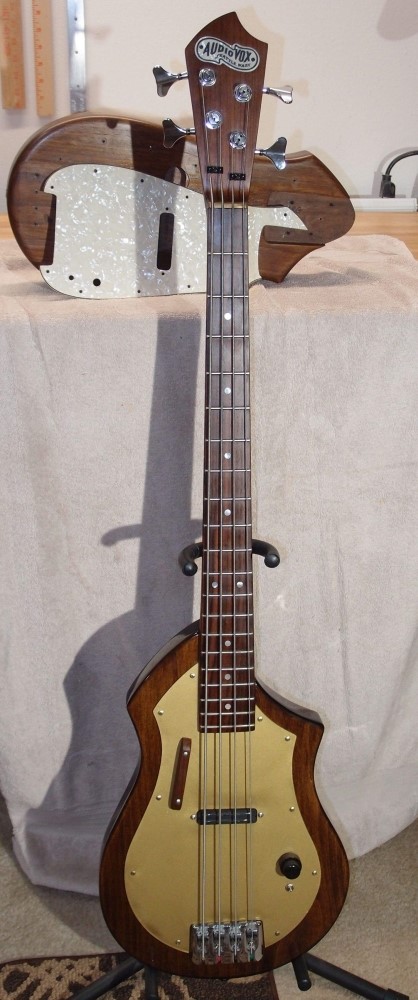
image

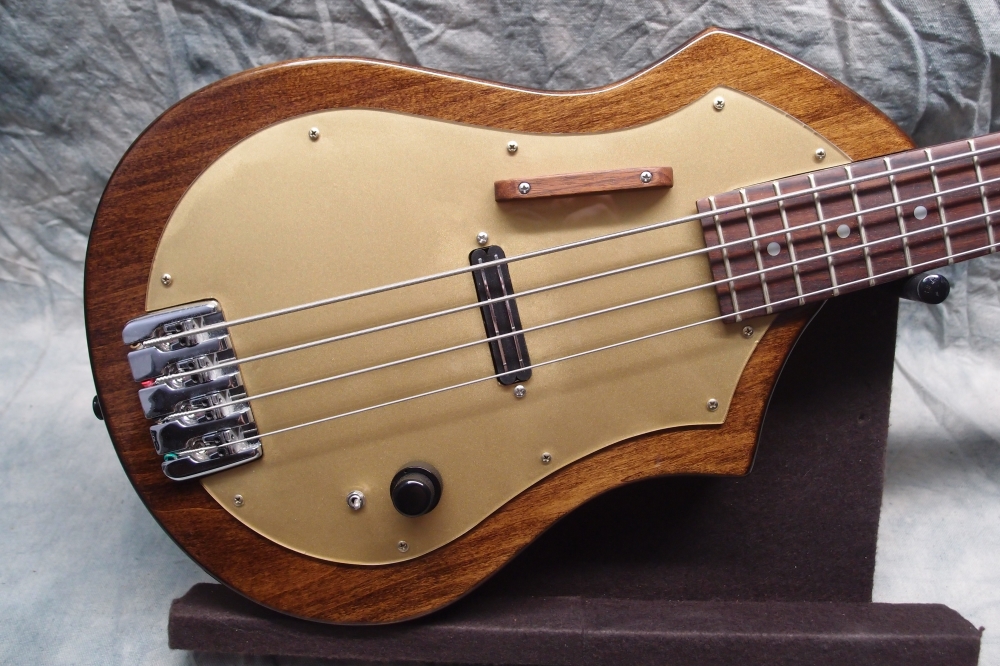
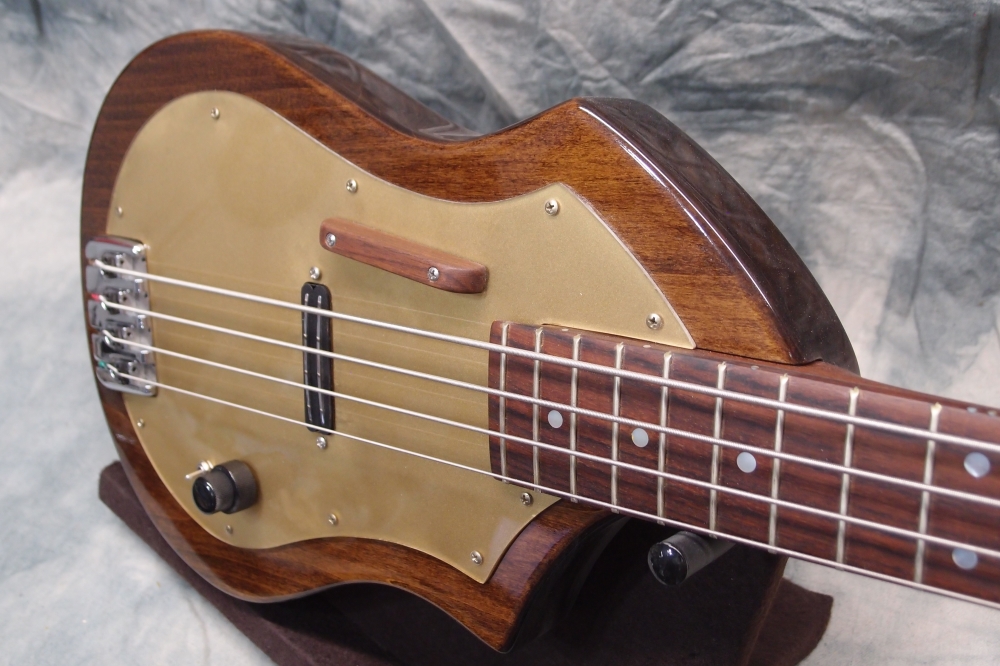
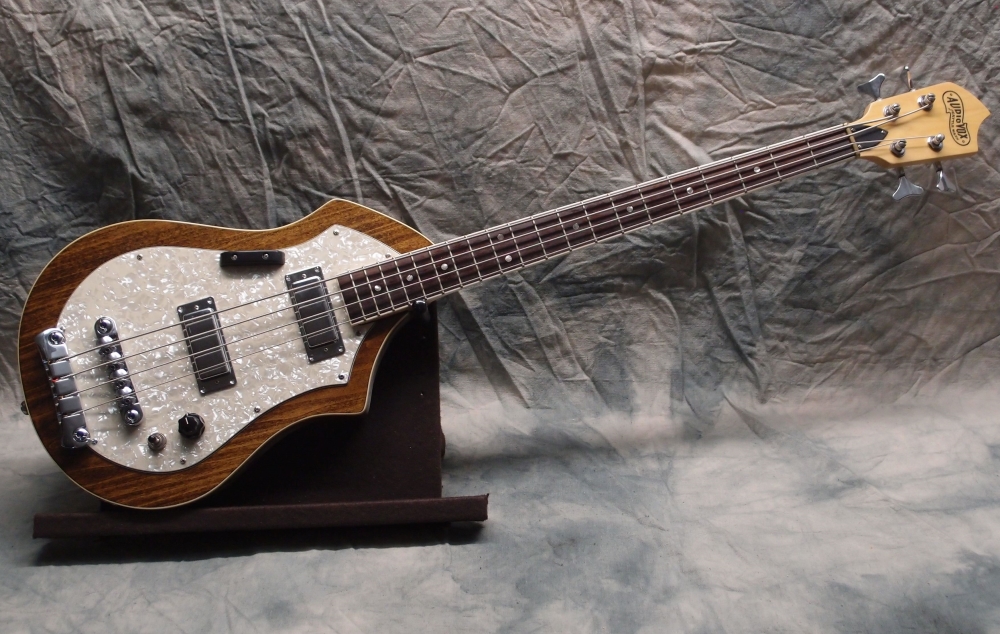
I got tired of this one being unplayable, so eventually, I made a new poplar body for it, stained to resemble the original walnut. The more-authentic brass pickguard is actually clear plastic painted on the back. The neck is solid walnut with the original Danish oil finish.

The scale is 32", more or less Fender geometry. Note the unusual tuner layout, one tuner on each side is reversed to make all the string pulls work on the authentic headstock shape. All my later Audiovox builds use a revised headstock shape that is much more conventional.

The stacked knob imitates the original's one big volume knob, while adding a tone control. The tiny switch changes the pickup from series to parallel mode.

I got a lot of mileage out of all the walnut scrap from this project.
 1 2 3 4  

Comments on Audiovox 736 Bass

Jim Chapman:

June 14, 2020 at 11:30 PM

Very nice work. Would you ever consider building an exact copy?

alder:

June 15, 2020 at 2:38 PM

Thanks, and no. The original is not a very good design, and in any case, a barely-functional antique. My evolved version is a much better instrument.

Questions or Inquiries?

Just want to say Hello? Sign the .

Submit a Comment

Your email address will not be published. Required fields are marked *


Click image to replace if unable to read.

Enter the digits from the image above, except for the last one:

This site uses Akismet to reduce spam. Learn how your comment data is processed.


Audiovox 736 Replica Bass
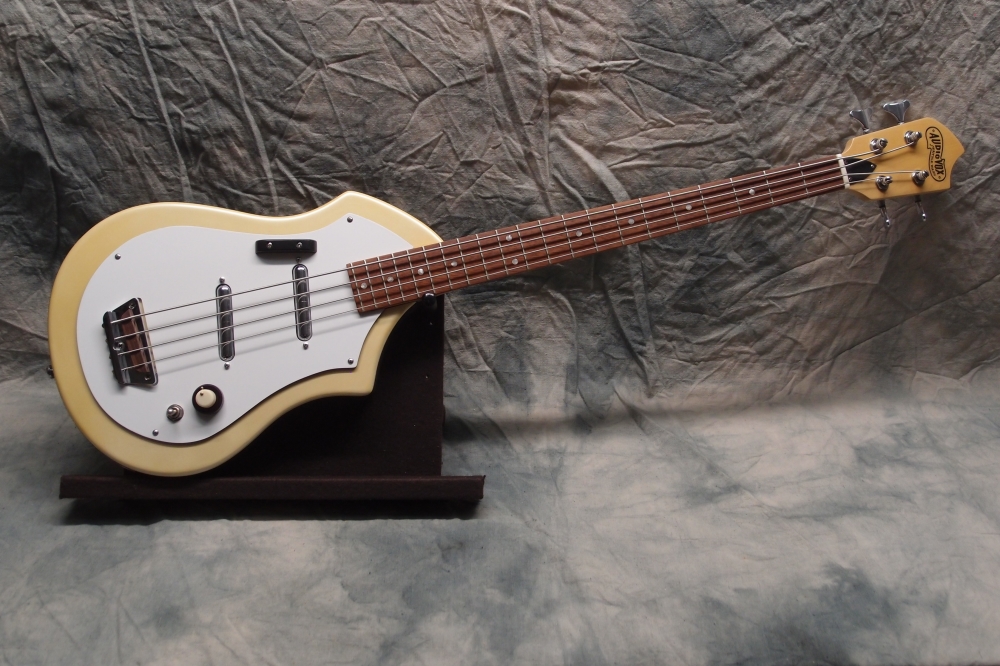
Audiovox Gibson-style Bass
Audiovox Gibson-style Guitar
Audiovox Strat-style Guitar
Audiovox Danelectro-style Bass
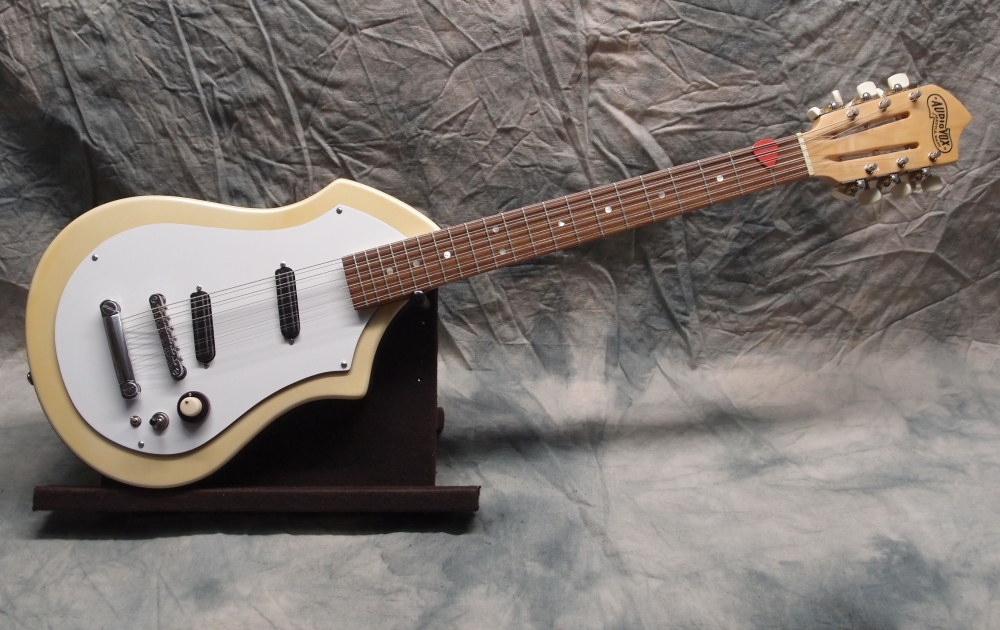
Audiovox 12-string Guitar
Audiovox Mandolin
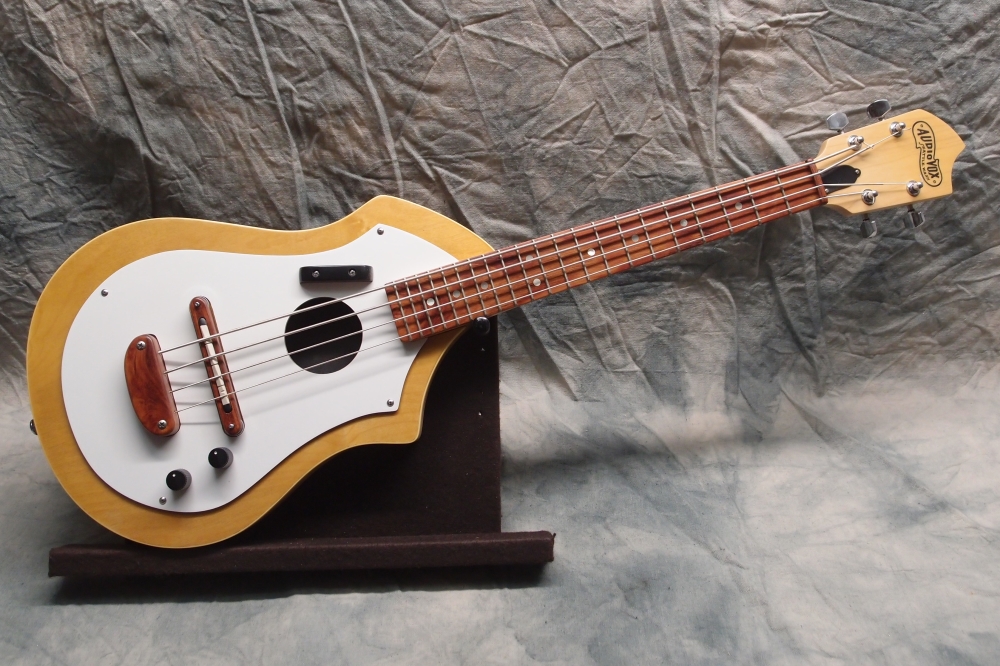
Audiovox Ukulele Bass
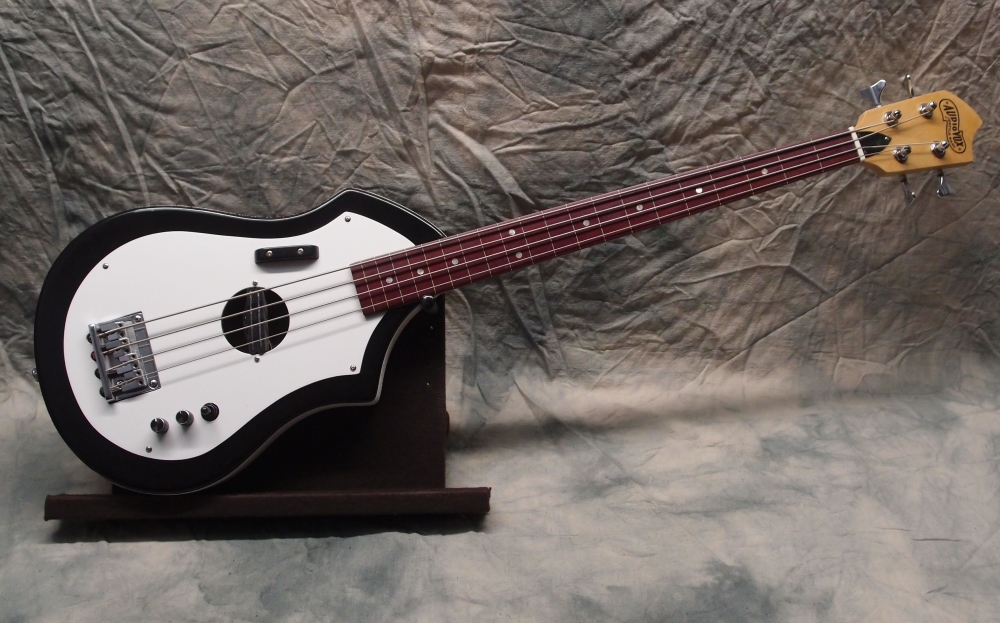
Audiovox Fretless Bass
Audiovox Electric Upright Bass
BC Rich "Osprey" Bass
Brownsville Violin Bass
Cowbell Bass
Danelectro Pro-1 Bass
Danelectro "Super-63" Guitar
Danelectro Silvertone 1457 Rescue Guitar
Danelectro Silvertone 1443 Bass
Danelectro Companion Guitar
Danelectro Longhorn Guitar
Danelectro Silvertone U-1 Guitar
Danelectro '67 Hornet Guitar
Fender Jazzmaster Bass 1
Fender Jazzmaster Bass 2
Fender Jazzmaster Bass 3
Fender Stratocaster Bass 1
Fender Stratocaster Bass 2
Fender Stratocaster Micro Bass 1
Fender Stratocaster Micro Bass 2
Fender Stratocaster Fretless Bass
Fender Stratocaster Bass VI
Fender Stratocaster Bass IV
Fender Stratocaster 12-string Guitar
Fender Stratocaster Uke Bass
Fender Telecaster Bass
SX Precision Bass
Gibson Fenderbird Bass 1
Gibson Fenderbird Bass 2
Gibson Reverse Fenderbird Bass
Kubicki Bass
Mosrite Bass
Schwinn Stingray Bass
Rickenbacker 325 Guitar
Rickenbacker 325 Bass 1
Rickenbacker 325 Bass 2
Rickenbacker 325 Bass 3
Rickenbacker 4001 Bass 1
Samick SG450 Guitar
Danelectro Pro-1 Guitar
Danelectro '63 Guitar
Danelectro Silvertone 1457 Guitar
Harmony H617 Bobkat
Danelectro Silvertone 1450 Guitar
Danelectro Silvertone 1472 Amplifier
Harmony Silvertone 1478

For a while now I've been working on the WordPress plugin that does the slideshows. I had re-written the php back-end from NivoSlider, and then I decided to rewrite the front-end. The front-end is driven by jquery, so it was a good opportunity to get familiar with that. It's actually pretty simple.

Over a few months of tinkering, I added several hundred slide transitions, grouped in families to make things manageable. Eventually, I pretty much exhausted all the things you can do by animating css with jquery. So I turned to inline svg image masks. You can do much more with real graphics than just css, but there is one hitch - svg is poorly supported in Chrome and all its derivatives, including Opera, Edge, and Brave. But if you load this page in Firefox or Safari, it will demonstrate what you can do with svg.