Audiovox Uke Bass (1/2)


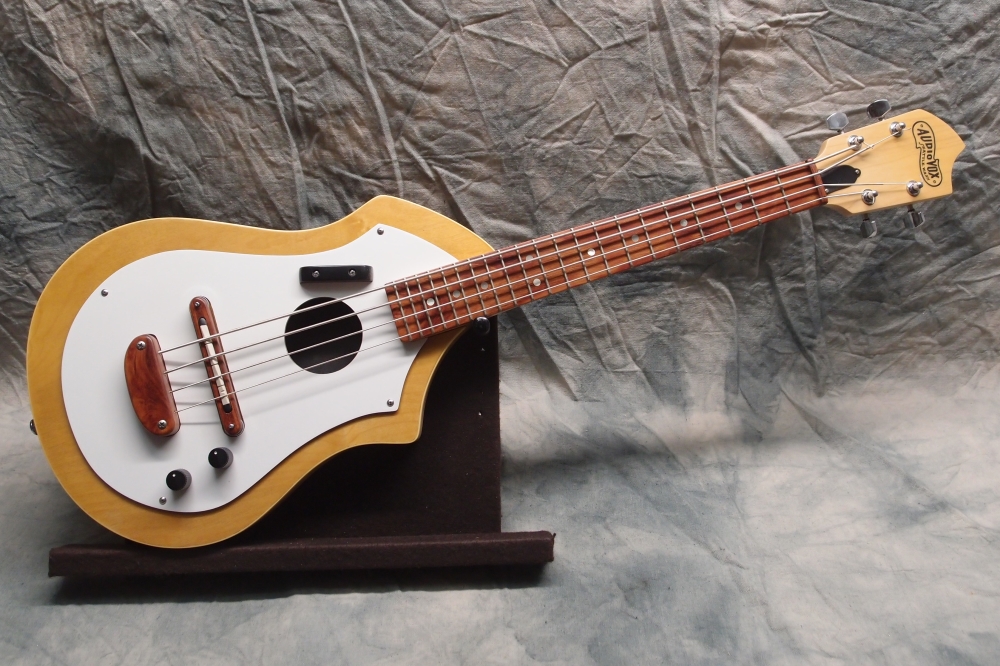


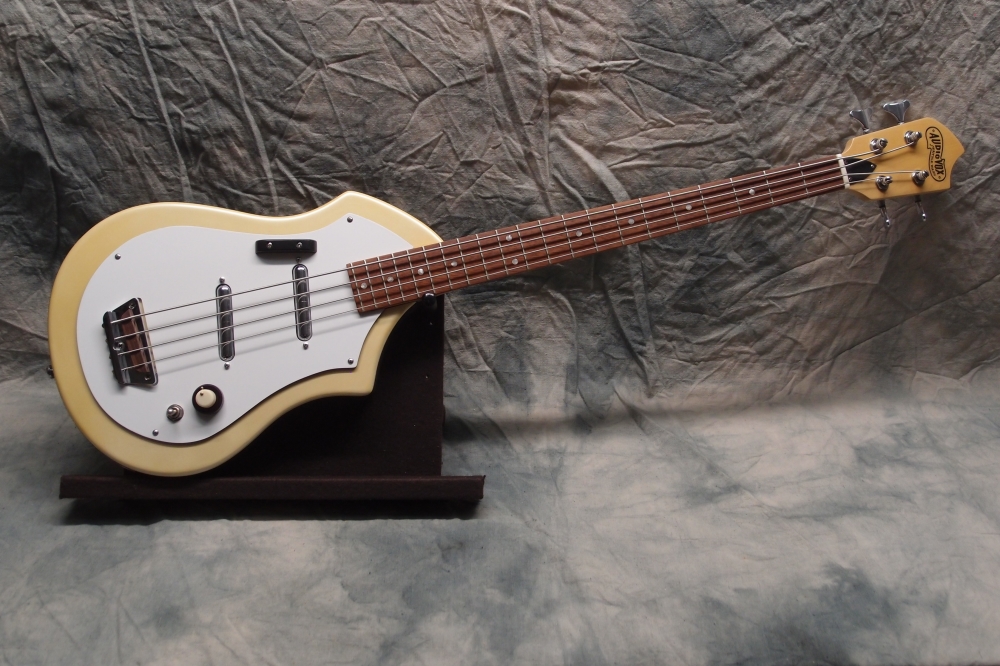
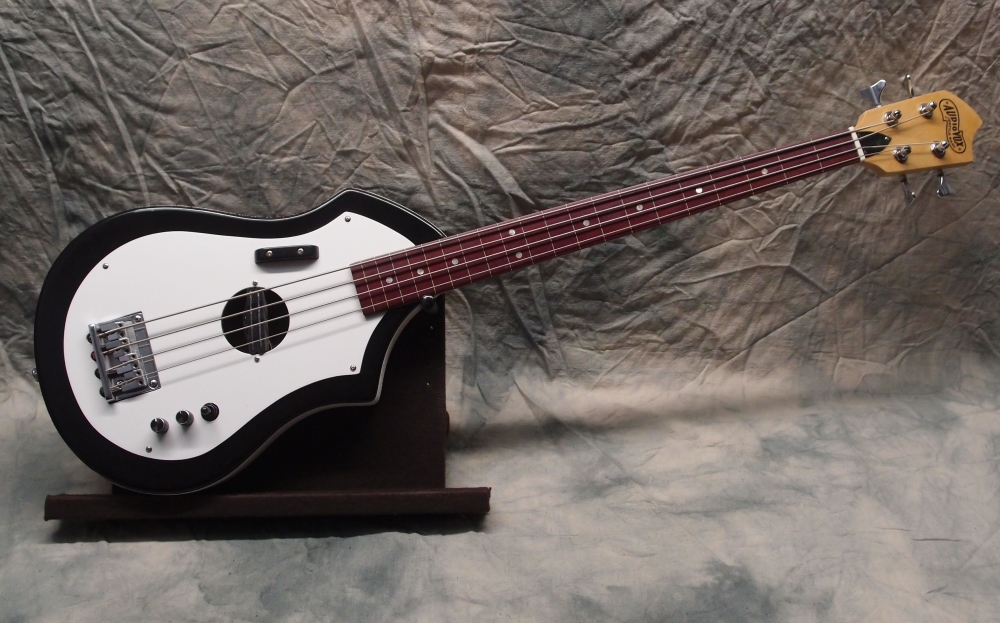
This bass is a 21" scale, with a piezo saddle mounted in an adjustable bridge. The soundhole is just for looks. The strings are metal-wound Kalas. The fretboard is cut out of the ugliest piece of wood I ever received. For such a small neck, I managed to cut around most of the ugly, and the result isn't half bad.
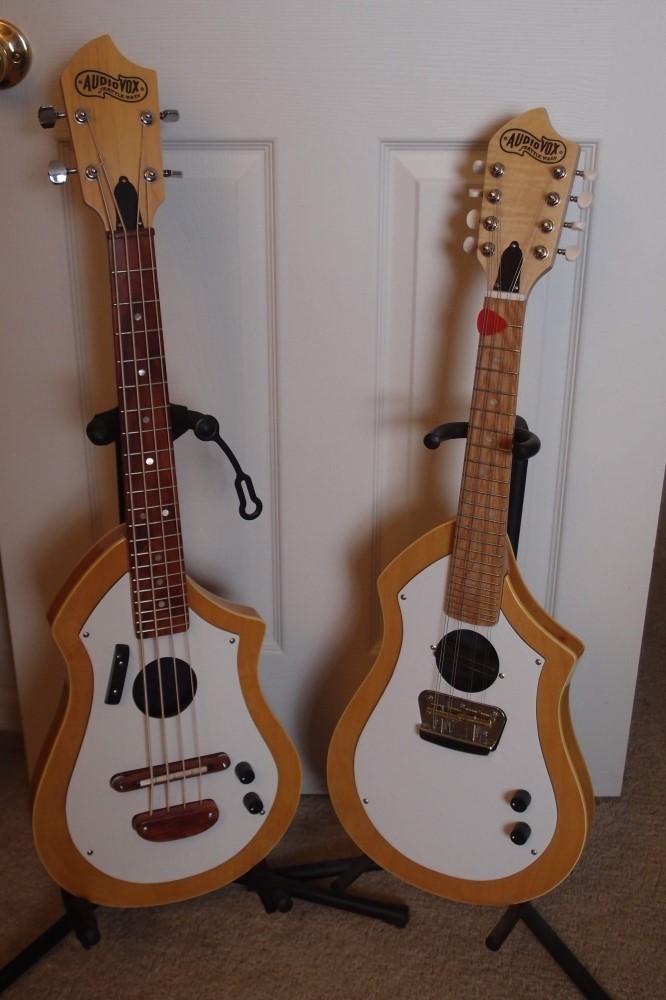
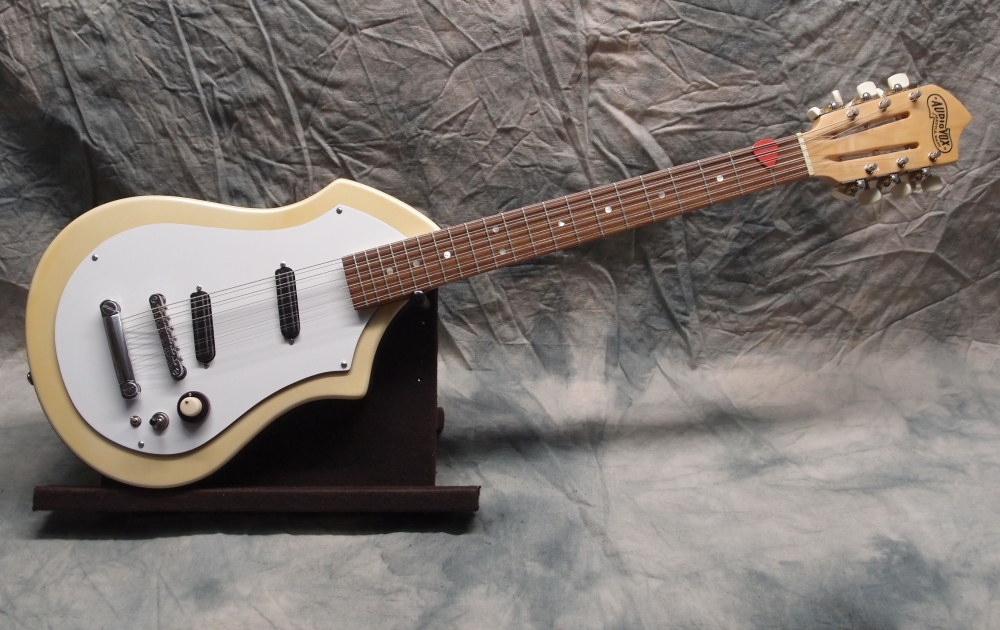
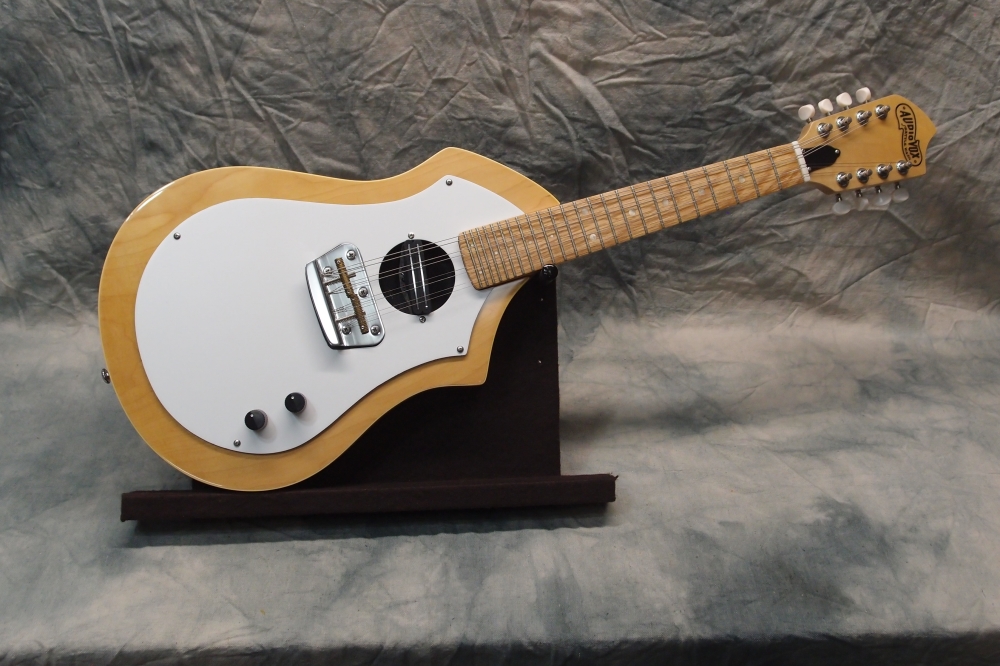
These two bodies are maple plywood over a hollow pine core, double-bound. They came out very lightweight, too light to balance even a guitar neck. The short uke bass was always planned. I shuffled parts and bodies between some other projects, and that left the second body free. I thought about it for a while and decided it would make a good mandolin.
Both of these short necks have fixed steel truss rods, although they probably don't need them. Both are finished in polyurethane, with masonite pickguards.
Questions or Inquiries?
Just want to say Hello? Sign the .