Doing Things Wrong

Fretless Basses

Projects with fretless necks.

Neck - Fretless


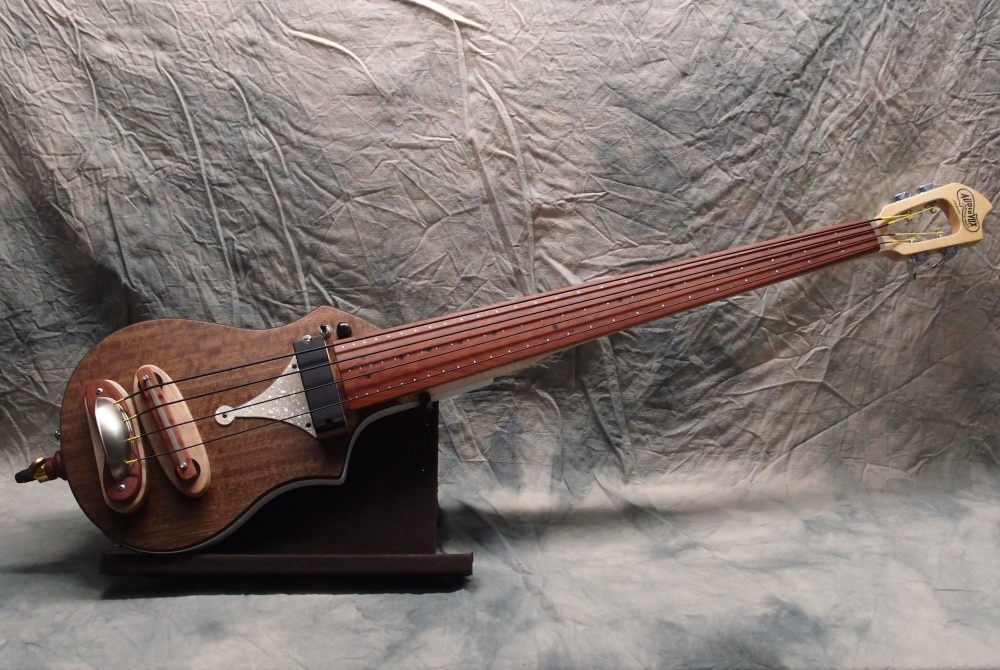
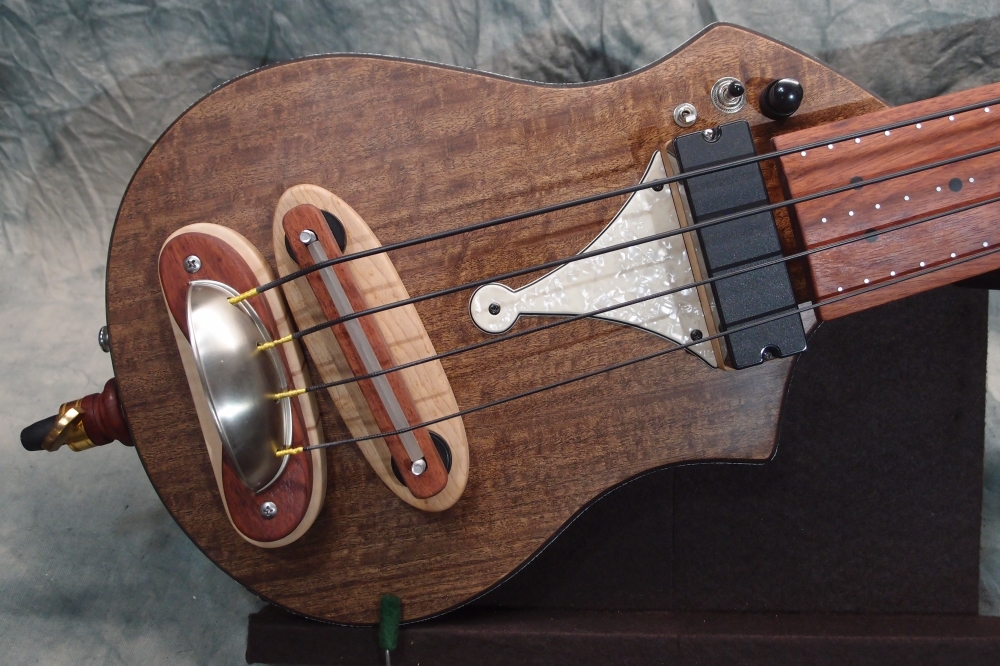
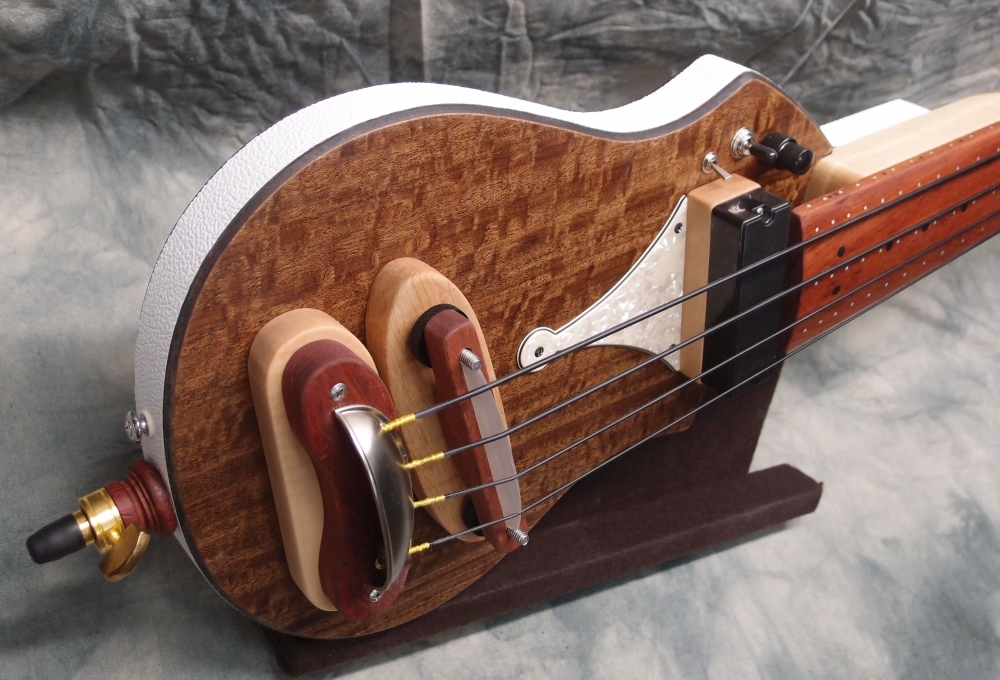
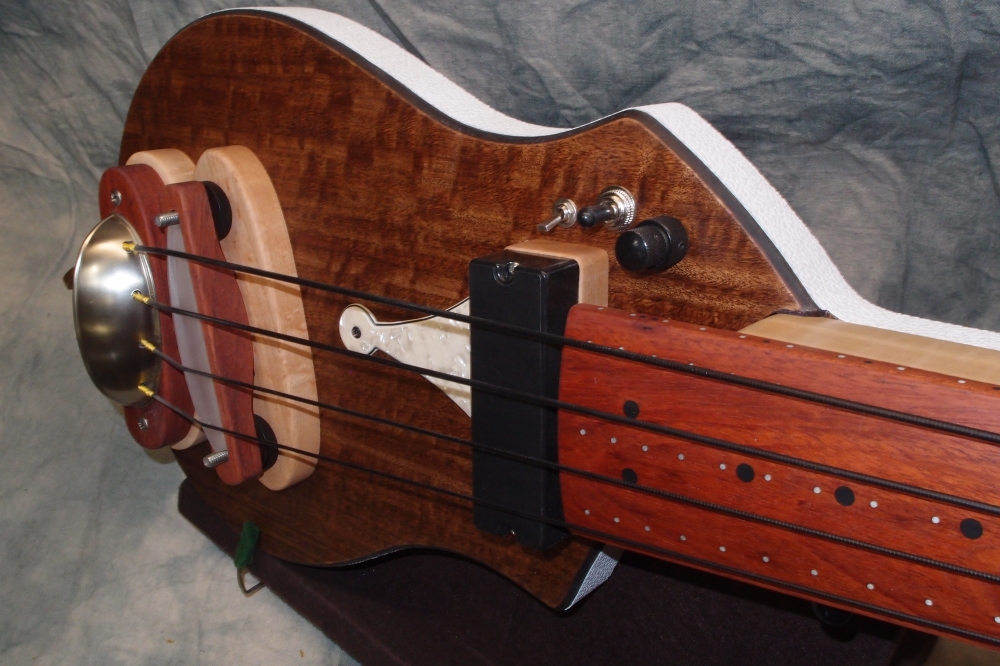
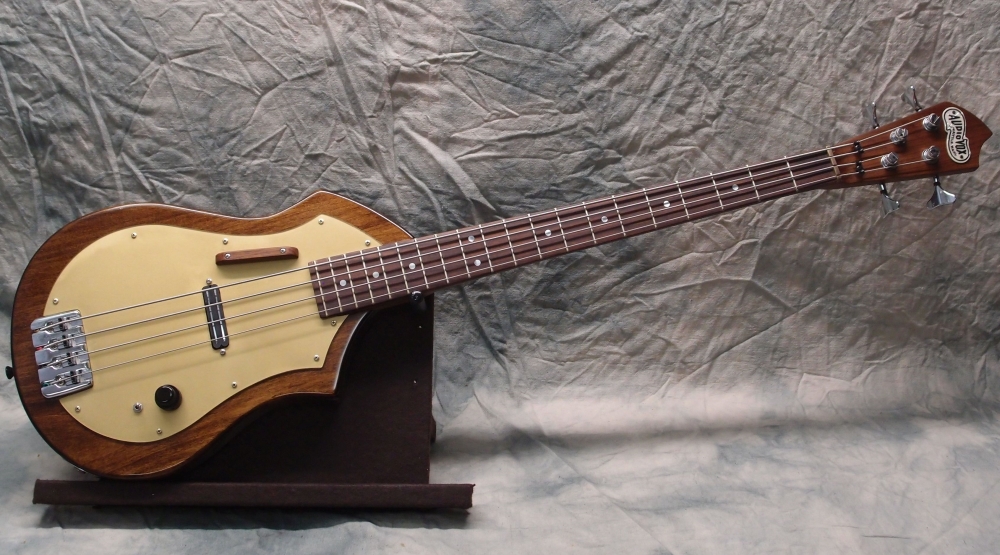
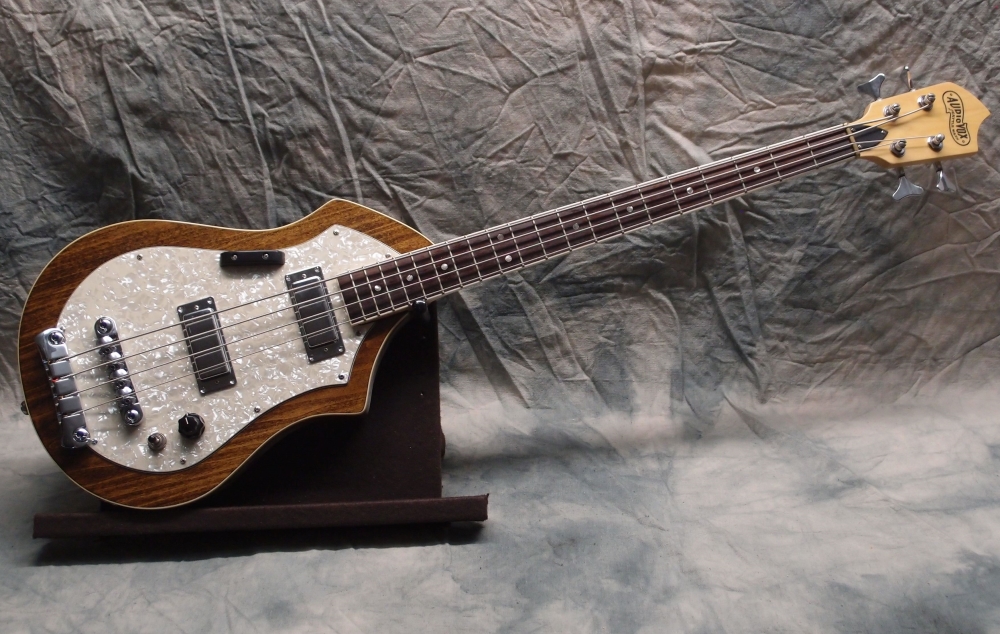
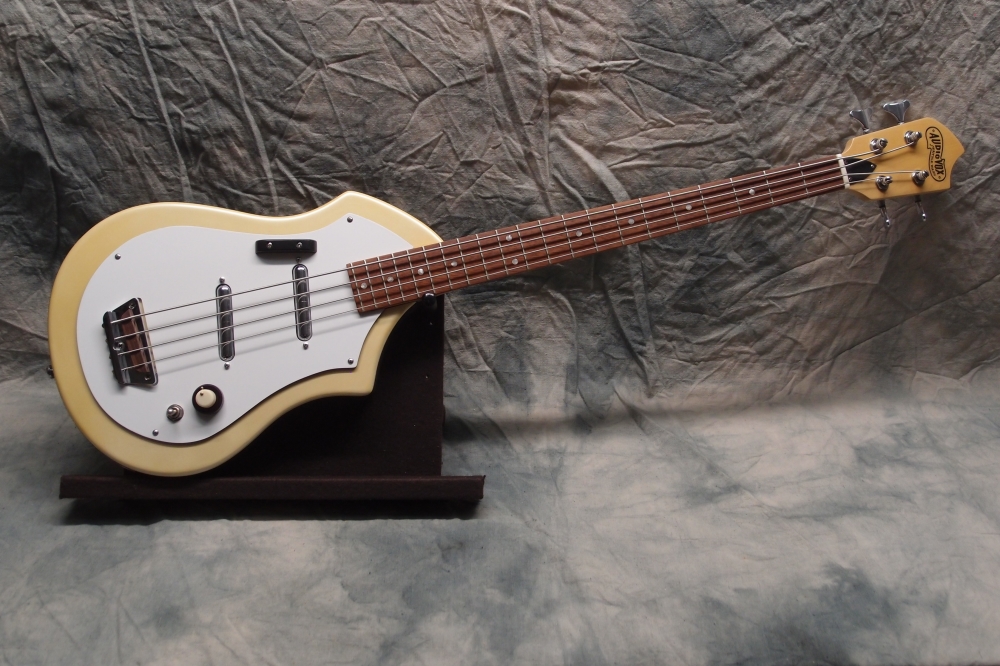
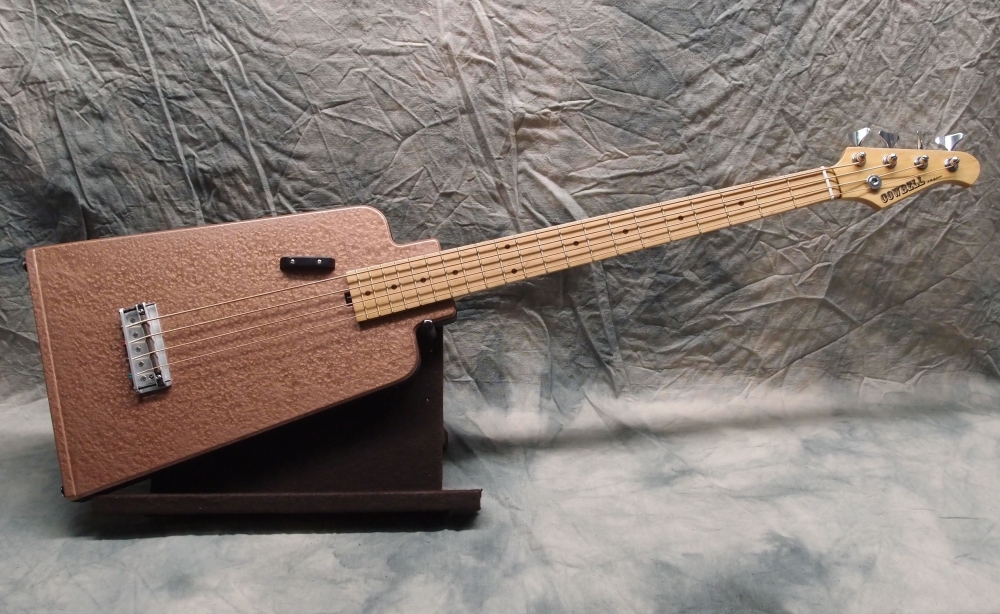
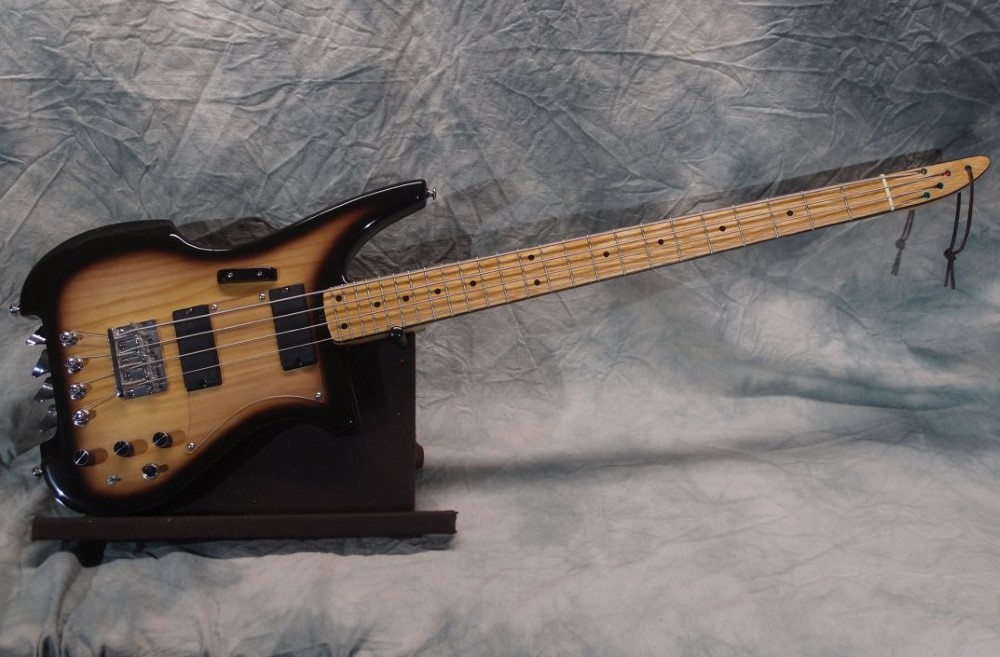
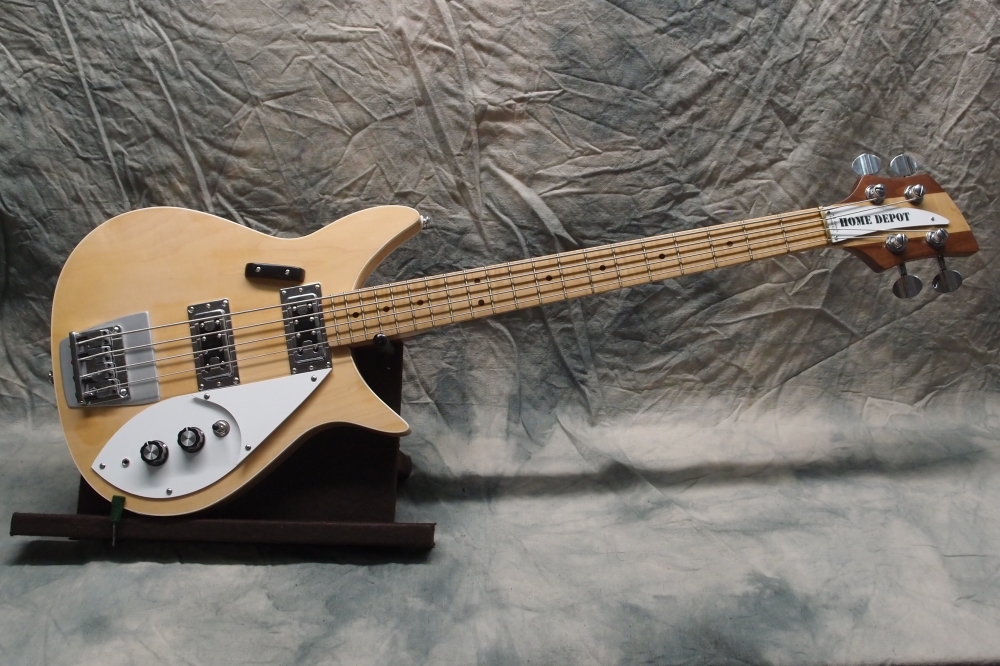
This is the biggest of the Audiovoxes, weighing in at a full 12 pounds, with a 36" scale. The neck is a Brazilian Cherry (Jatoba) floorboard over maple, with a straight cutout headstock. There are over 100 marker dots. The body is veneered masonite over solid plywood, with Danelectro-style Tolex binding. There are also strap buttons, this instrument can be played vertically or horizontally.


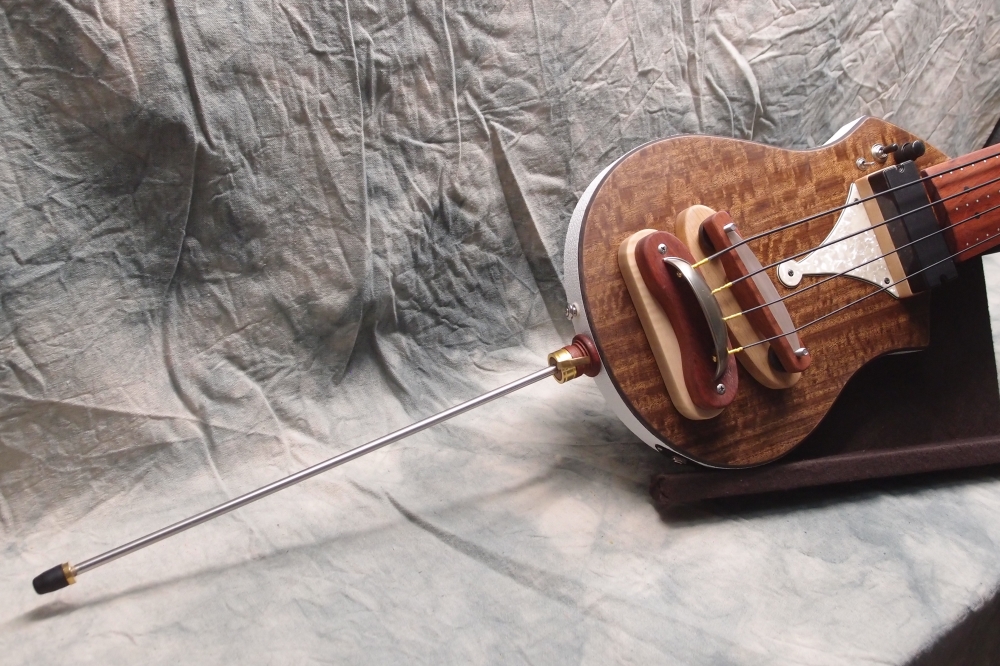
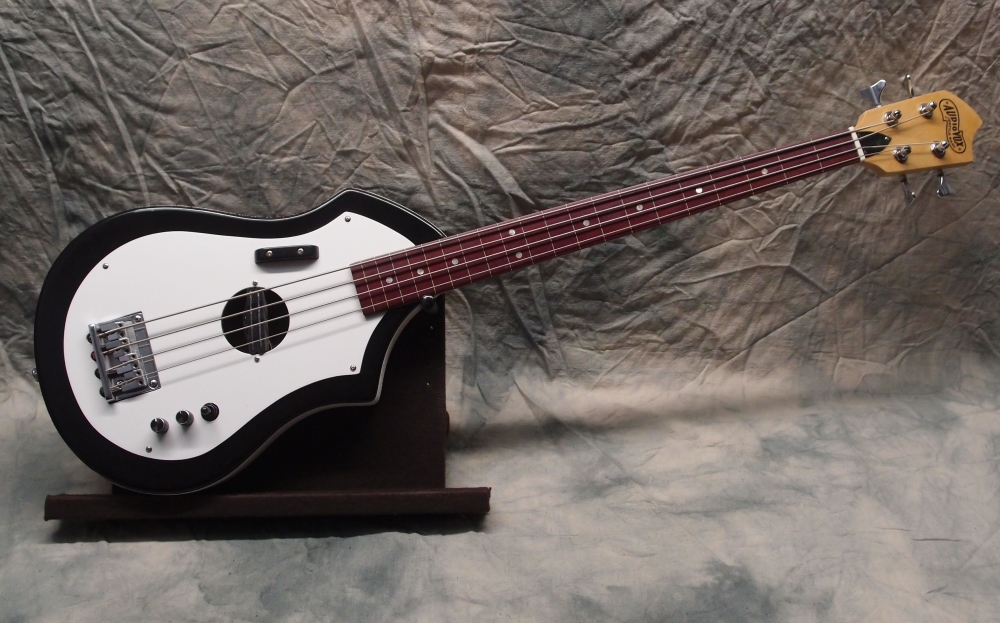
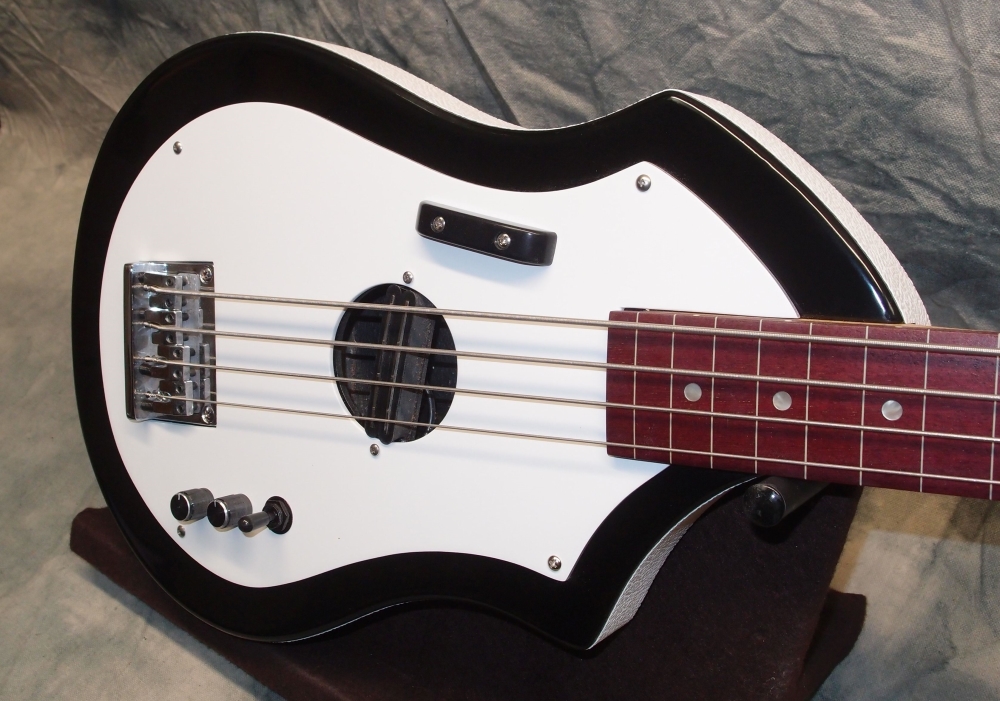
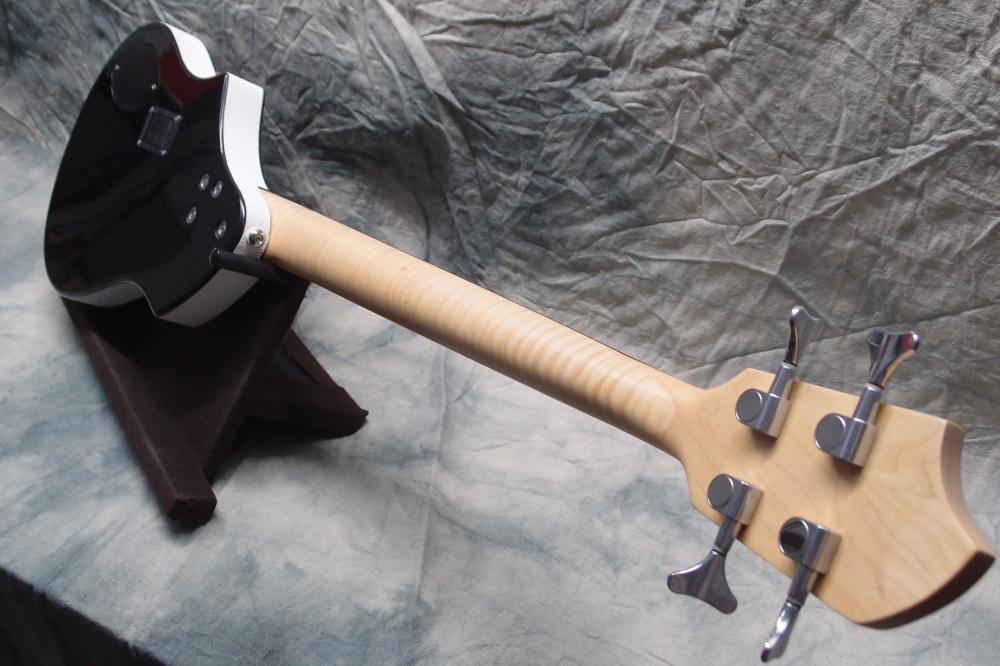
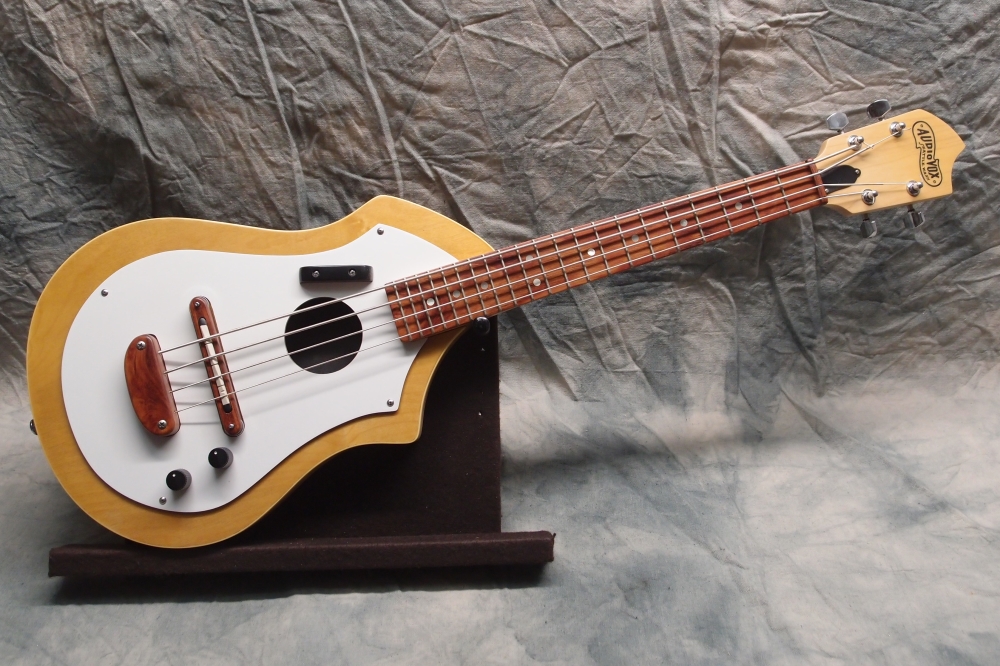
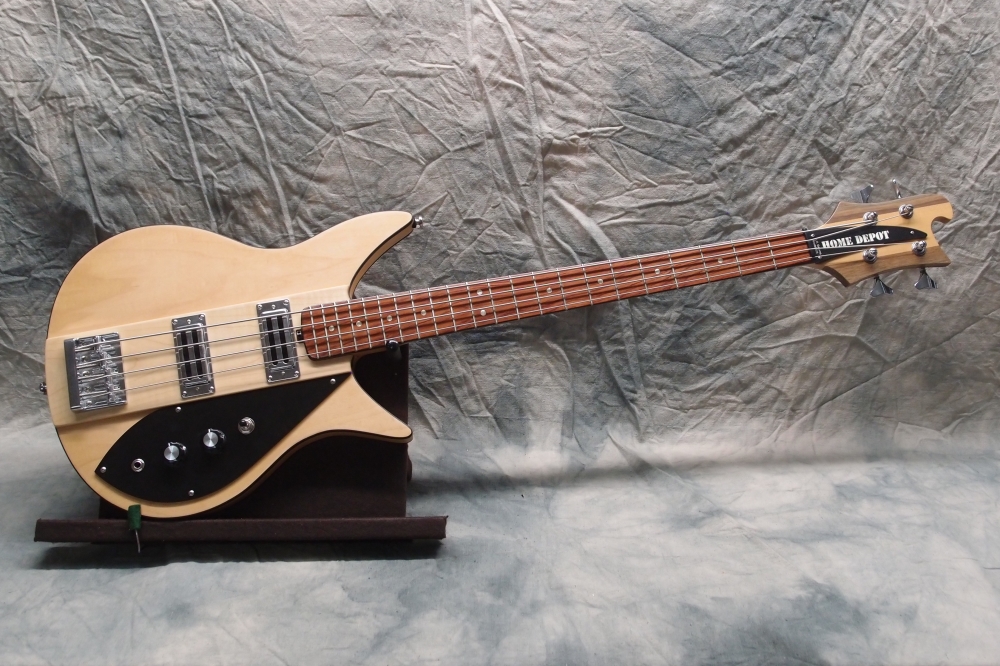
This one is almost identical in construction to the Danelectro-style - masonite over chambered plywood body, masonite pickguard. The neck is purpleheart over maple, with plastic fret lines. The soundhole merely serves as a pickup mount, and the pickup was just insurance against never getting the intended piezo system to work. Eventually, I did get it to work, the piezo is incorporated in a modified bridge, and sounds great. 30" scale.


This fretless sounds really cool, and is super-easy to play, as you no longer have to stretch your hand unnaturally just to make ordinary patterns. It is set up with flats I found in the junk box. Can anyone tell me what kind of strings have blue thread leaders? The intonation fell right in, which is surprising considering the bridge was previously set up for 25.5" guitar strings. ( Actually, how important is intonation on a fretless anyway? )


image

A subject so simple you hardly even consider it, yet really very mysterious. Just what is the roughness of sandpaper, and the relation to the number on the package?

Here's a plot of some numbers I found online: sandpaper "grit" versus actual micron size. Interesting to see what size scratches you are taking out ( or putting in. ) The curve starts at 320, which is the coarsest grit that might be considered part of the finishing process. For final finishing like orange-peel removal, I start with 1500 and work up from there, I find that even 1000 leaves scratches that are difficult to remove.