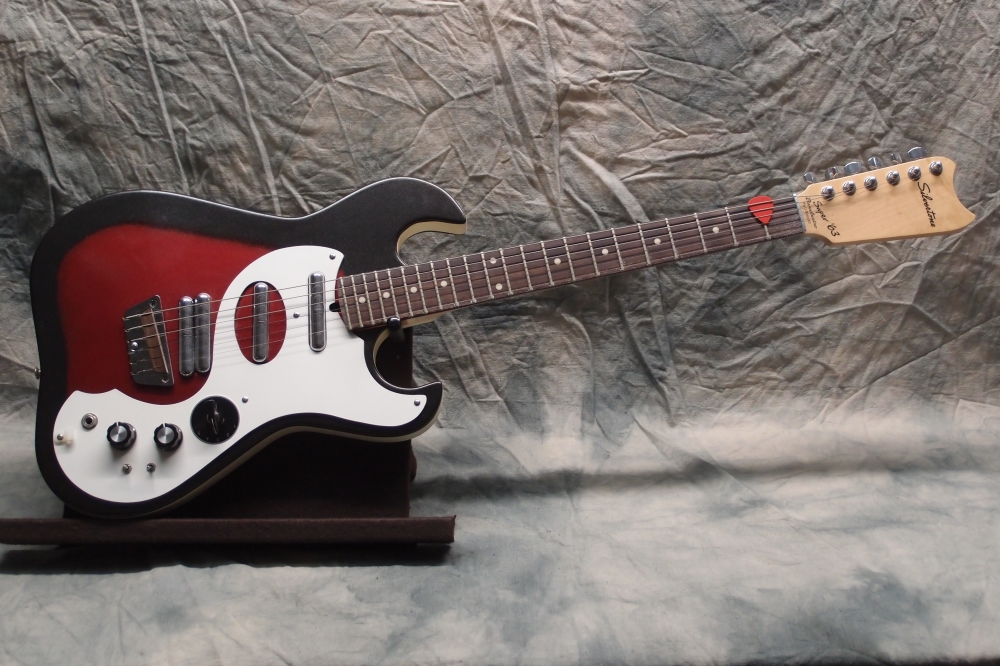
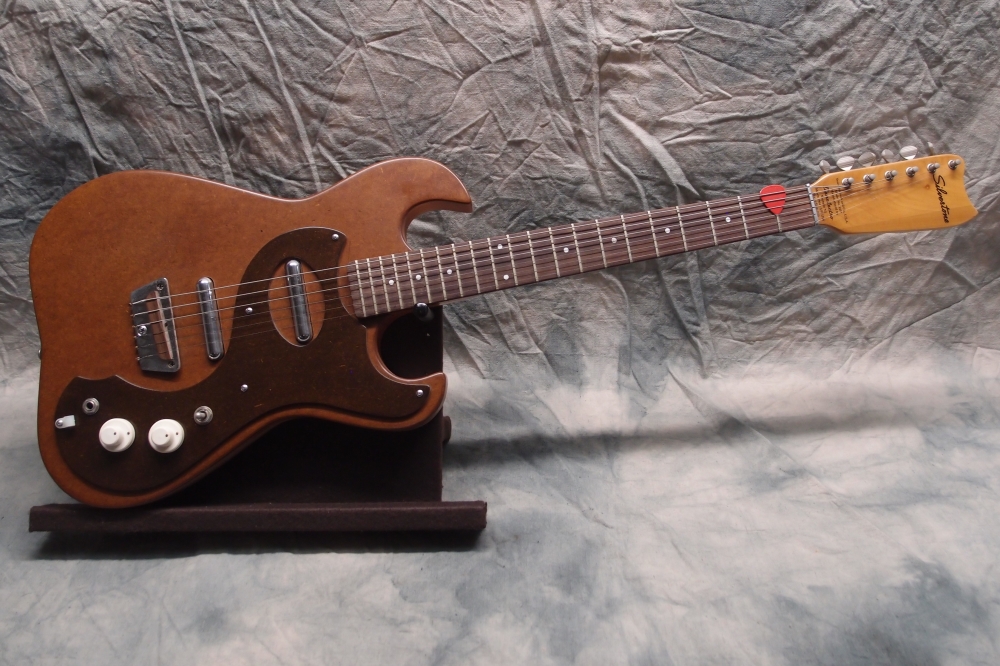
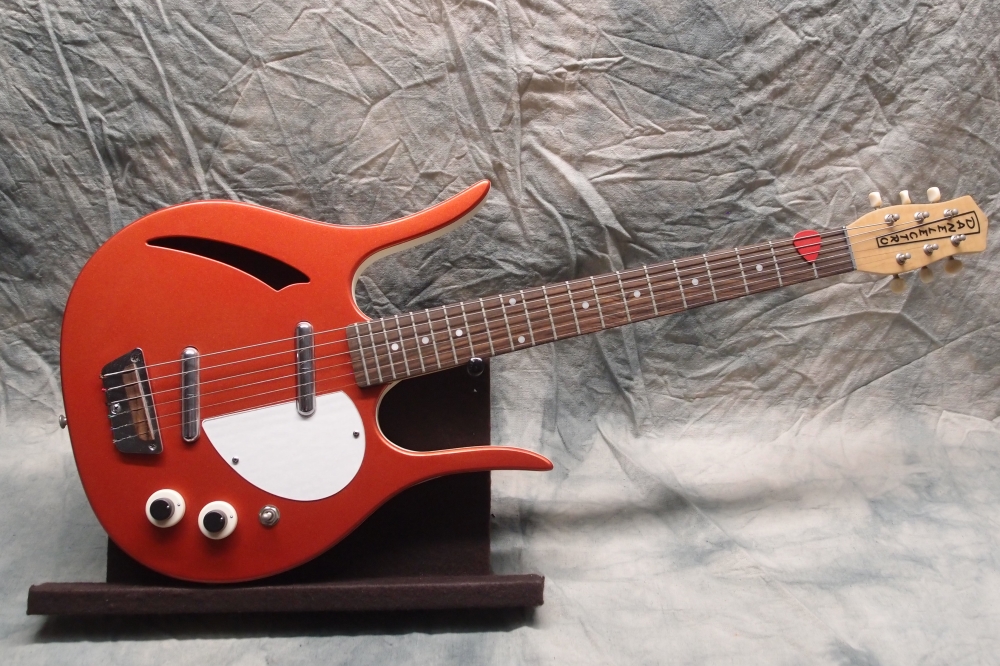
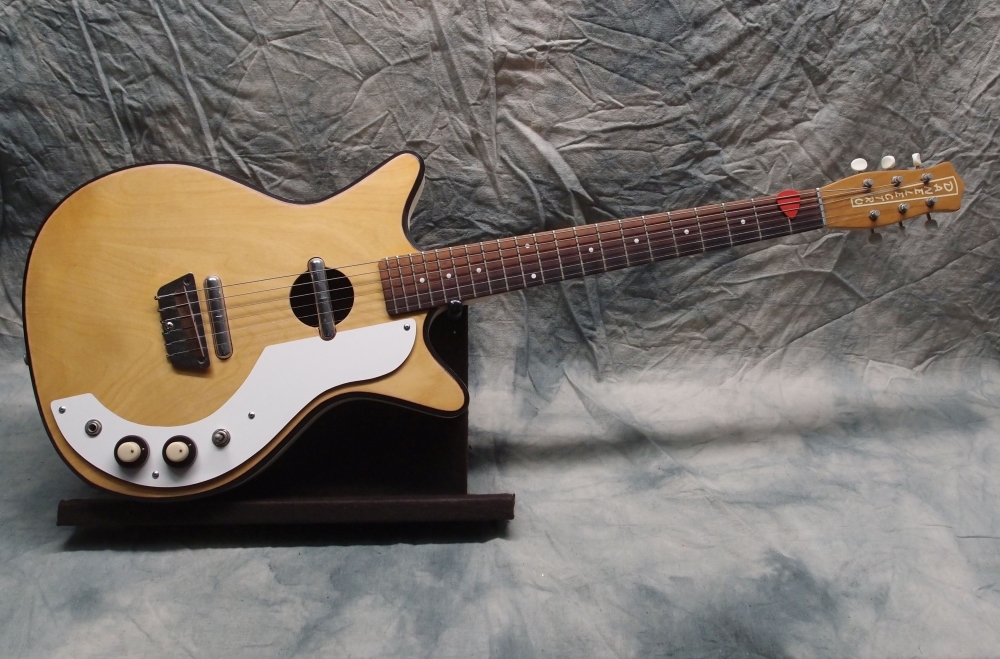
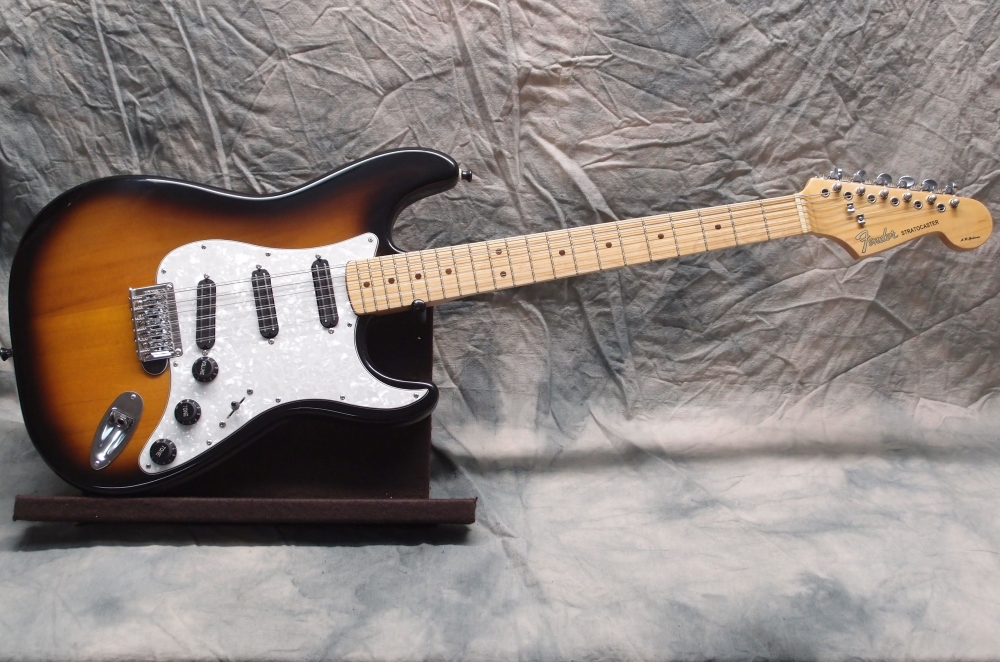
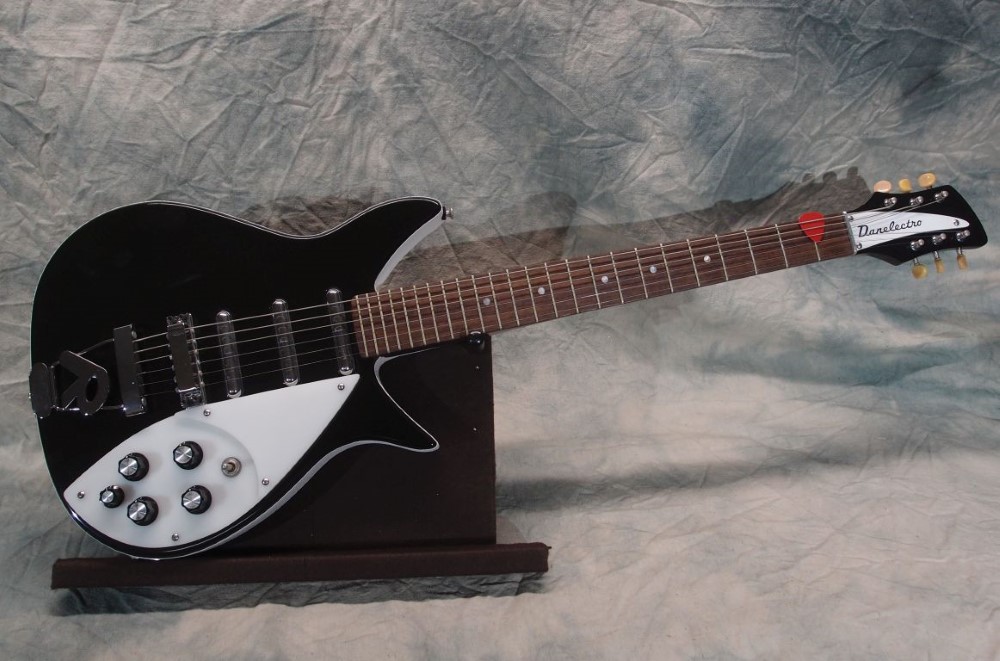
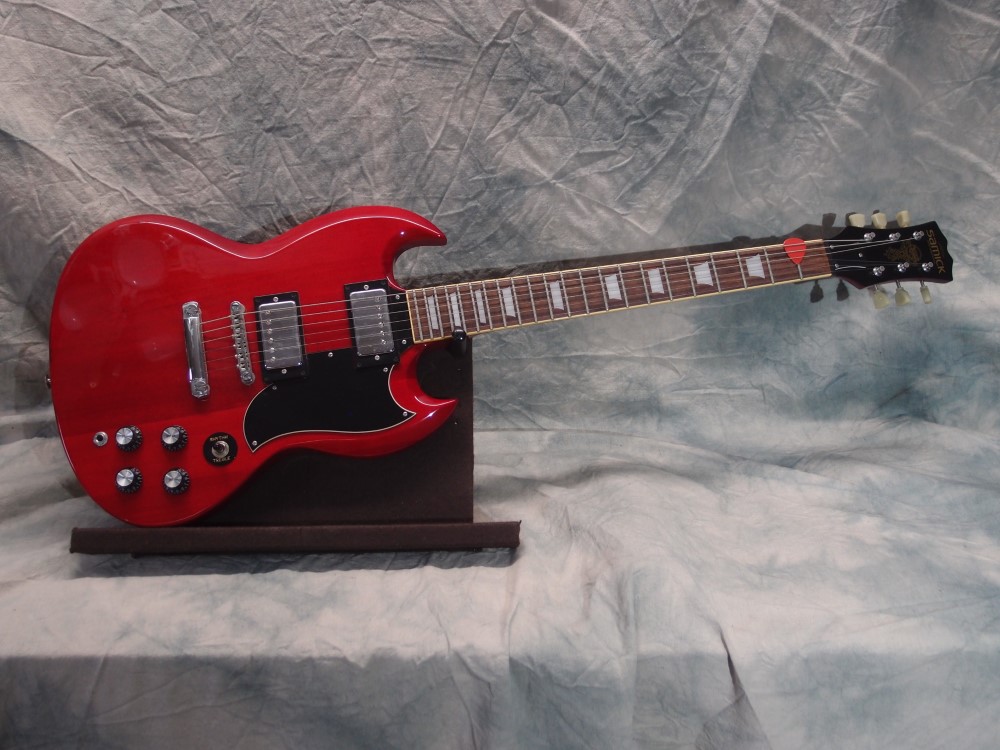
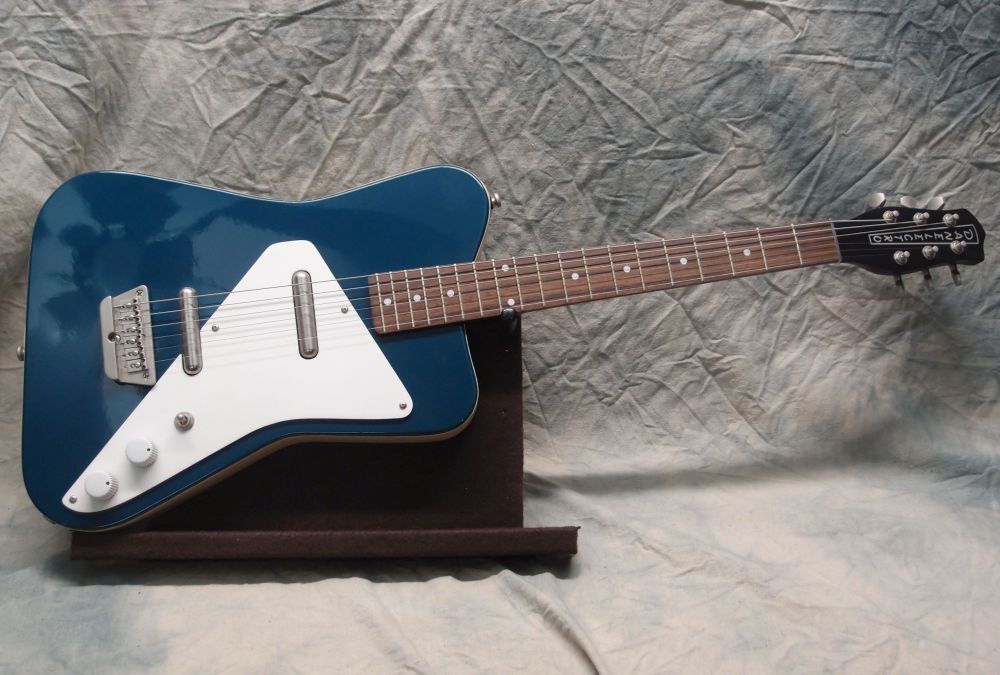
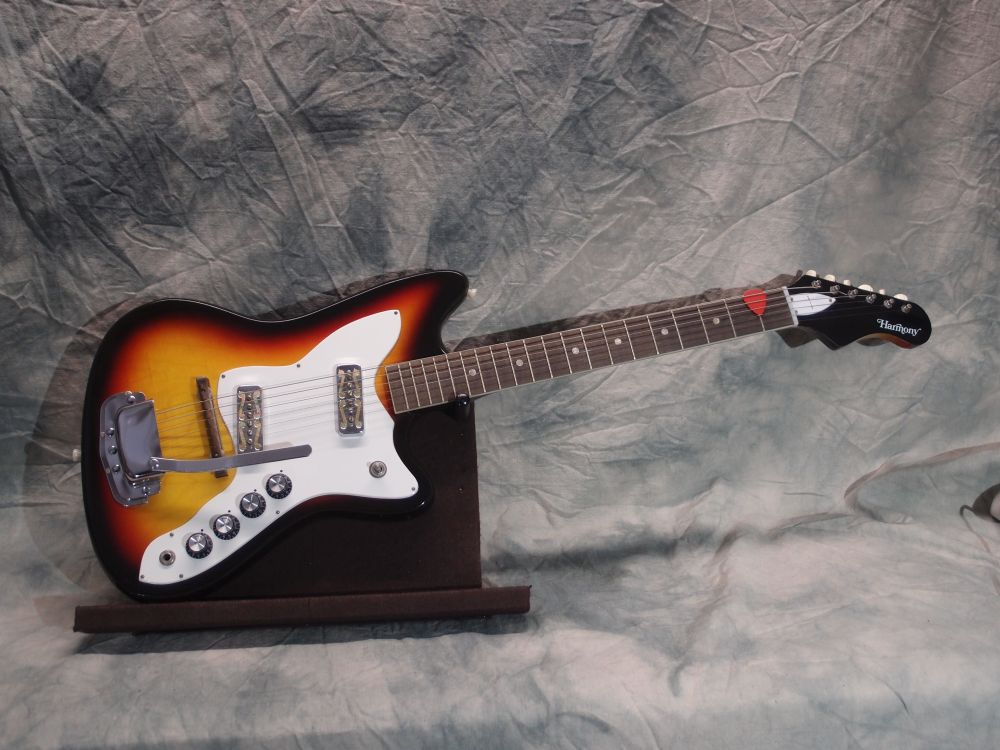
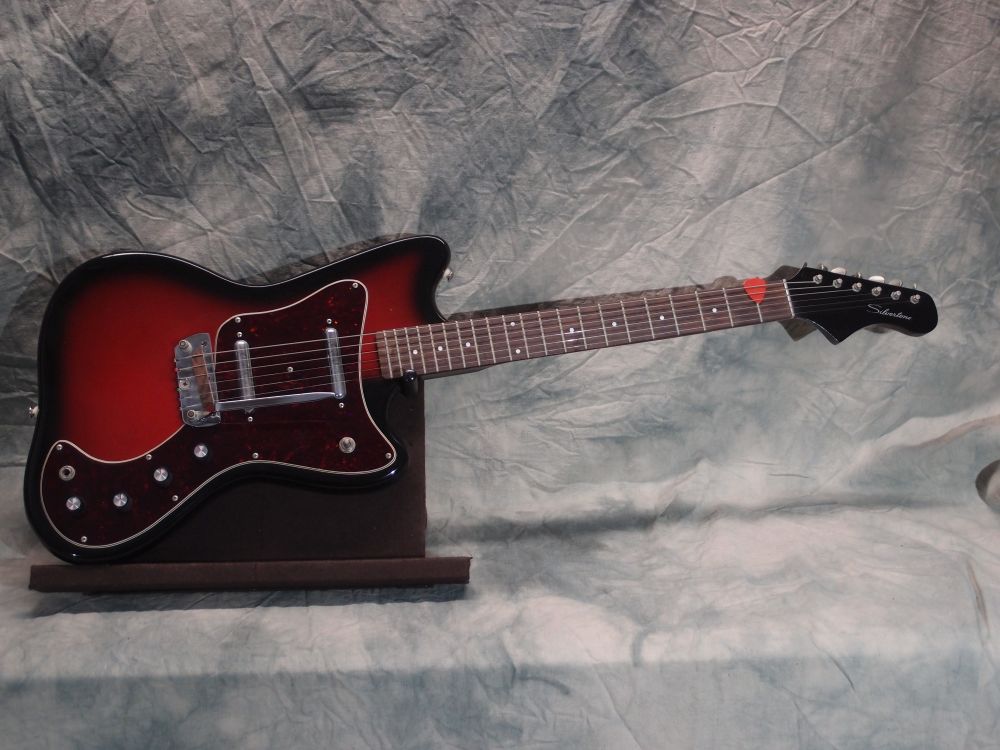
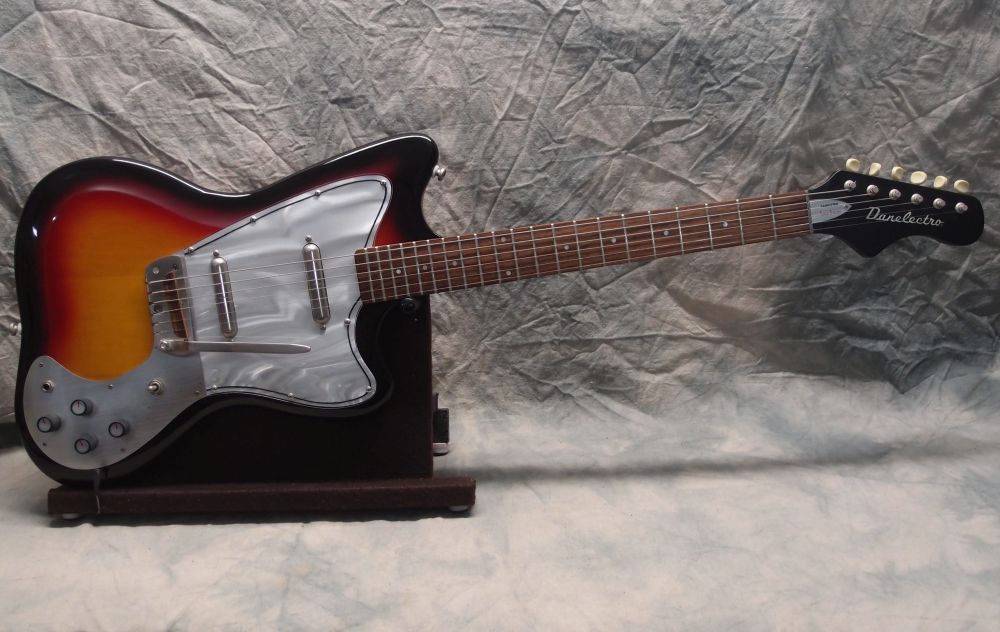
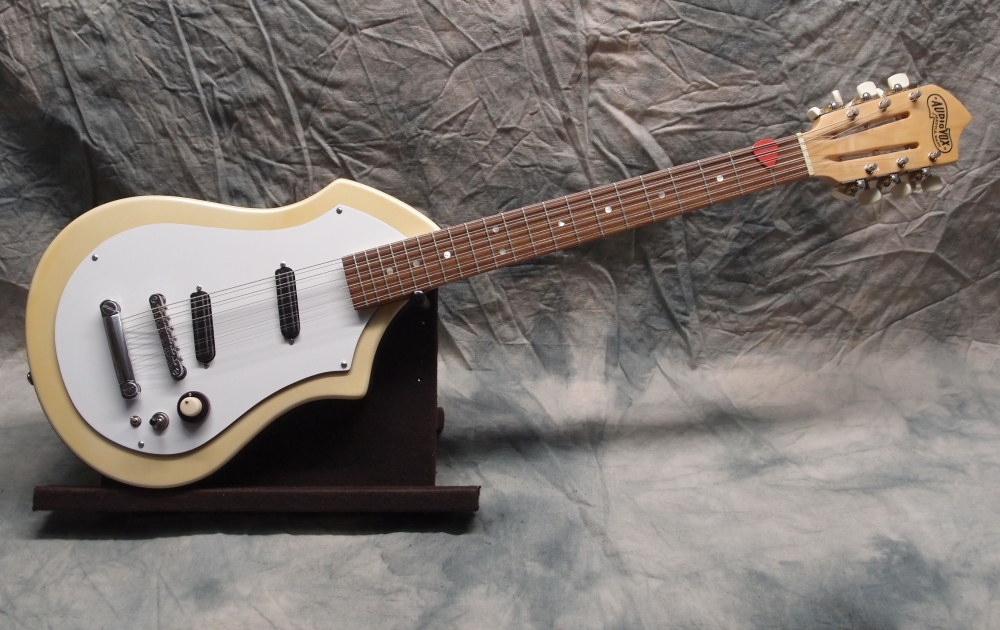
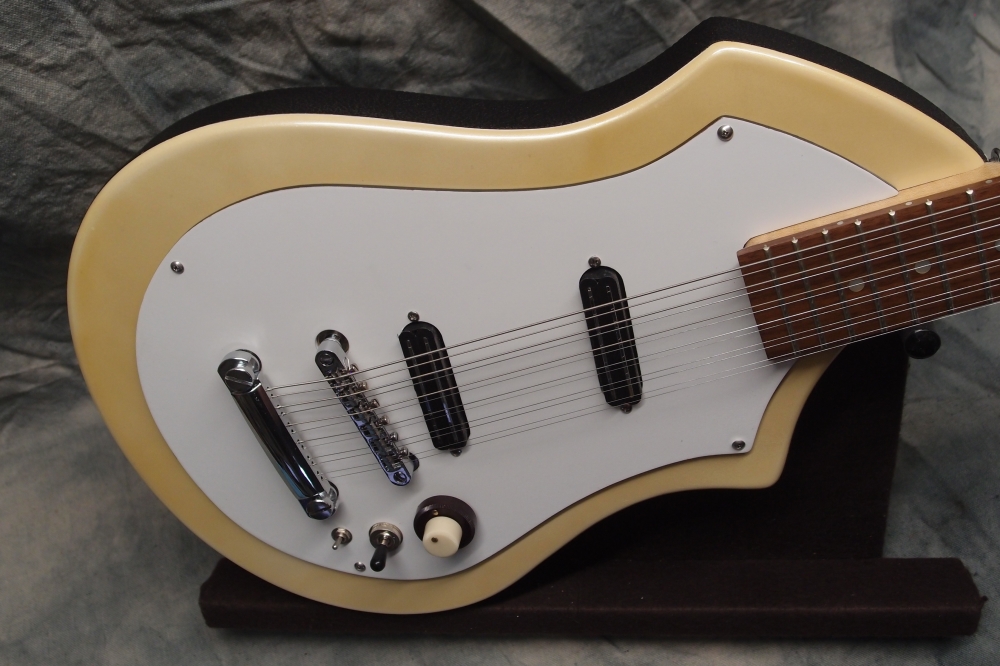
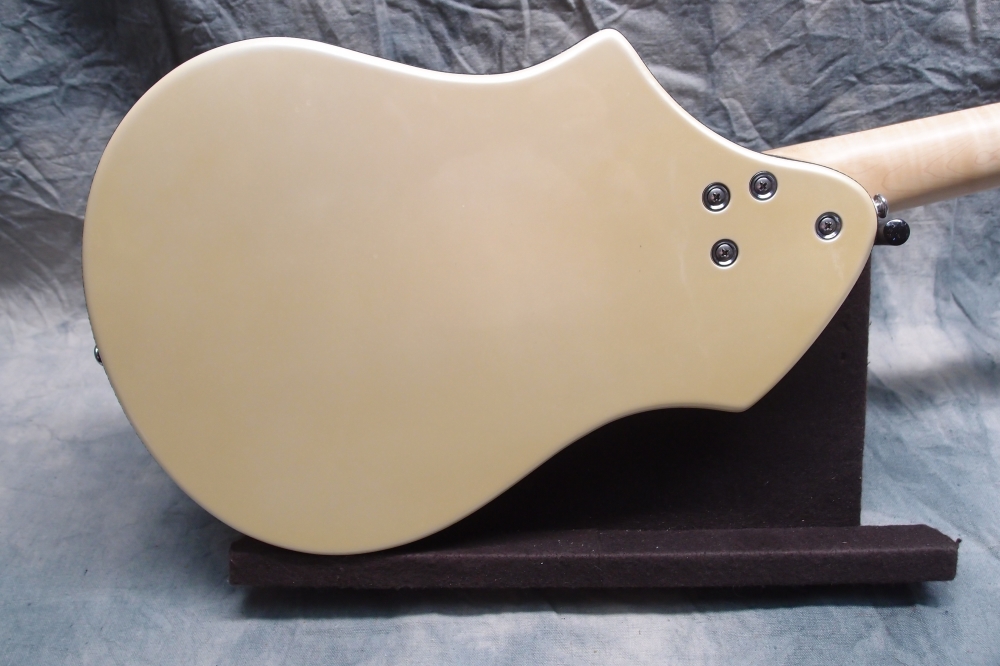
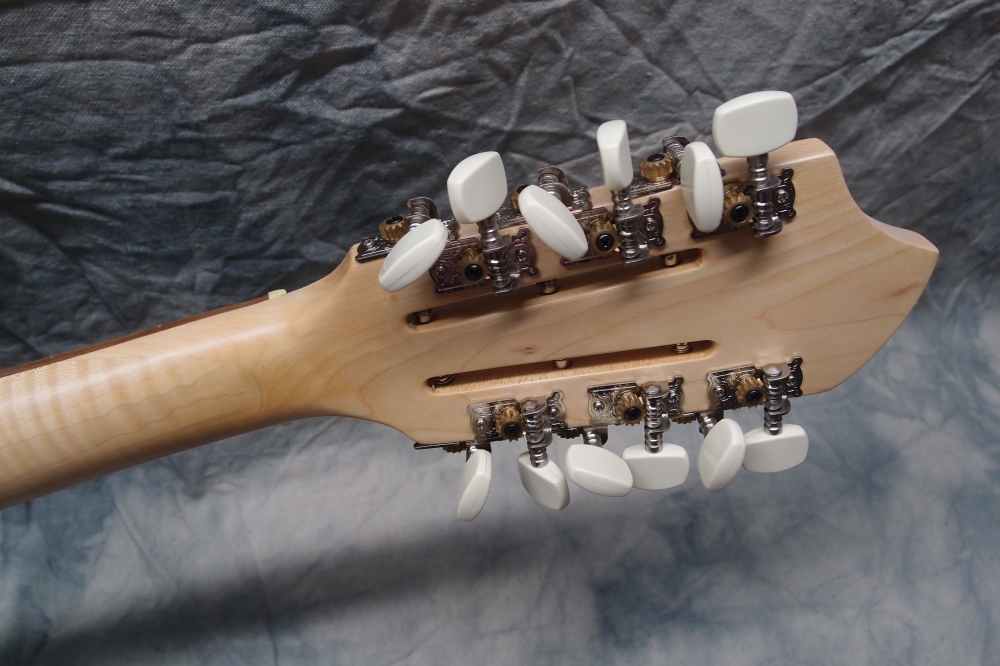
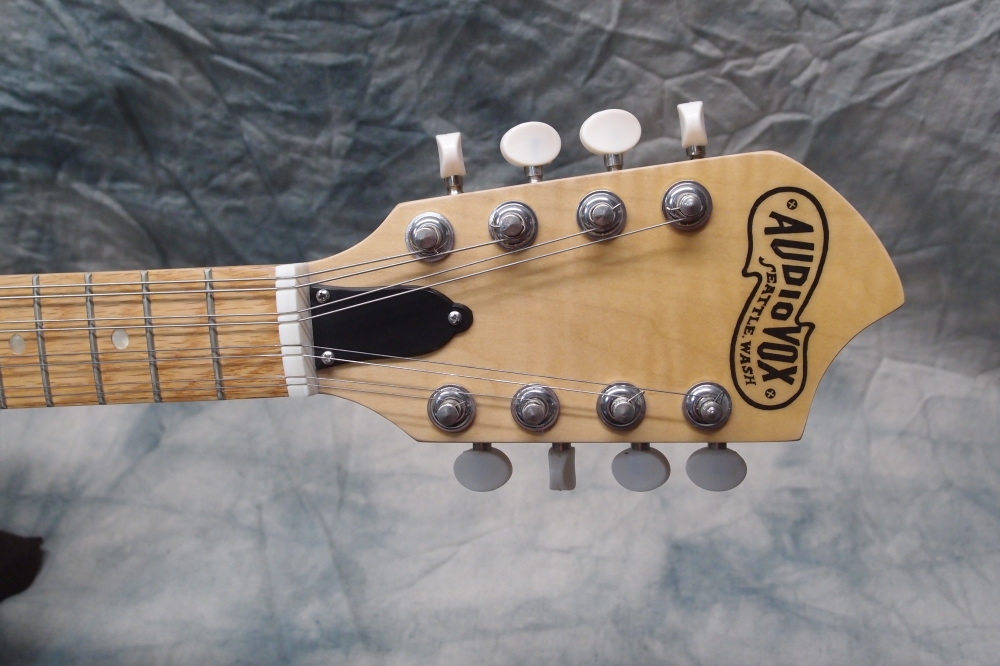
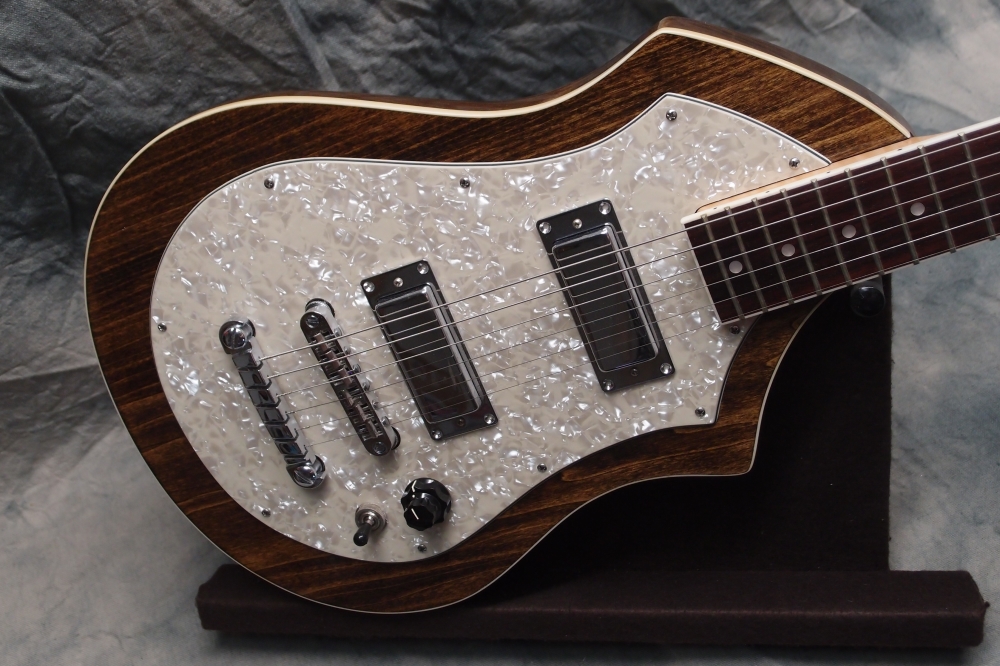
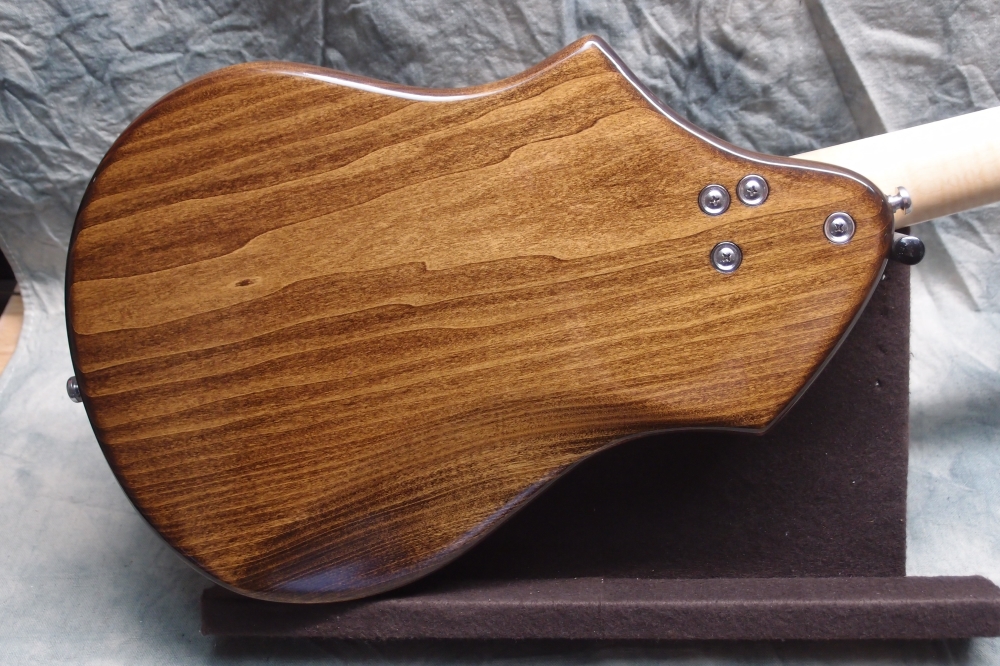
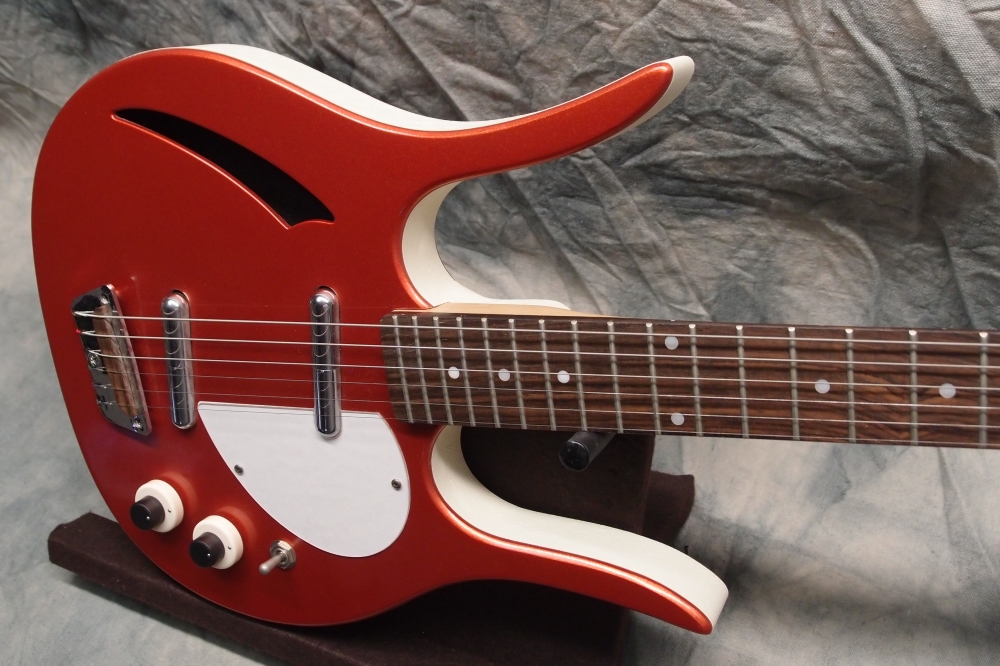
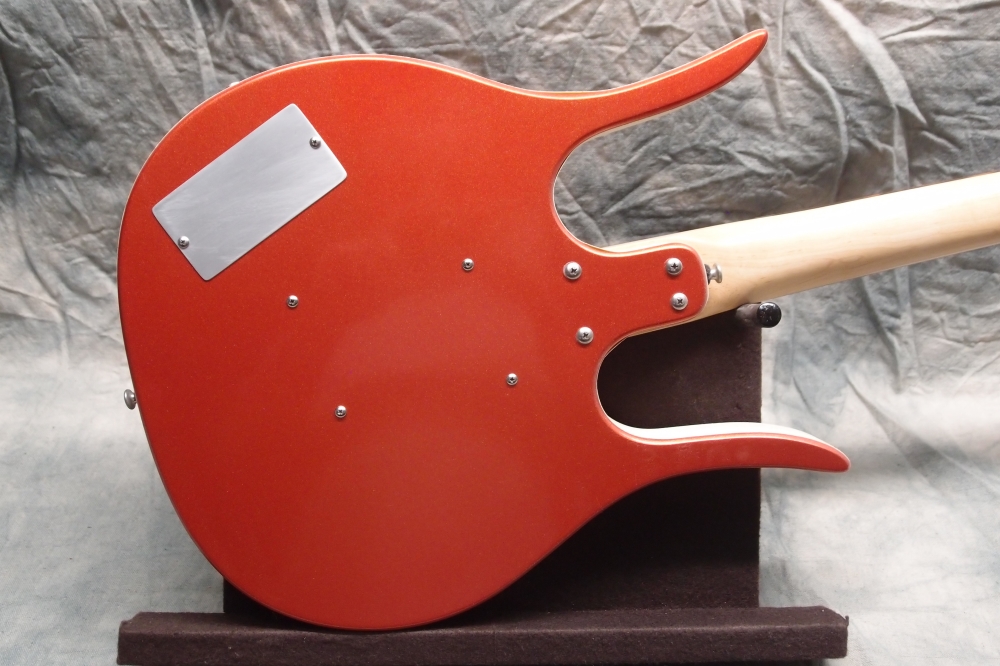
This twelver is a mashup of a number of different models. The body is Danelectro-style masonite over chambered plywood, with Tolex binding. The headstock is interleaved Rickenbacker, the bridge is more like a Gibson, while the overall style is my typical Audiovox.
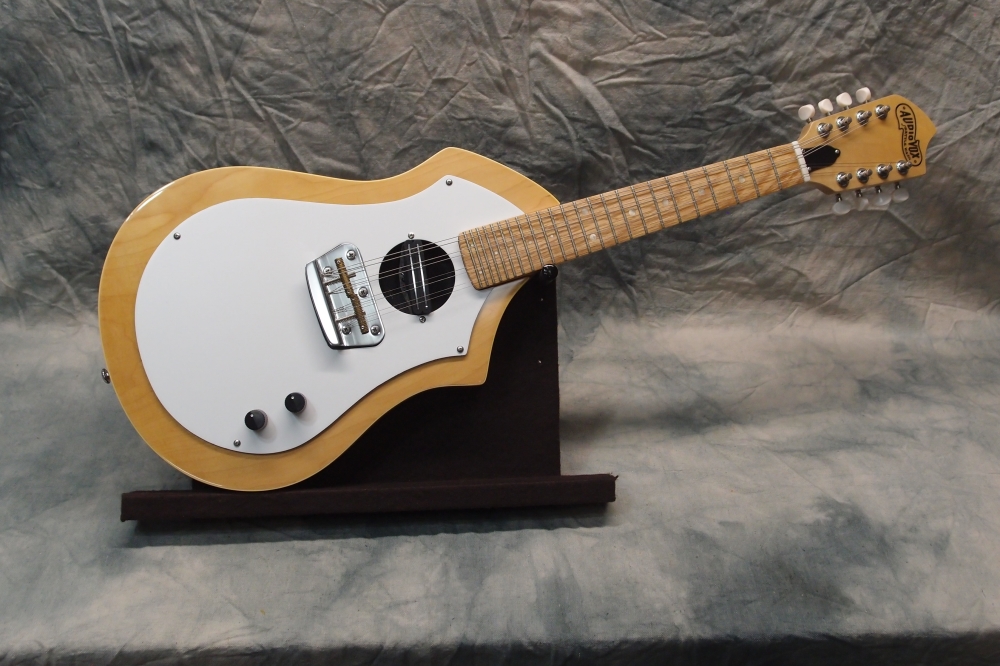
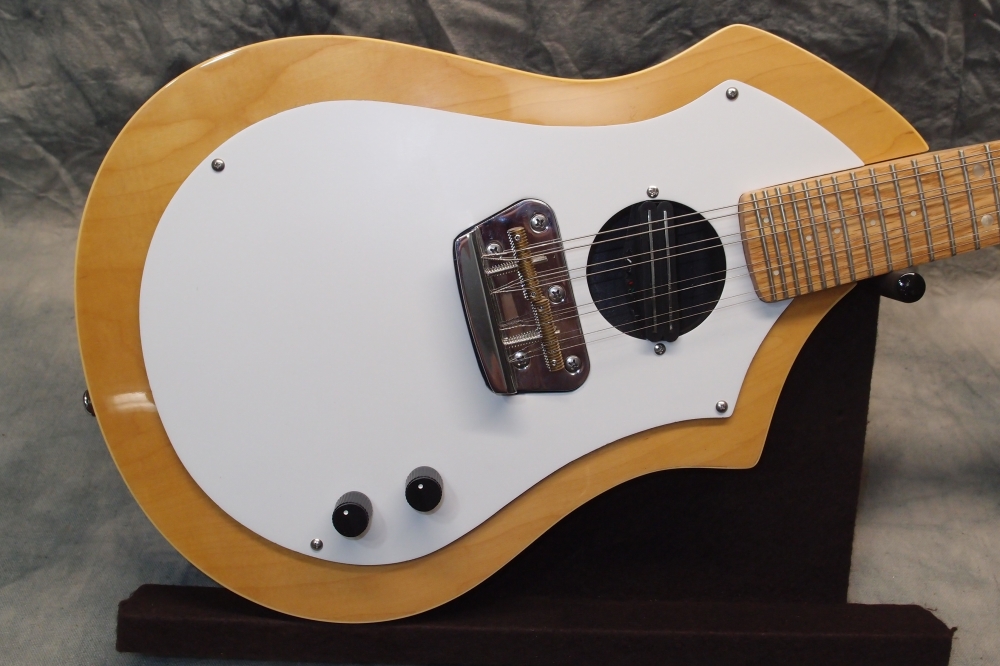
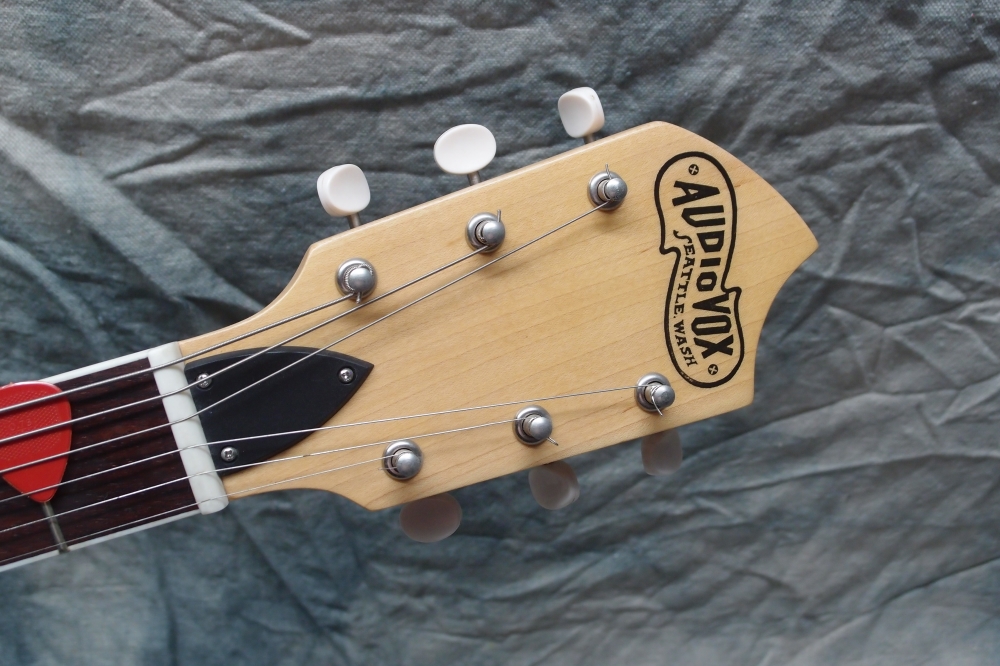
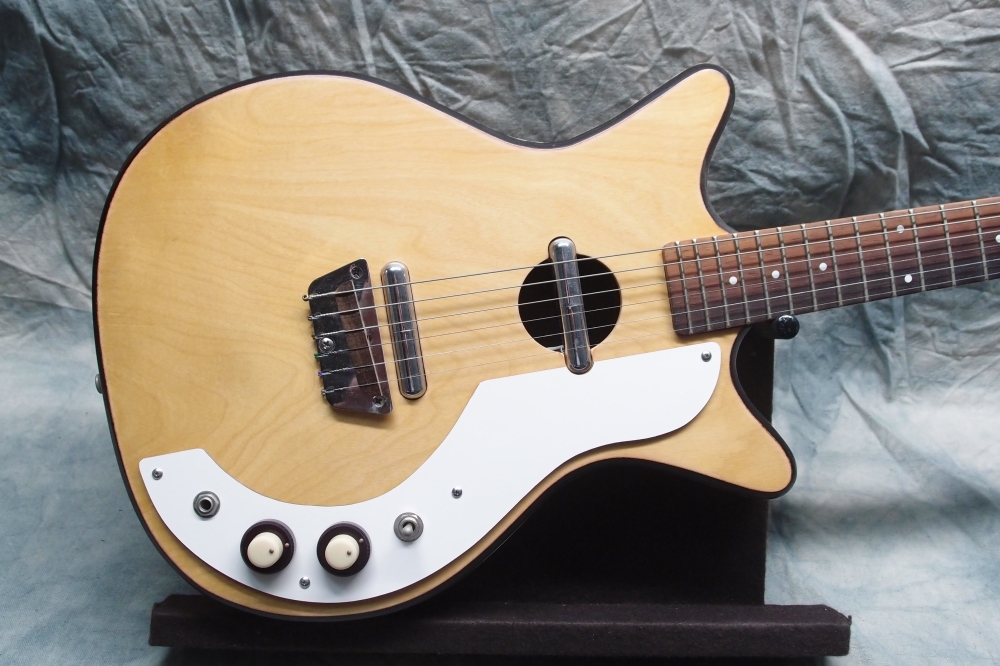
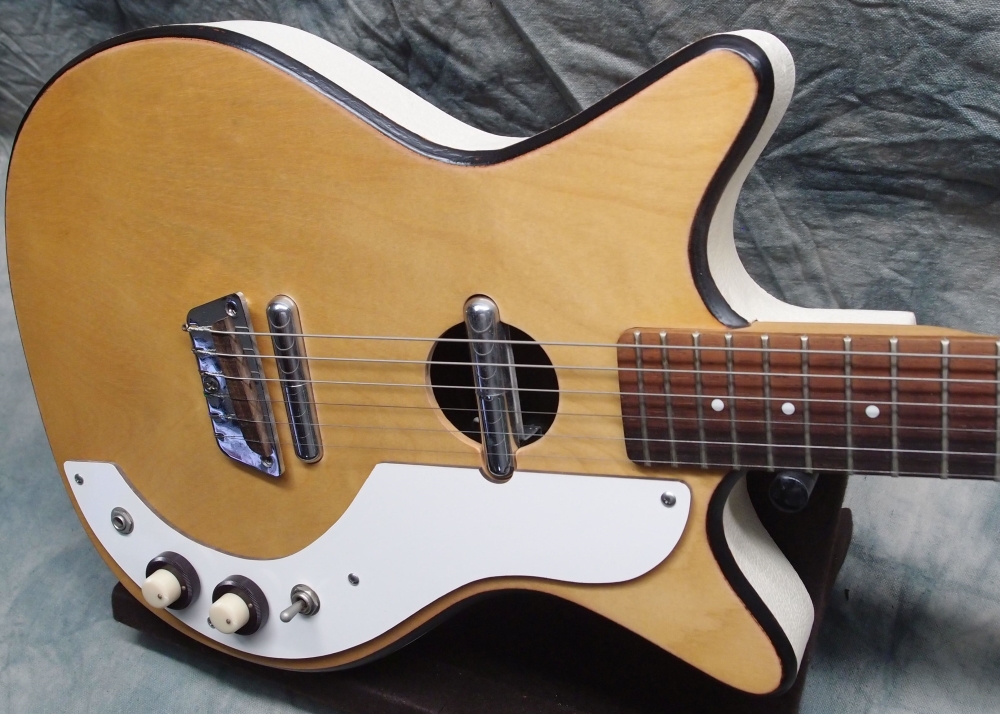
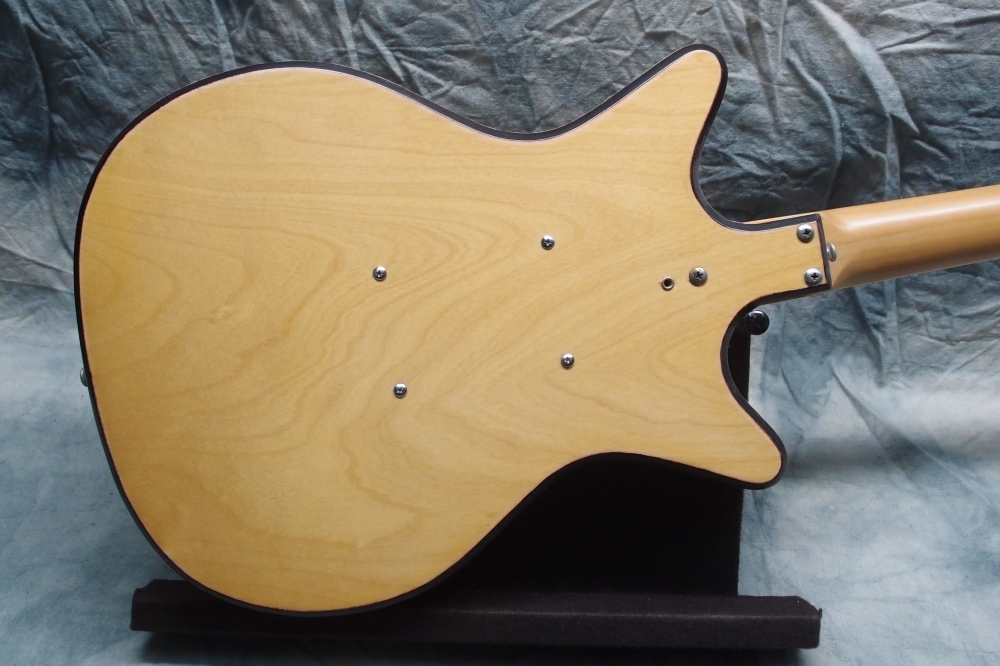
This body is maple plywood over a hollow pine core, double-bound. It came out very lightweight, too light to balance even a guitar neck. This was originally going to be the 12-string, but I realized that it would never balance. So I shuffled parts and bodies between some other projects - a planned six-string got canceled and became the twelver. That left this body free. I thought about it a while and decided it would make a good mandolin.
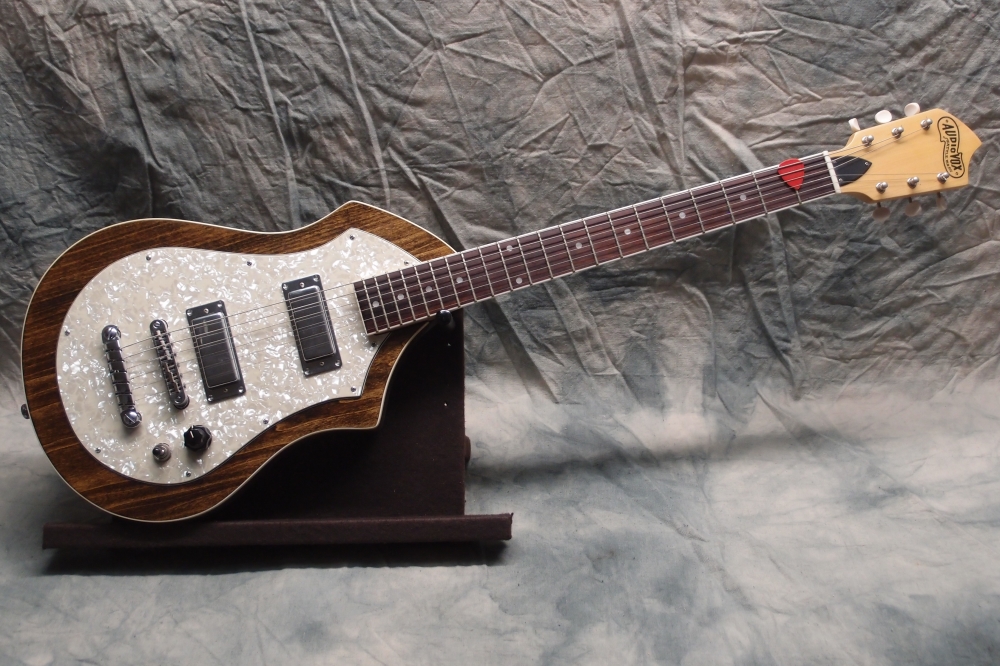
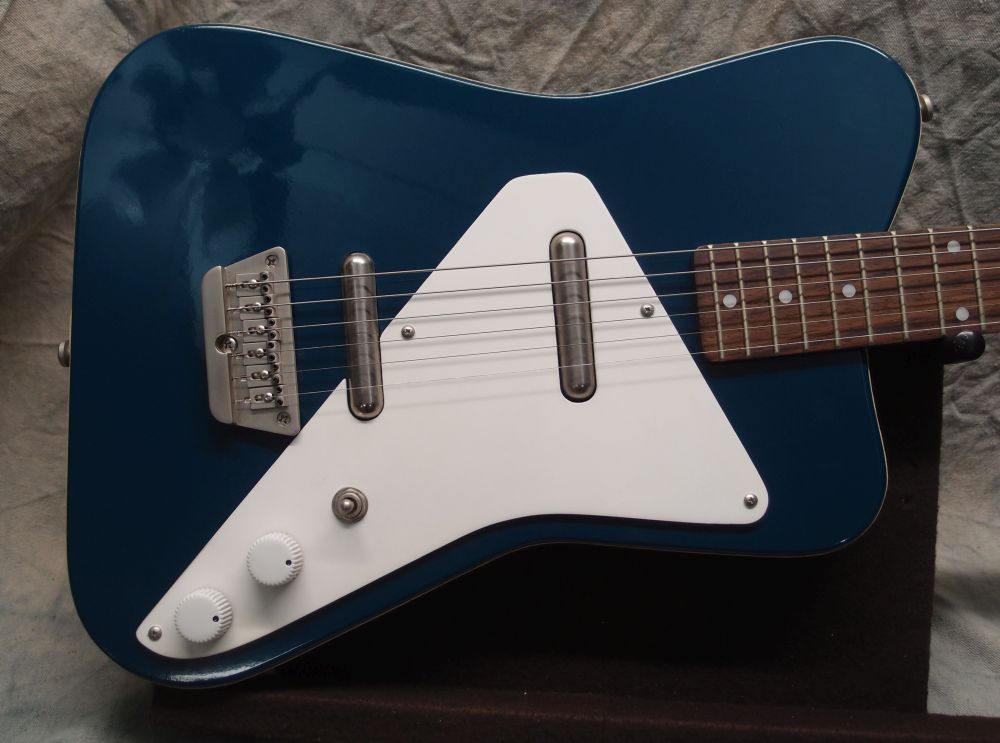
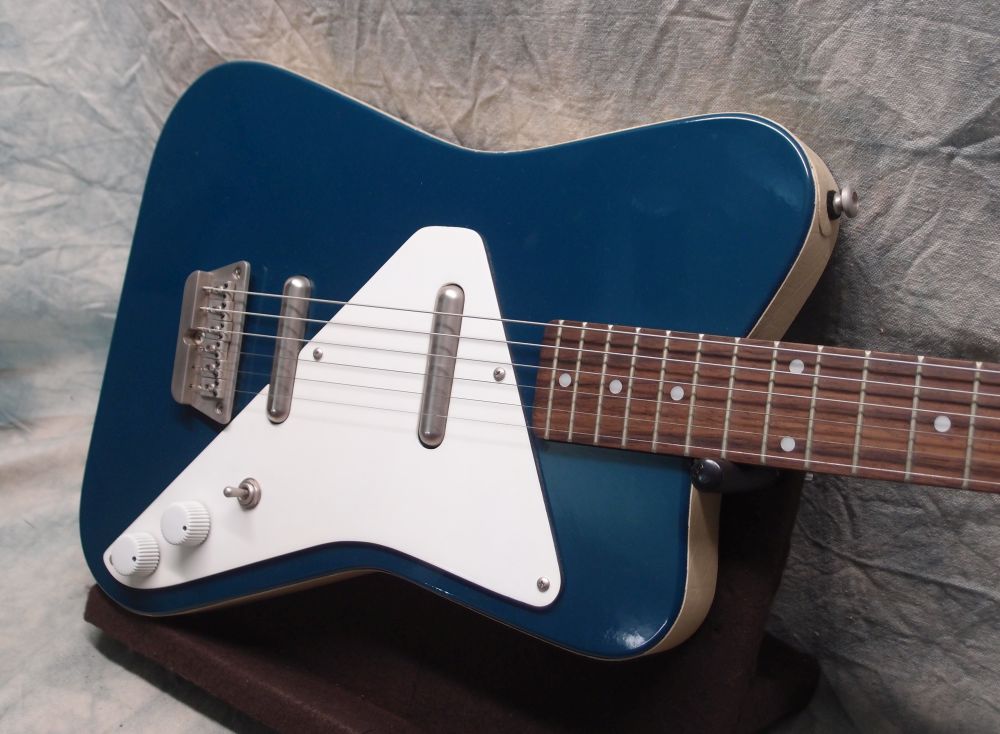
This was the first of my modified Audiovox design to be completed. Solid poplar bodies, stained to look like walnut, with single bindings. Each pickguard used an entire sheet of material; only these two got the pearl treatment, the rest got much less expensive masonite pickguards.
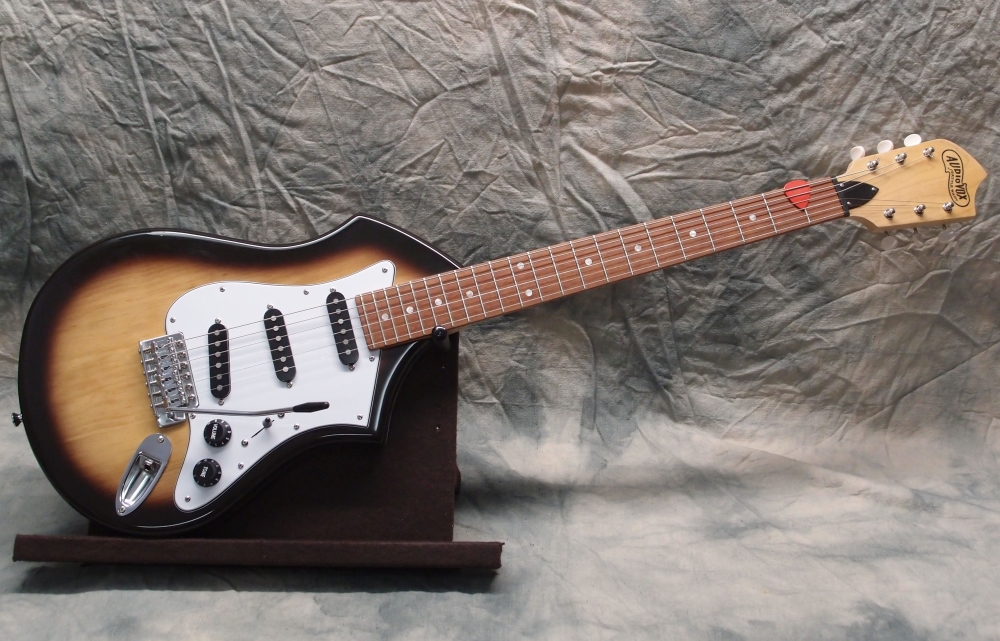
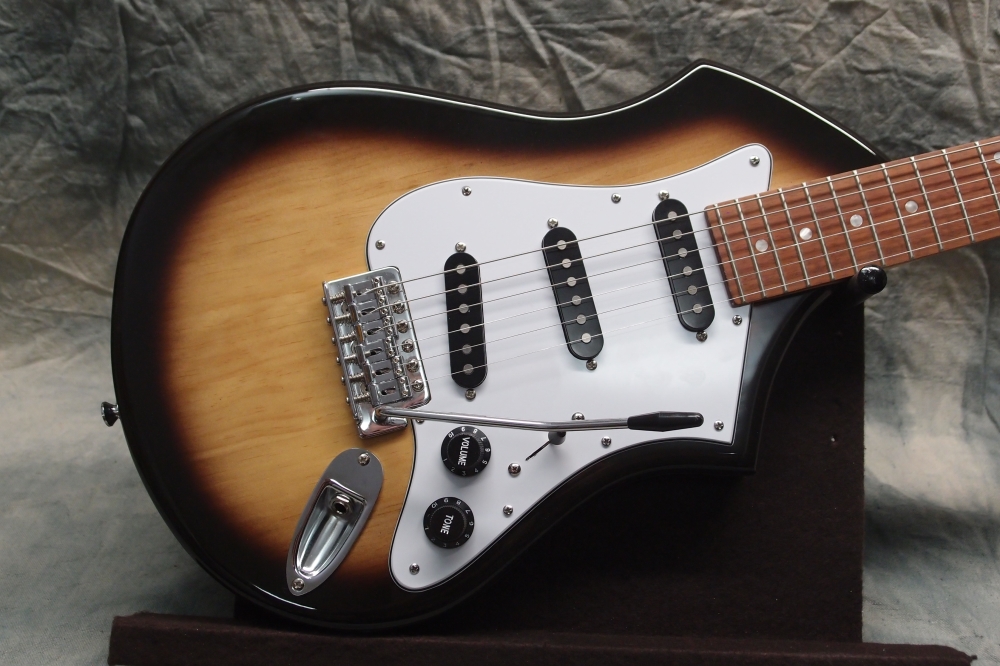
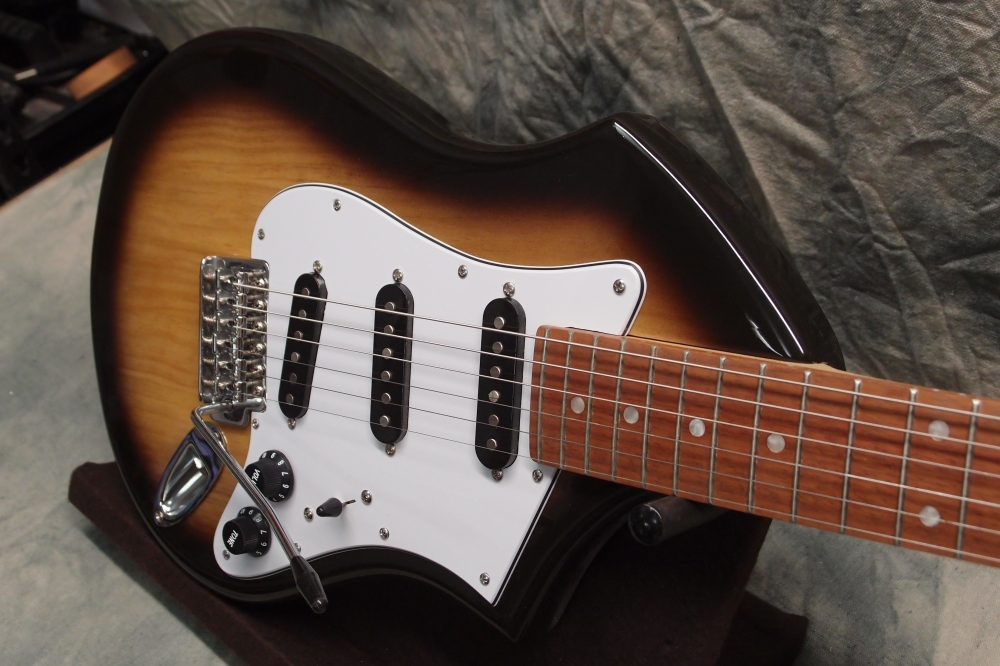
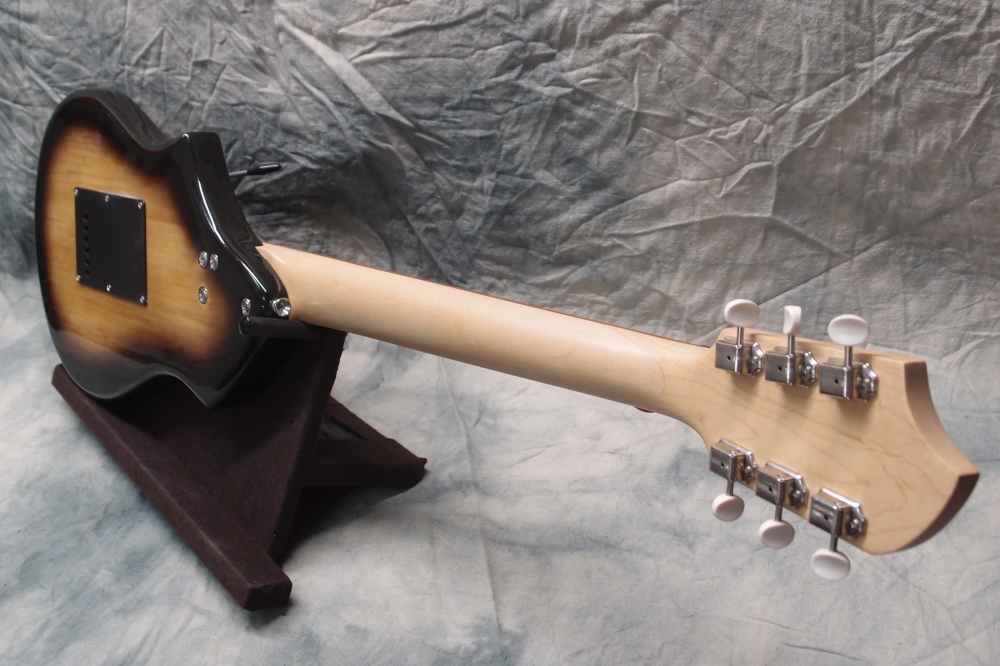
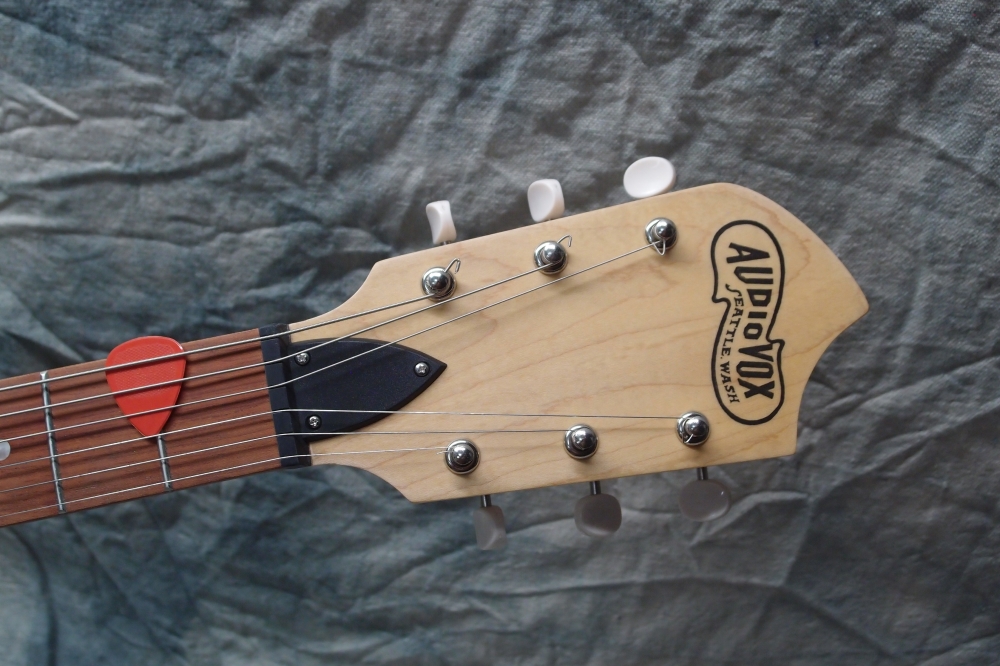
This one was a testbed for the Radiata glue-up body construction. I had lots of Strat hardware lying around from all the bass projects, so I decided to use some of it. As usual for my guitars, this has a fixed steel truss rod. This is the last of my Audiovoxes, and probably my favorite.
These are the two main templates I used to build all the Audiovoxen. The image is straight from the camera, simply save it and print it out at the proper scale. The dimensions of the body template are 17" long and 11-1/2" wide. The overall length of the headstock template is 10-7/8". The neck pocket is Fender-standard.
This is my own original design, it is inspired by the old Audiovox, but not copied from it. My original design was an accurate copy, and it didn't work very well. Therefore, nothing needs to be exact if you want to build one of these, there are no official factory specifications.
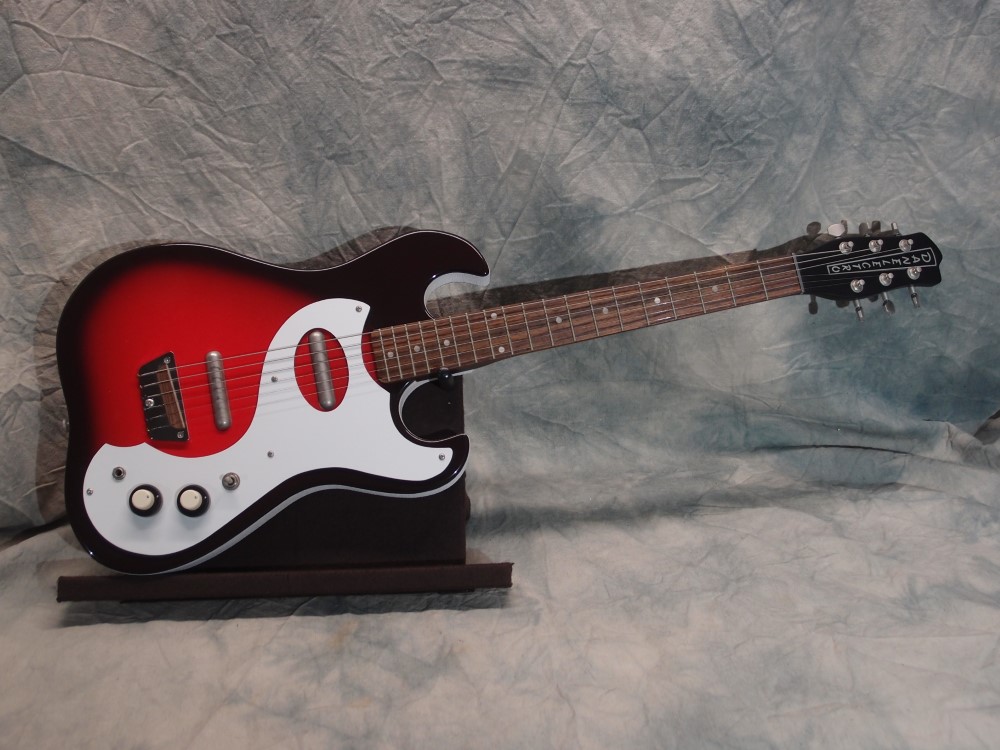
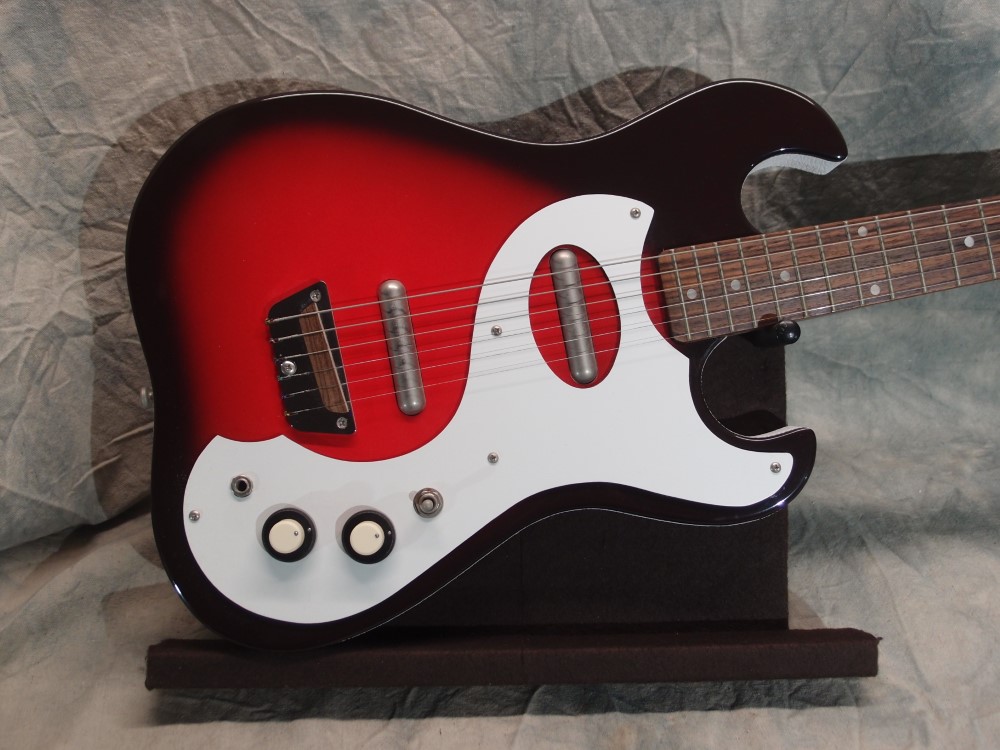
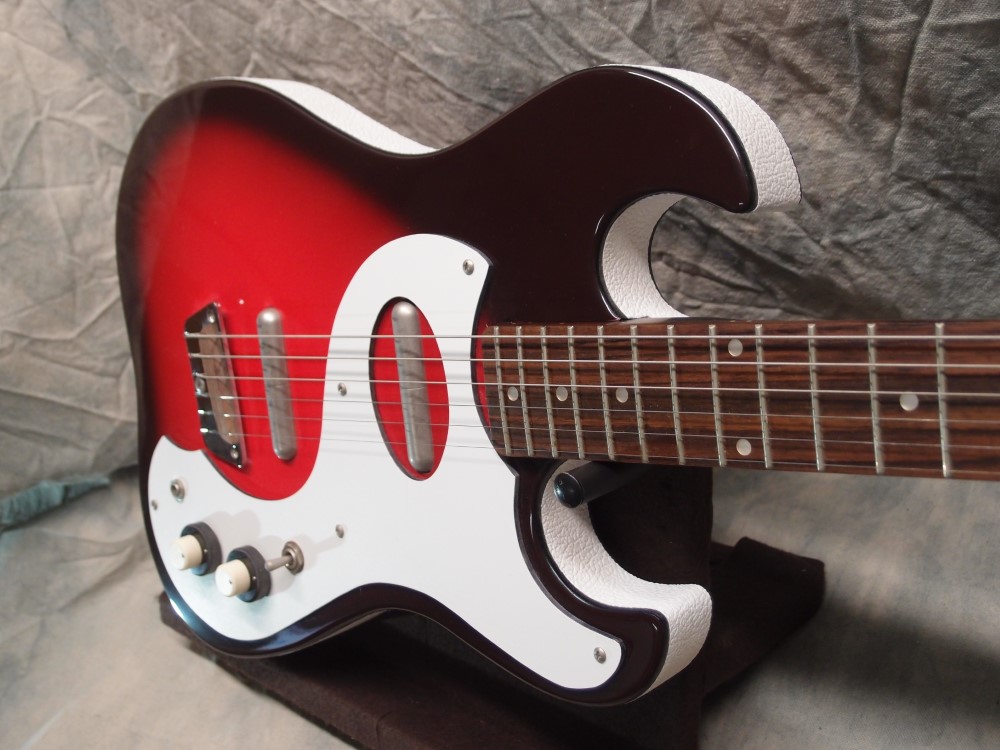
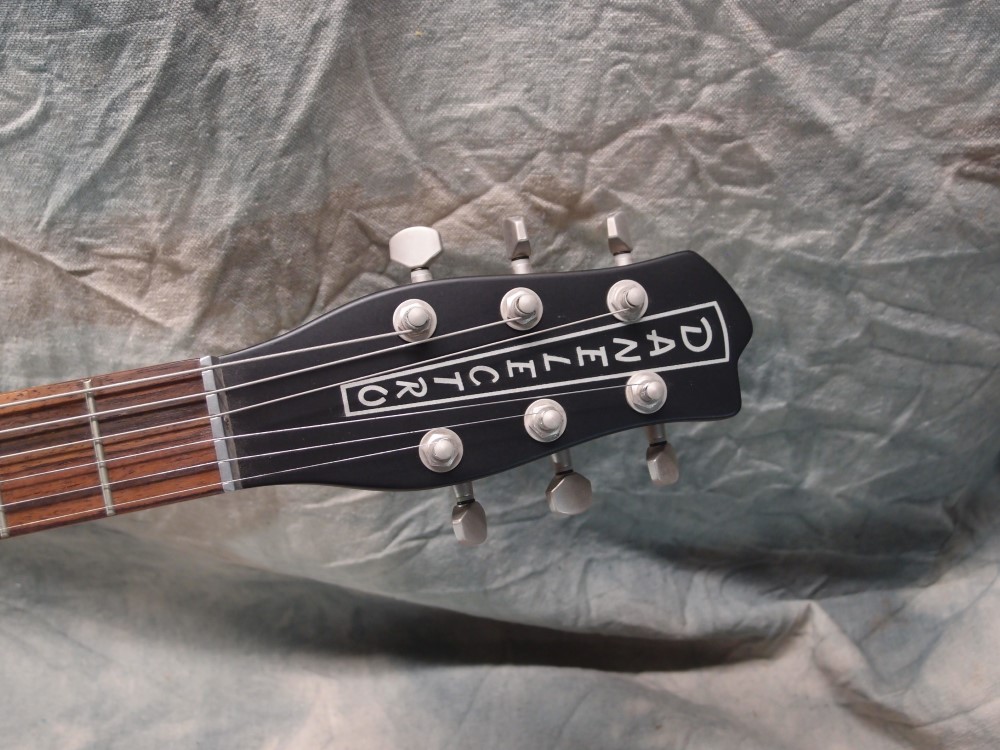
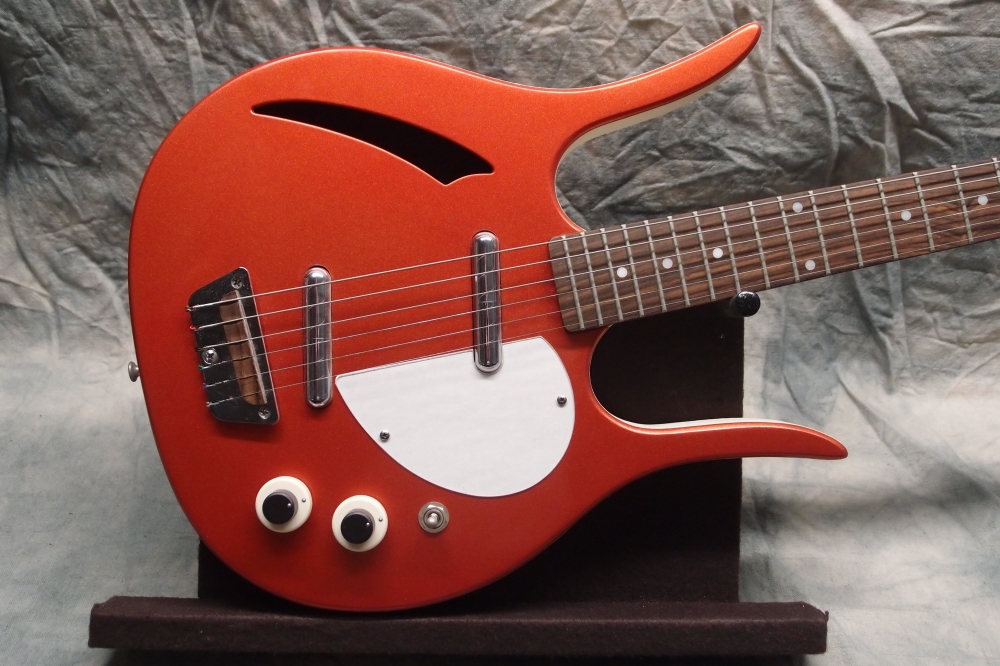
This body style was originally reissued in a range of models - guitar, bass ( long and short scale ) and baritone. I only have the guitar. These were part of Danelectro's Chinese production, and while not bad, are not as nice as the prior or later Korean models. A second reissue in 2015 restored the gloss sparkly finish of the vintage original. None of the reissues use the original headstock shape, though.
This was a box of junk I got on eBay, originally a vintage Convertible. I replaced the front and back with cabinet-grade birch plywood, as the original mother-of-countertop material is no longer available. I rebuilt it as something like a Companion, which is a very rare model. The neck and sides are vintage, the rest is modern.
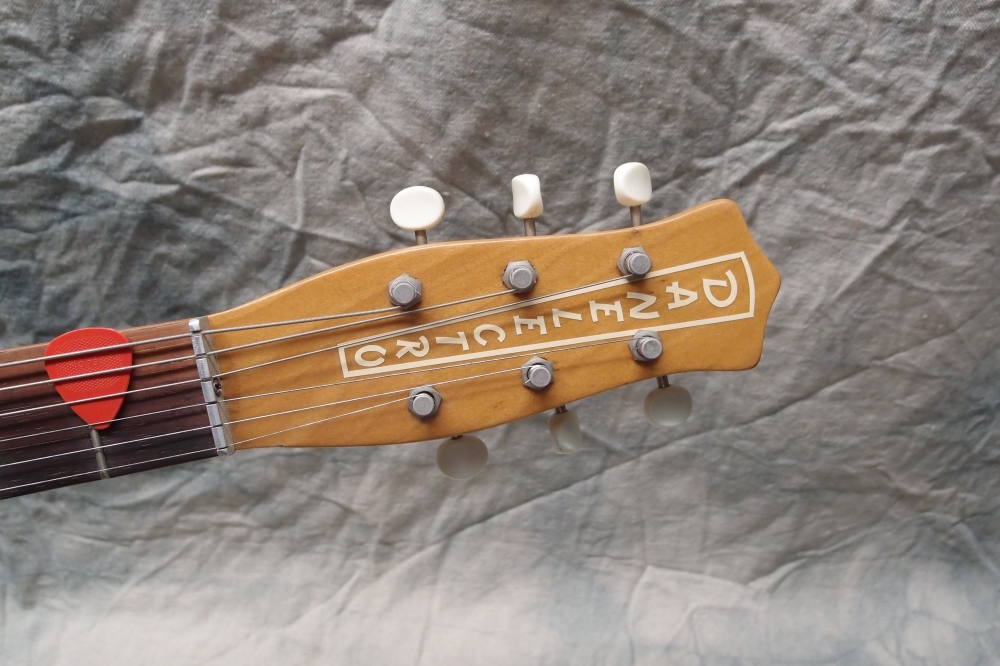
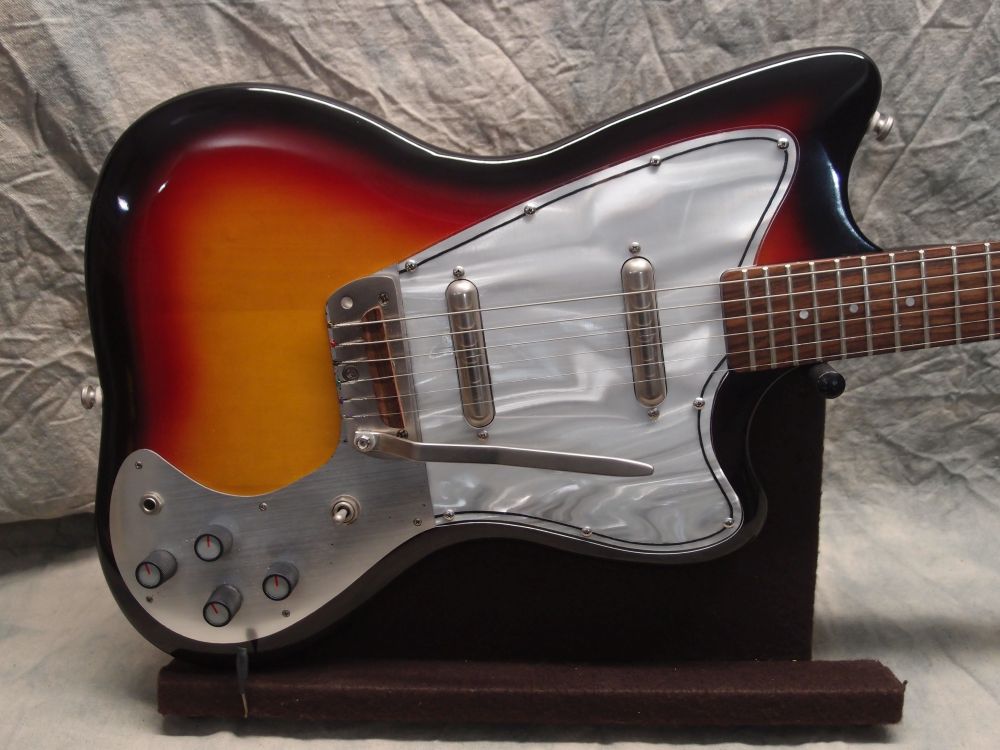
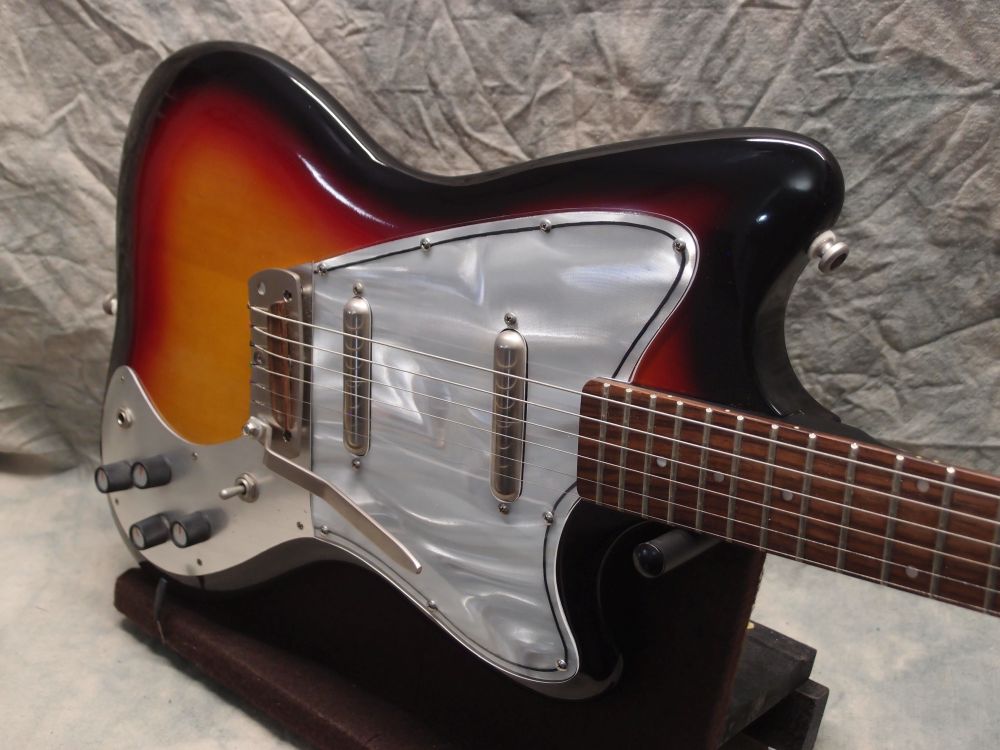
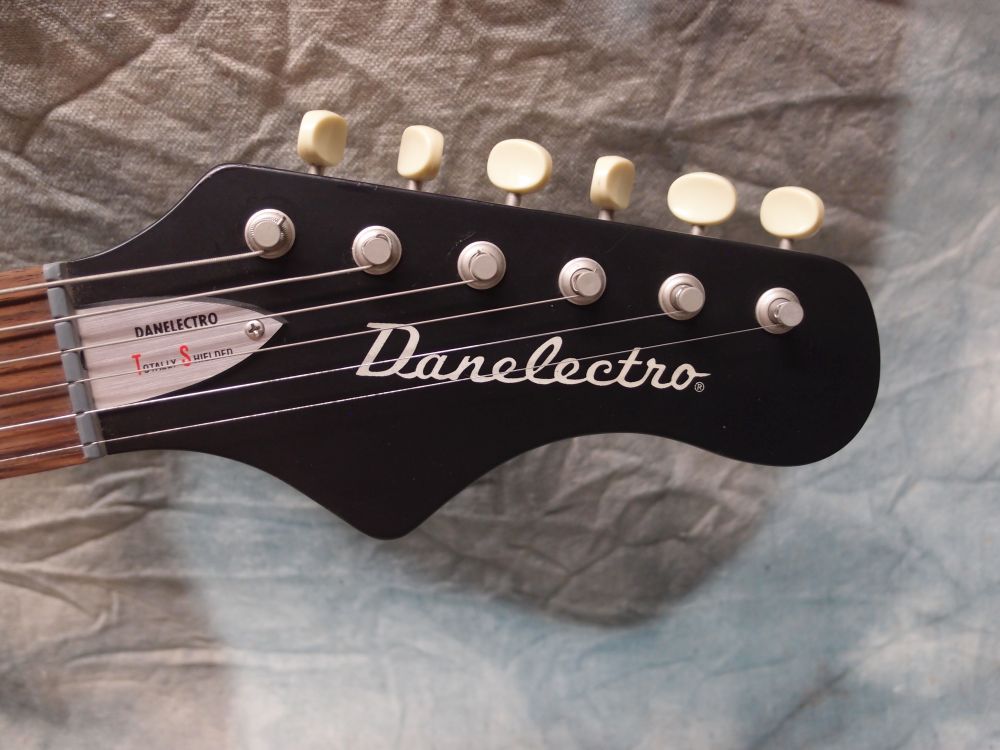
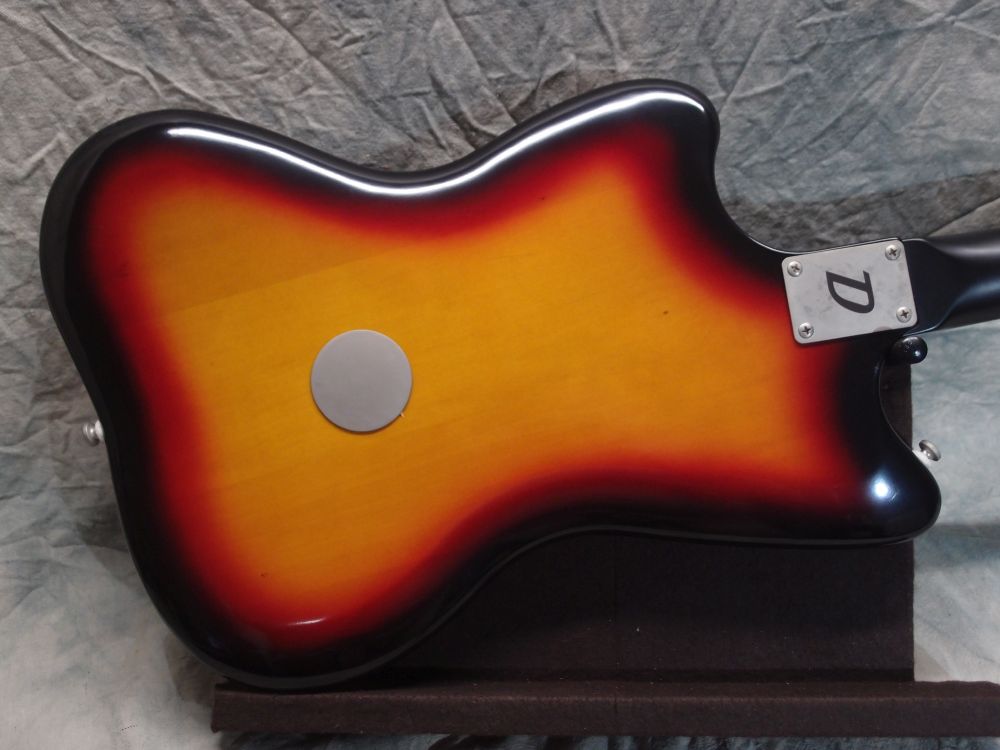
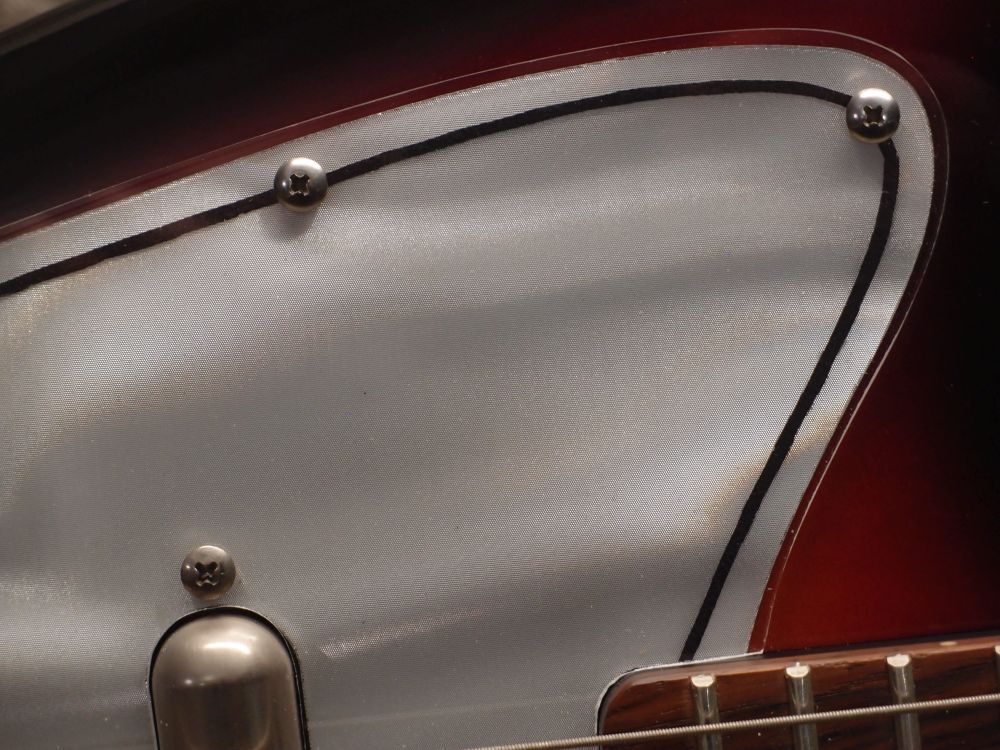
This beauty is Evets' reissue of a 1960s Danelectro Hornet. The solid-body Hornet has the same body outline as the Silvertone 1452, a sort-of cross between a 1457 and a Fender Jazzmaster. But unlike the slab-sided 1452, the body of the Hornet is a continuous curve, front and back, with a completely rounded edge. ( This is as sexy as a guitar gets, but makes it a little slippery on your knee. ) The reissue from Evets has the same contours as the original, and even the same 'lightshow' pickguard. The three-tone sunburst on this one was an exclusive to Guitar Center. I picked this one up as an 'open-box' from their subsidiary Music123 for a song, so to speak. The body was originally slathered in dullcote, which I polished off, resulting in a beautiful shine with just a bit of orange peel that I left.
Another early build for me - 2010, a reissue Danelectro neck on a built body. The finish is pearl automotive acrylic lacquer. The pickguard is actually clear with a piece of paper under it.
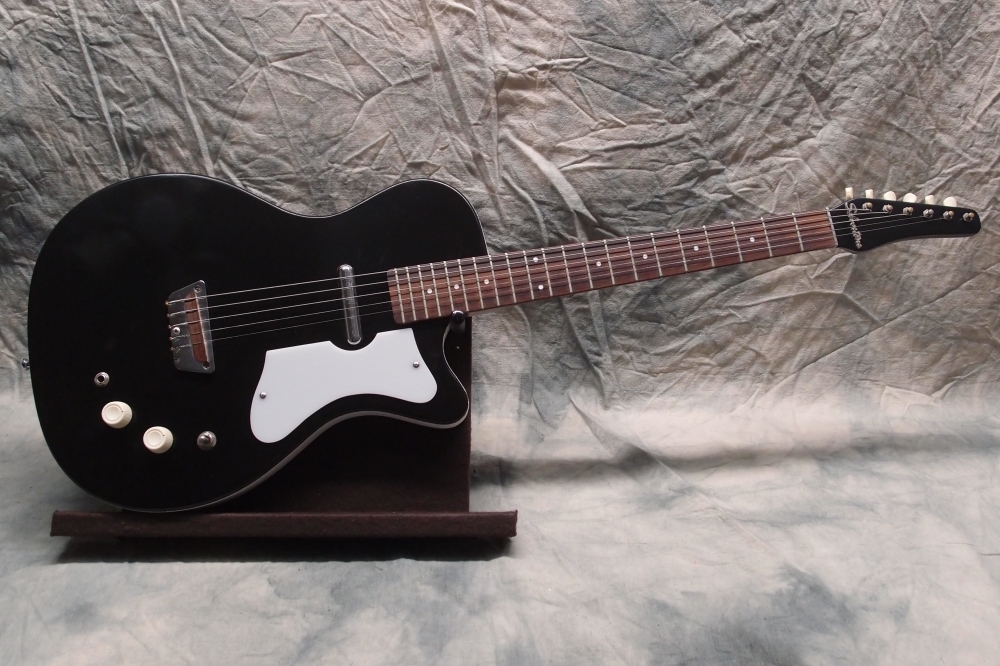
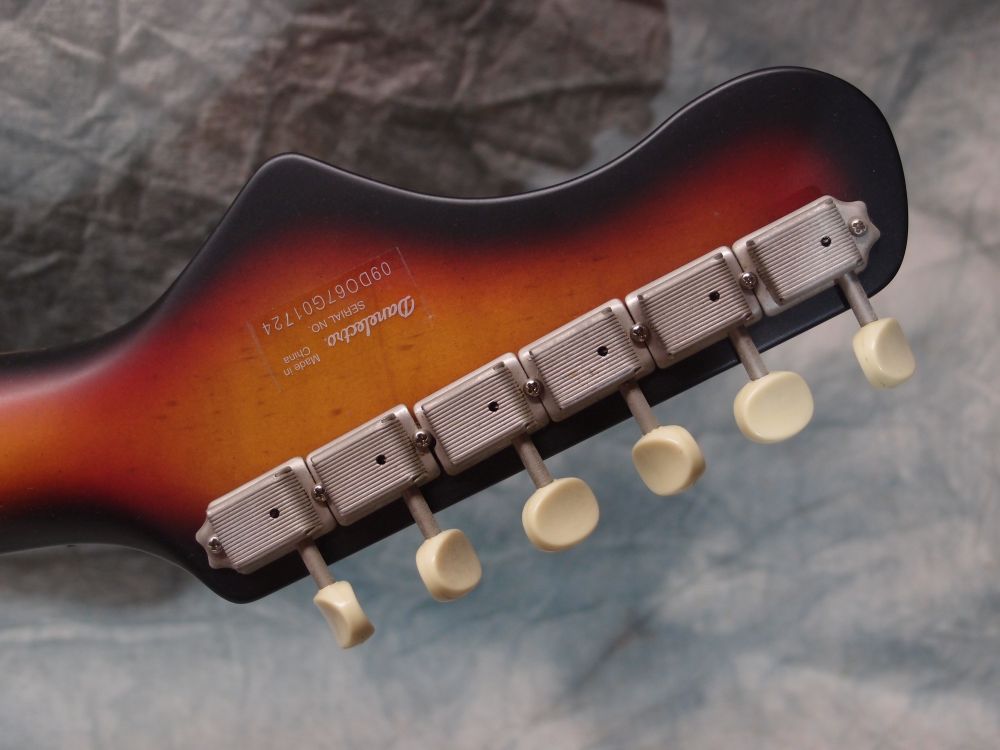
This is a factory guitar, but I have modified it enough that I guess I can call it a project. This is a reissue produced by Evets around 2007. This was not a high point for Evets quality, they had shifted production from Korea to China, and it showed. The reissues from the '90s are Korean-made, and quite nice, and this guitar is not in the same class. That said, it's not terrible either, but there's quite a bit to go into. Evets eventually shifted production back to Korea, and the quality went back up.