Projects sorted by construction style.
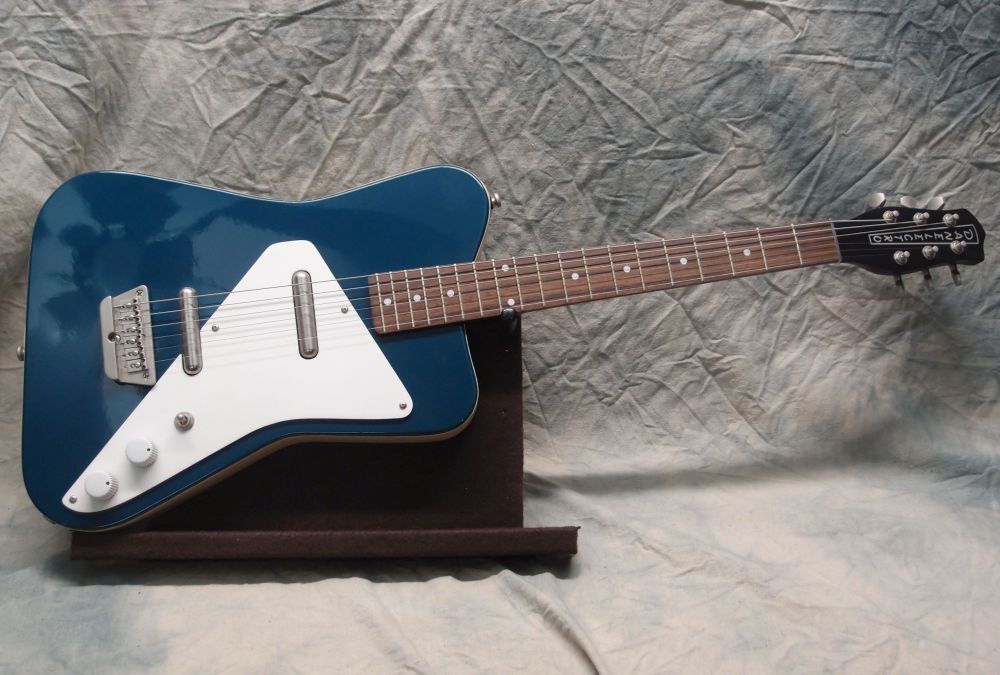
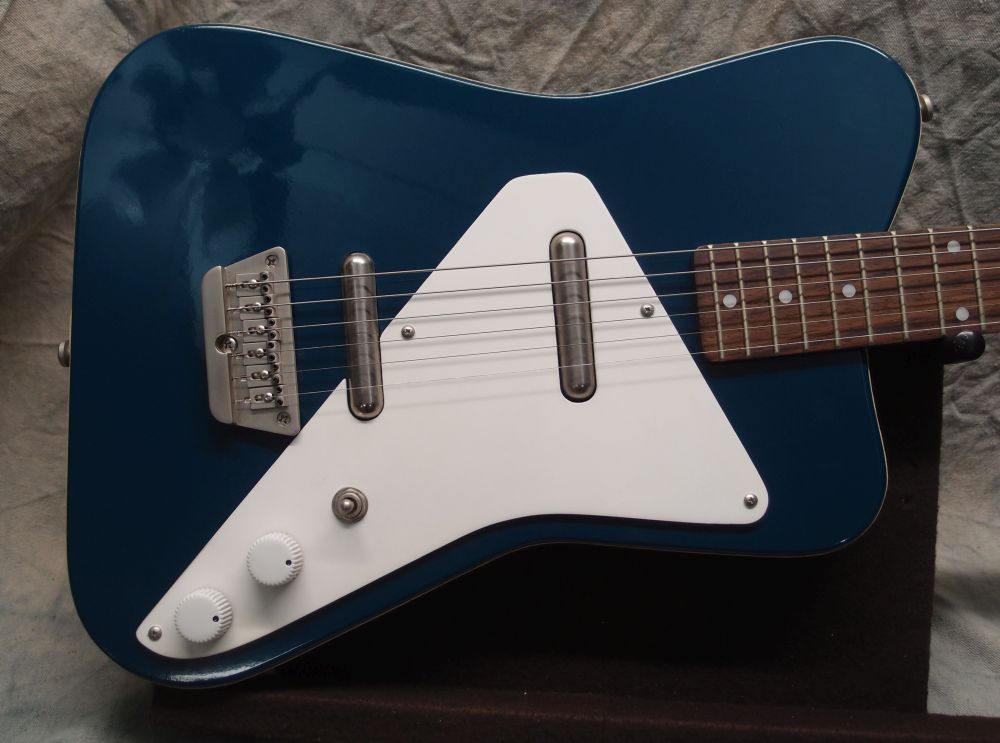
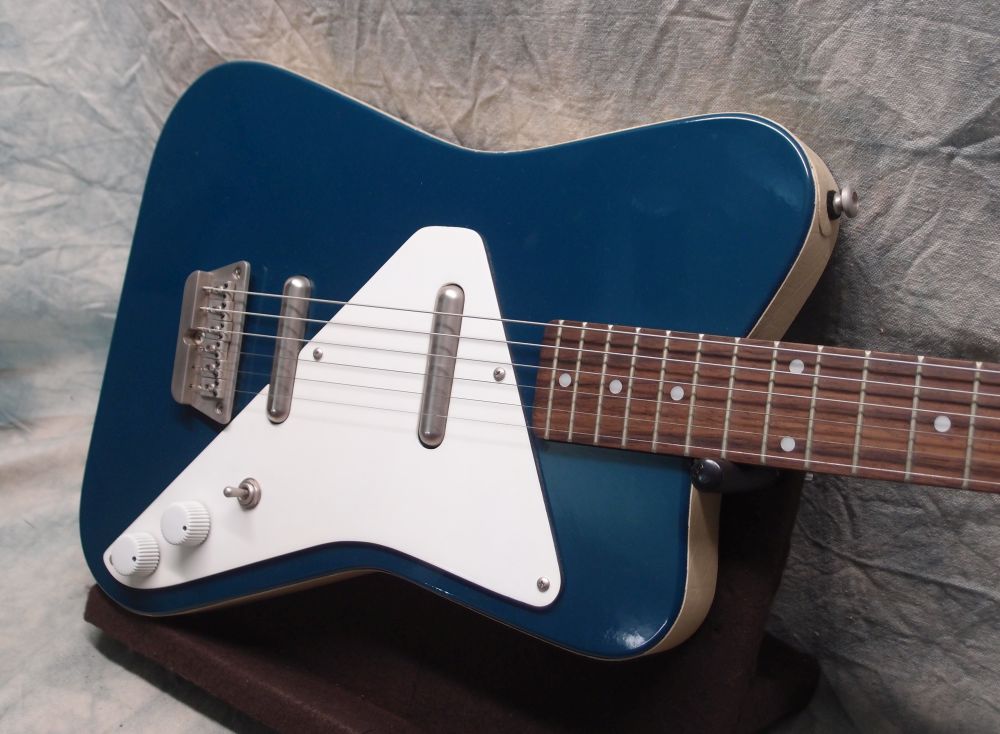
This is a factory guitar, but I have modified it enough that I guess I can call it a project. This is a reissue produced by Evets around 2007. This was not a high point for Evets quality, they had shifted production from Korea to China, and it showed. The reissues from the '90s are Korean-made, and quite nice, and this guitar is not in the same class. That said, it's not terrible either, but there's quite a bit to go into. Evets eventually shifted production back to Korea, and the quality went back up.
More: Danelectro Pro-1 Guitar ...
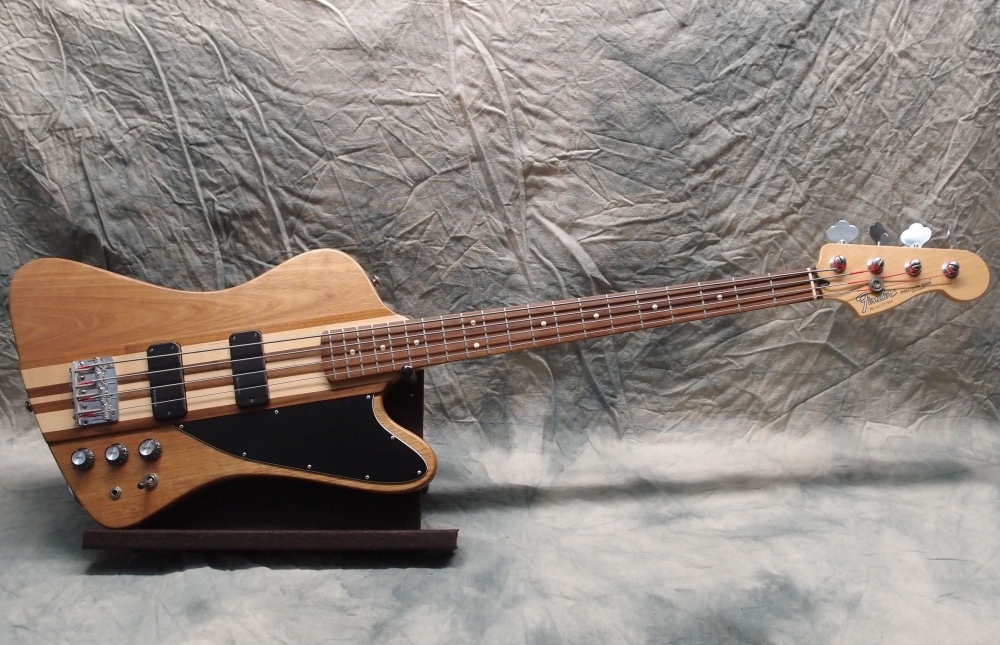
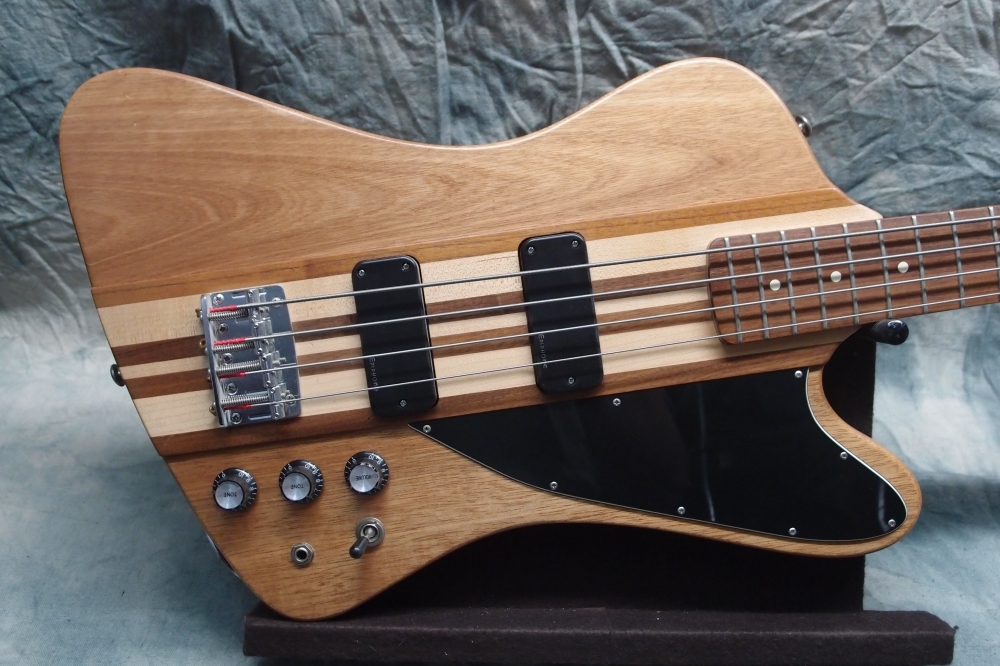
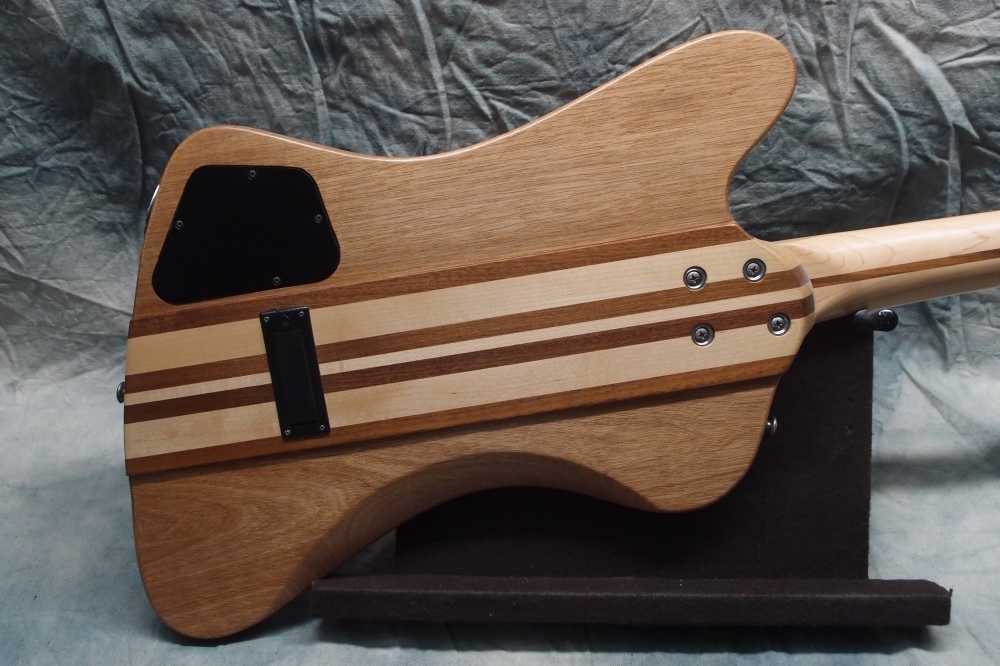
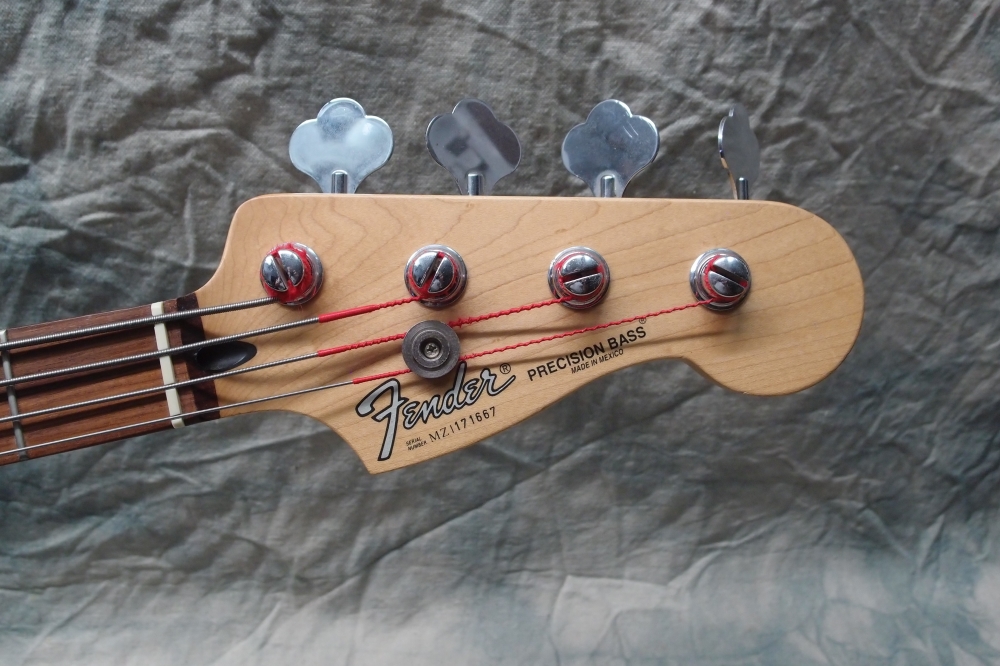
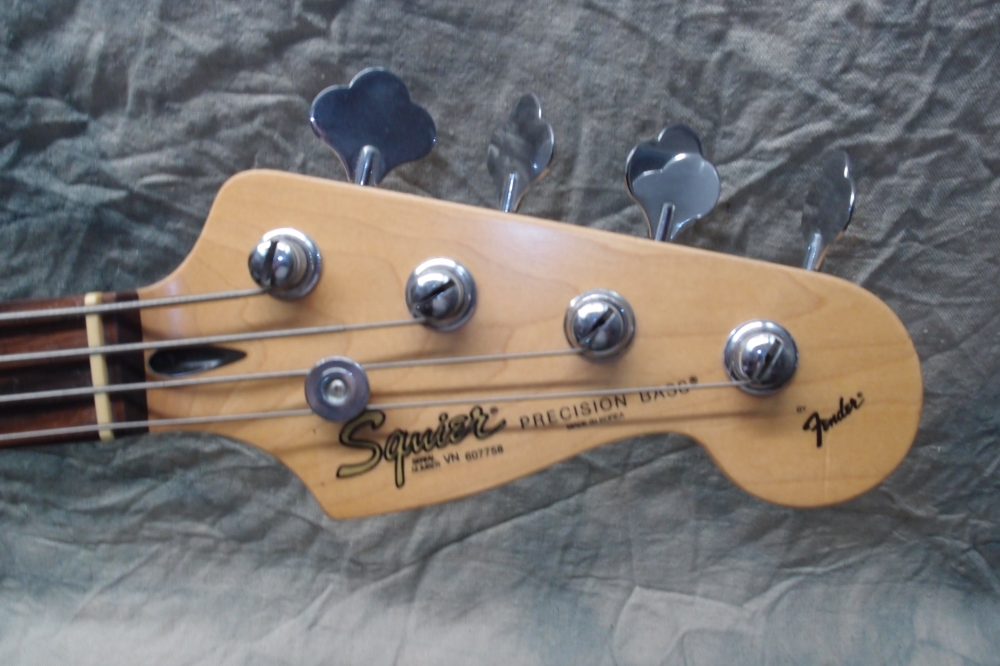
This started out as a broken Epiphone, one of the very nice Pro models. Turns out the Epi copy was a bit too authentic - it even reproduced the standard Gibson pop-off headstock. I removed the neck, re-finished the stump, routed out a neck pocket, and installed a Fender Mexico Precision neck. The pickups are stock, the active electronics are a replacement as the originals blew up. I also made the pickguard. The high frets are basically inaccessible, but the trade-off is much better balance.
More: Epiphone Fenderbird ...
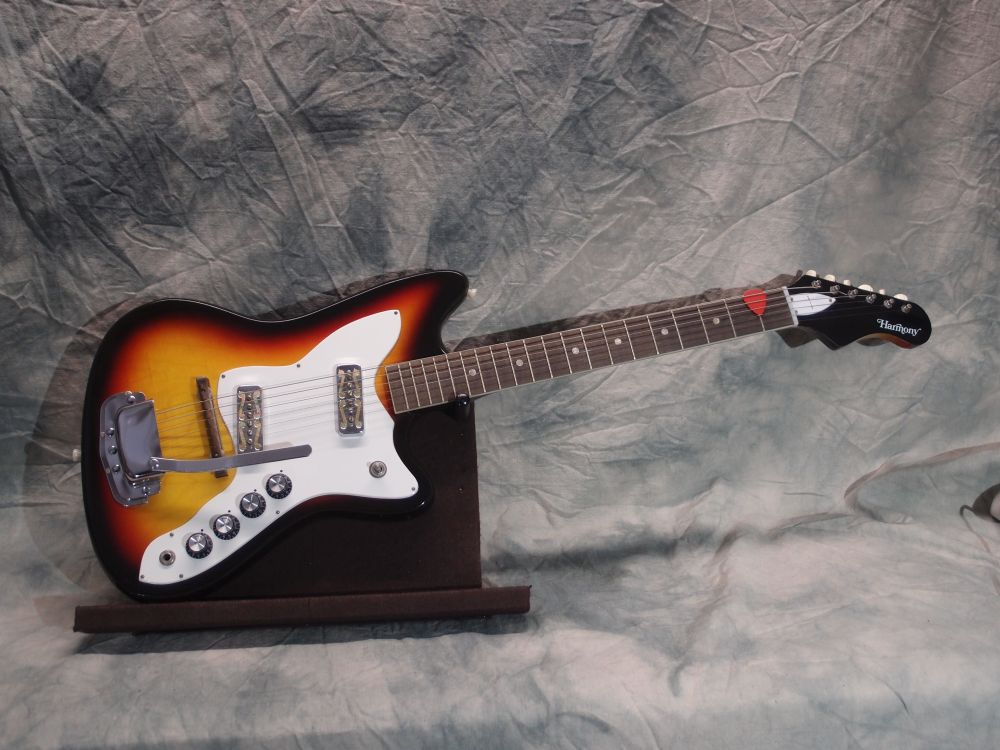
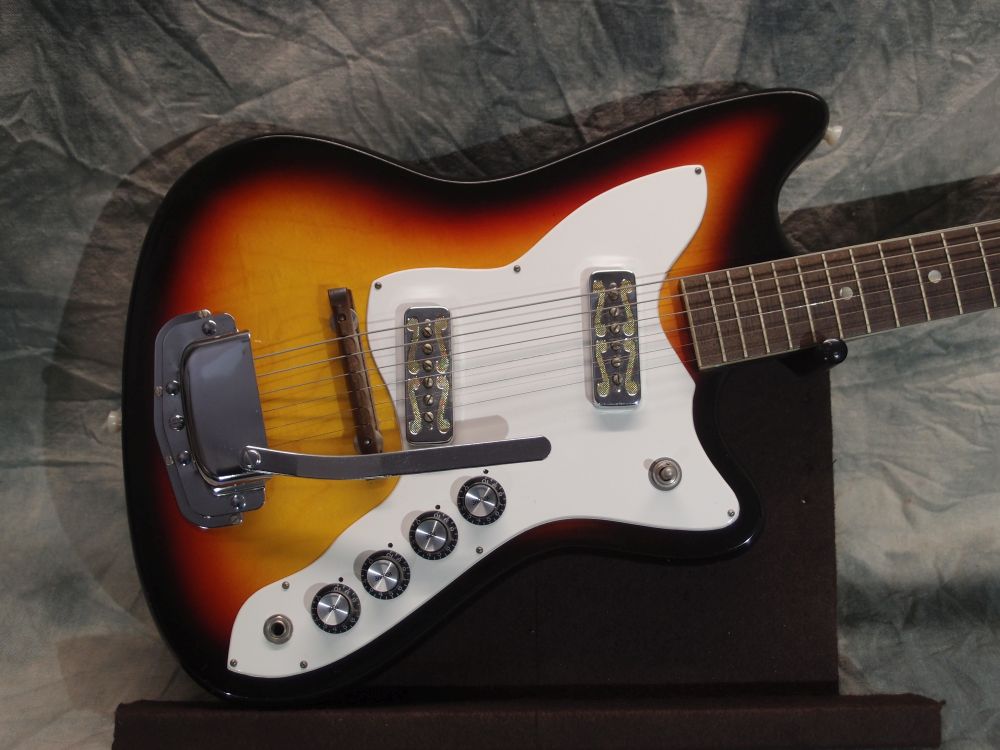
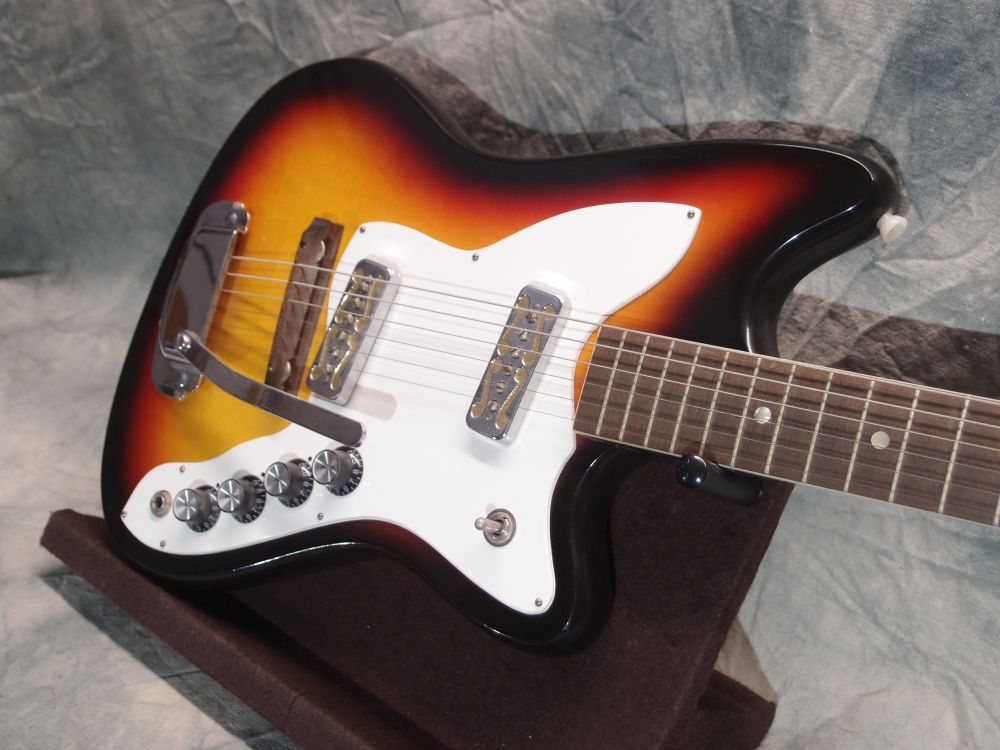
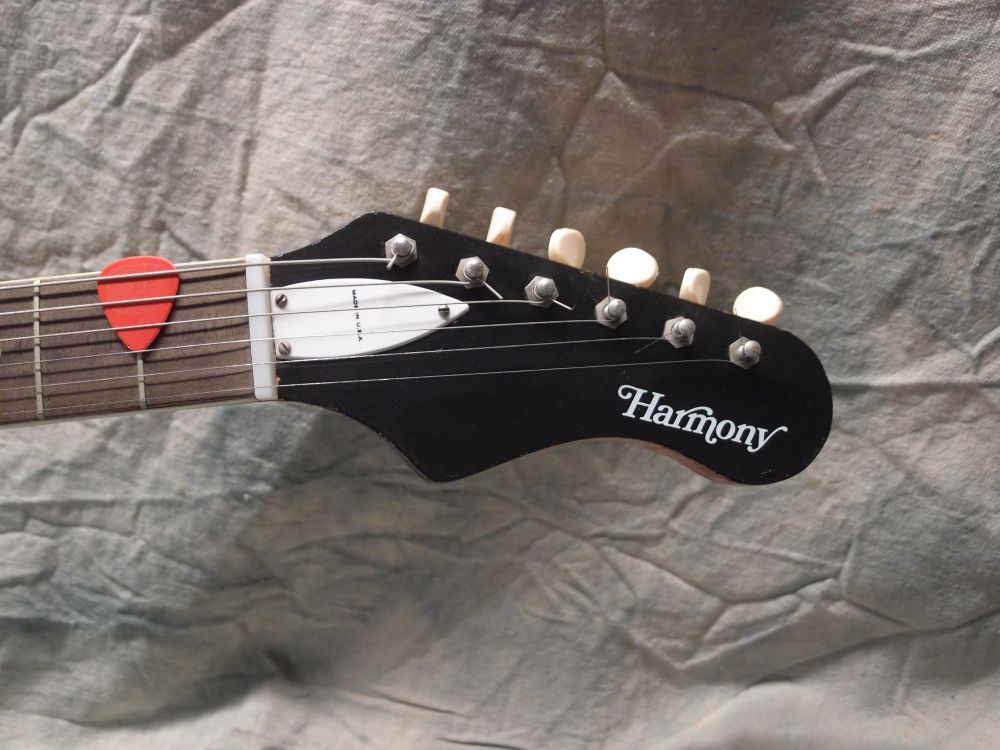
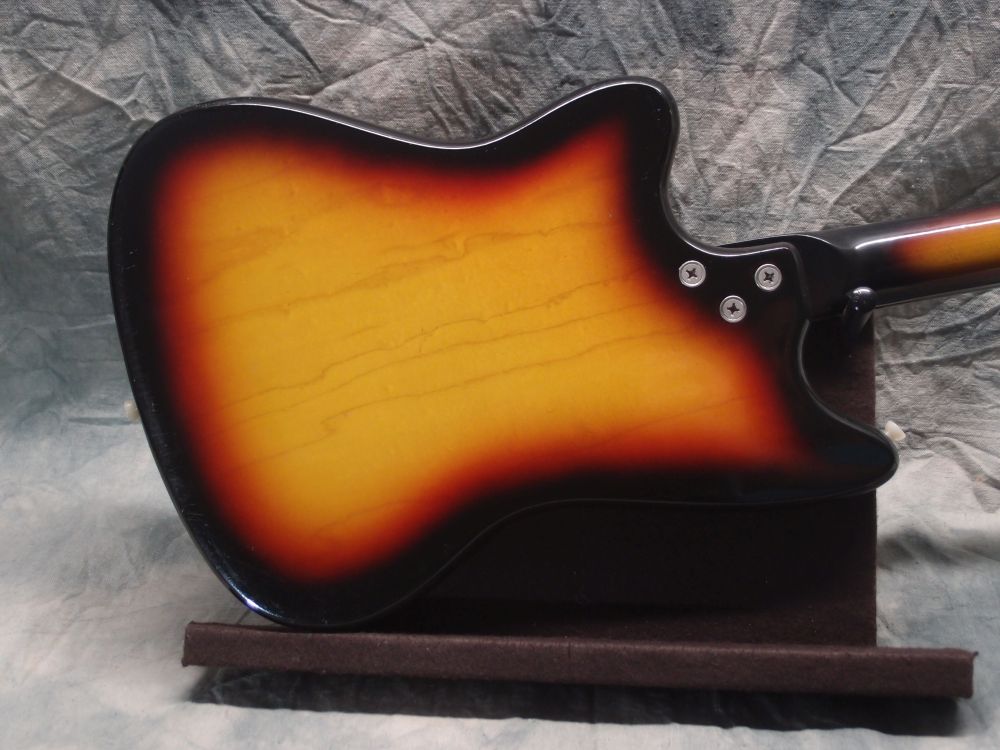
This pretty little thing is a Harmony H617 Bobkat. The H-bodied series of guitars, originally known as the Silhouette, began in 1963 and ended in 1973. This one is from 1972 or 1973. Harmony built a number of guitars for Sears under the Silvertone name, at first as a step up from the Danelectros, and ultimately replacing them. See the Silvertone 1478.
More: Harmony H617 Bobkat ...
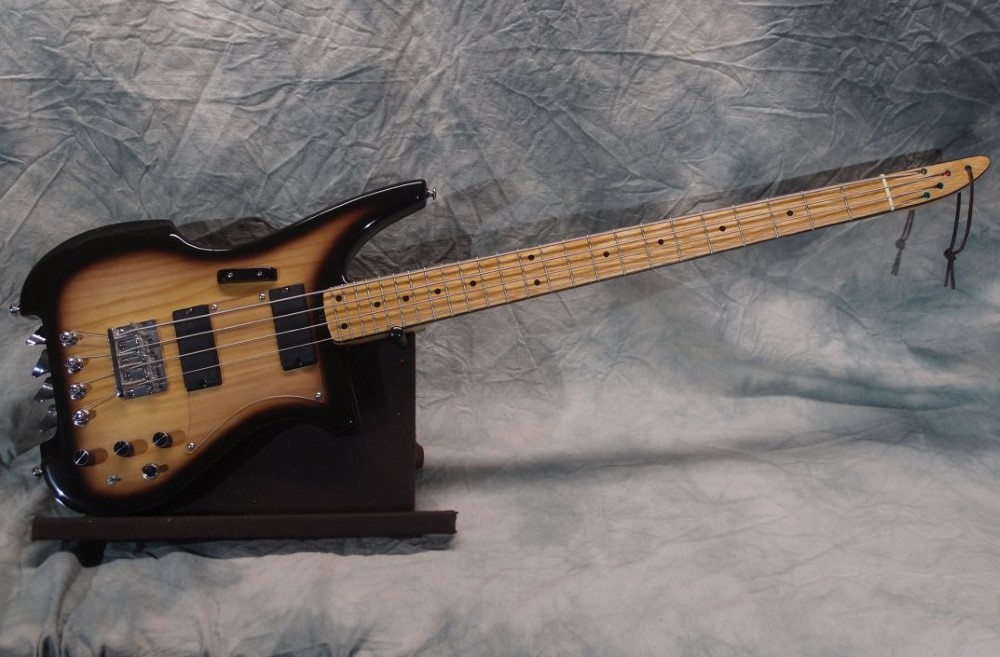
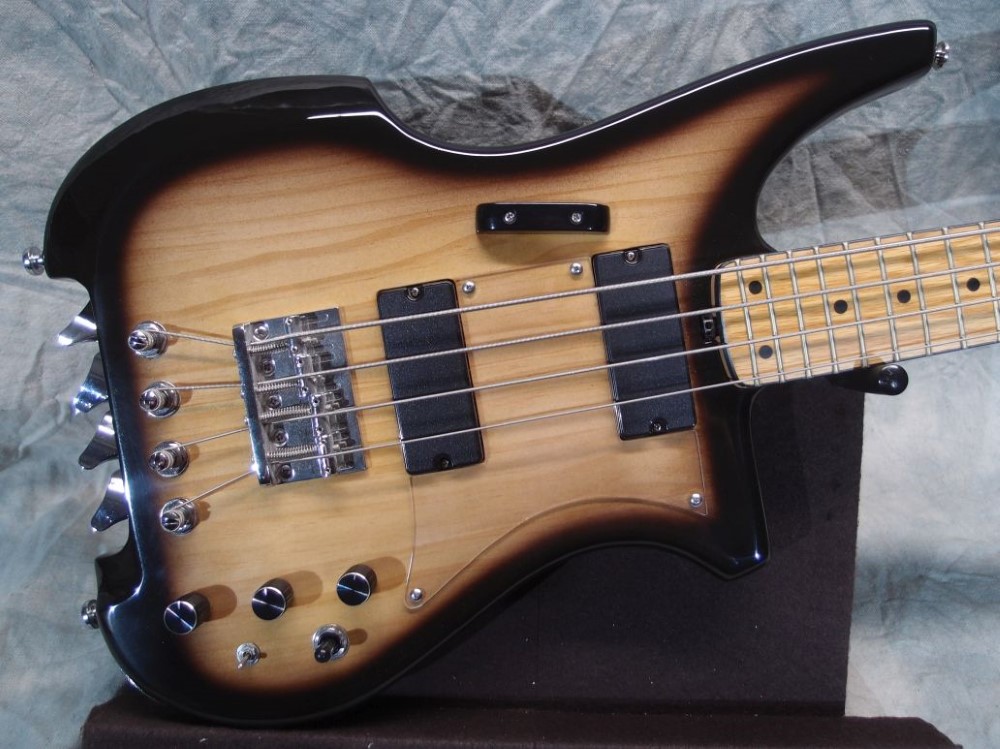
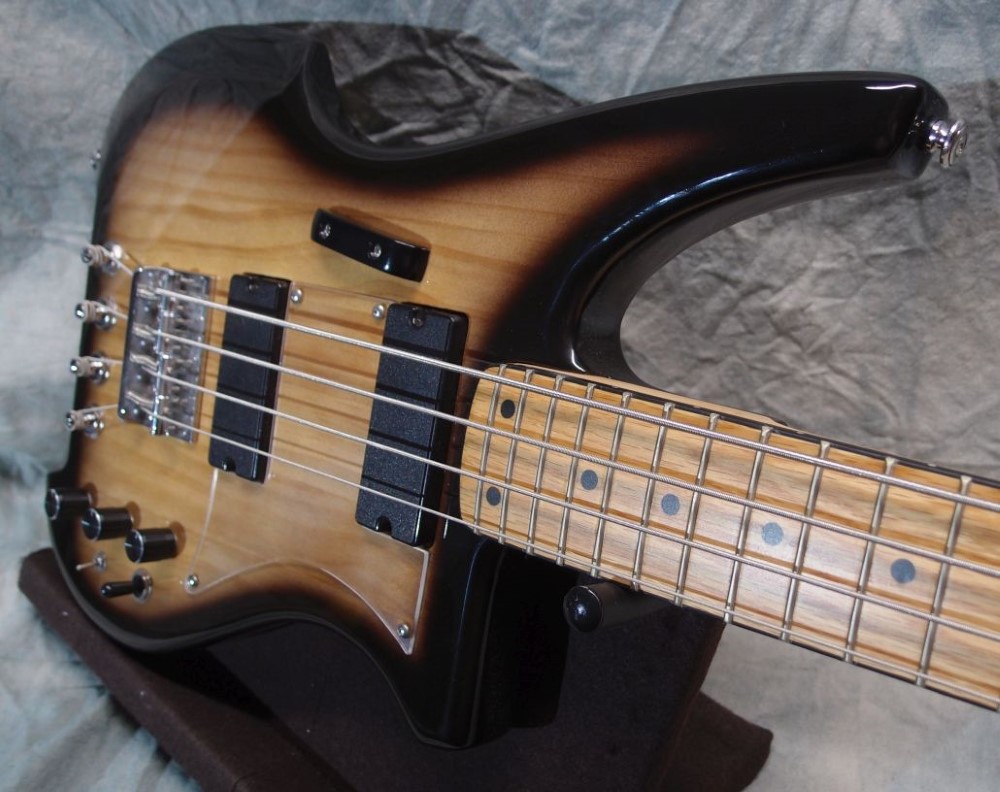
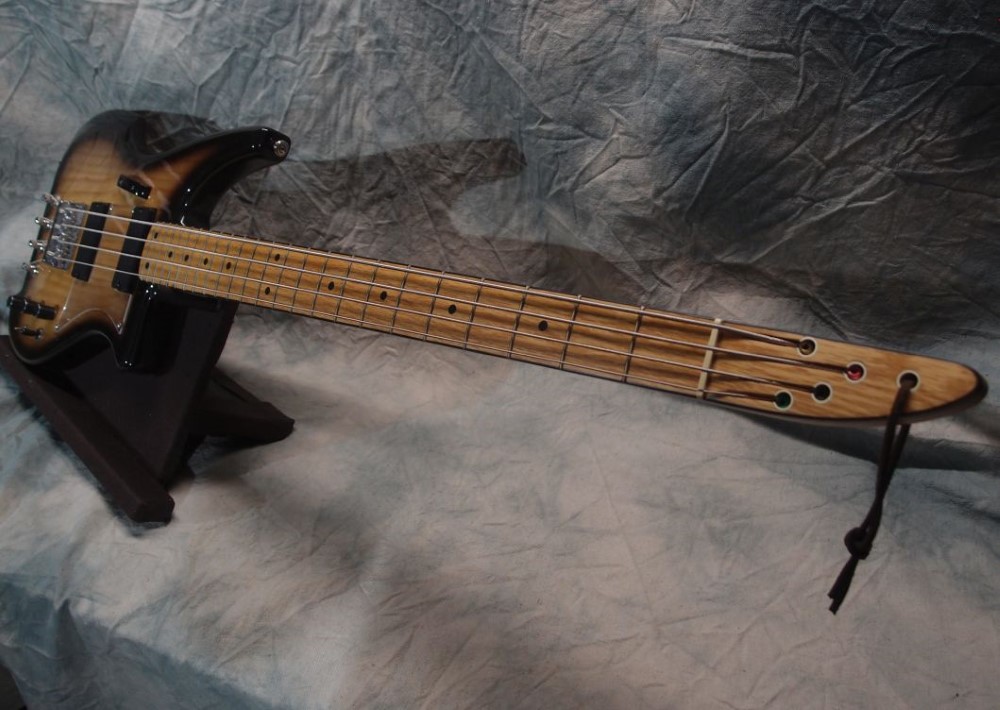
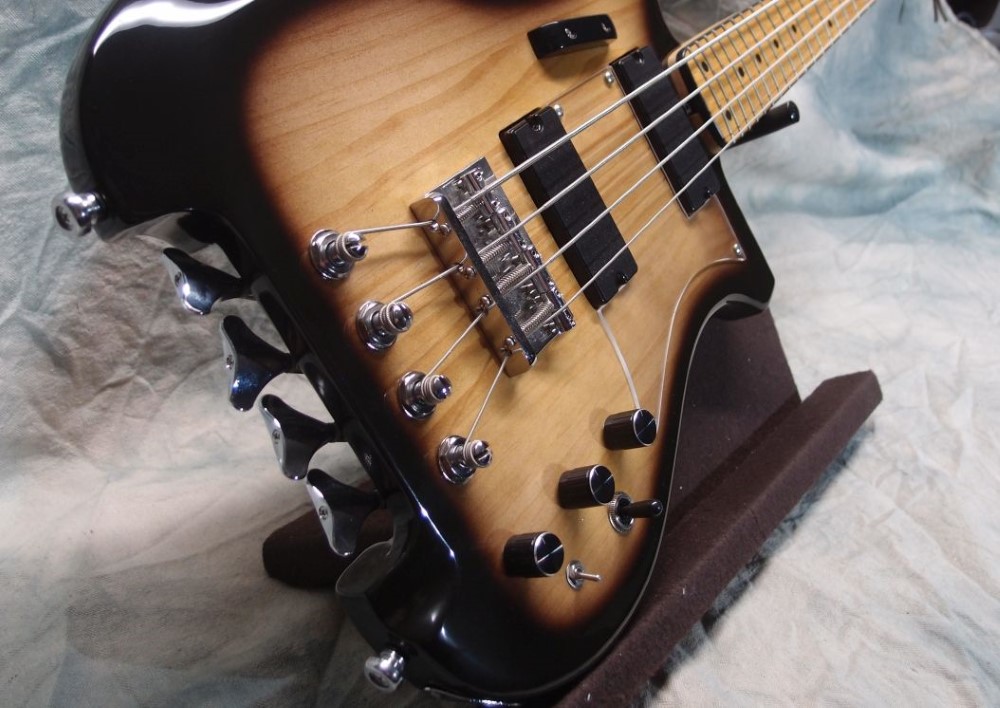
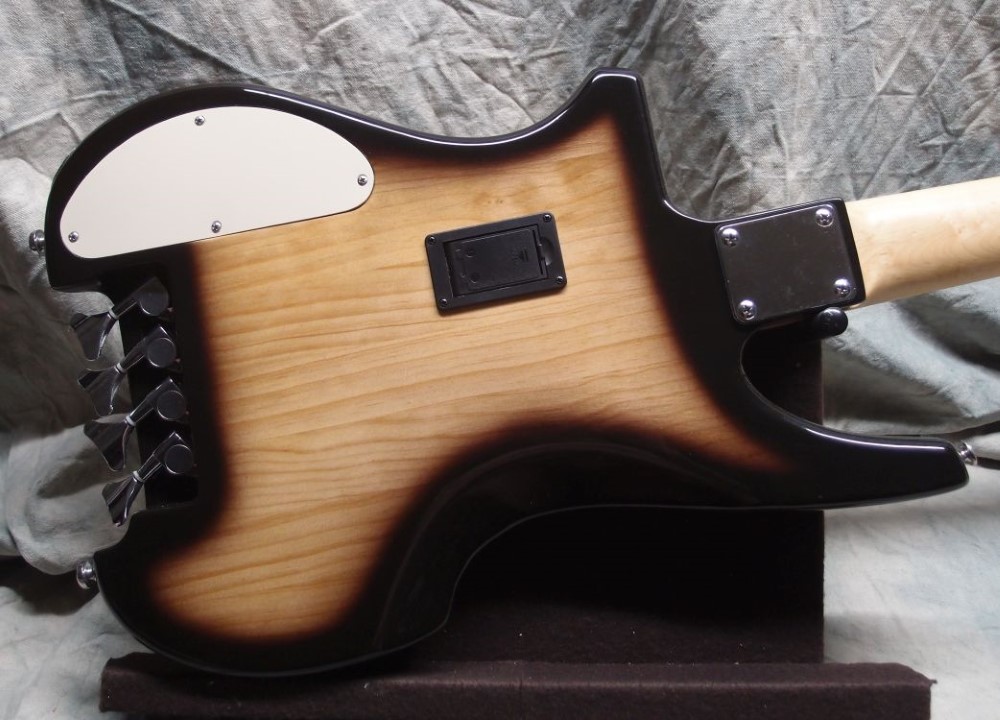
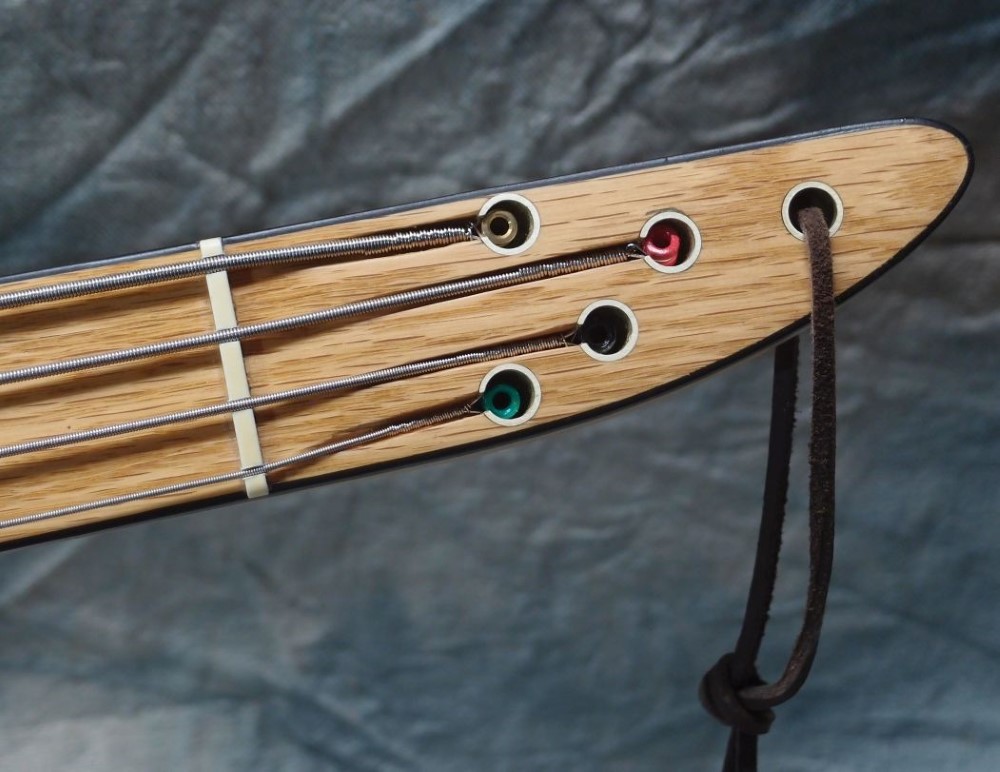
Sort of like a Kubicki, but not really.
More: Kubicki Factor Bass ...
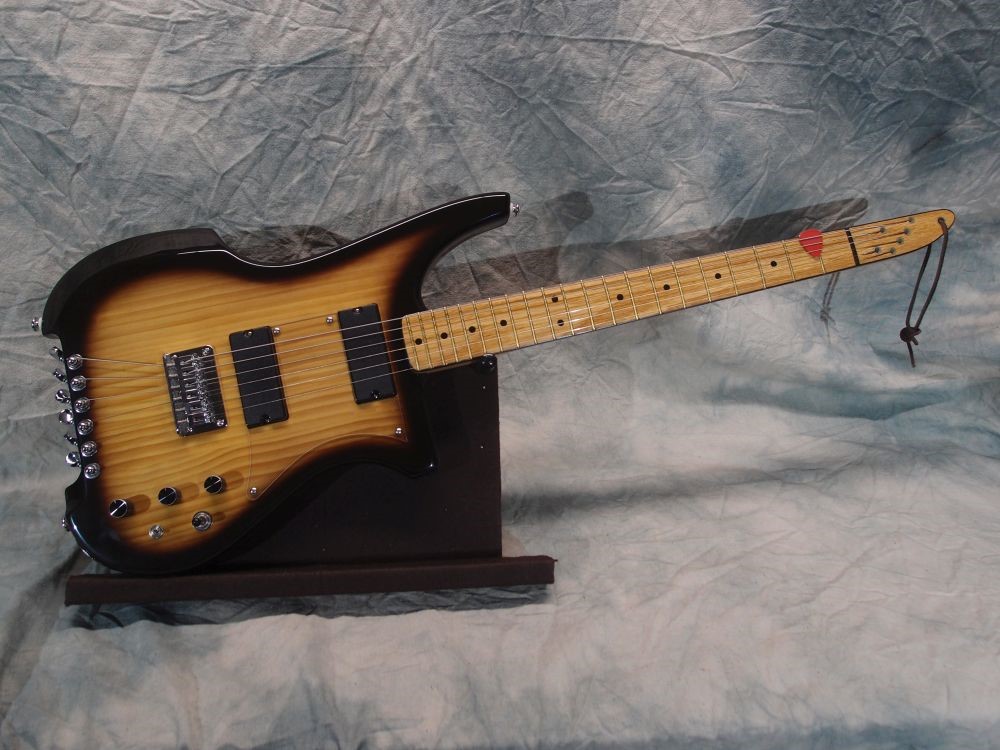
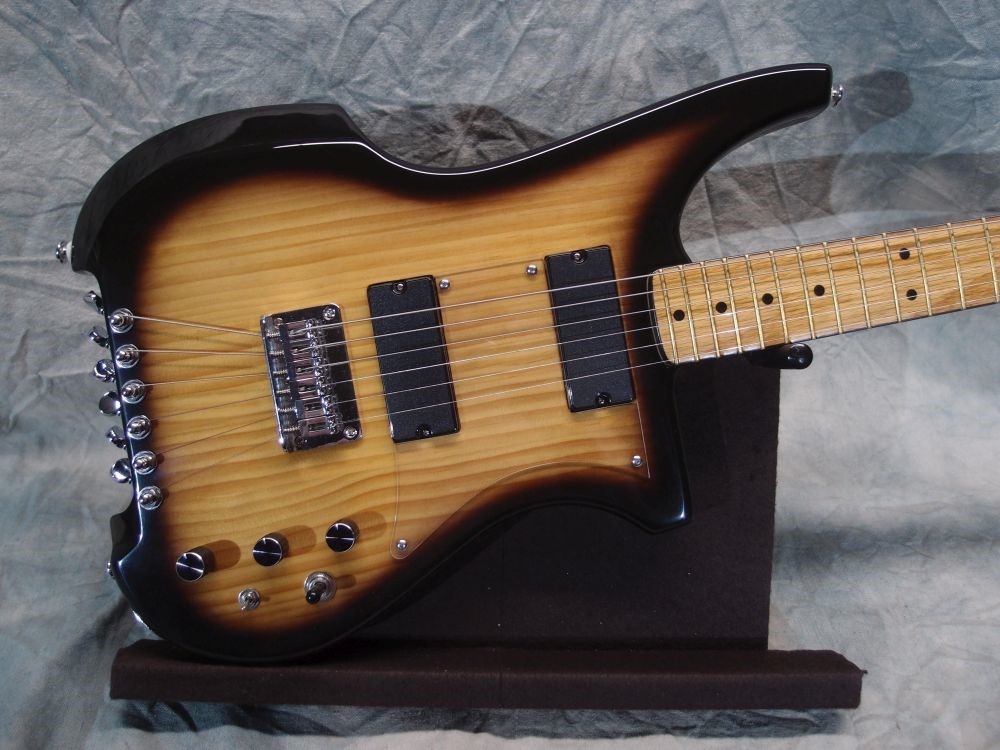
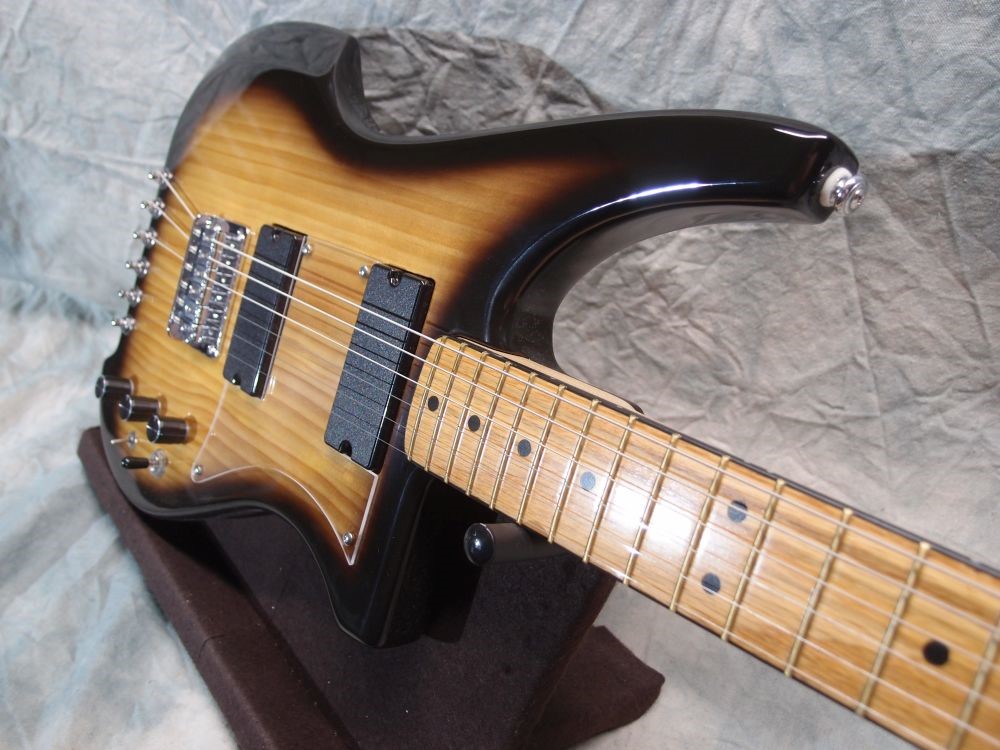
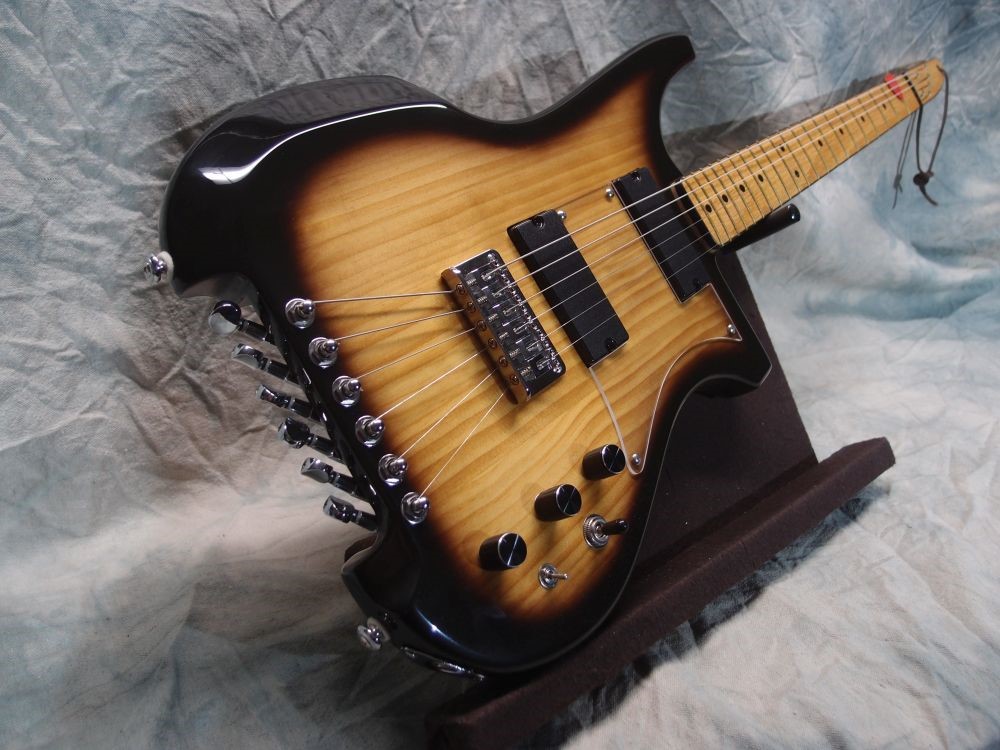
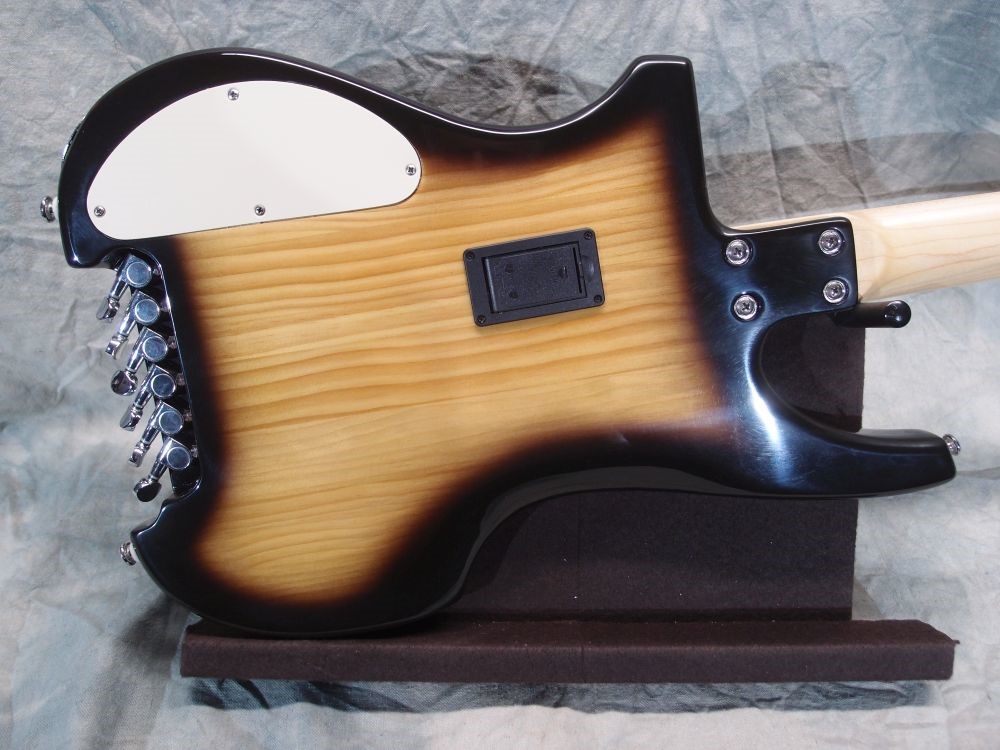
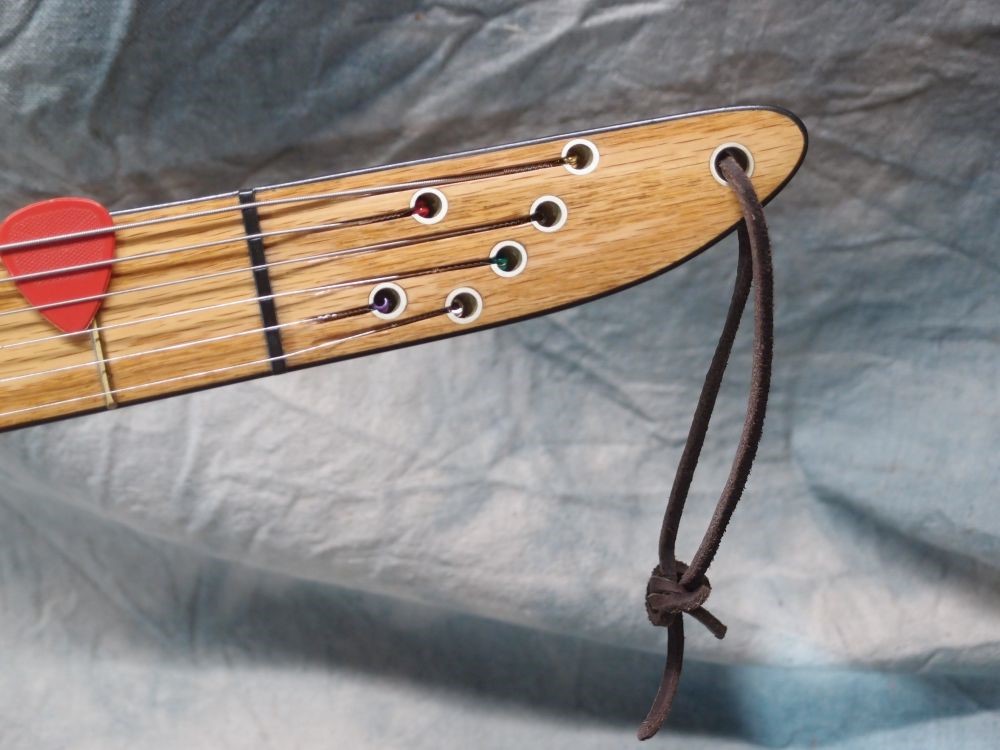
I was so pleased with the bass that I thought I'd try a guitar. This is a little more complicated, as there are six tuners rather than four, but it worked out well. The battery is for an Artec tone control that I wanted to try. More later ...
More: Kubicki Factor Guitar ...
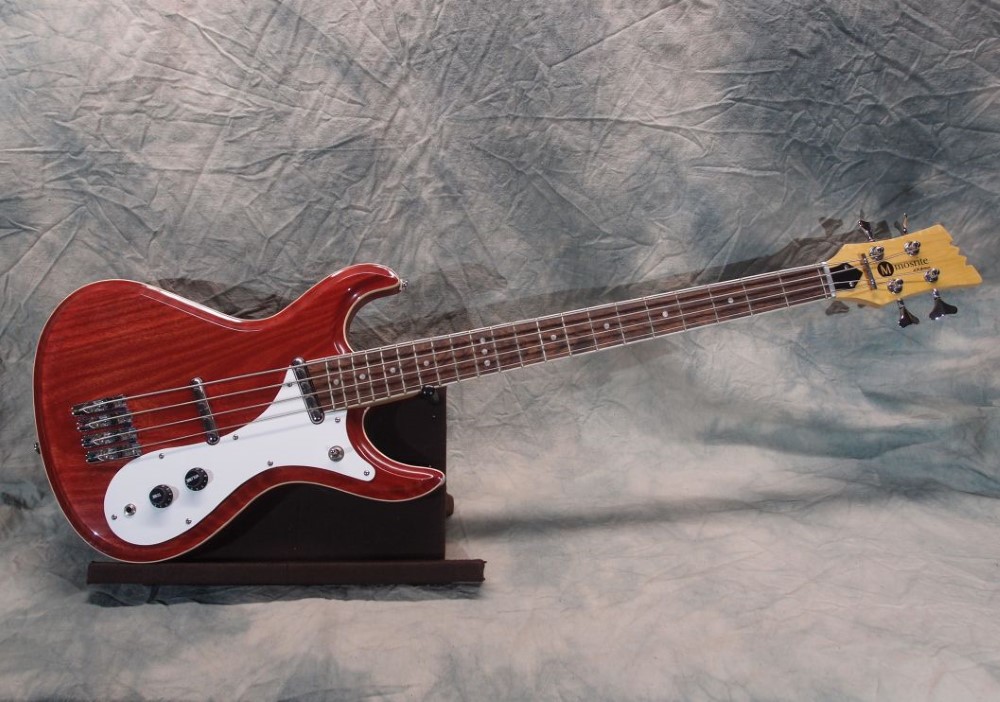
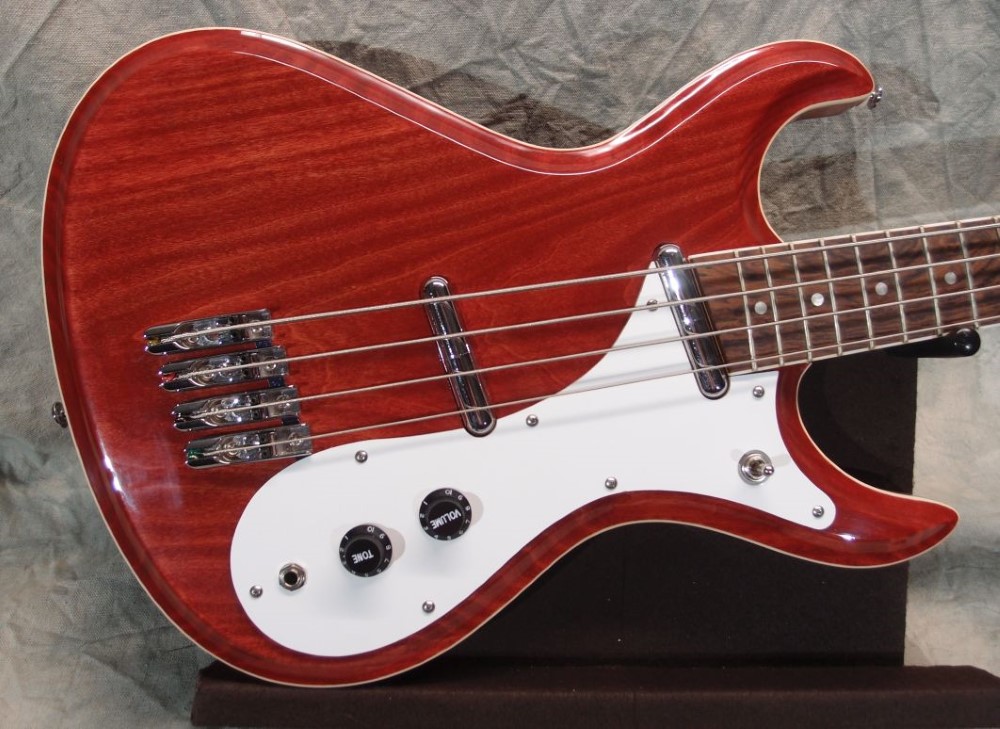
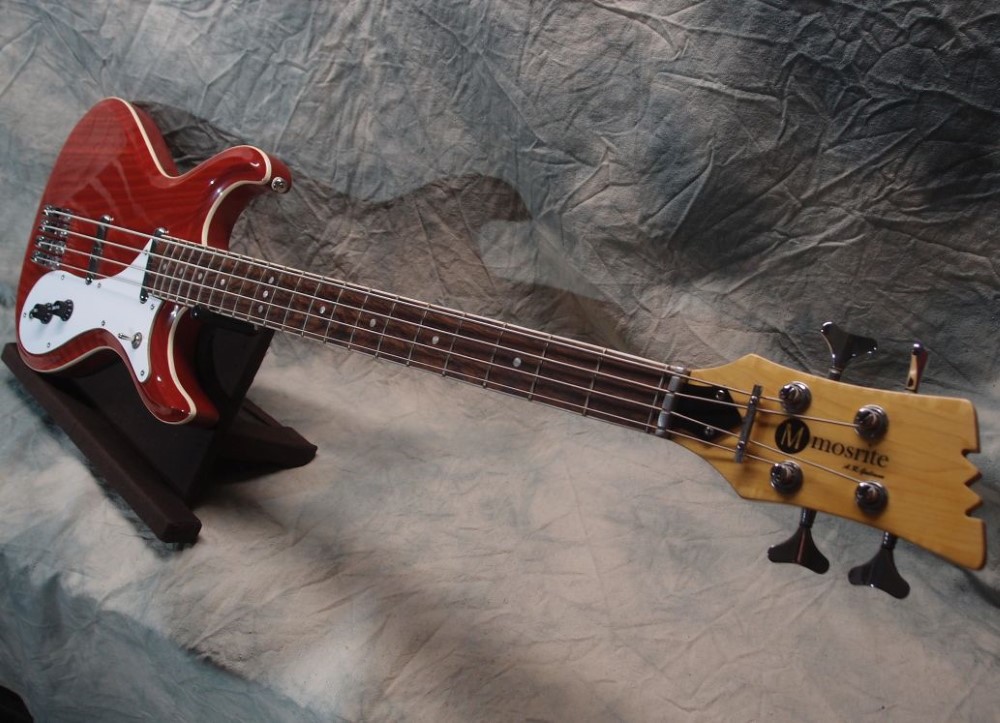
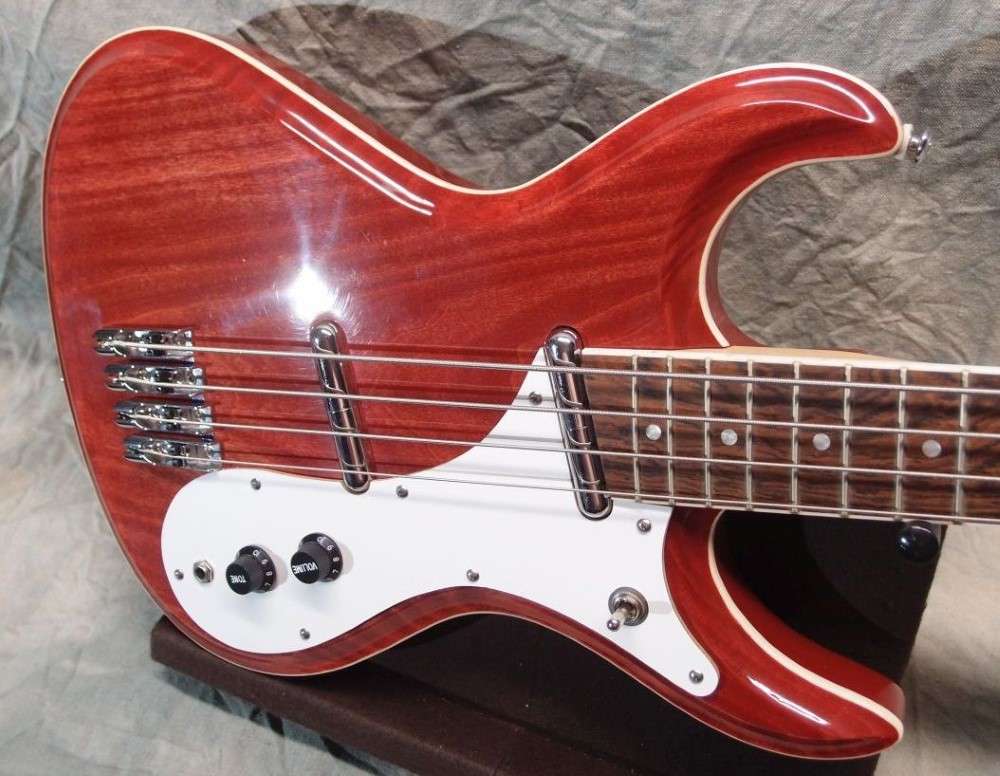
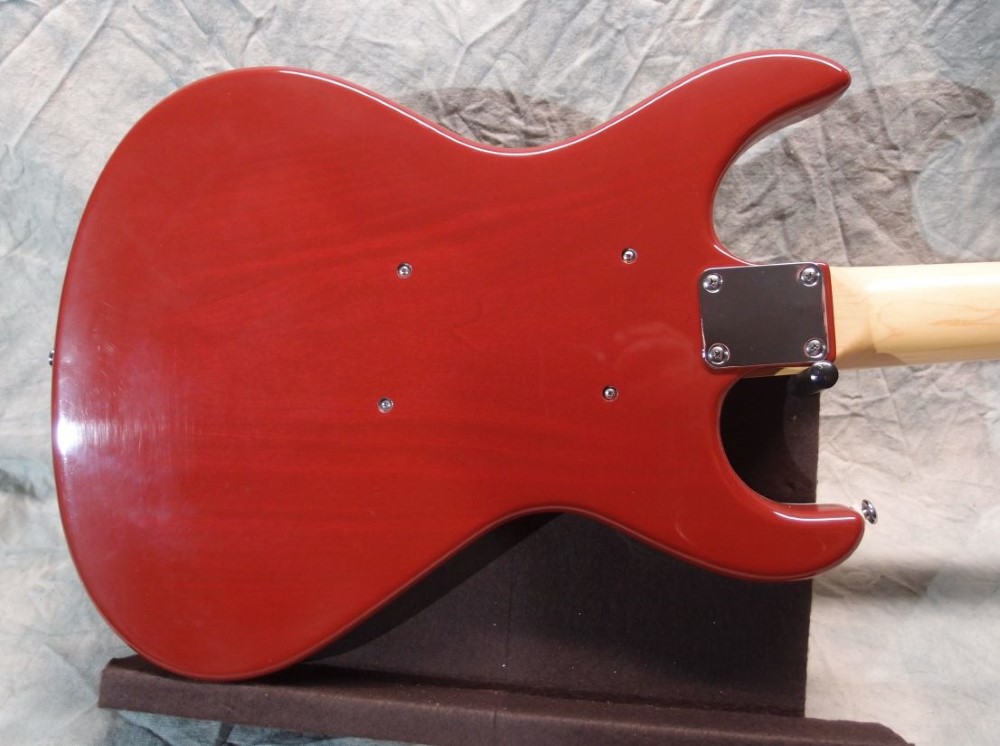
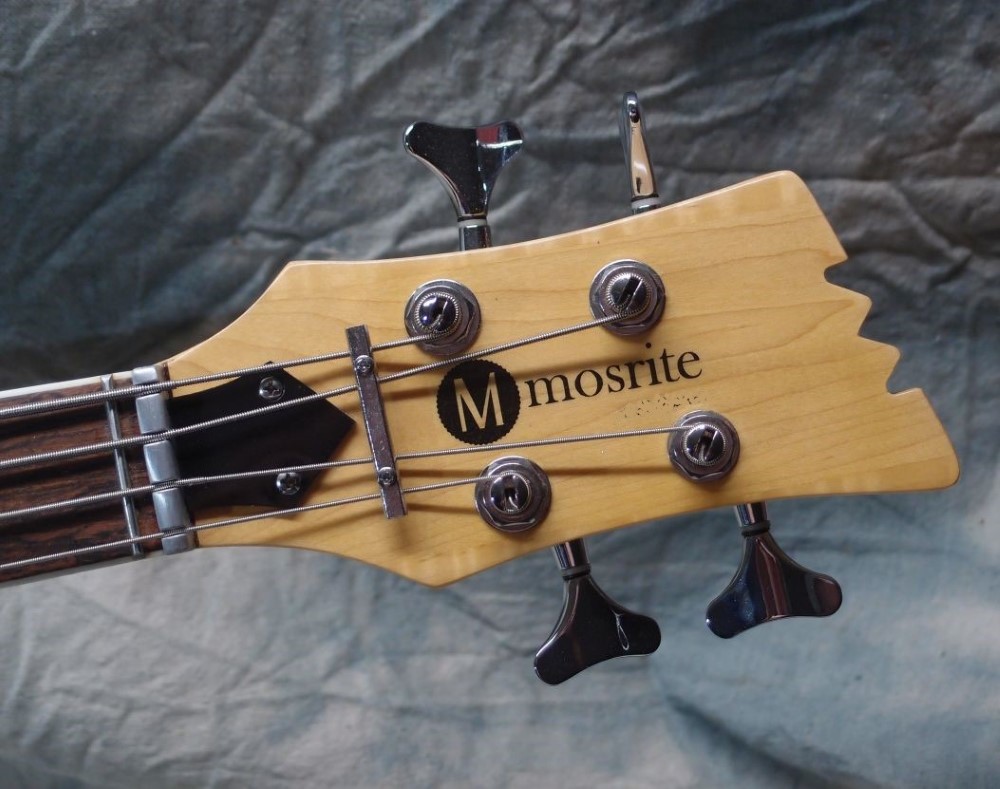
This one went through a long and torturous build process over almost two years. All I can say is don't believe the "advice" you find on talk_ass. However, in the end, it turned out to be a pretty nice instrument.
More: Mosrite Bass ...
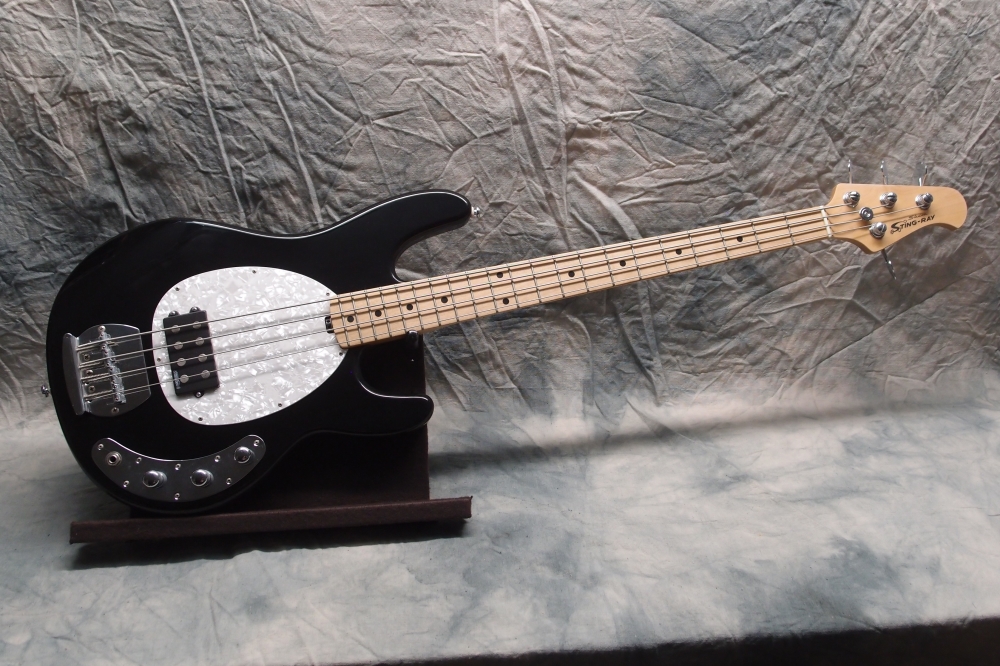
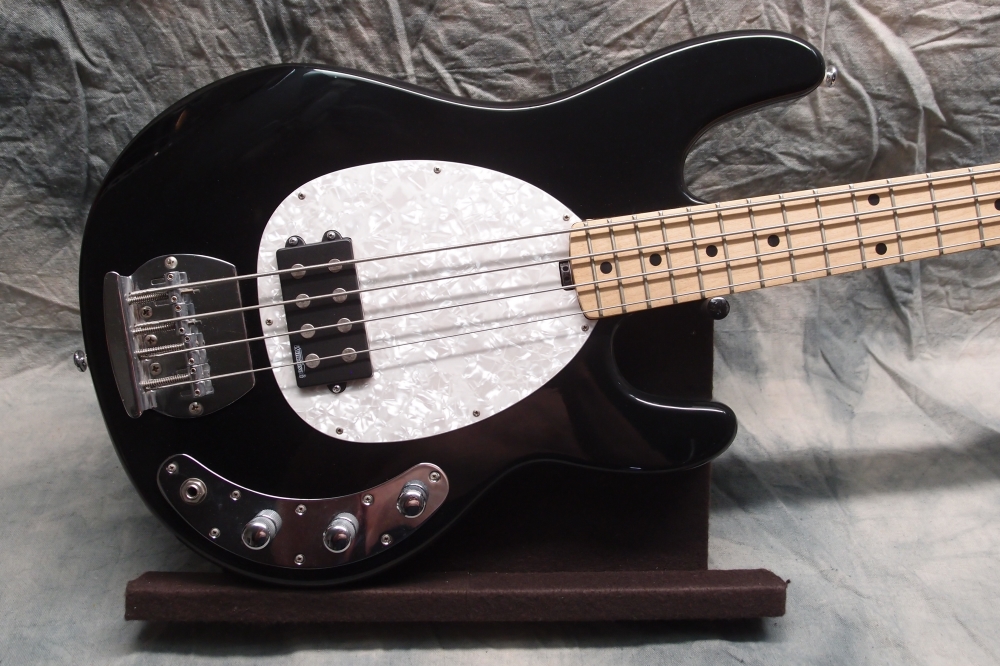
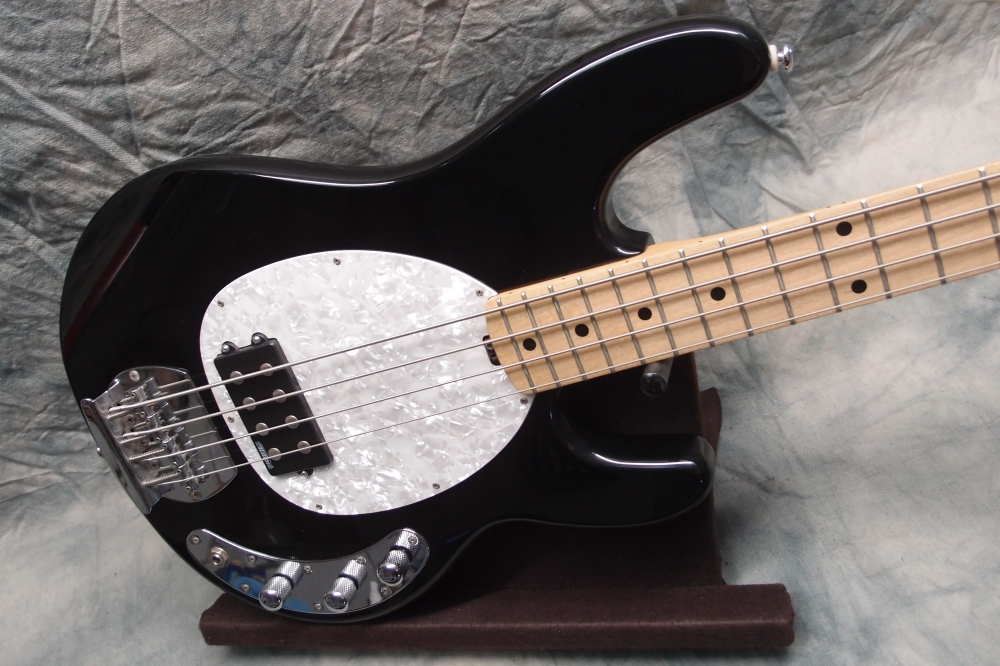
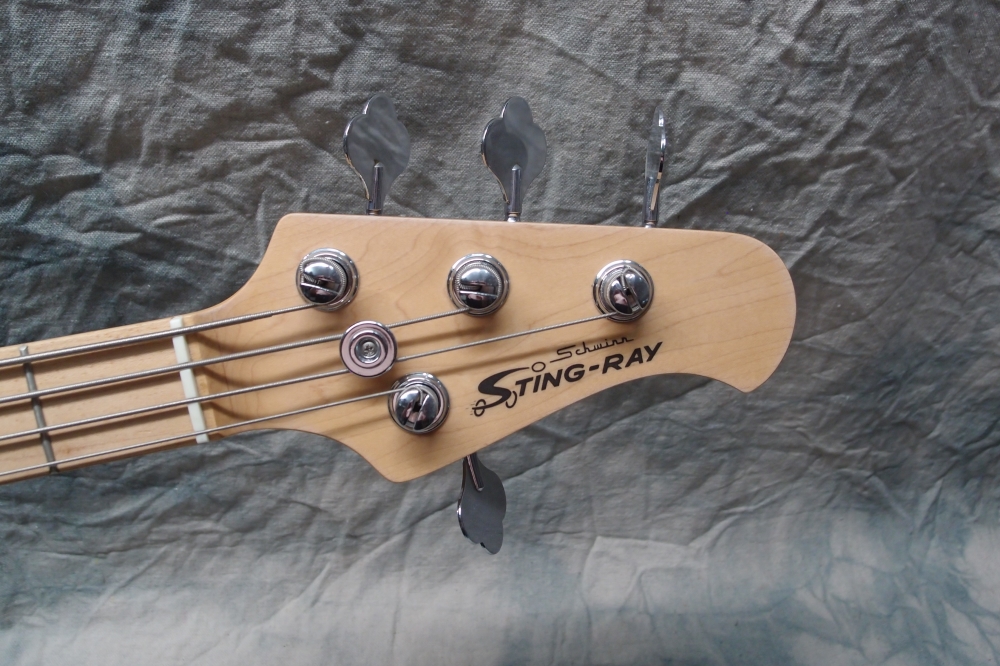
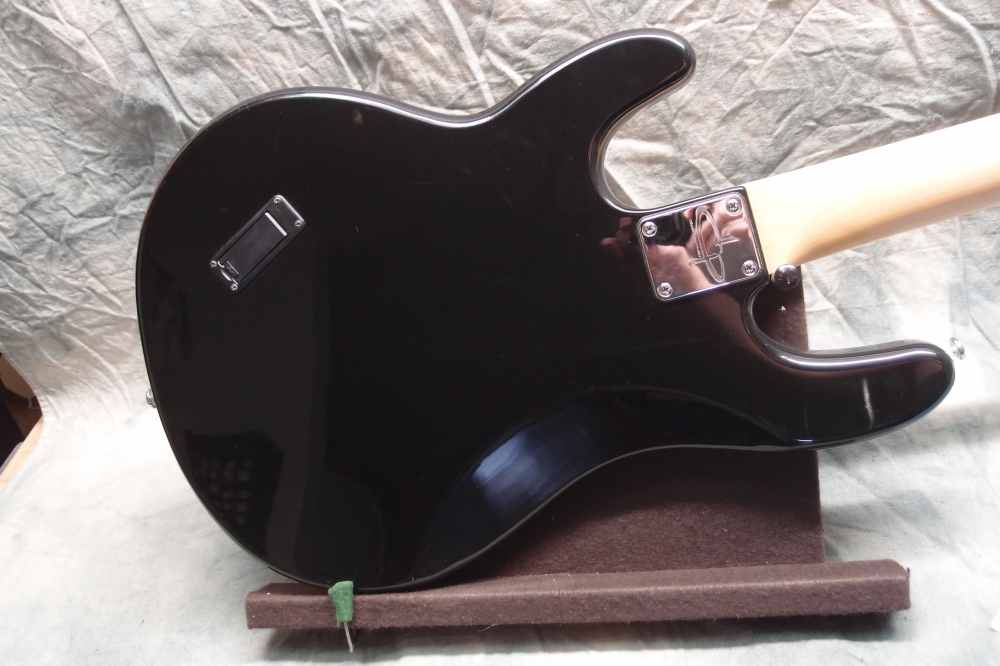
This OLP Stingray was one of the first basses I ever modded heavily. I routed a battery and a second pickup cavity, and did all sorts of experiments on it, before returning it to it's original single-pickup configuration, but with upgraded active electronics and pickup, and a nice new pearl pickguard.
More: Musicman Stingray Bass (OLP) ...
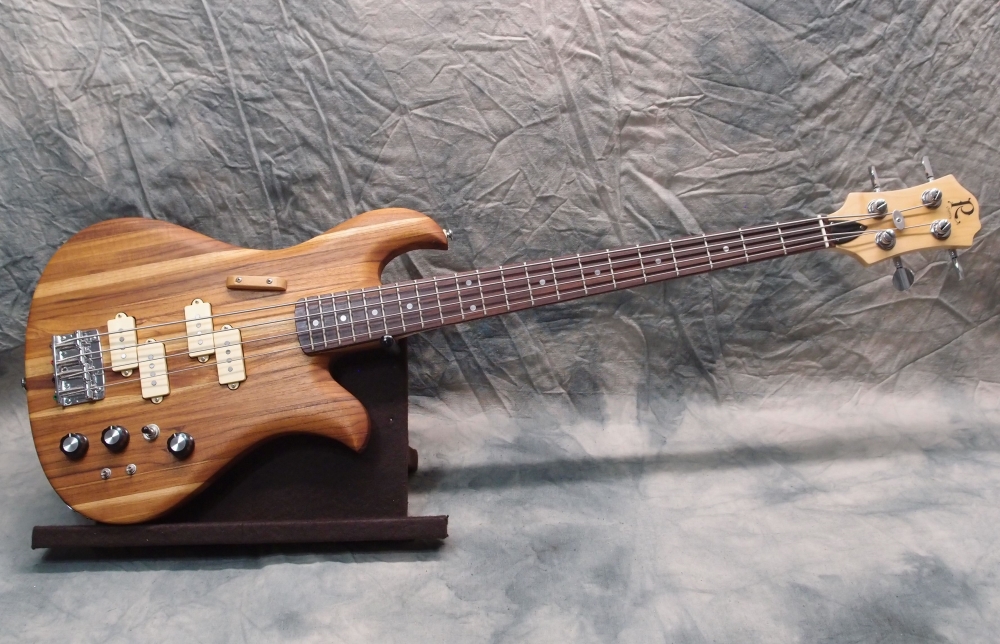
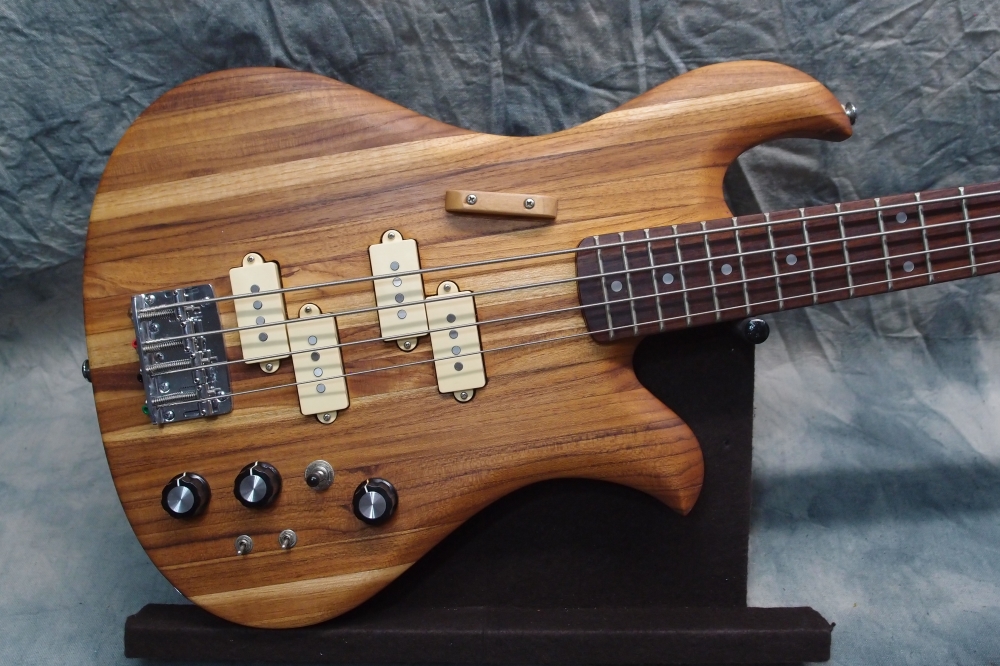
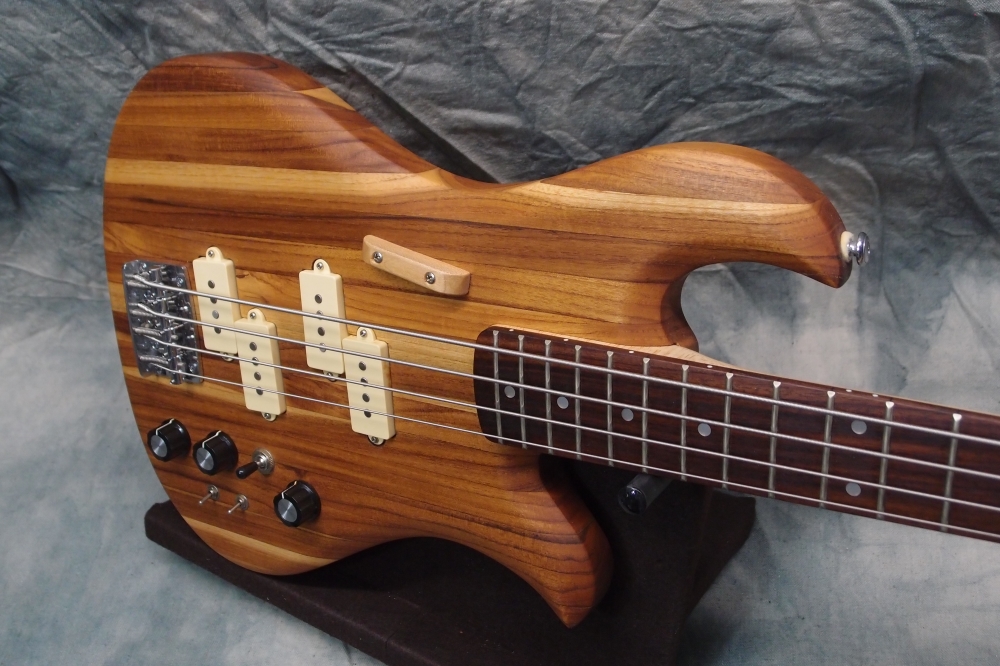
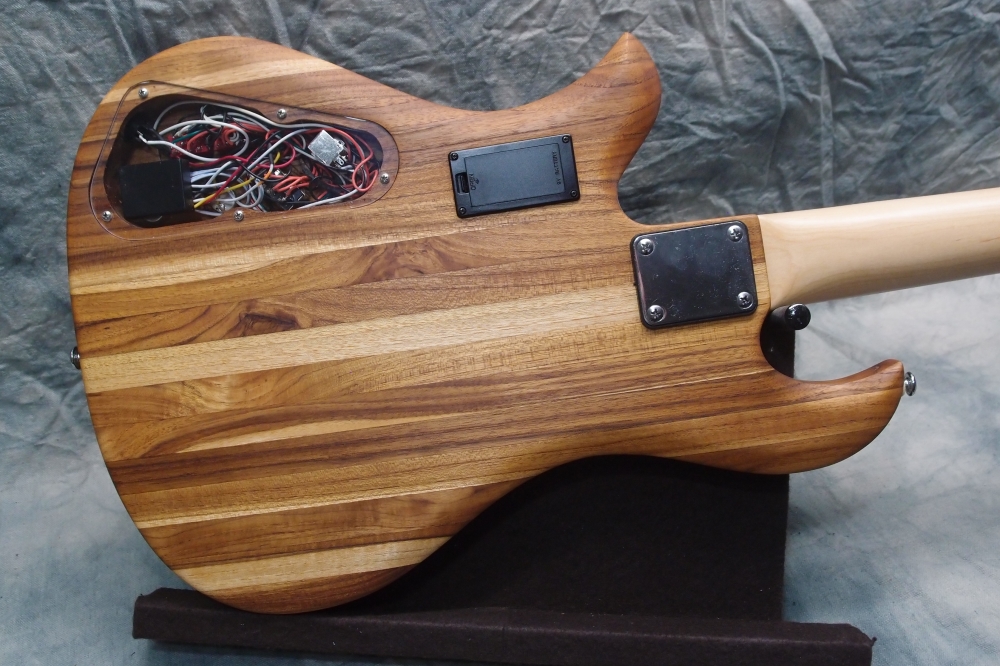
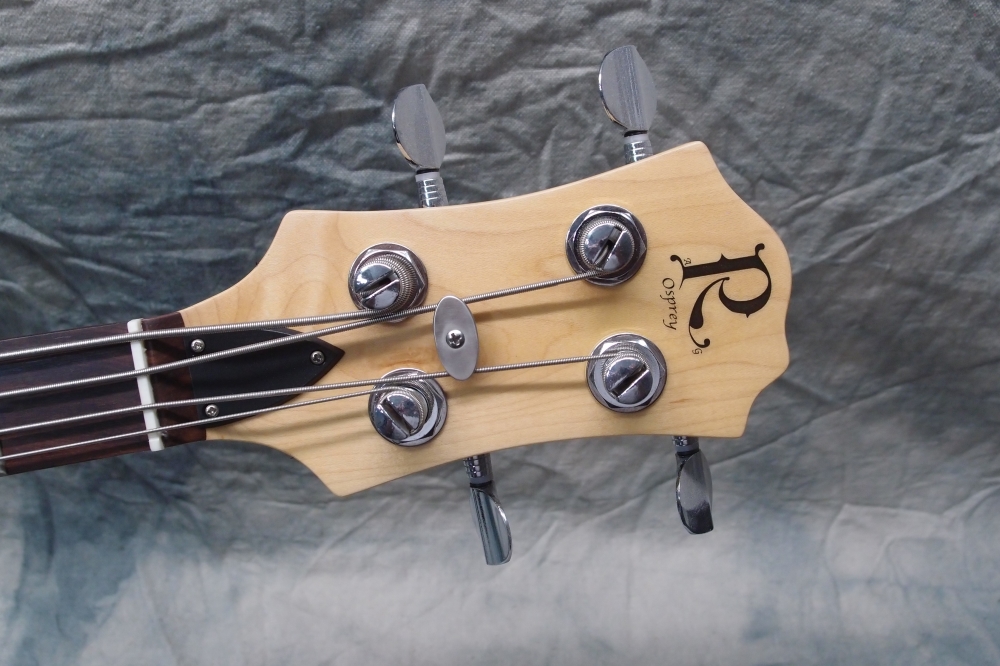
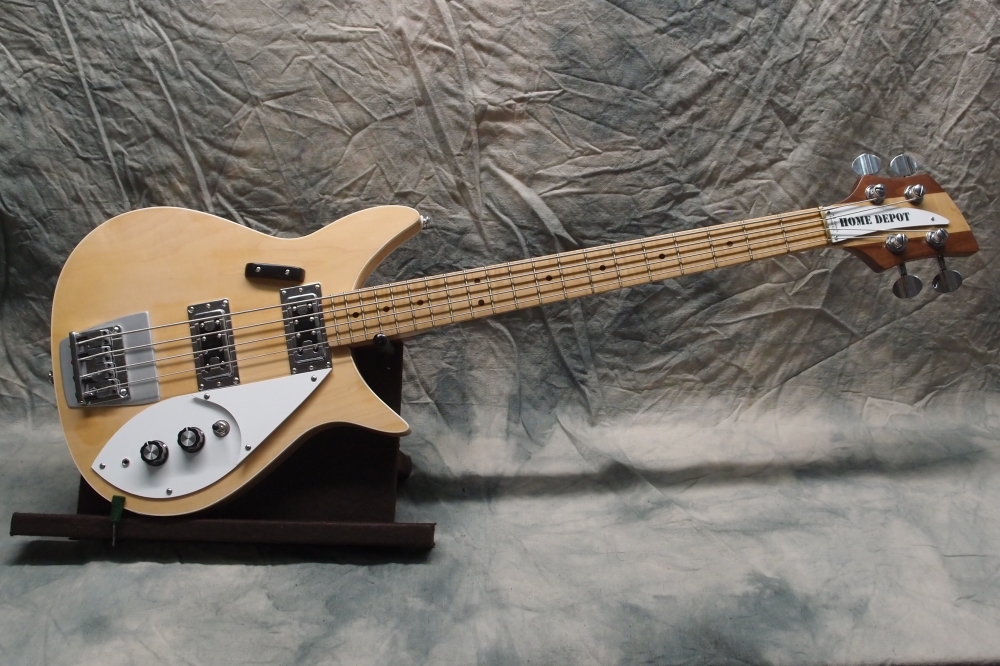
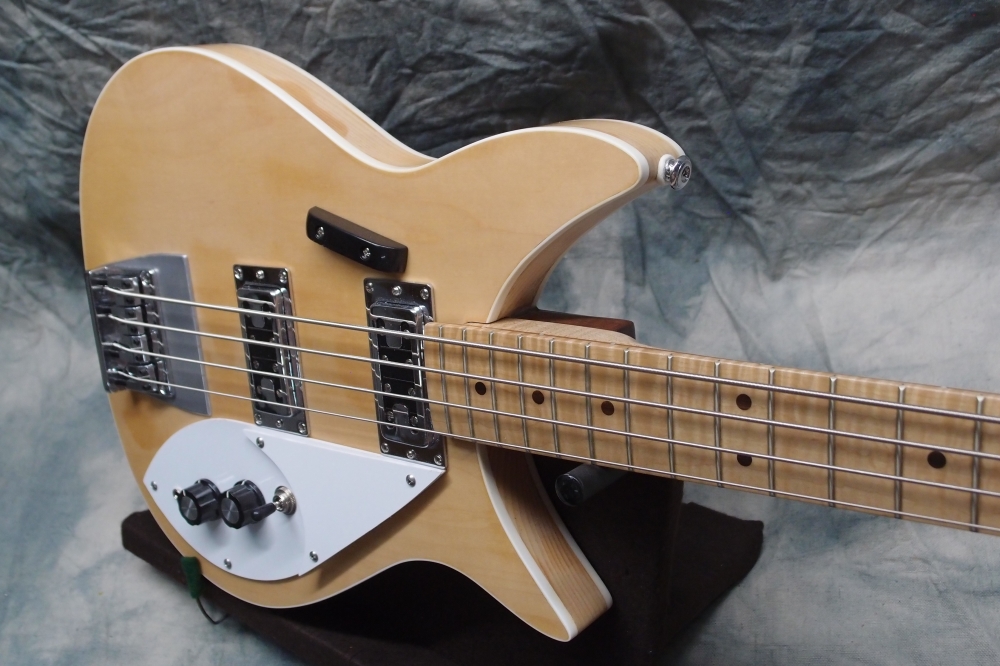
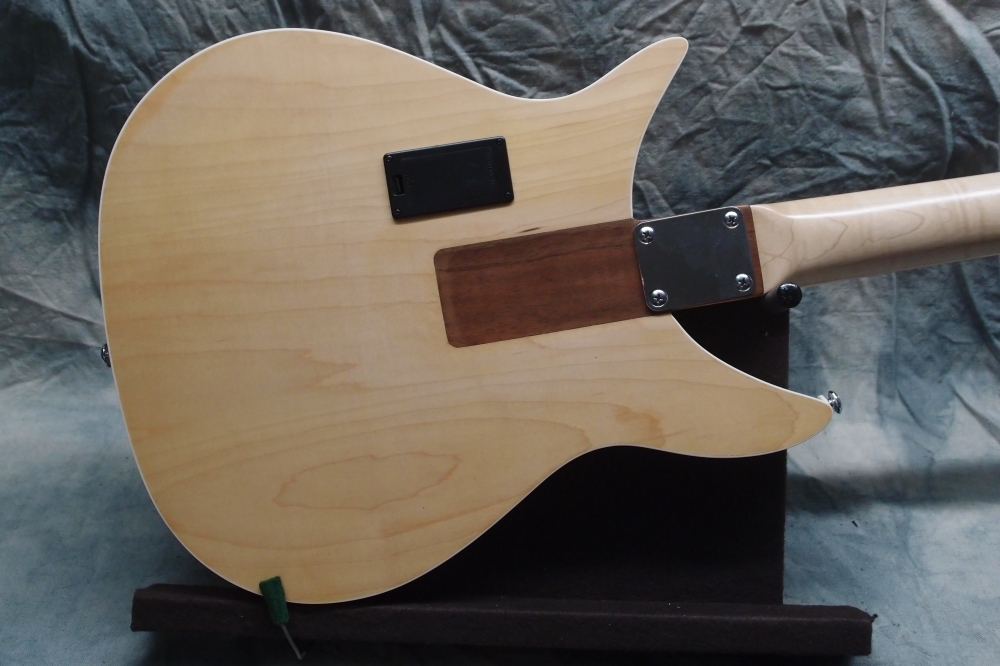
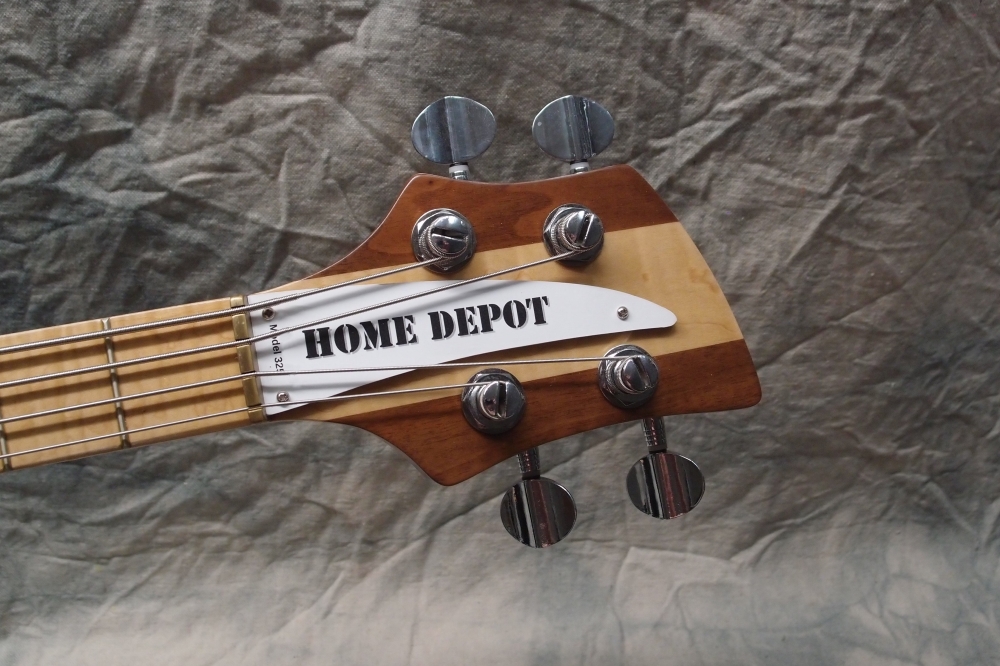
This beautiful instrument was built from a teak cutting board that I got for free from Home Depot for review. 32" Eden neck, active electronics. Teak is hard enough for a simple oiled finish. This one was built with a minimum of tools, mostly by hand, to show that it can be done and how.
More: Osprey Bass (BC Rich Eagle) ...
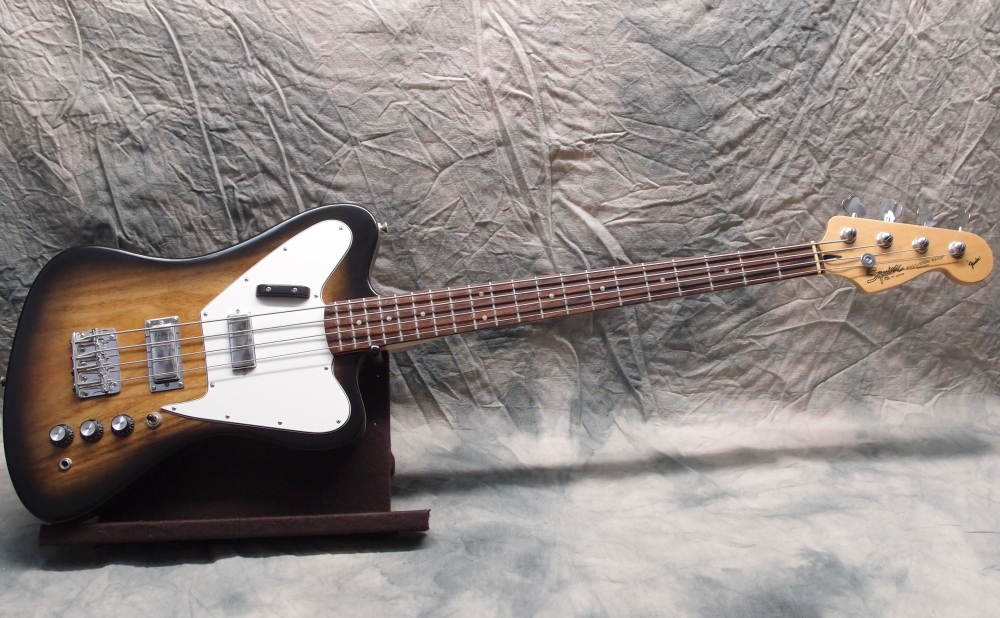
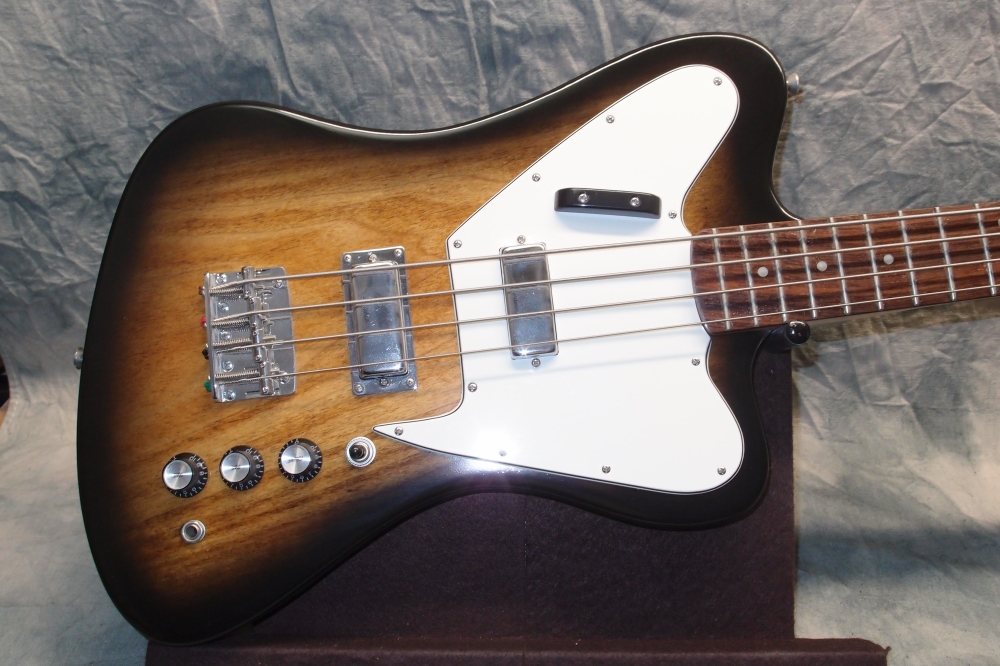
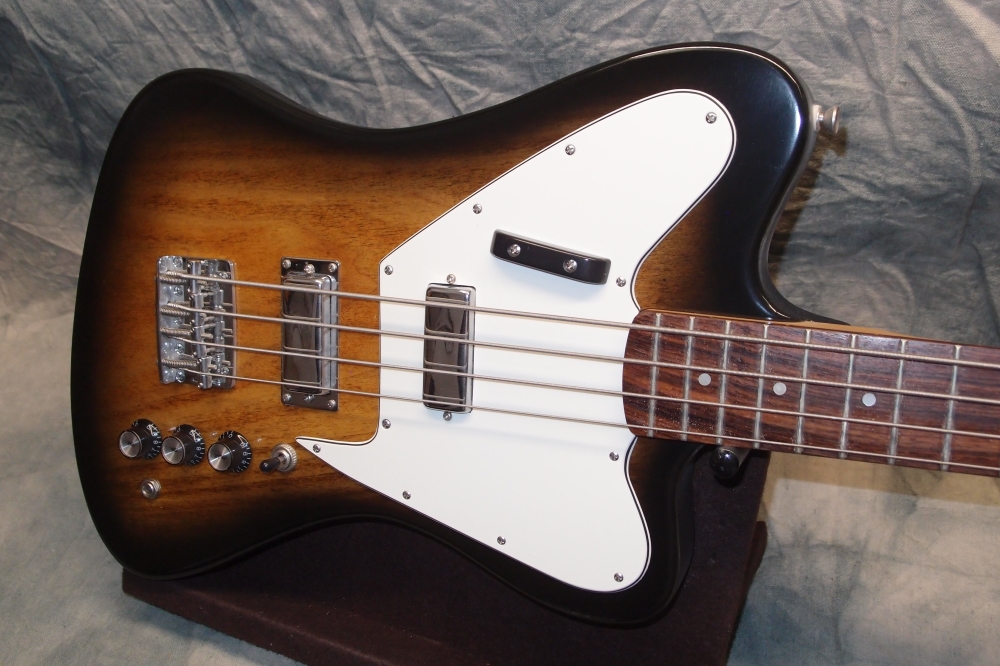
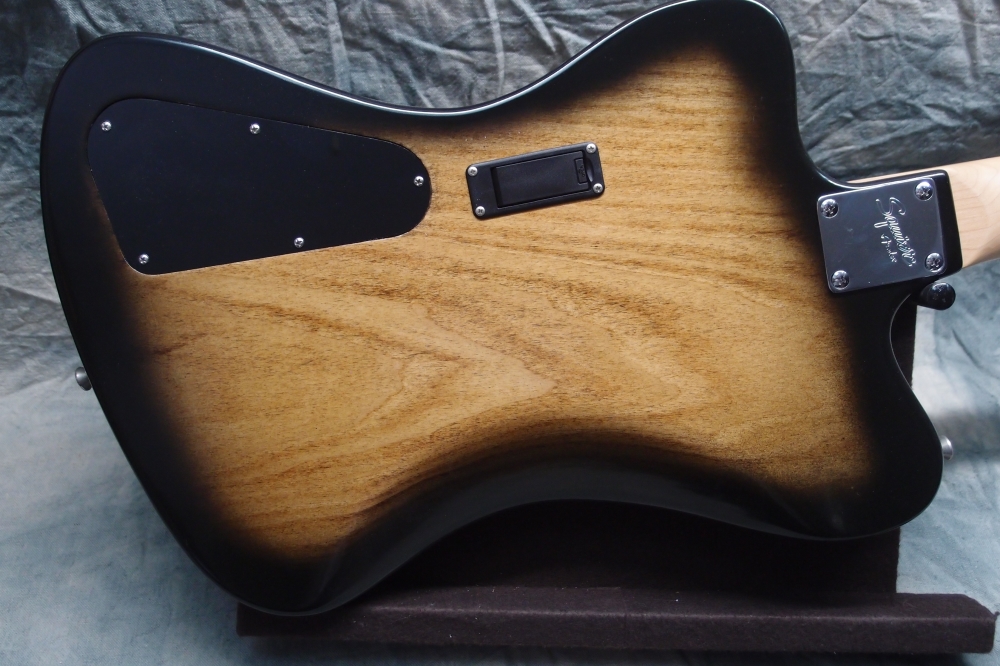
Solid poplar body, lightly stained and finished in polyurethane. Korean Squire neck, active electronics. Is it a reverse, or a non-reverse? Since this is a reverse of the original Thunderbird body ( more-or-less ) I say it is a reverse. If this is a non-reverse, then the original would have to be the reverse. Reverse of what? Makes no sense.
More: Reverse Fenderbird ...
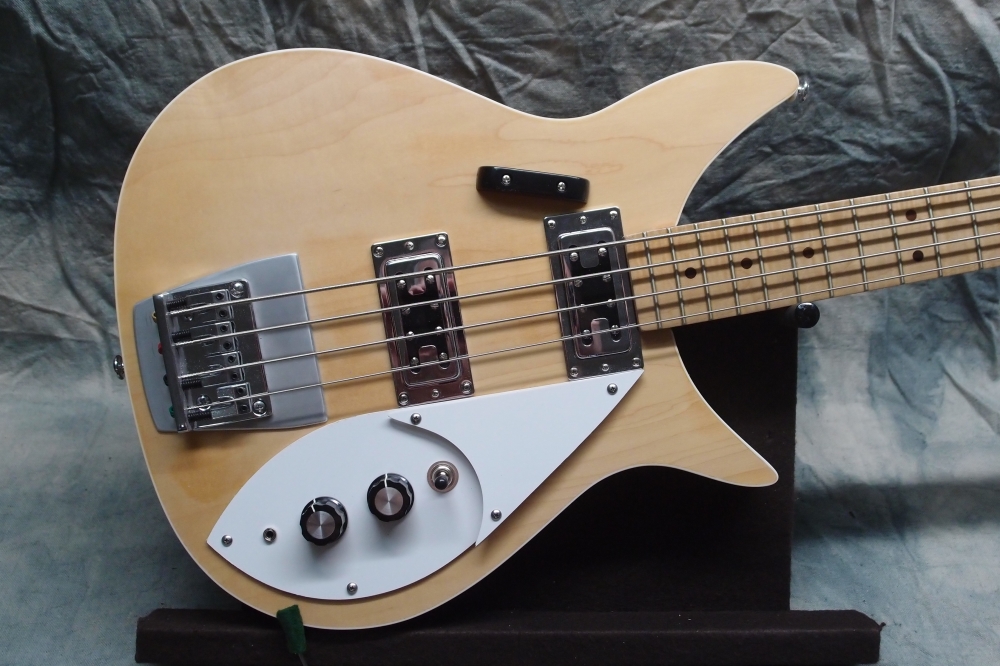
These were my first two tries at a 325 bass. Both are plywood over pine hollow-bodies. The one on the left - #1 - used an experimental neck mounting that I didn't like. The one on the right - #2 - suffered a router mishap. I took all the good parts and built the solid-body, and both of these spent years on the scrap heap.
More: Rickenbacker 325 Bass 1 ...