I'm not averse to using a bought neck for a project. Generally, I will not build a neck that I could buy instead and modify to suit my project. There are many good sources for necks online.
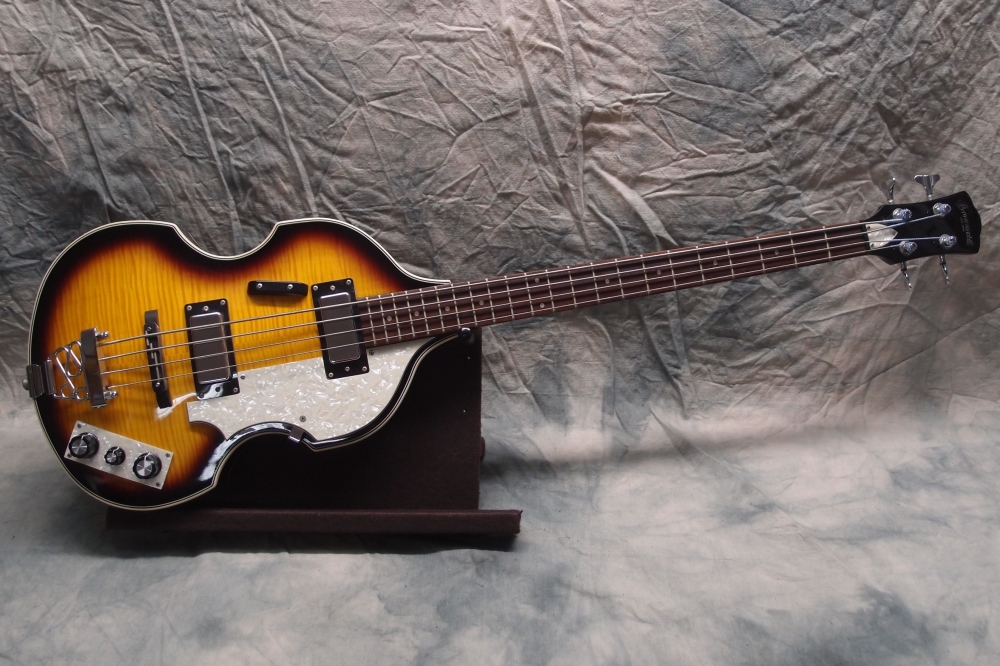
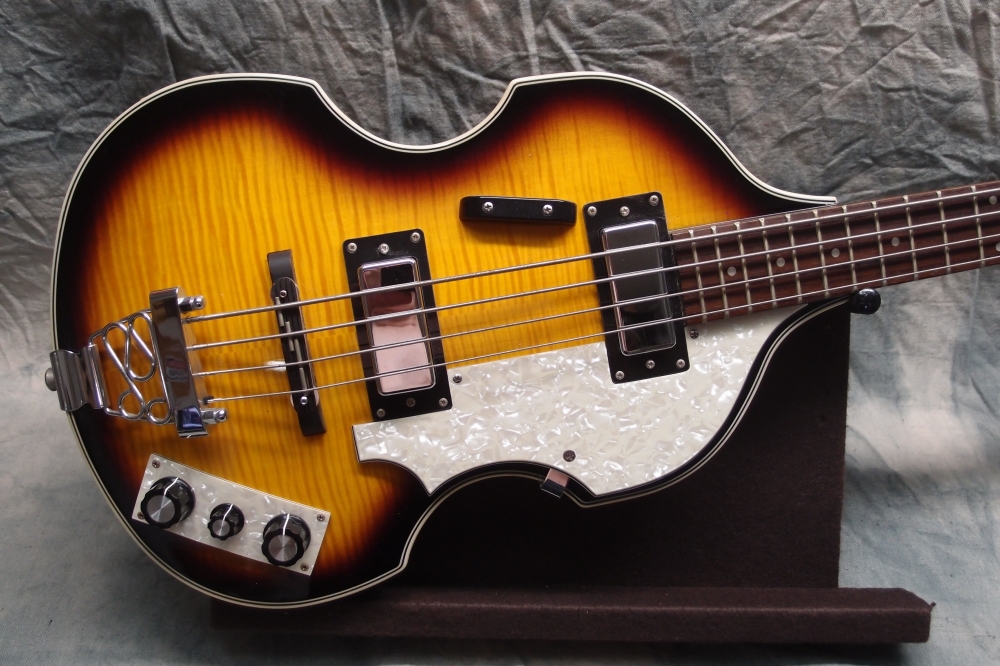
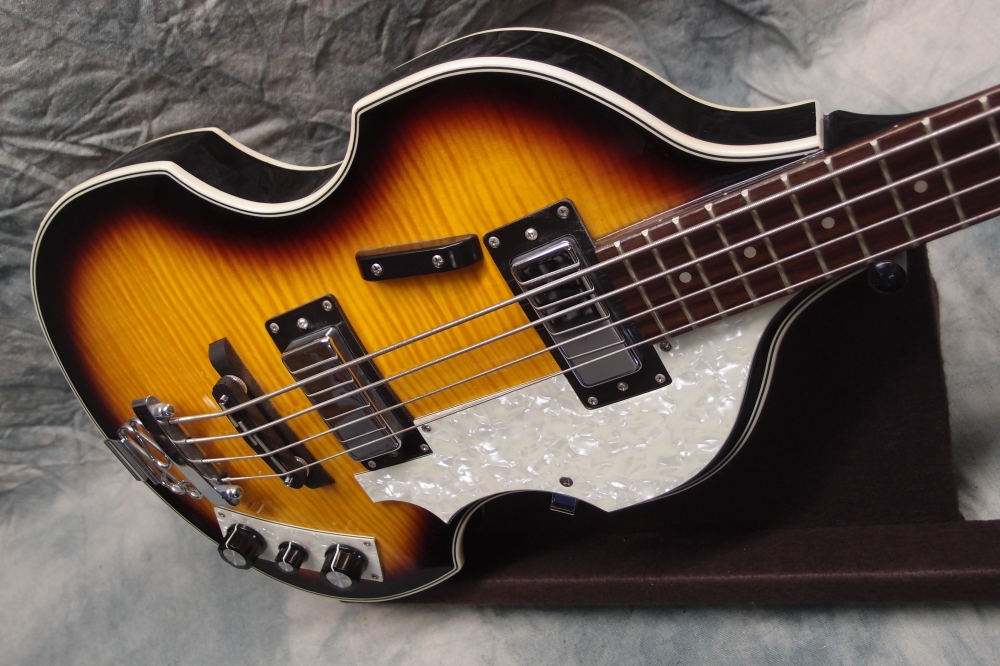
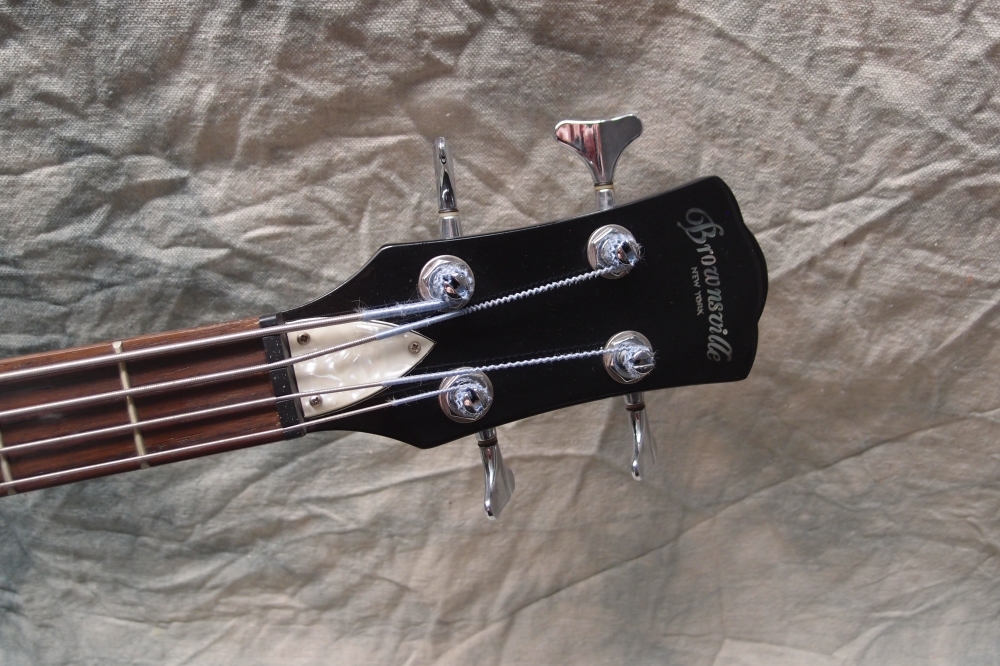
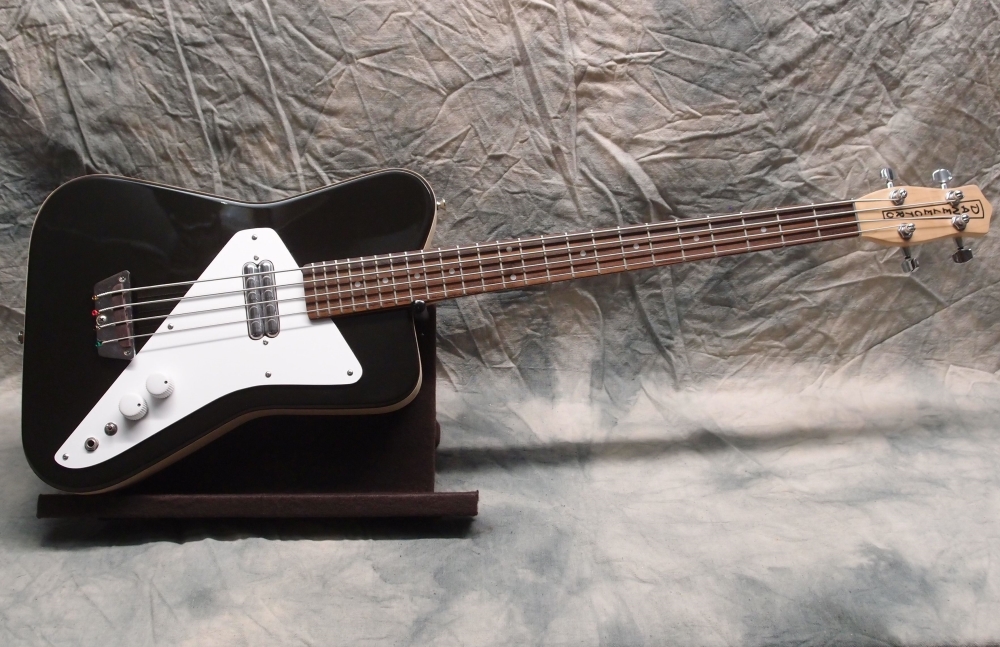
This is probably the cheapest violin bass on earth, and I got a discount on top of that because it had a persistent buzz that turned out to be a bad string. "Brownsville" is a house brand for Sam Ash, where I bought it on a whim. The scale is about 30.5". It's a beauty, isn't it?
More: Brownsville Violin Bass ...
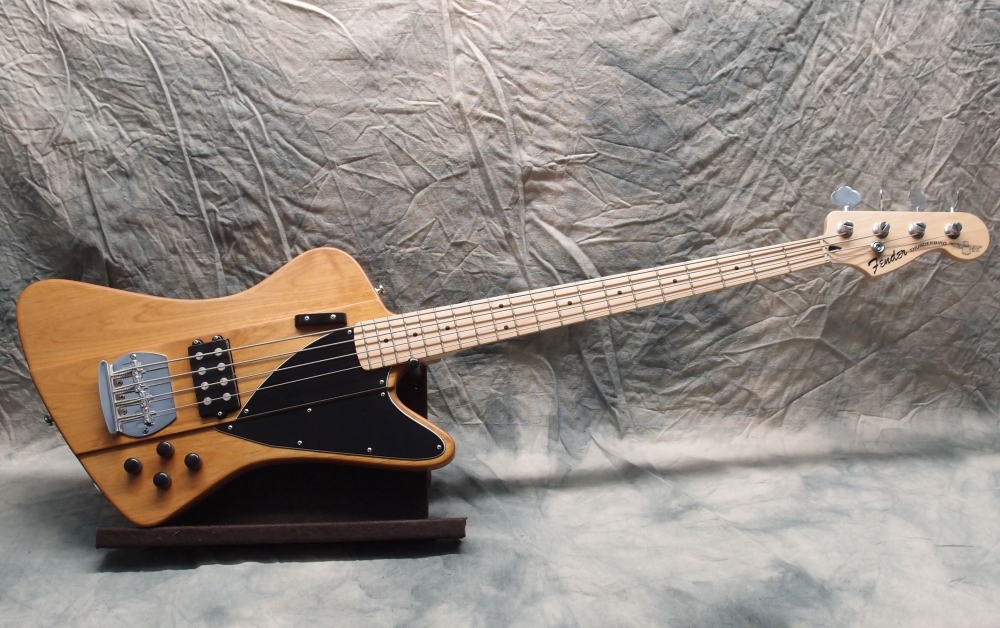
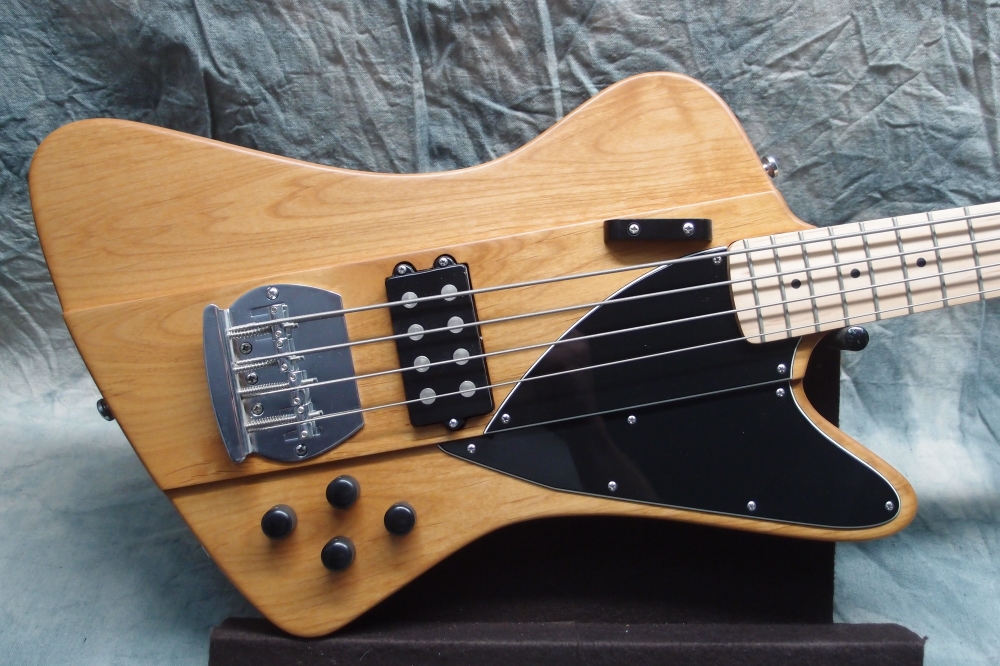
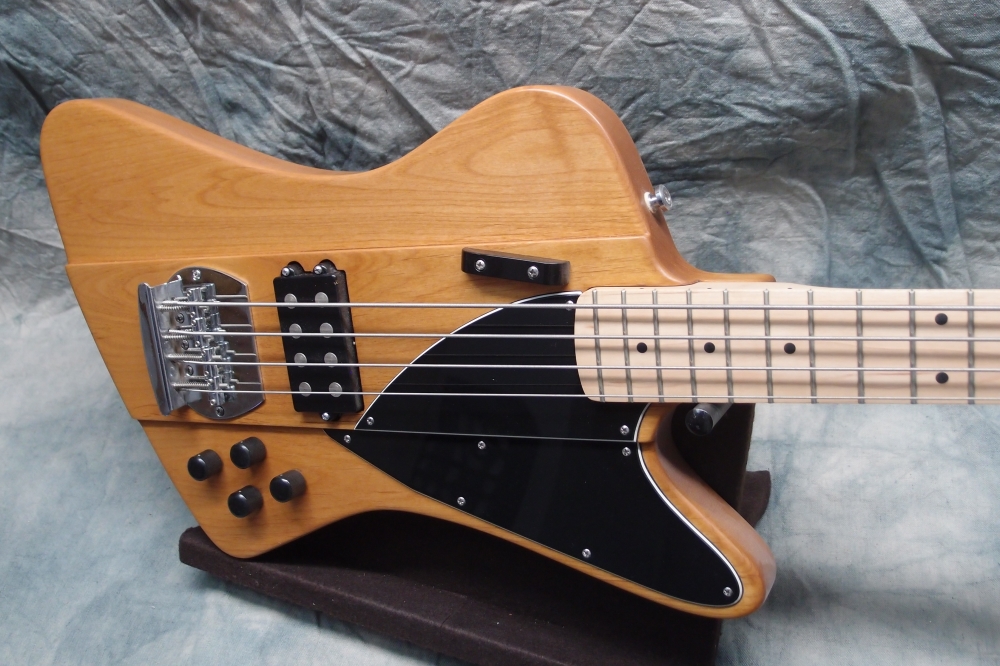
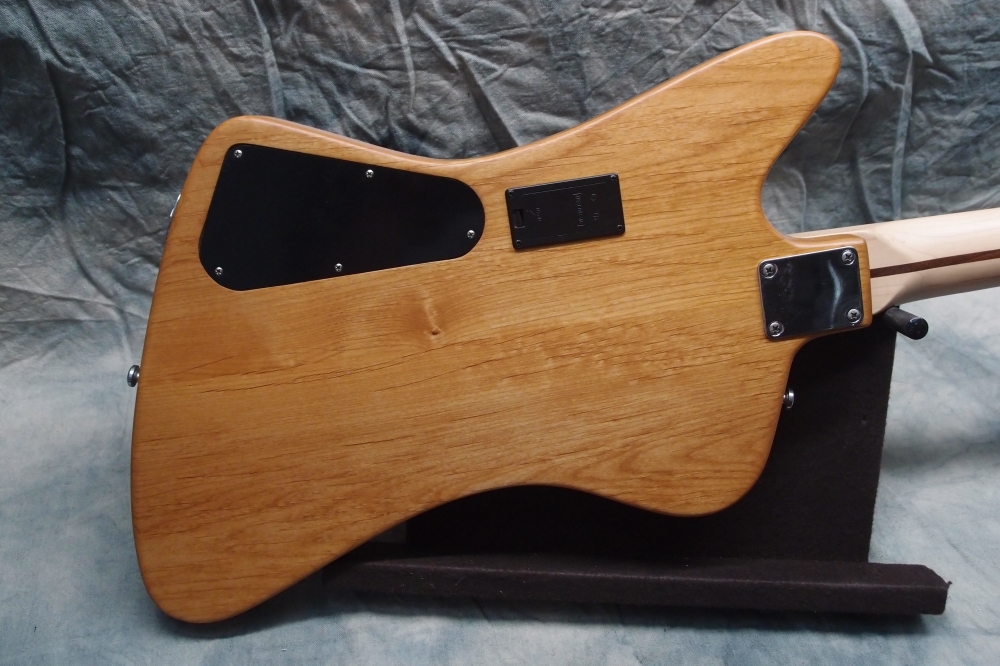
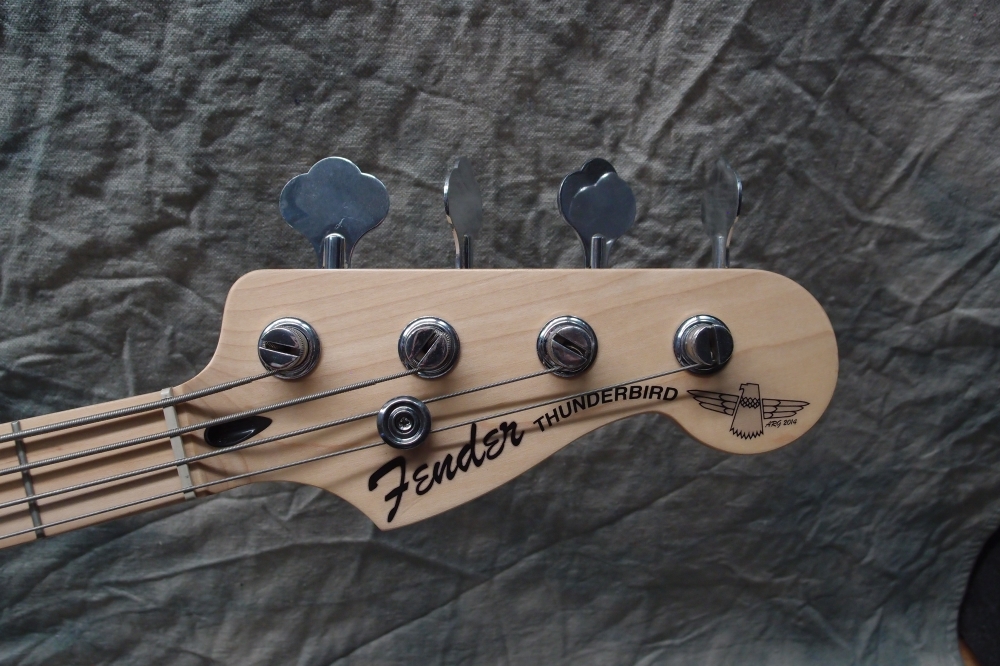
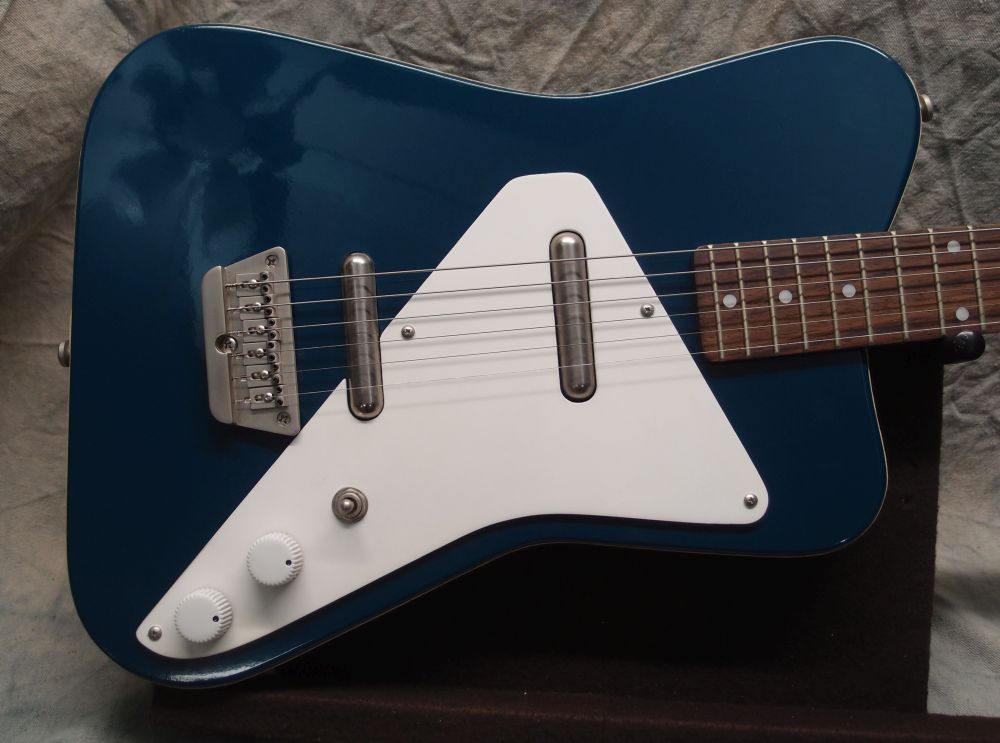
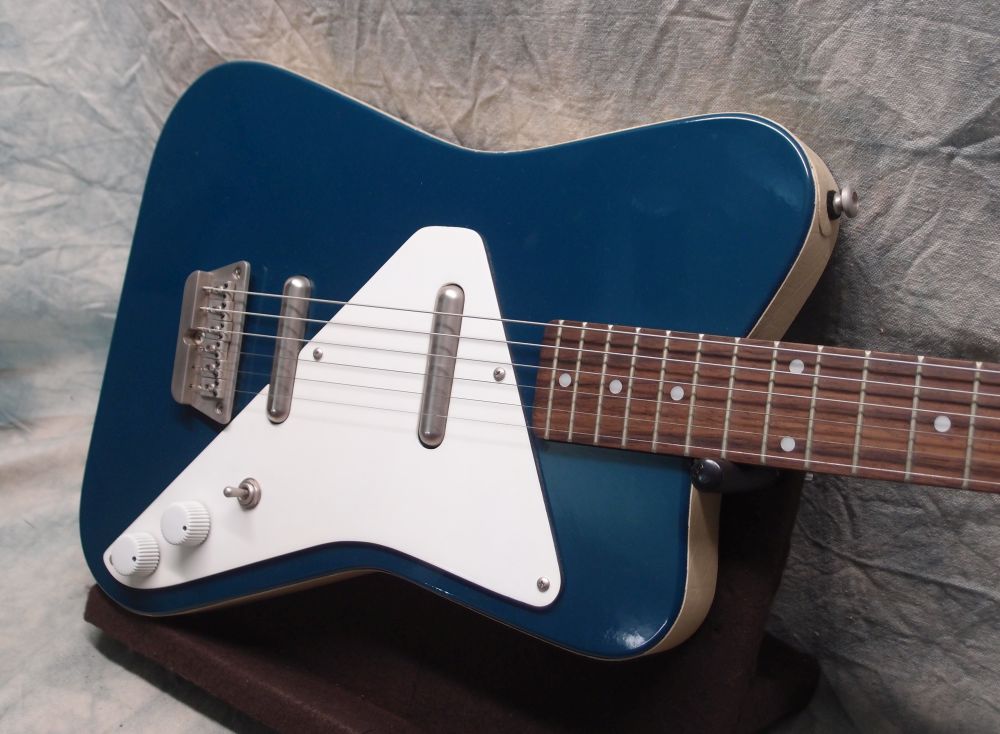
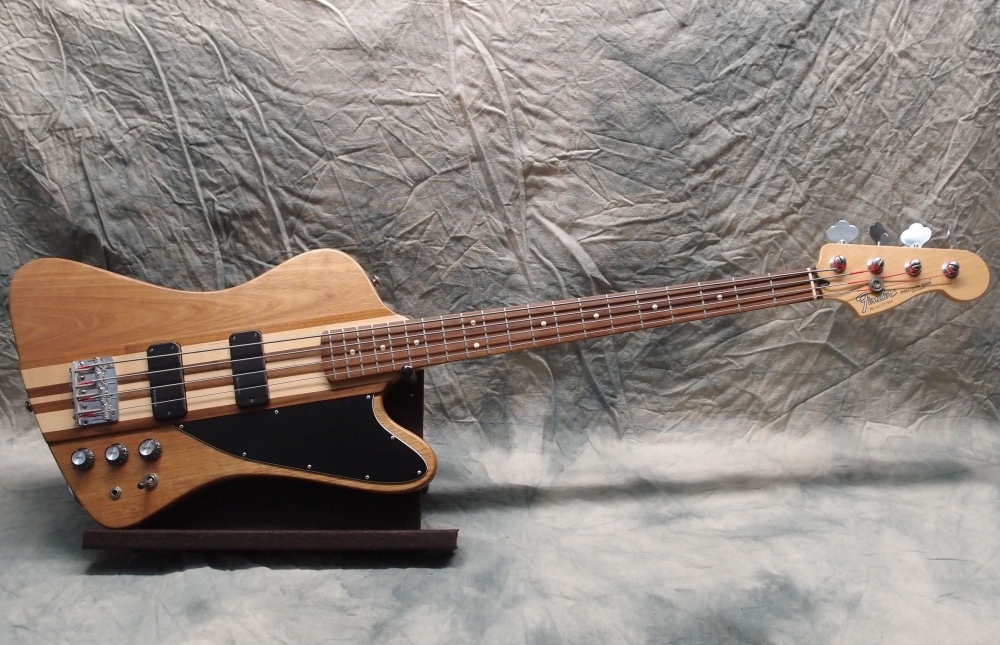
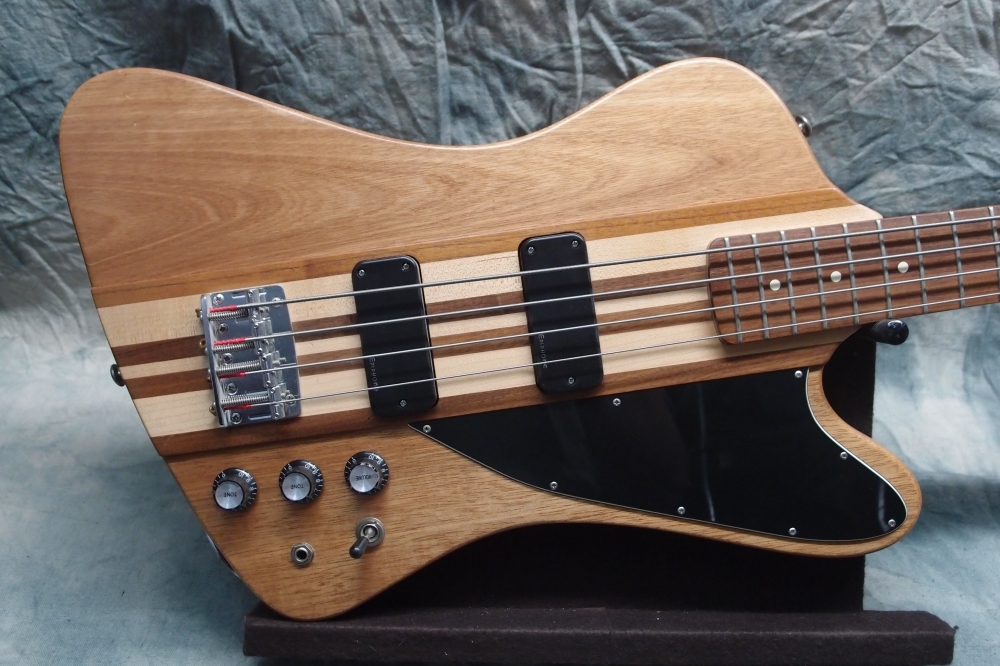
For those of you who thought my Stratocaster bass was an abomination, feast your eyes on this. The MusicmanBird. ThunderJazzRay. FenderManBird. I just call it FenderBird #2.
More: Cherry Fenderbird ...
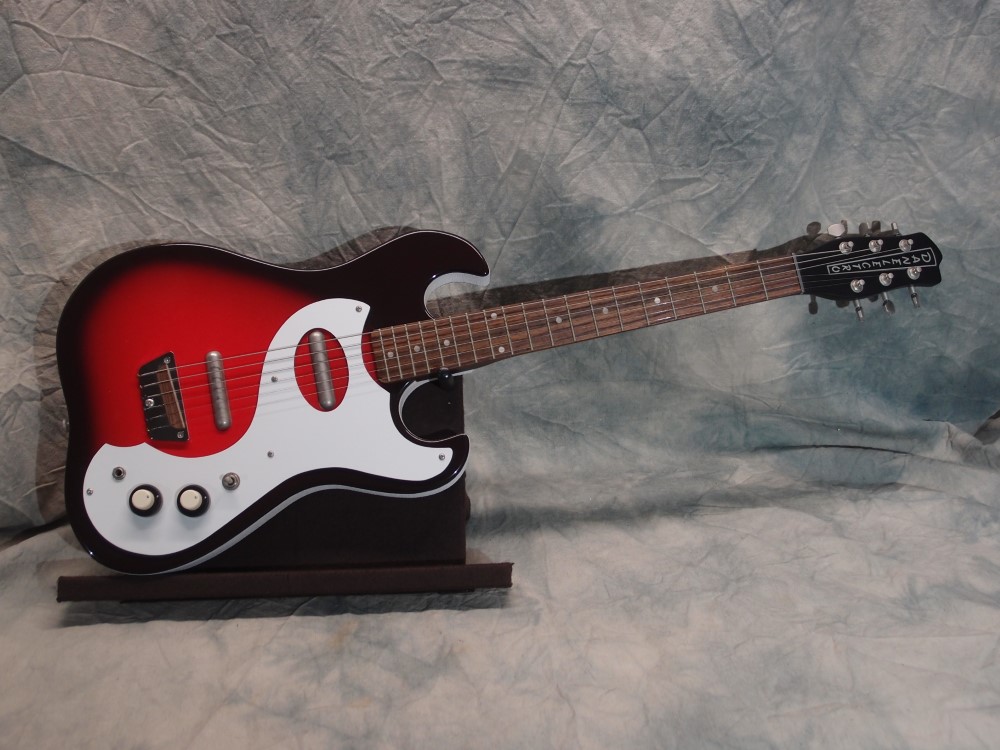
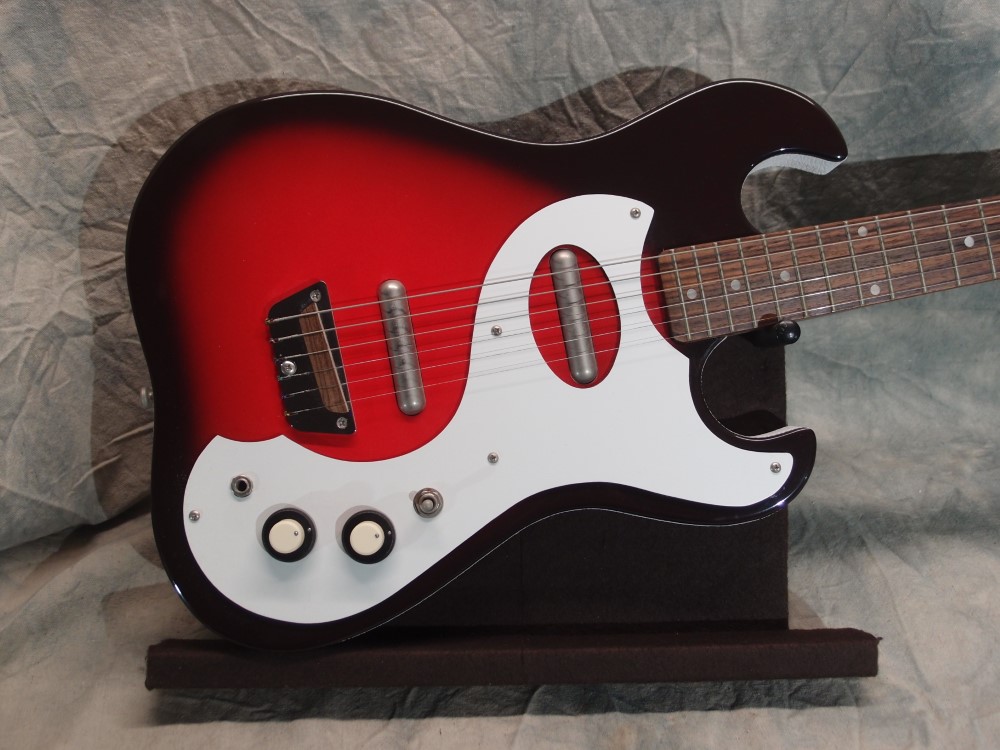
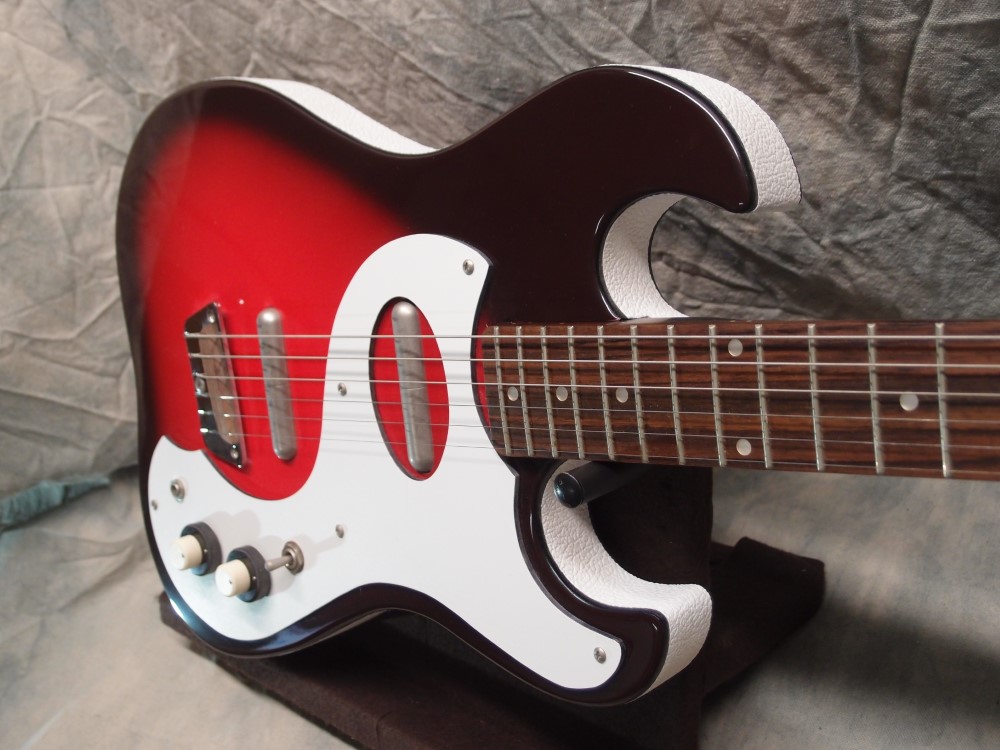
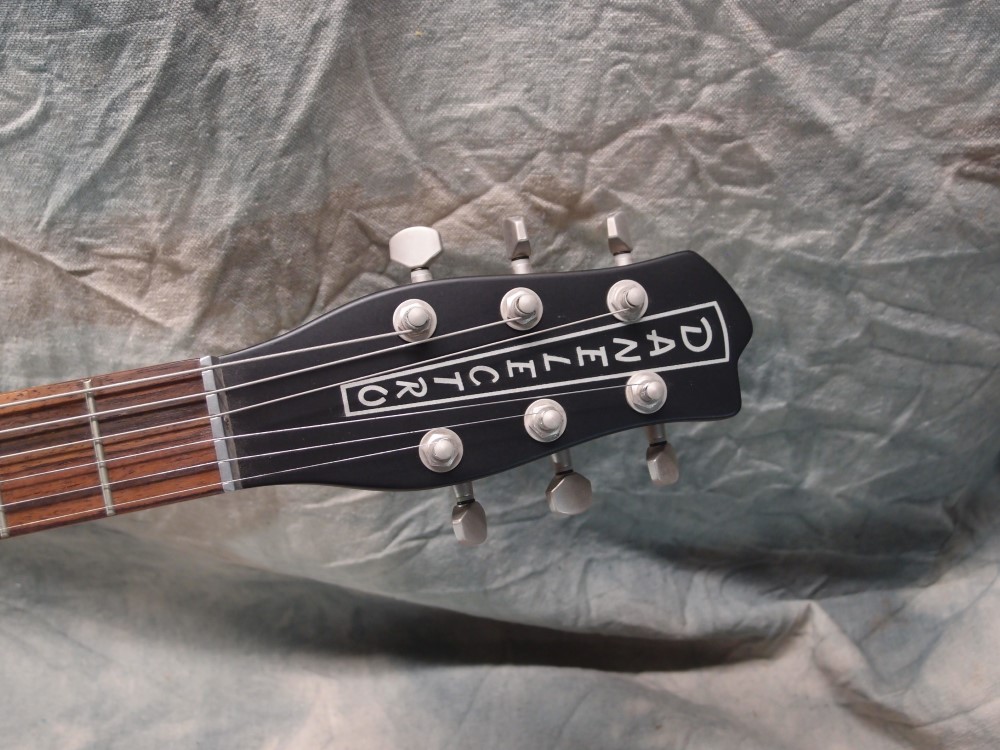
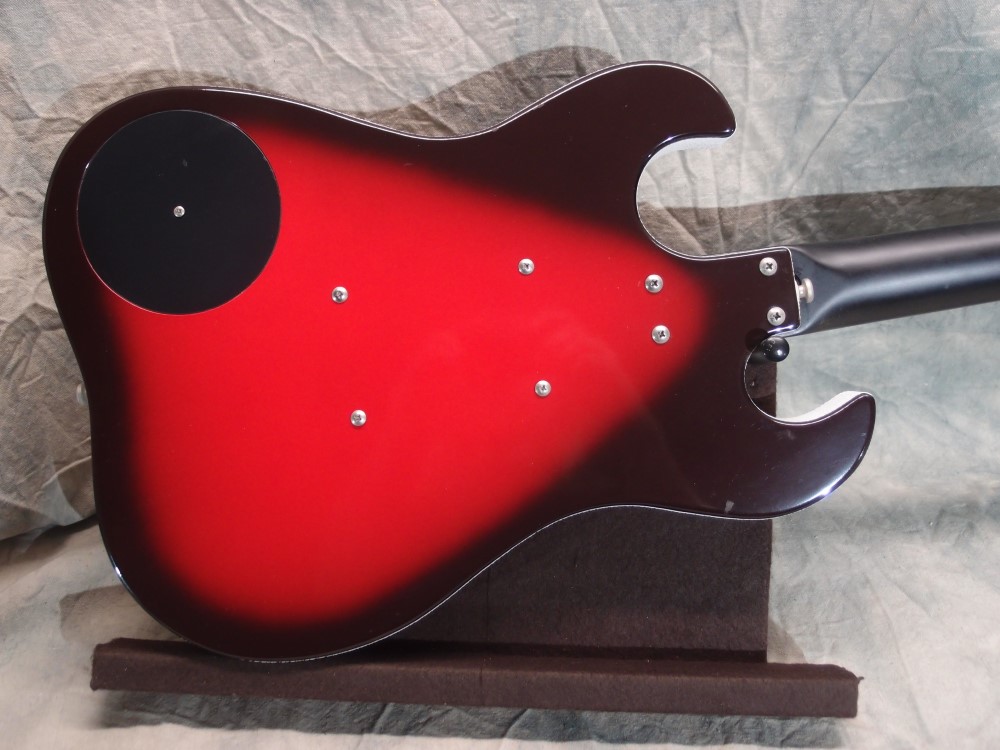
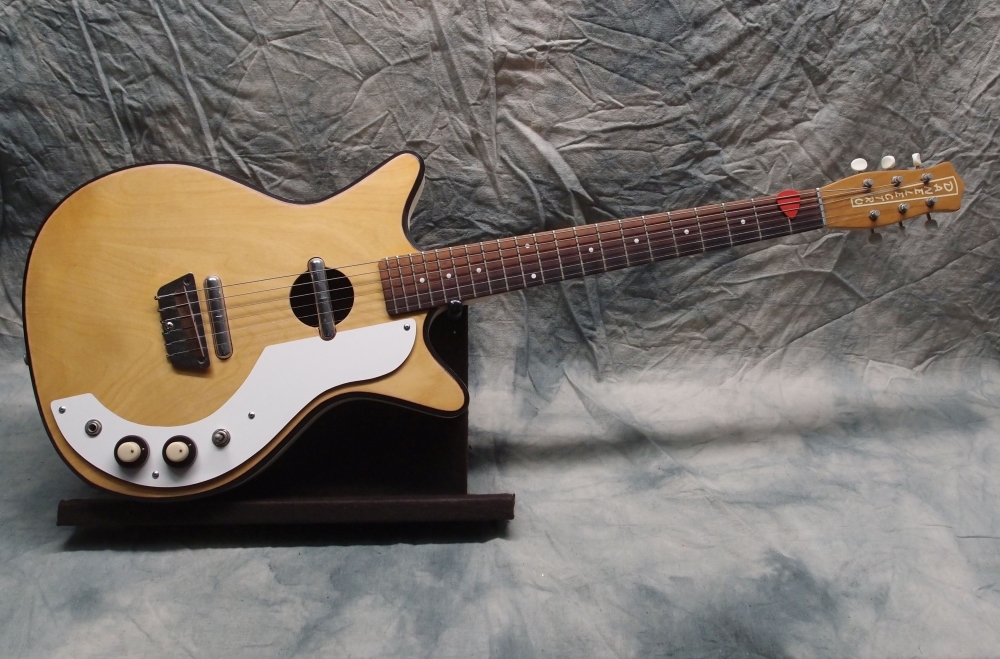
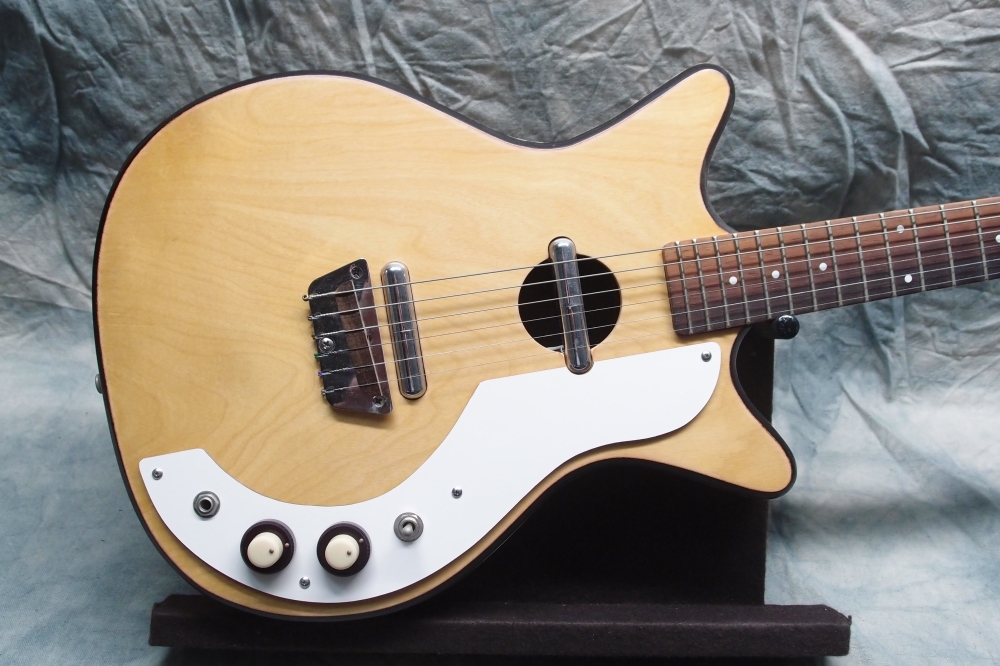
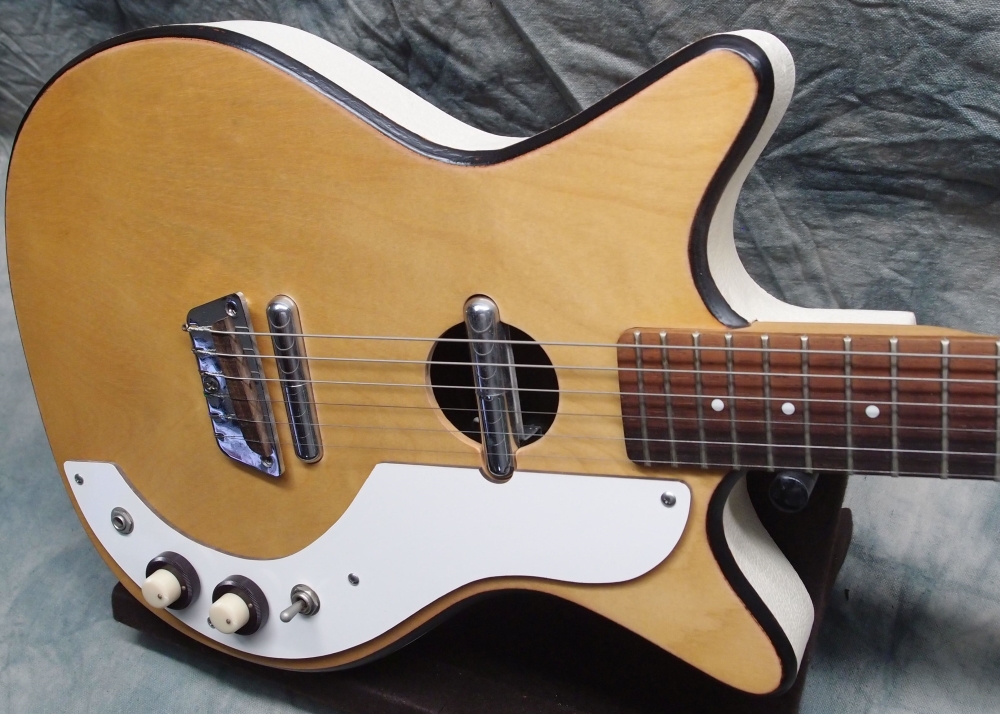
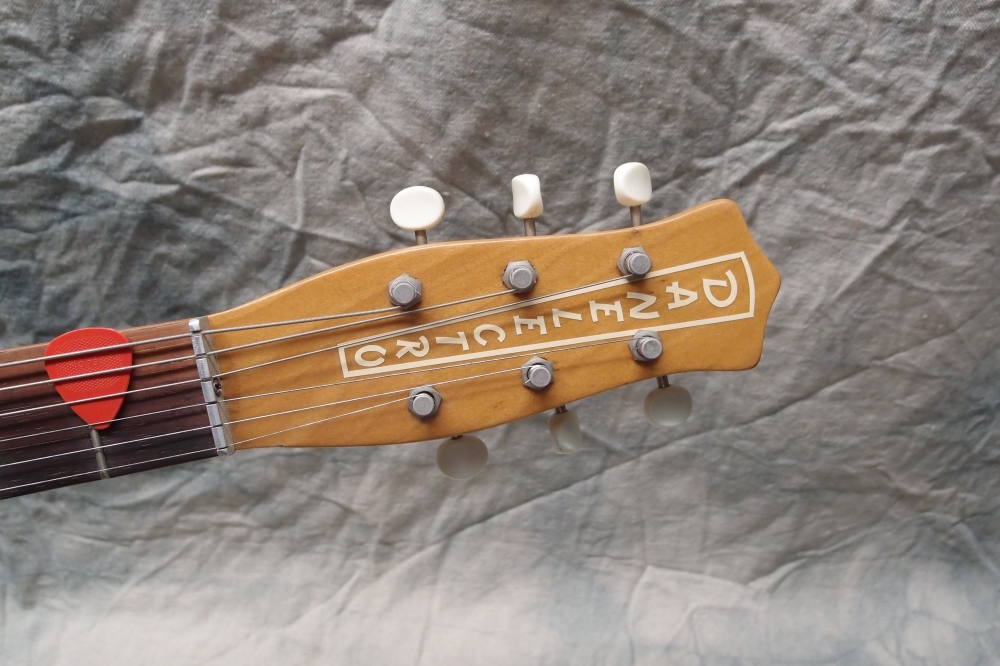
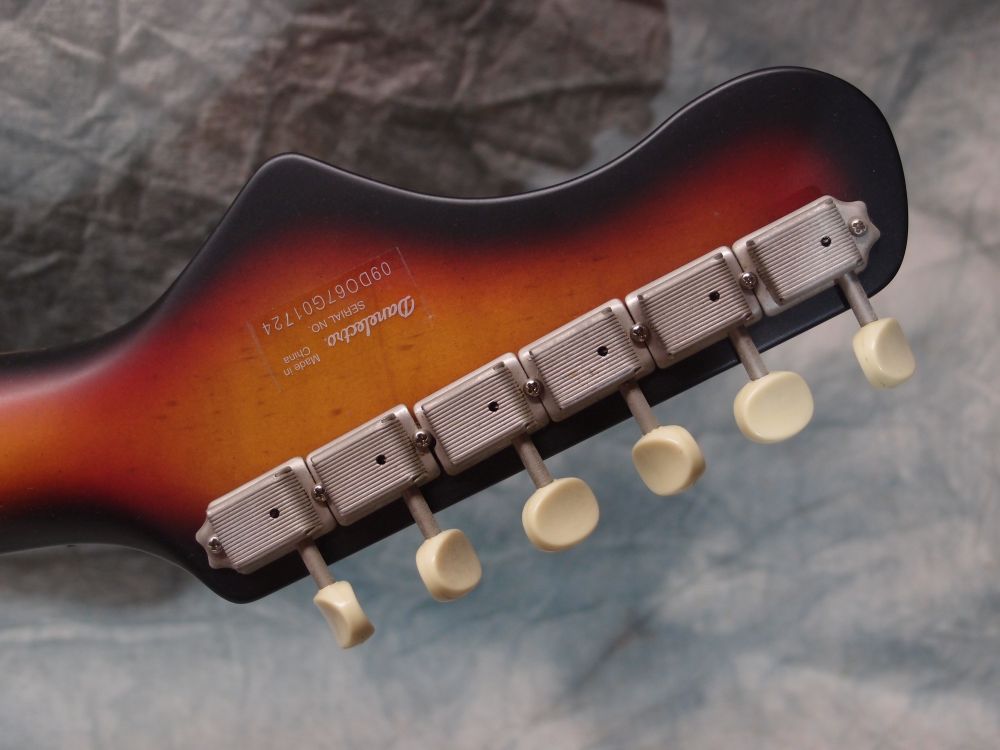
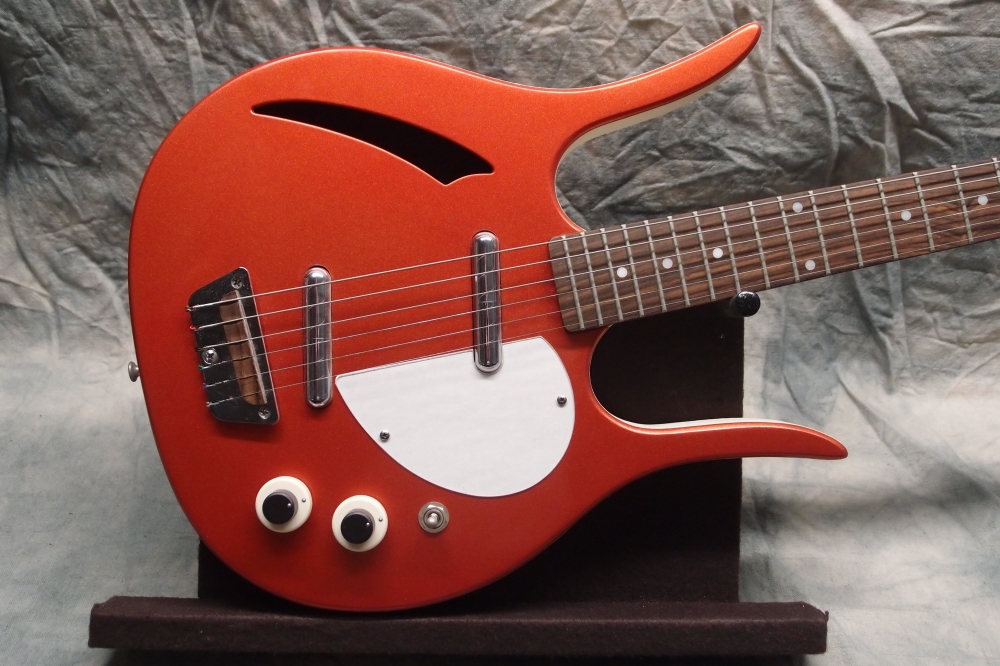
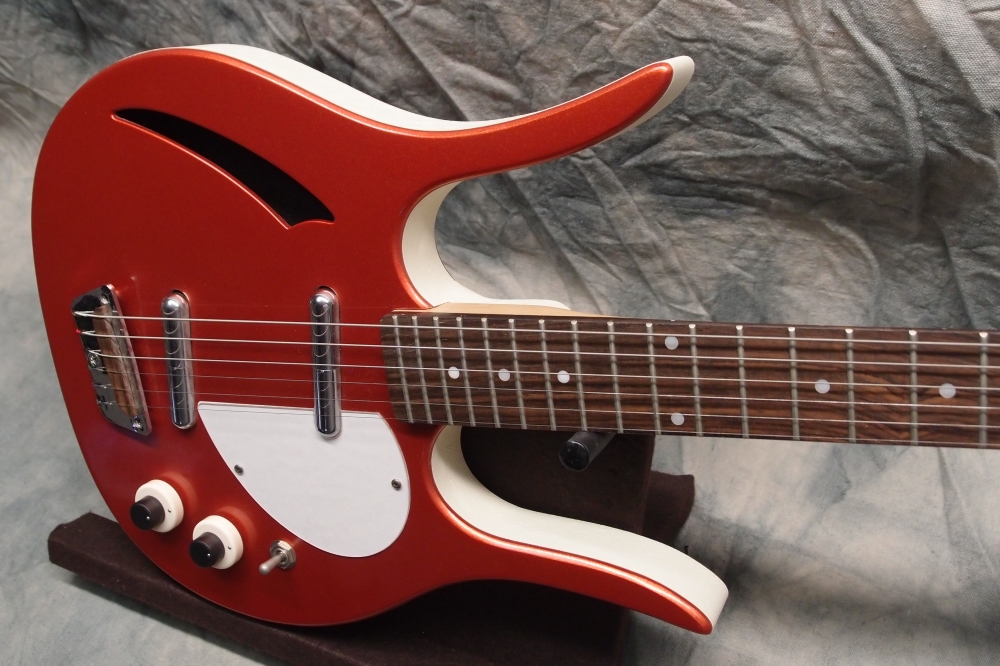
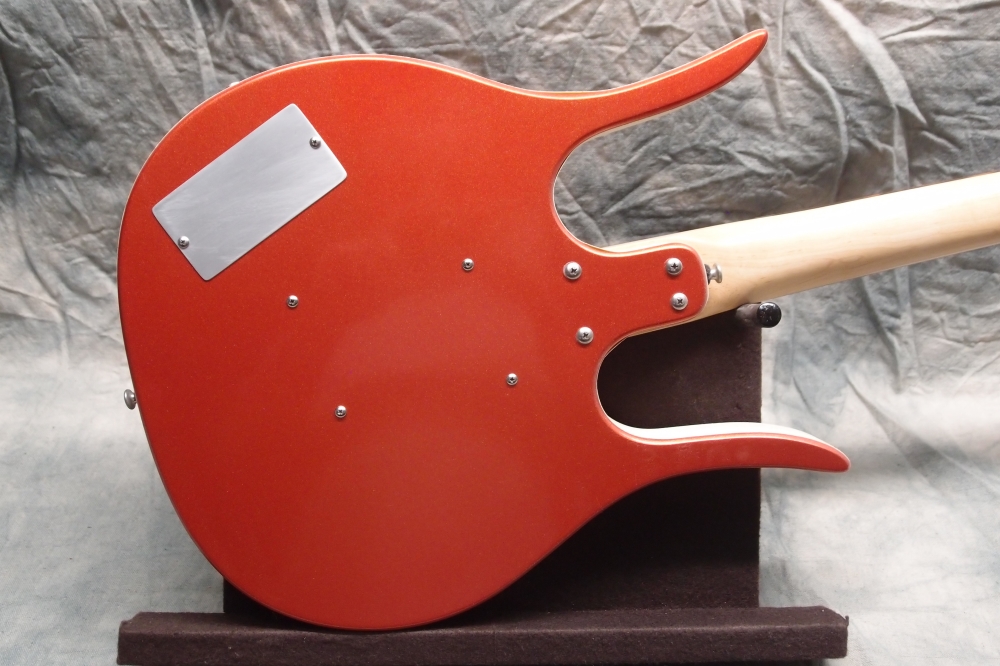
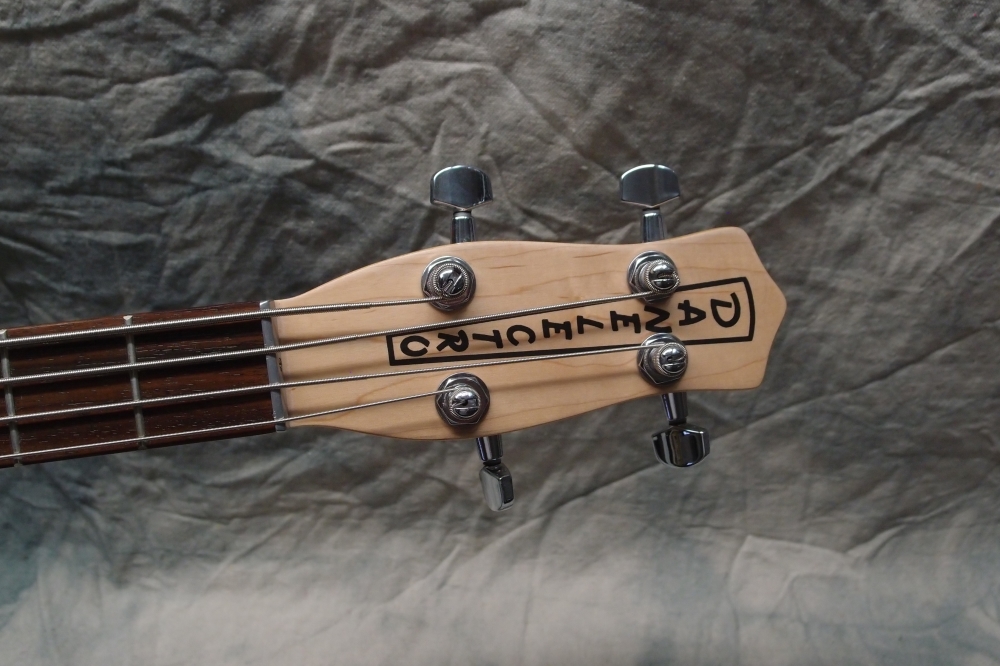
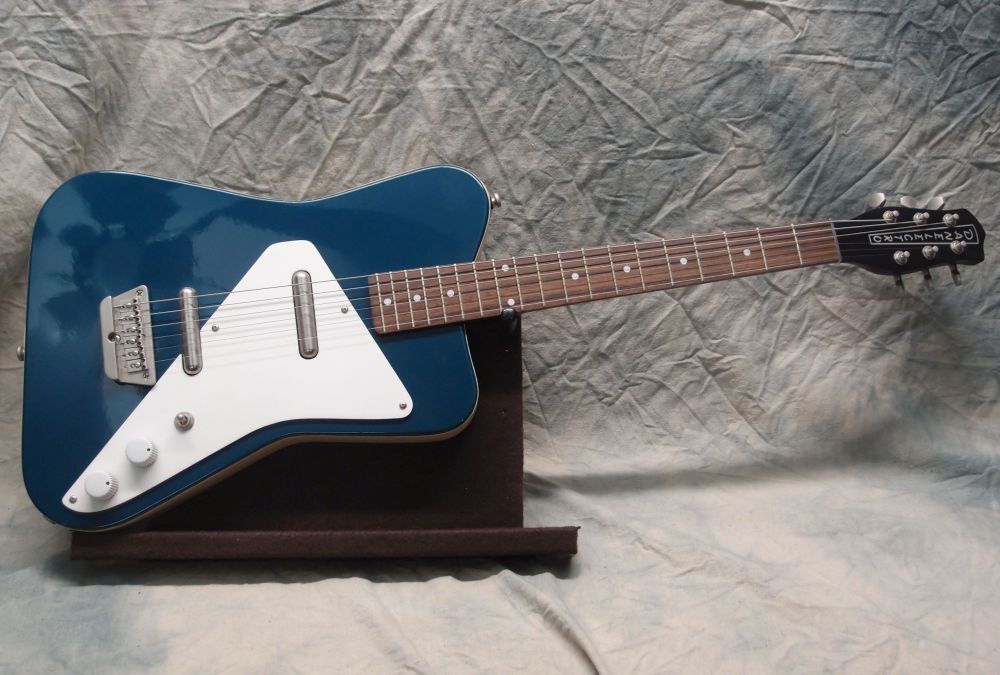
This body style was originally reissued in a range of models - guitar, bass ( long and short scale ) and baritone. I only have the guitar. These were part of Danelectro's Chinese production, and while not bad, are not as nice as the prior or later Korean models. A second reissue in 2015 restored the gloss sparkly finish of the vintage original. None of the reissues use the original headstock shape, though.
More: Danelectro '63 (1457) Guitar ...
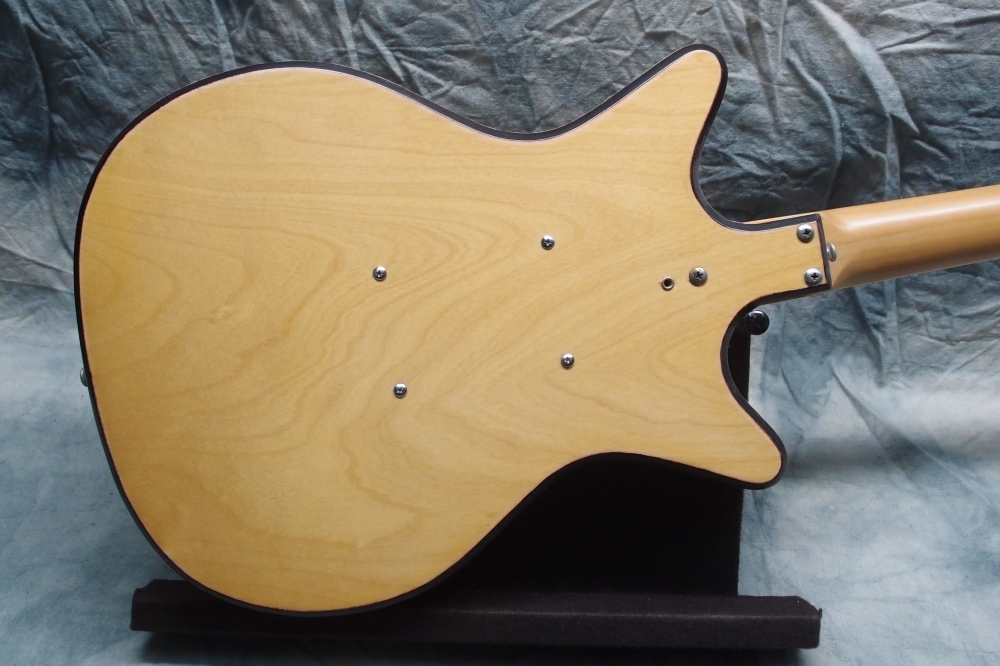
This was a box of junk I got on eBay, originally a vintage Convertible. I replaced the front and back with cabinet-grade birch plywood, as the original mother-of-countertop material is no longer available. I rebuilt it as something like a Companion, which is a very rare model. The neck and sides are vintage, the rest is modern.
More: Danelectro Companion Guitar ...
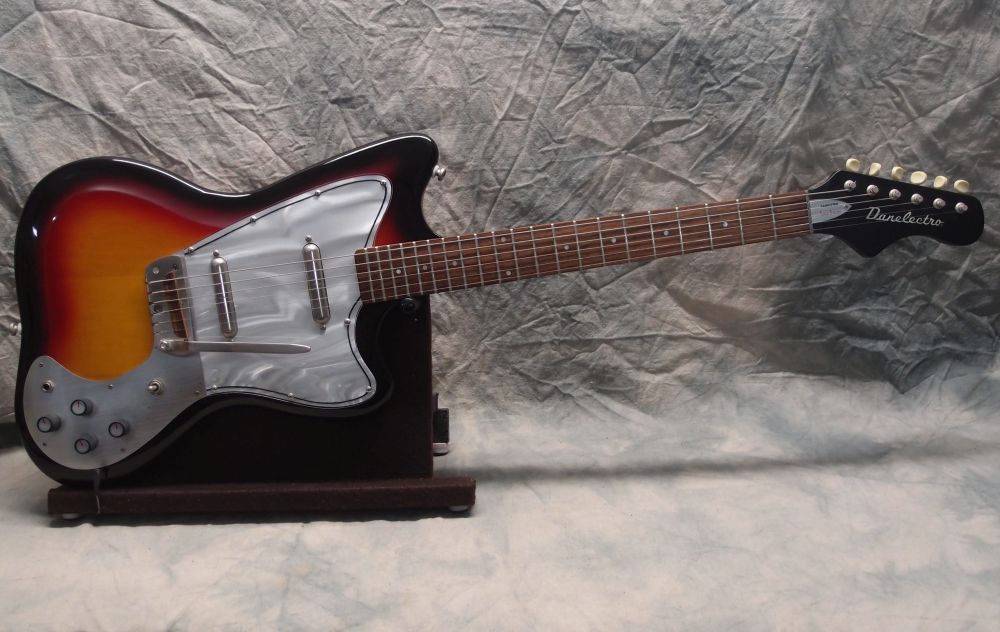
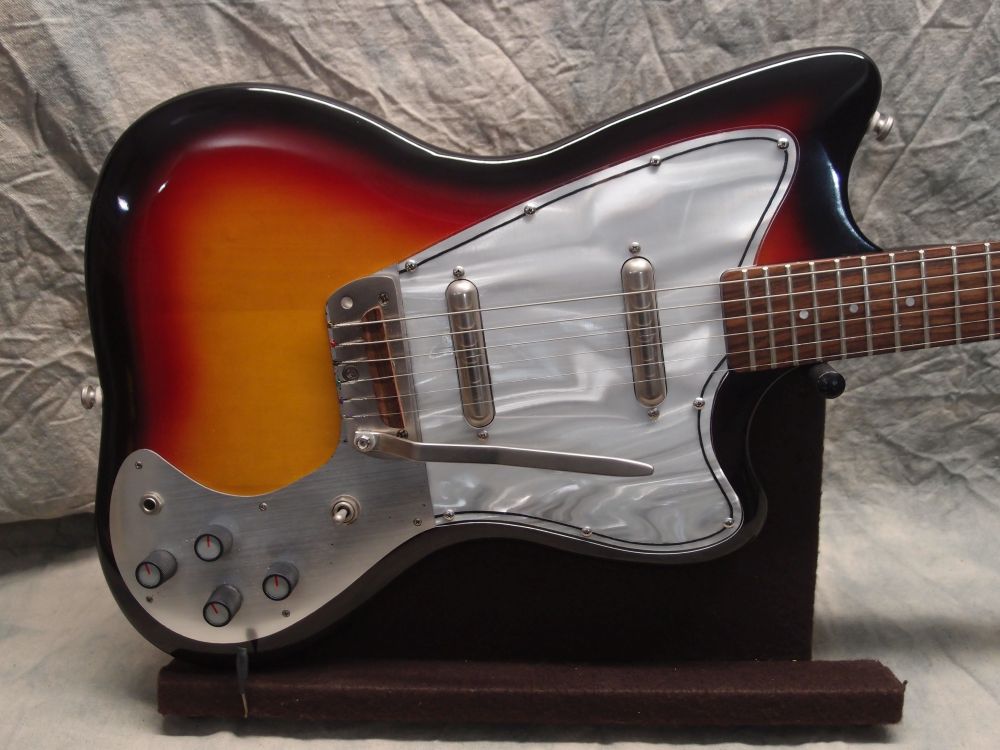
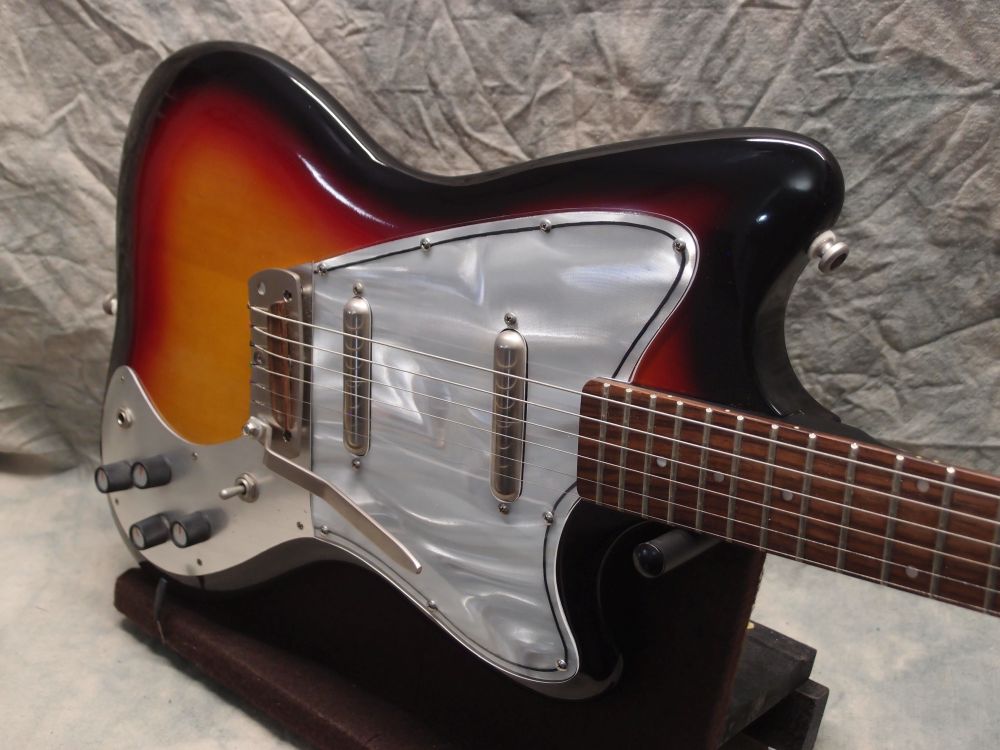
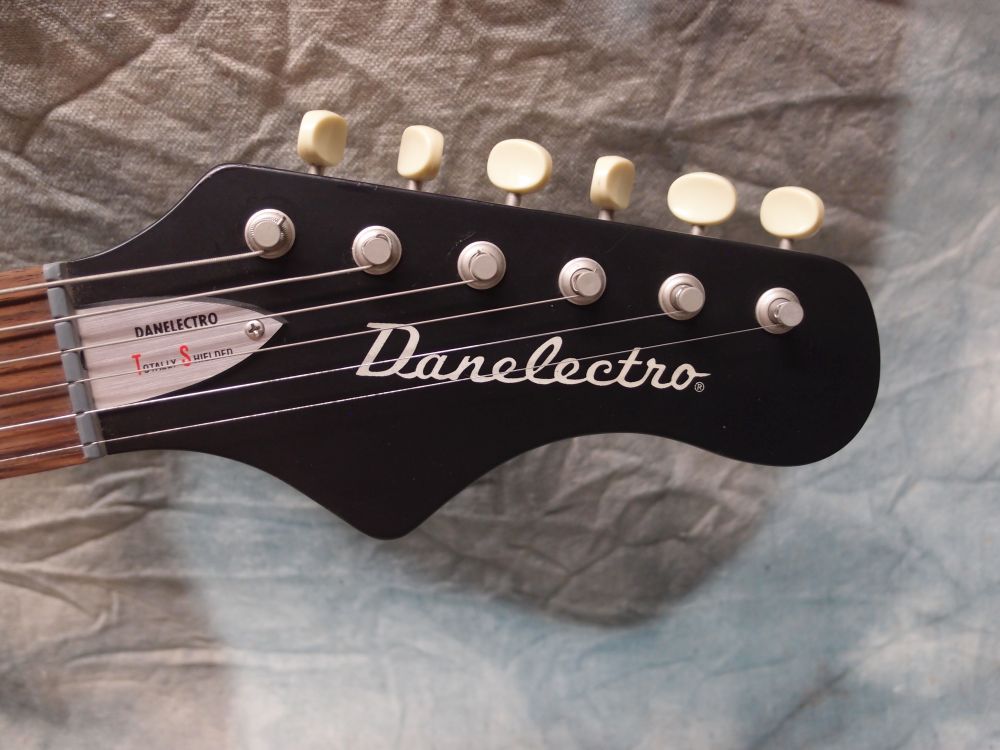
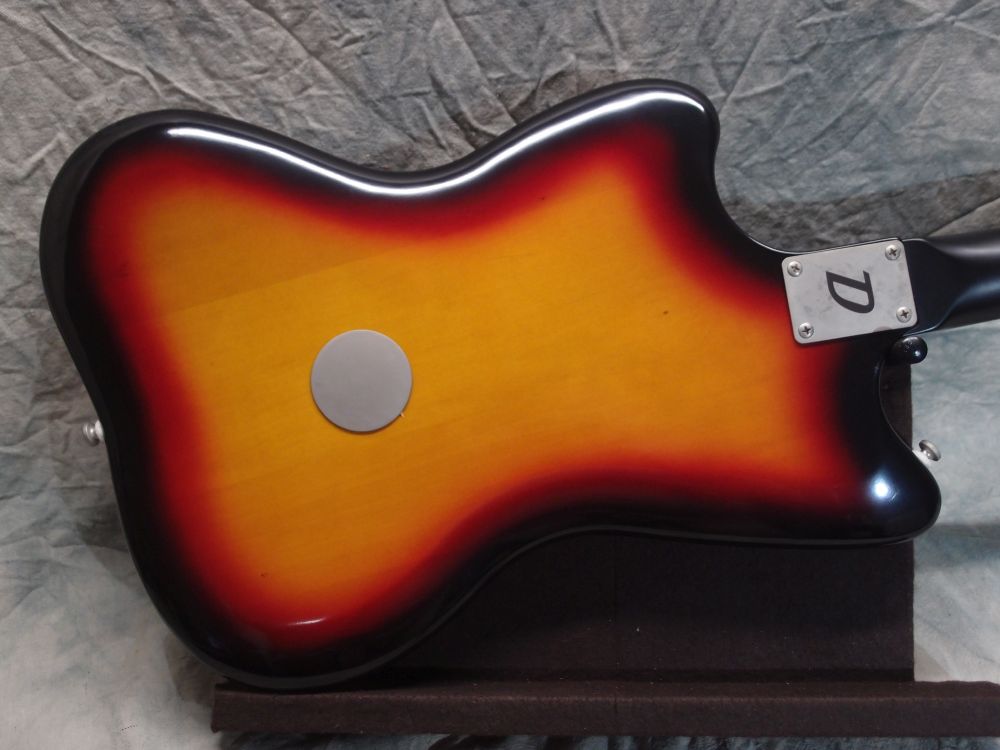
This beauty is Evets' reissue of a 1960s Danelectro Hornet. The solid-body Hornet has the same body outline as the Silvertone 1452, a sort-of cross between a 1457 and a Fender Jazzmaster. But unlike the slab-sided 1452, the body of the Hornet is a continuous curve, front and back, with a completely rounded edge. ( This is as sexy as a guitar gets, but makes it a little slippery on your knee. ) The reissue from Evets has the same contours as the original, and even the same 'lightshow' pickguard. The three-tone sunburst on this one was an exclusive to Guitar Center. I picked this one up as an 'open-box' from their subsidiary Music123 for a song, so to speak. The body was originally slathered in dullcote, which I polished off, resulting in a beautiful shine with just a bit of orange peel that I left.
More: Danelectro Dead-On '67 (Coral Hornet) Guitar ...
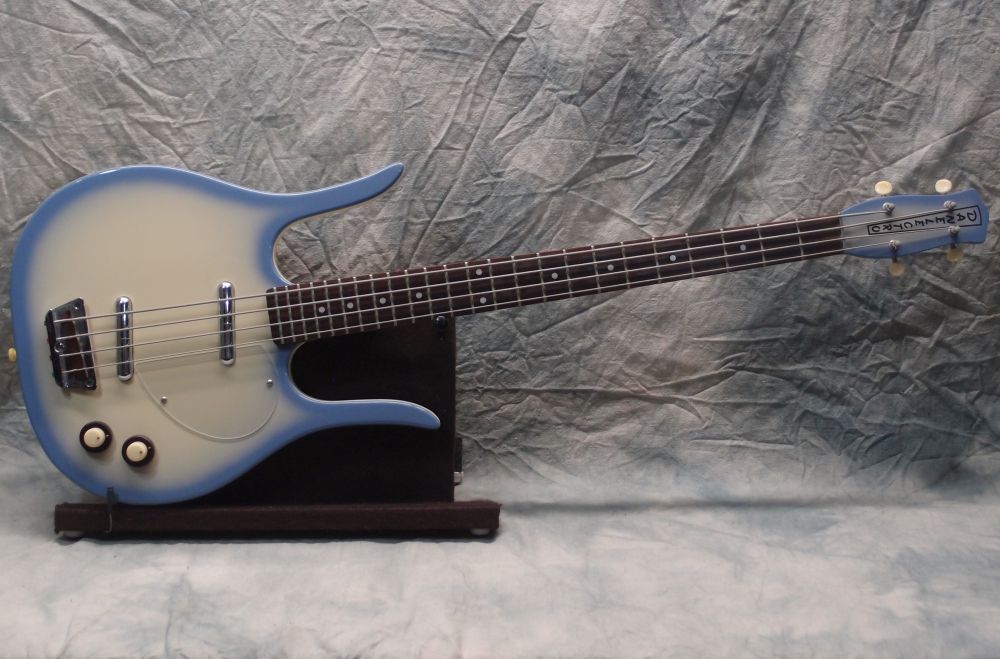
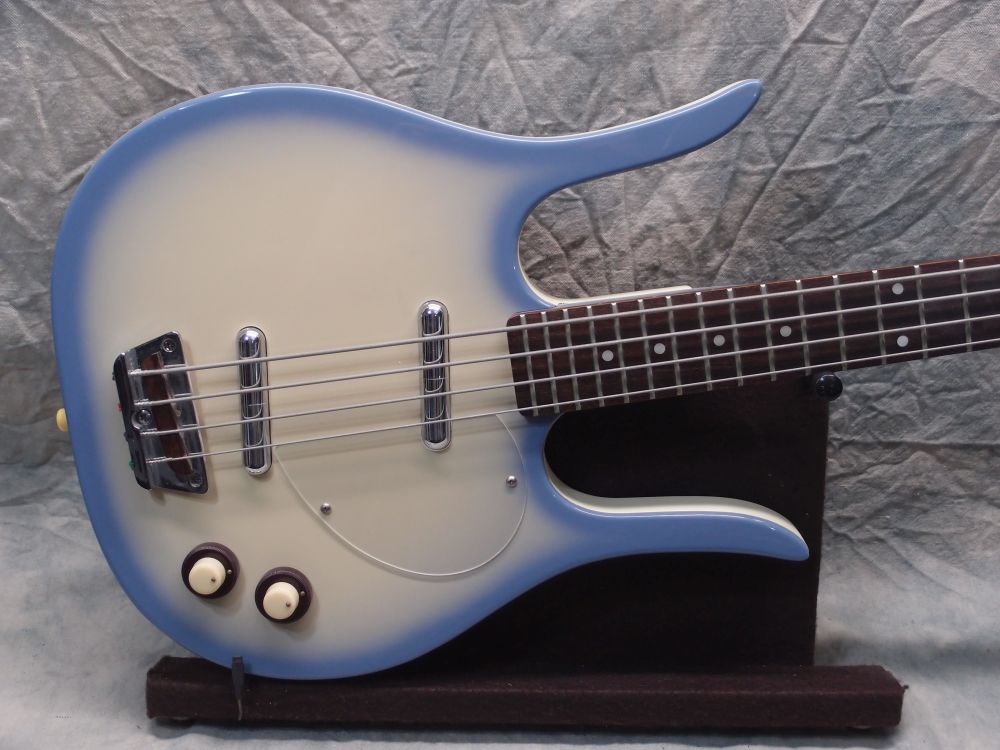
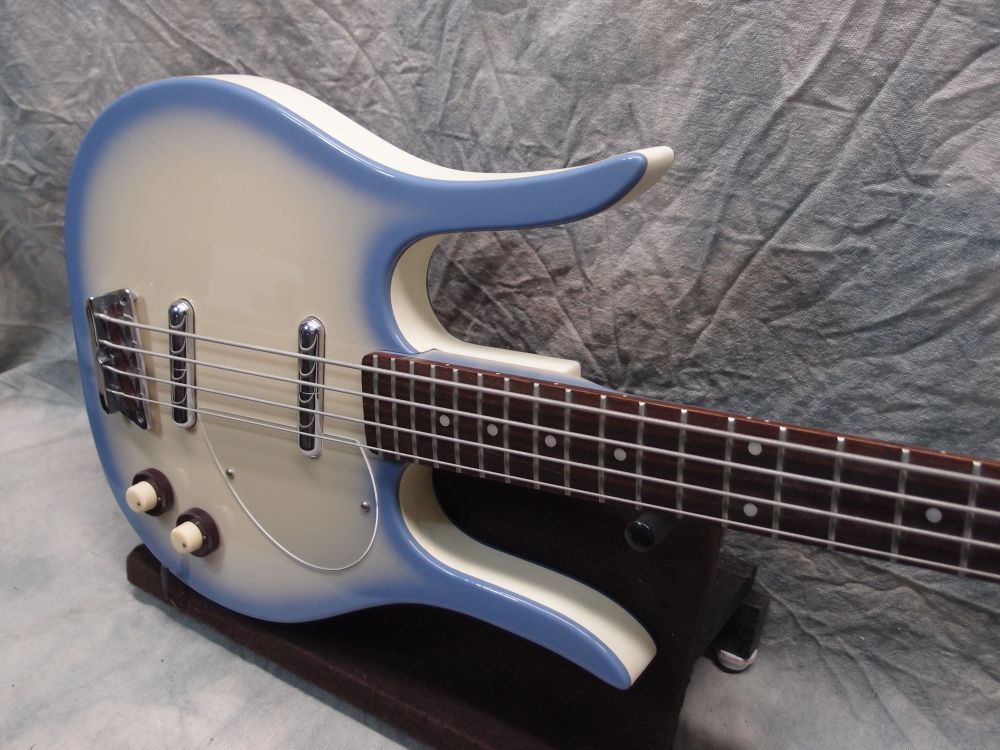
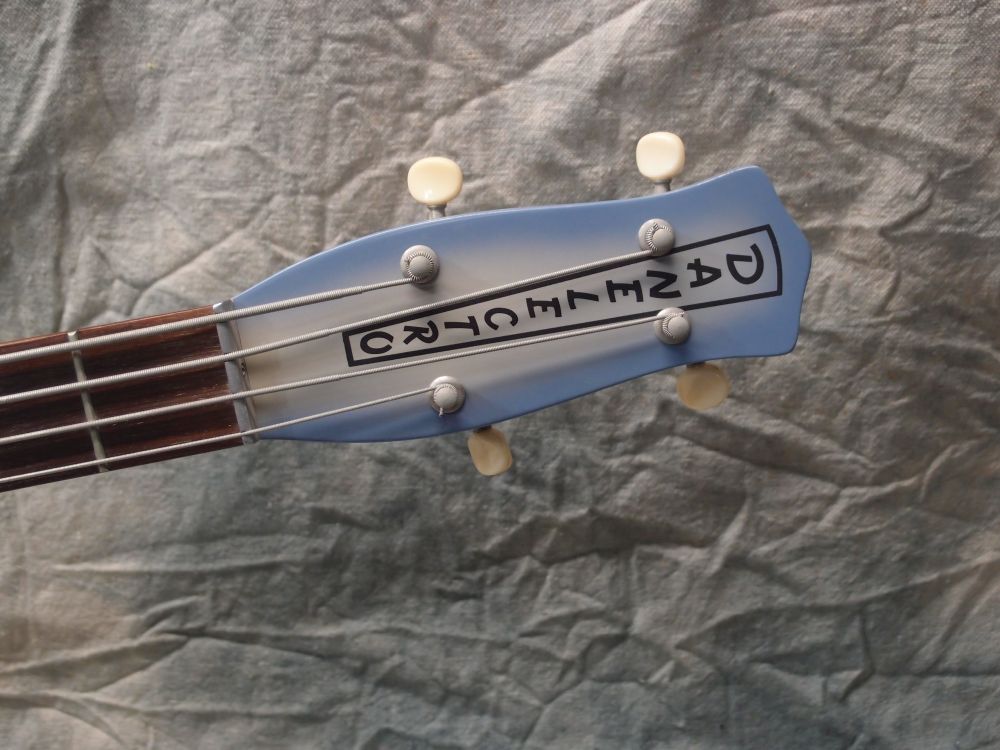
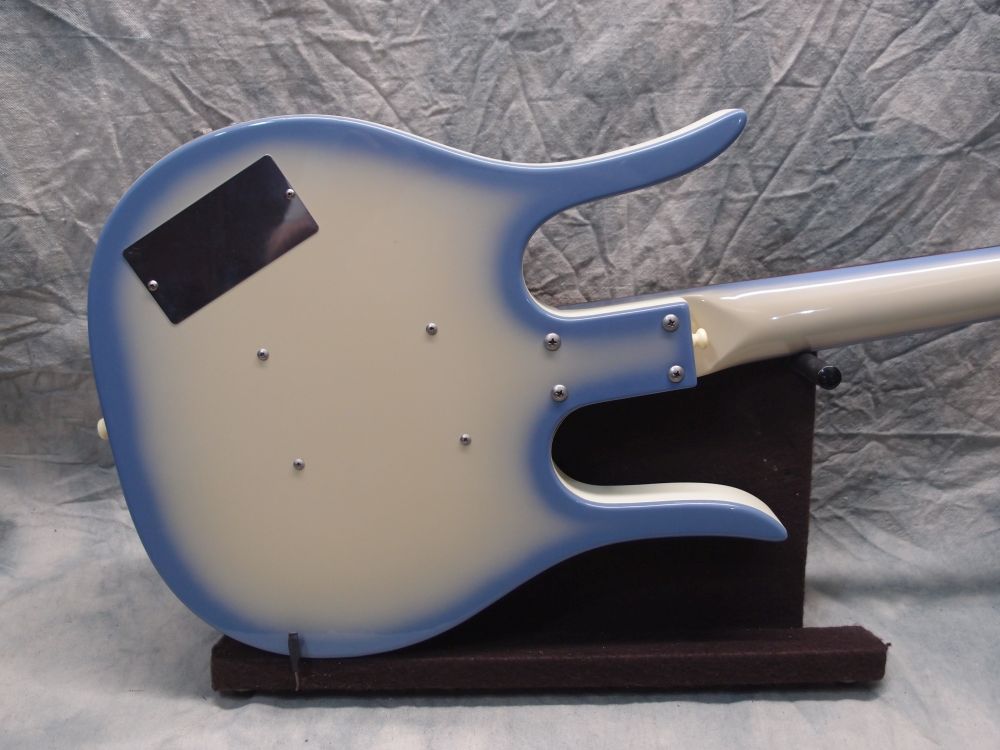
This is an Evets '90s-vintage original reissue, made in Korea. These reissues are actually much better instruments than the originals from the 1960s. While a copper-burst would be more authentic, I like the sky blue better. The newer reissues are even more true to the originals.
More: Danelectro Longhorn Bass ...
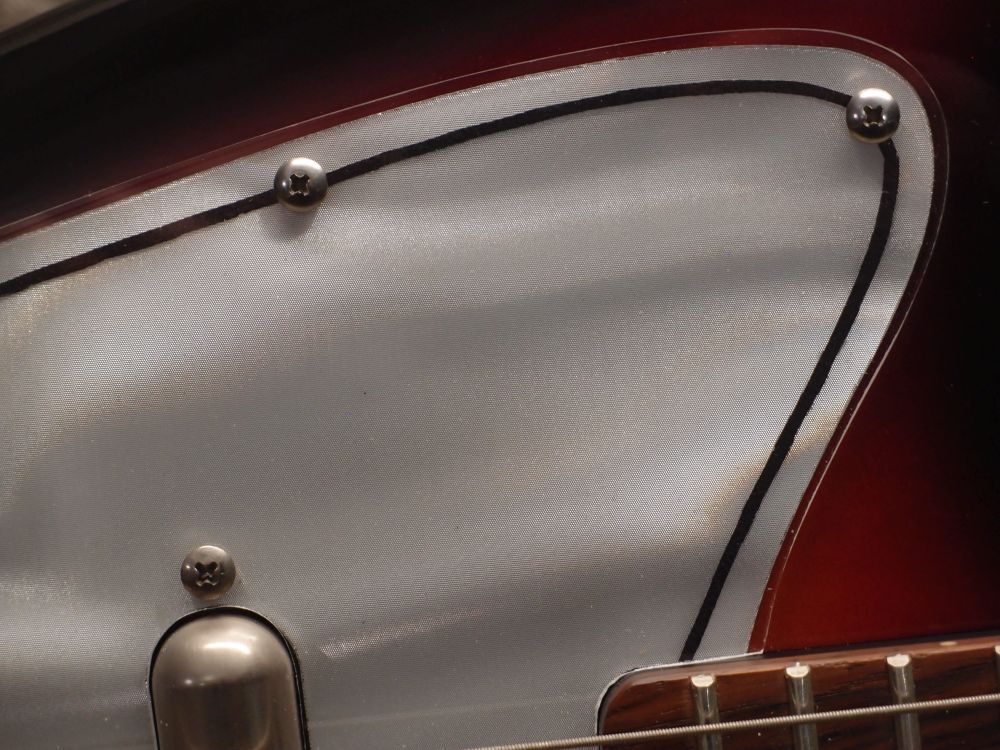
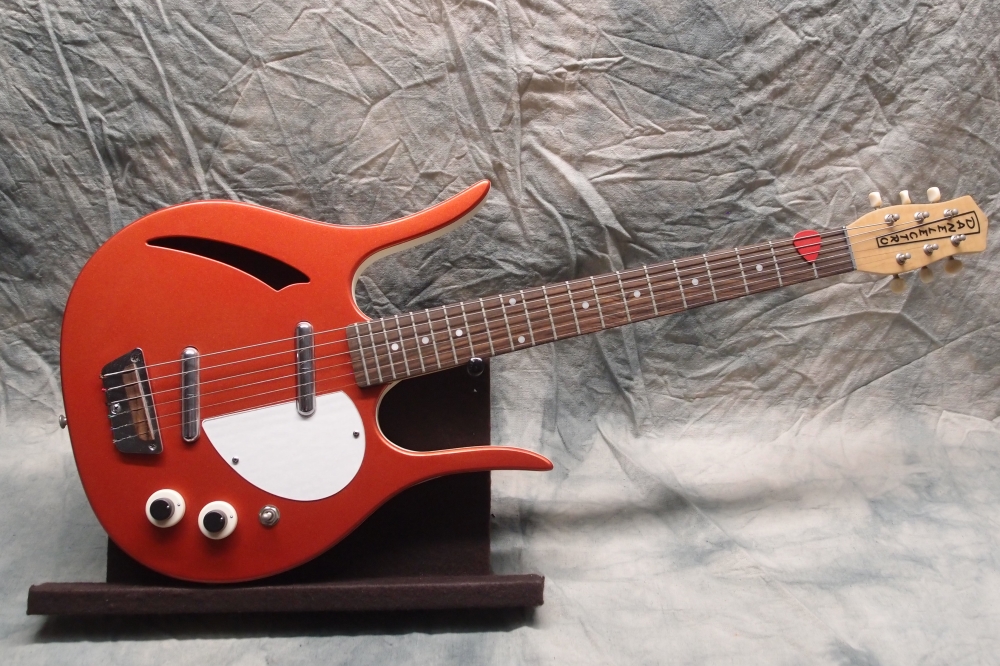
Another early build for me - 2010, a reissue Danelectro neck on a built body. The finish is pearl automotive acrylic lacquer. The pickguard is actually clear with a piece of paper under it.
More: Danelectro Longhorn Guitar ...
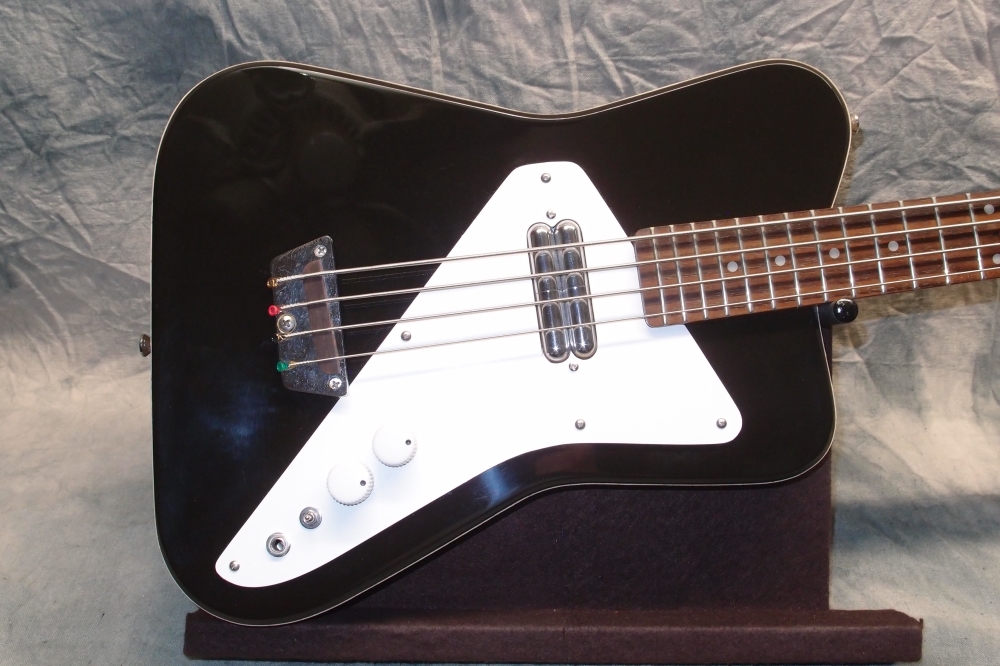
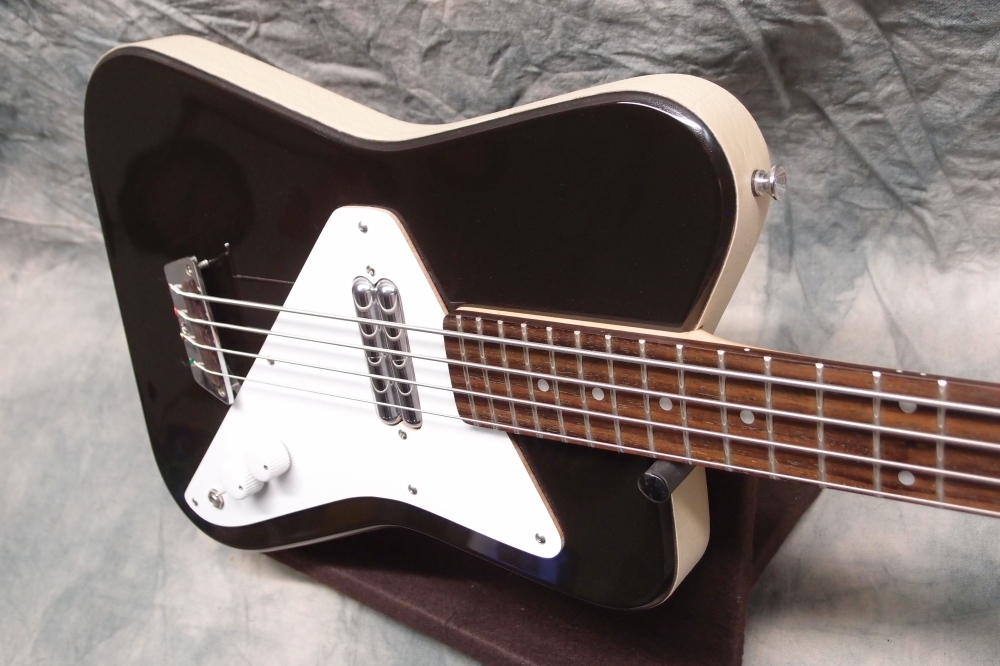
The body was traced directly off the guitar, finished in very dark brown poly with tan Tolex. The neck is a reissue that has lain around for years. The bridge was originally left-handed, a few minutes with a file and it was right-handed. The double lipstick is switchable series/parallel/single-coil, for some variety. This is my first dry-erase pickguard.
More: Danelectro Pro-1 Bass ...
This is a factory guitar, but I have modified it enough that I guess I can call it a project. This is a reissue produced by Evets around 2007. This was not a high point for Evets quality, they had shifted production from Korea to China, and it showed. The reissues from the '90s are Korean-made, and quite nice, and this guitar is not in the same class. That said, it's not terrible either, but there's quite a bit to go into. Evets eventually shifted production back to Korea, and the quality went back up.
More: Danelectro Pro-1 Guitar ...
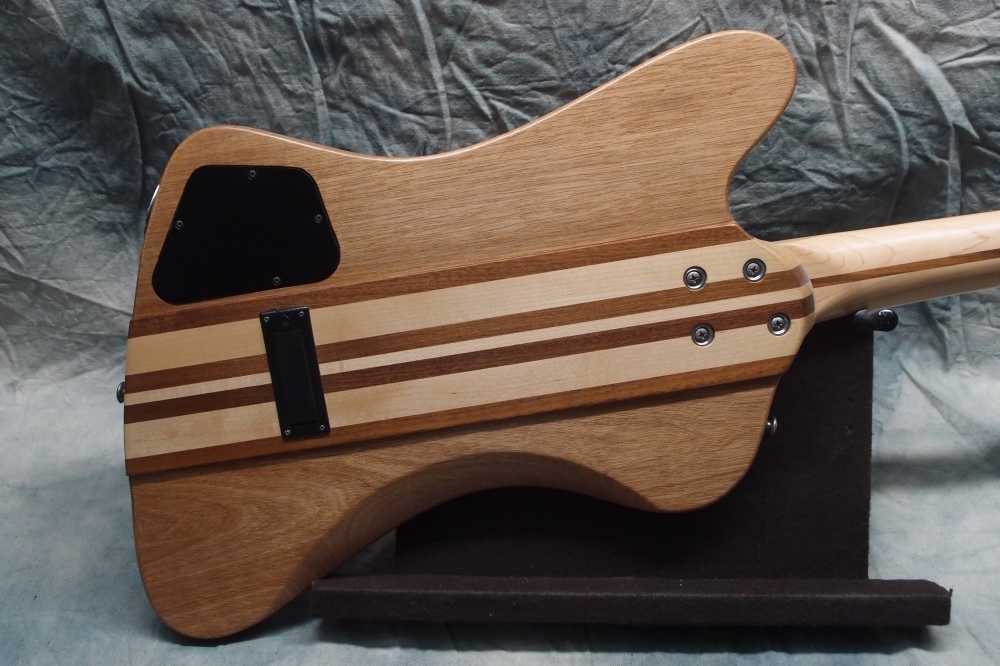
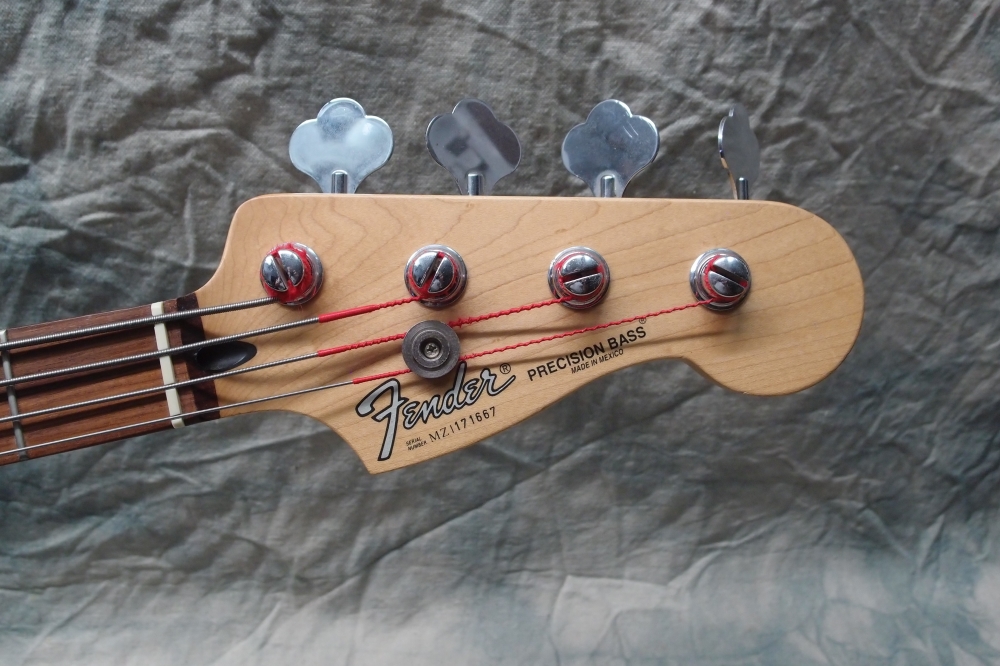
This started out as a broken Epiphone, one of the very nice Pro models. Turns out the Epi copy was a bit too authentic - it even reproduced the standard Gibson pop-off headstock. I removed the neck, re-finished the stump, routed out a neck pocket, and installed a Fender Mexico Precision neck. The pickups are stock, the active electronics are a replacement as the originals blew up. I also made the pickguard. The high frets are basically inaccessible, but the trade-off is much better balance.
More: Epiphone Fenderbird ...