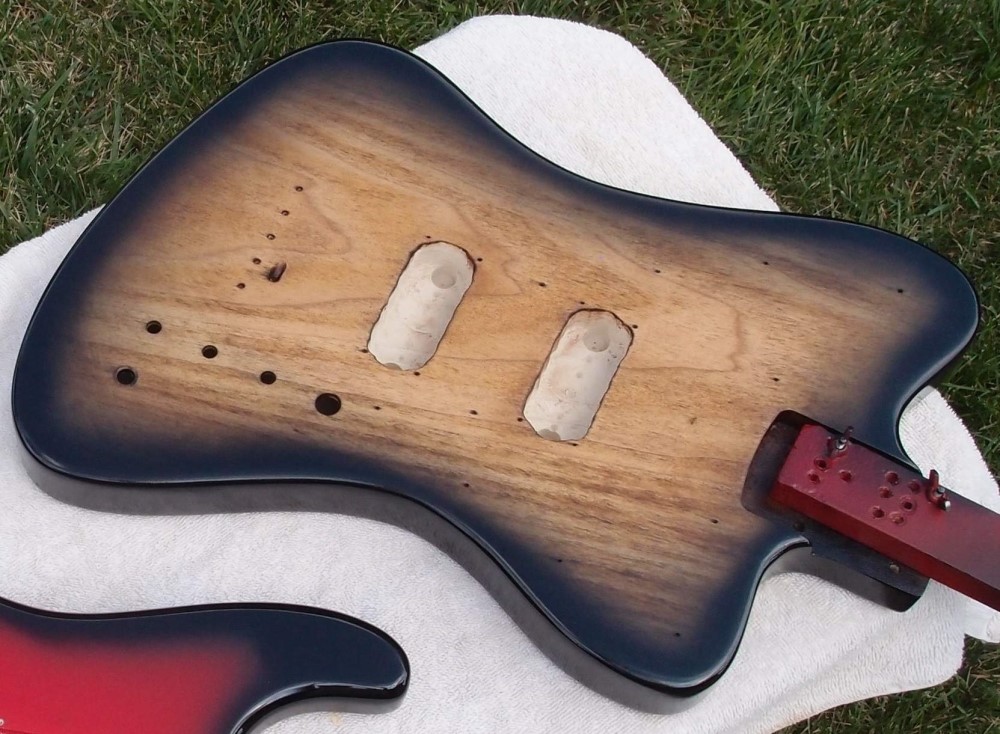
Although sold as a hardwood, poplar is actually softer than some pines. It often has an unattractive green color, although the grain patterning is usually nice. The grain itself is tight, requiring no filling. Poplar is suitable for stained and solid-color finishes that hide the natural color. Poplar requires a hard protective finish like polyurethane.
Poplar may be thought of as east-coast Alder - it is equivalent - if not superior - to that west-coast wood in every way. Poplar is often available at lumber yards in large thick pieces that can make a smaller guitar body in one piece, or a larger one from two pieces. Large thick pieces may be prone to cracking. It is also available at home centers in 3/4" thicknesses.
I recommend Radiata over poplar. I have used up my last large poplar blank, and I doubt I will use any more.
Here at Luthiery Labs, we're only interested in woods that are reasonably priced and locally available.
Wood Notes:
Since the gubment made rosewood illegal, ** despite the fact that there is no real definition of what rosewood is, alternative fretboard woods are going to become more mainstream in loothery. Bubinga is also illegal now, but that's no great loss.
An electric guitar body serves several purposes. It provides a place to attach (and hide) hardware and electronics, and provides a counterweight for the neck, specifically the tuners out there at the end. It also provides enough weight and bulk to stabilize the instrument while it is played, either sitting or standing, while at the same time being not too heavy or interfering with natural playing motions and access to the strings. And needless to say, it must be strong enough to resist the effects of string tension, which can be 100-200 pounds or more.
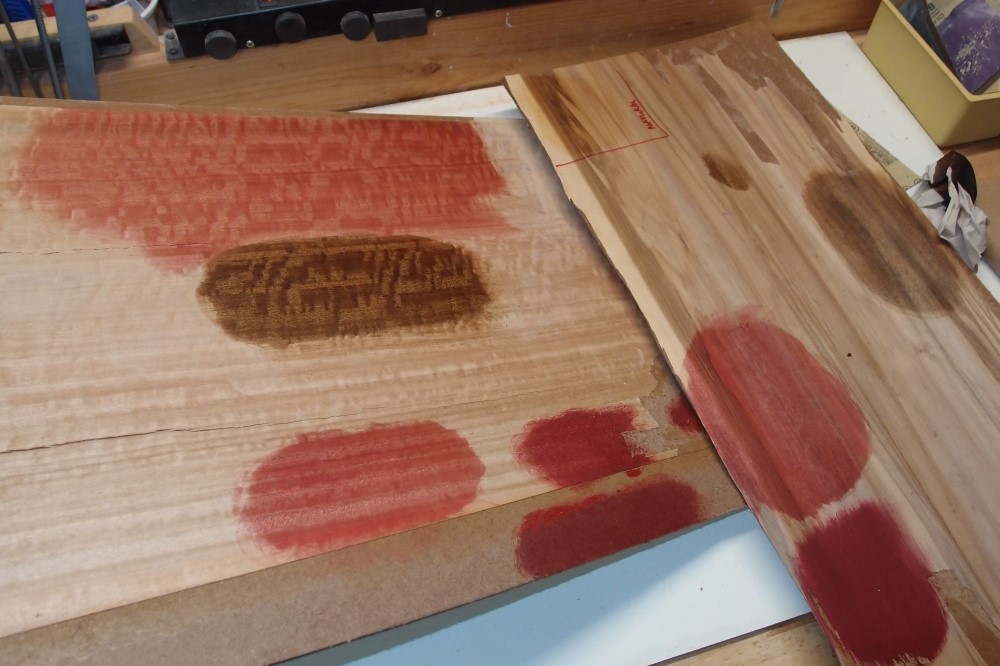
A few quick color swatches on some veneers. The deep red is Varathane "Barn Red", the lesser red is the same thing diluted 3:1 with mineral spirits. The brown is Minwax "Provincial 211", my regular brown stain for everything. And of course, Minwax "Natural", which gives its usual warming and brings out the grain.
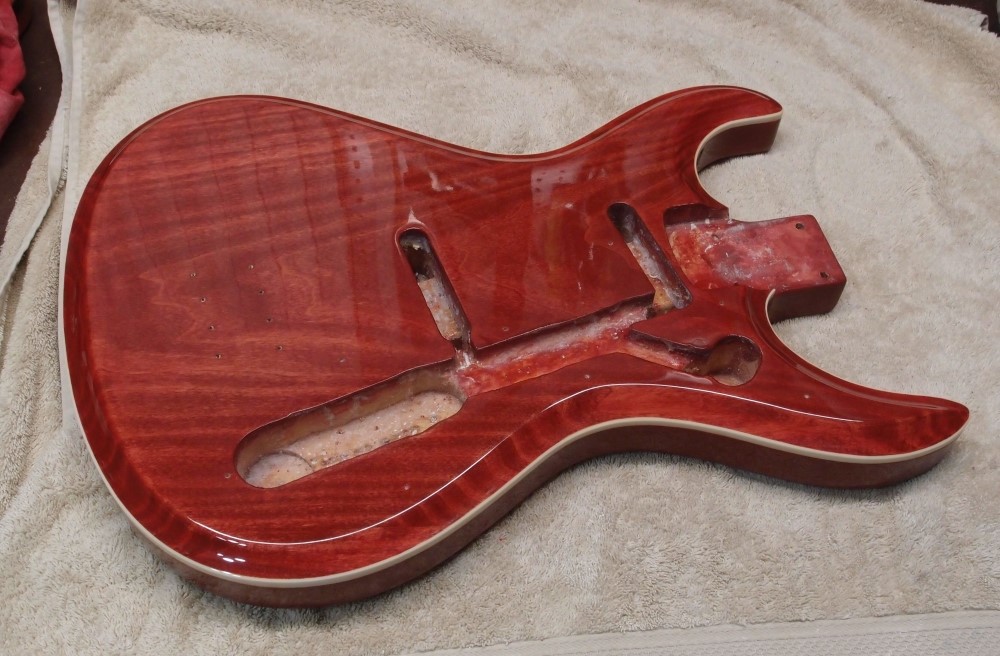
Except for very rare cases like my teak-bodied Osprey bass, oil-based polyurethane is my finish of choice for both necks and bodies. I generally use rattle-can poly for necks and small parts, simply because it is convenient. For bodies, I spray brush-on poly with a compressor.
I picked all the scrap pieces out of the trash for this cool picture
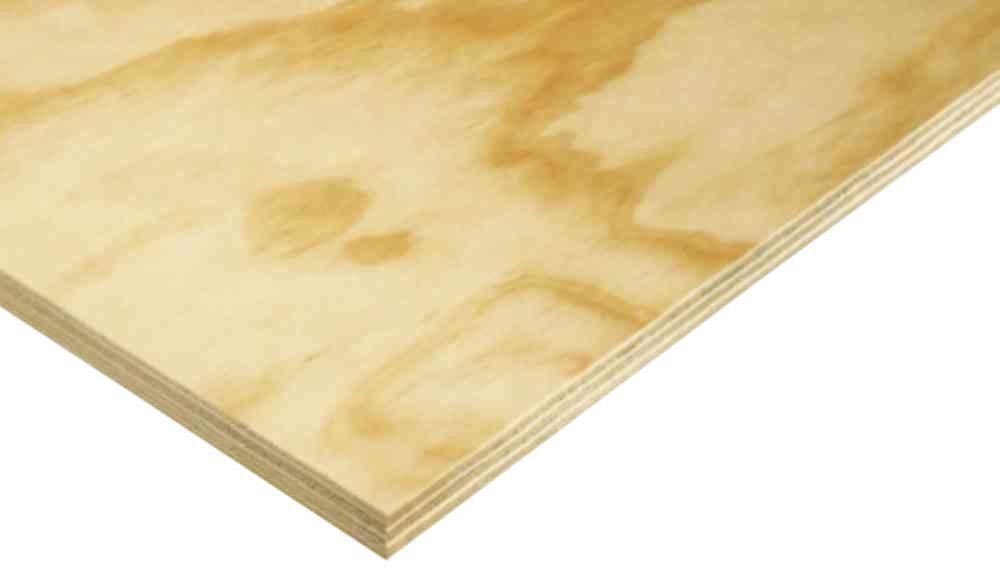
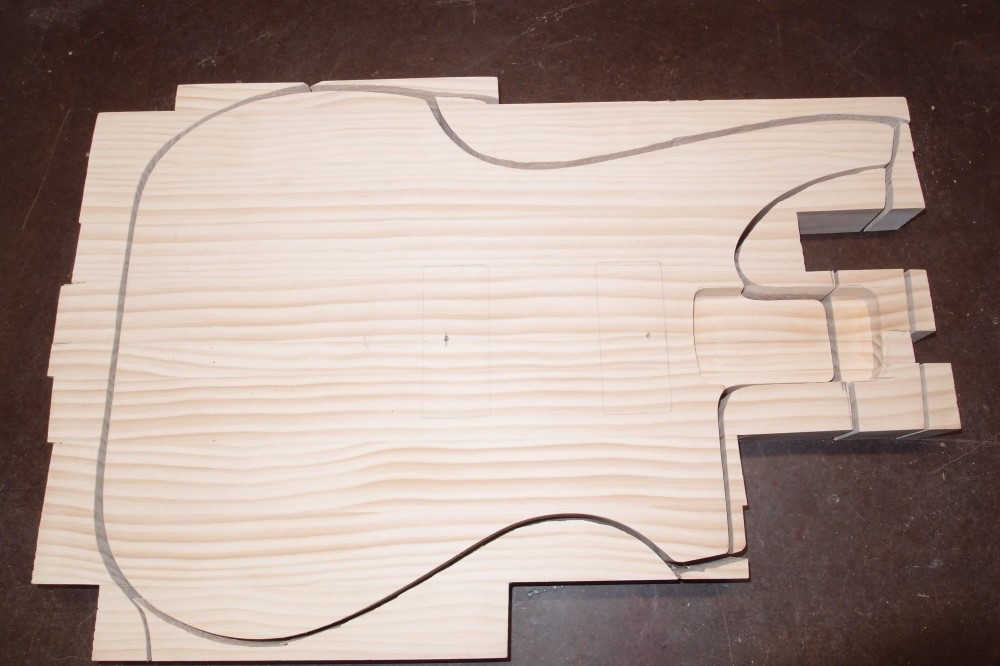
This is a body made from 2x2 Radiata pine from Home Depot. This material is actually 1-1/2" square and gives you a choice of tight grain on two opposing sides and loose feathery grain on the other two sides. This is the tight grain.
Questions or Inquiries?
Just want to say Hello? Sign the .