Passive Electronics
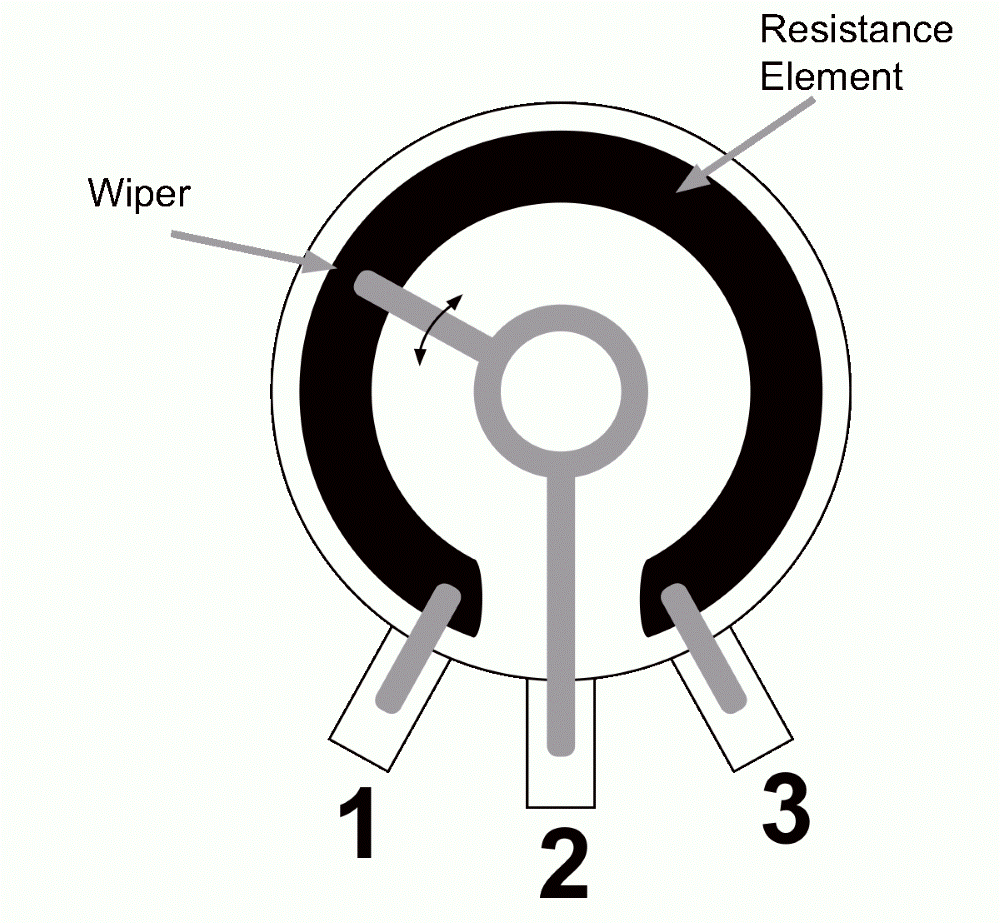
Passive electronics are un-powered - no battery. They modify the output from the pickups only by taking away - they can remove frequencies and reduce volume, even induce distortion, but they cannot add anything. The only power they have to work with is what is generated by the pickups.
Passive electronics are the most common by far on guitars and basses. There are three main classes of passive electronics:
Volume controls, which use a variable short to ground to reduce output volume. A balance control is two volumes centered on one shaft that can be used to reduce either side.
Tone controls, which are two types: A treble control uses a variable short to ground through a capacitor, forming a low-pass filter. A bass control uses a variable bypass to output around a capacitor, forming a high-pass filter.
Switches, which control the wiring of the pickups. Switches can control the wiring inside the pickup, and also the wiring between multiple pickups. Switches can also be used to select from multiple tone capacitors and many other things.
Factory guitar wiring tends to be very simple, usually just volume-tone-switch. This keeps manufacturing costs down. You can find diagrams here for all kinds of passive circuits you'll never find on a factory guitar.
Learn how to solder !!!
Questions or Inquiries?
Just want to say Hello? Sign the .