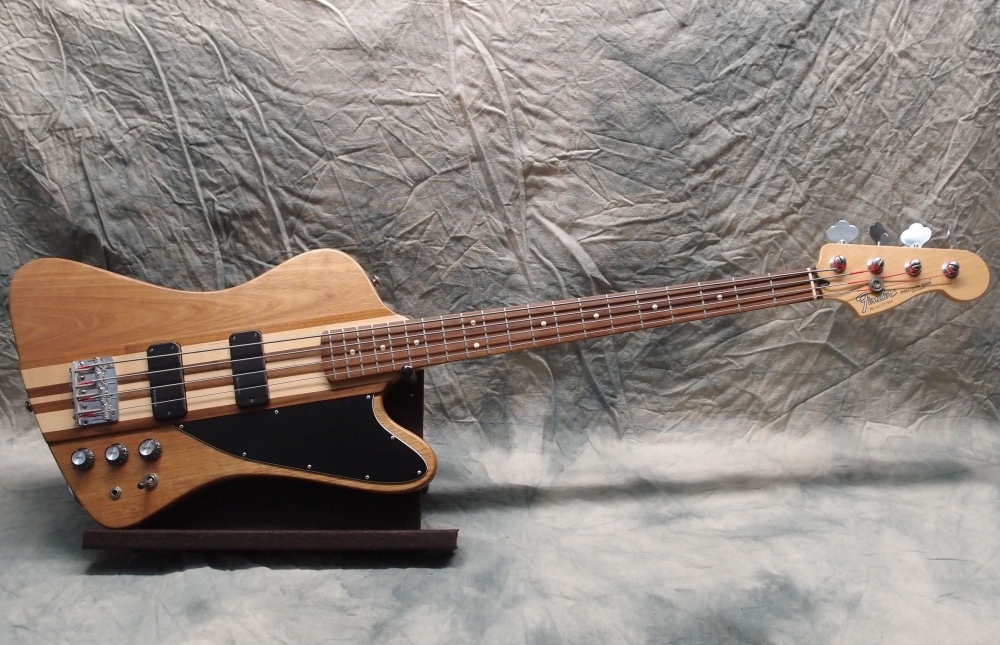
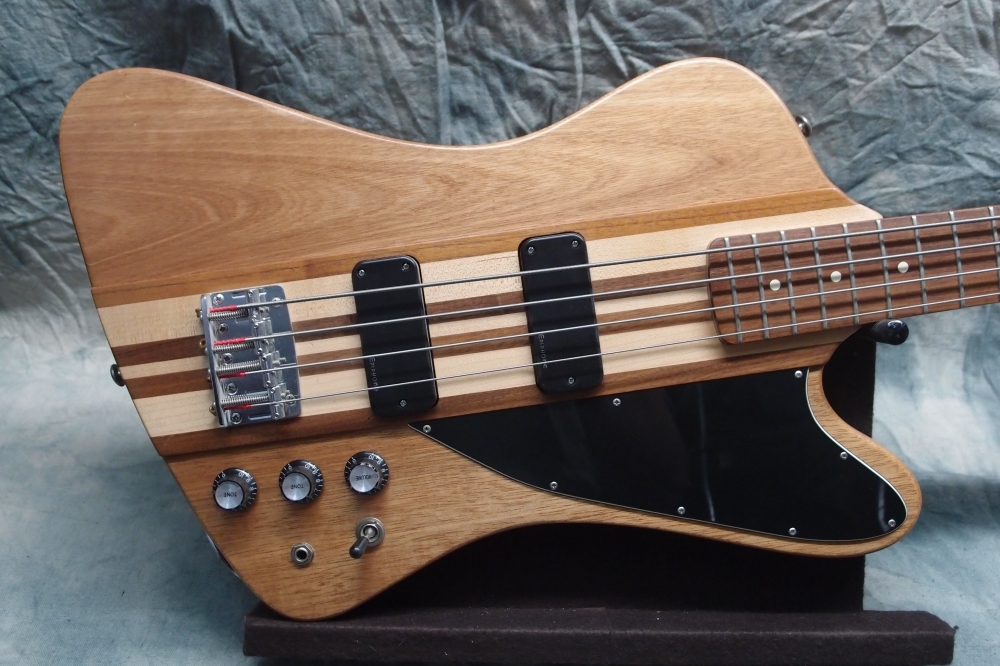
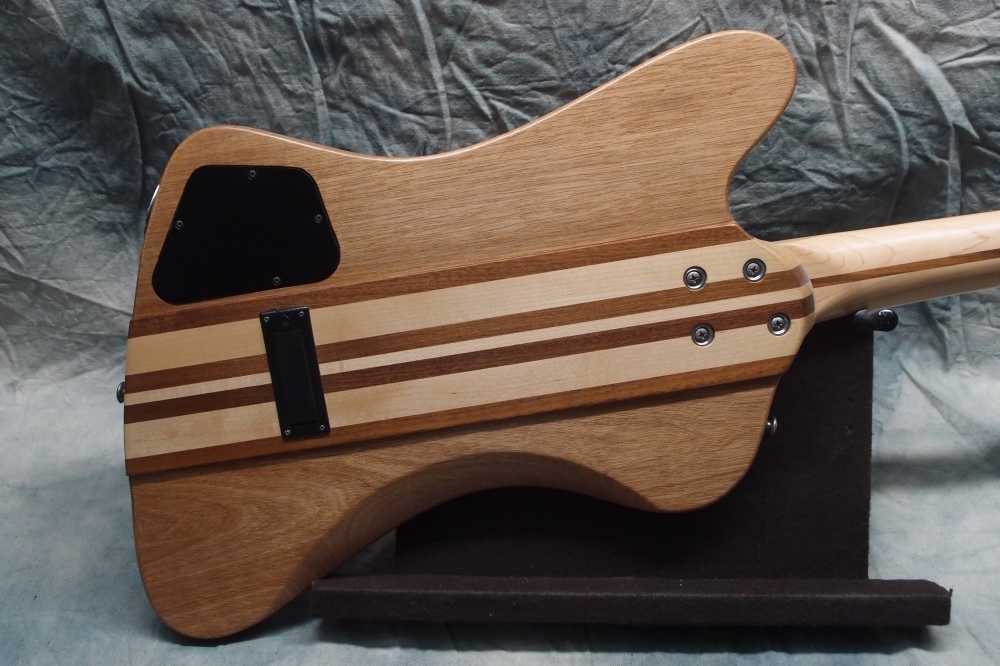
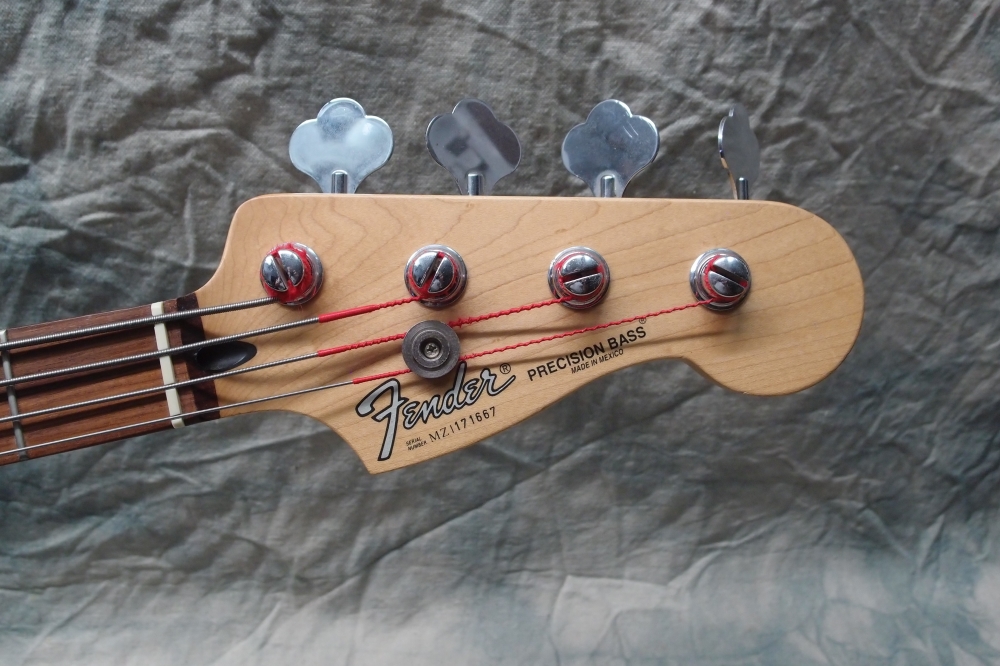
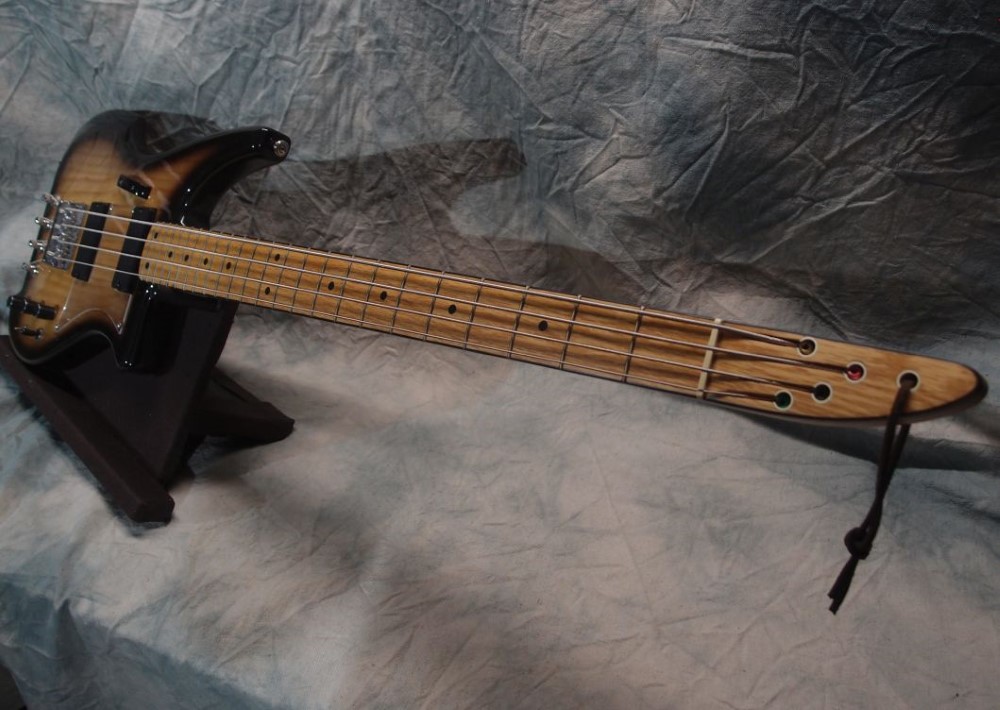
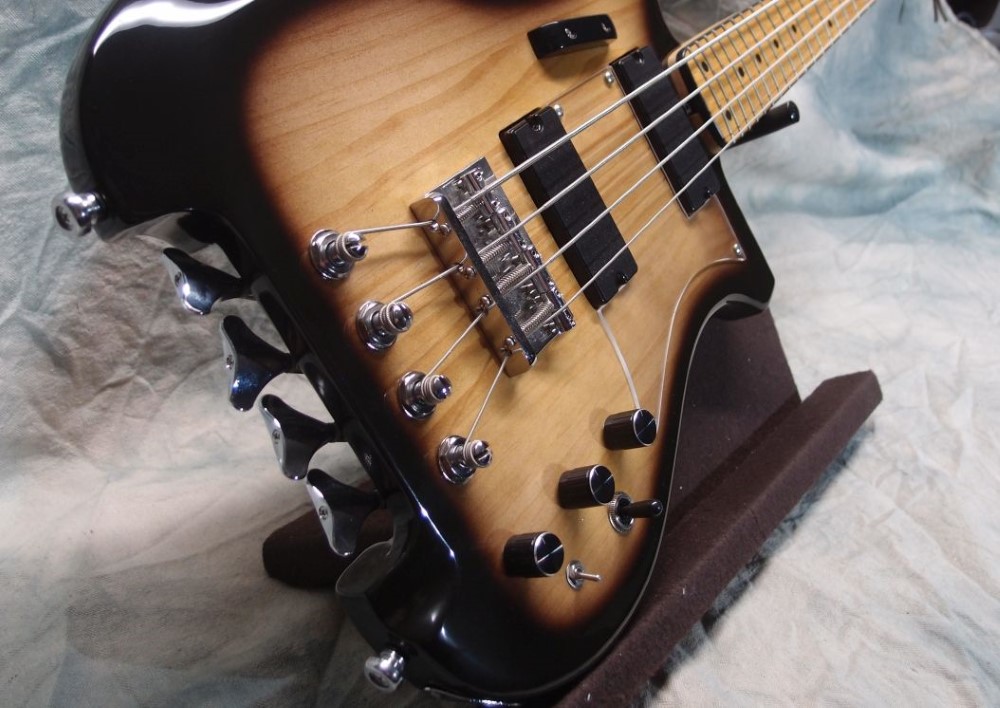
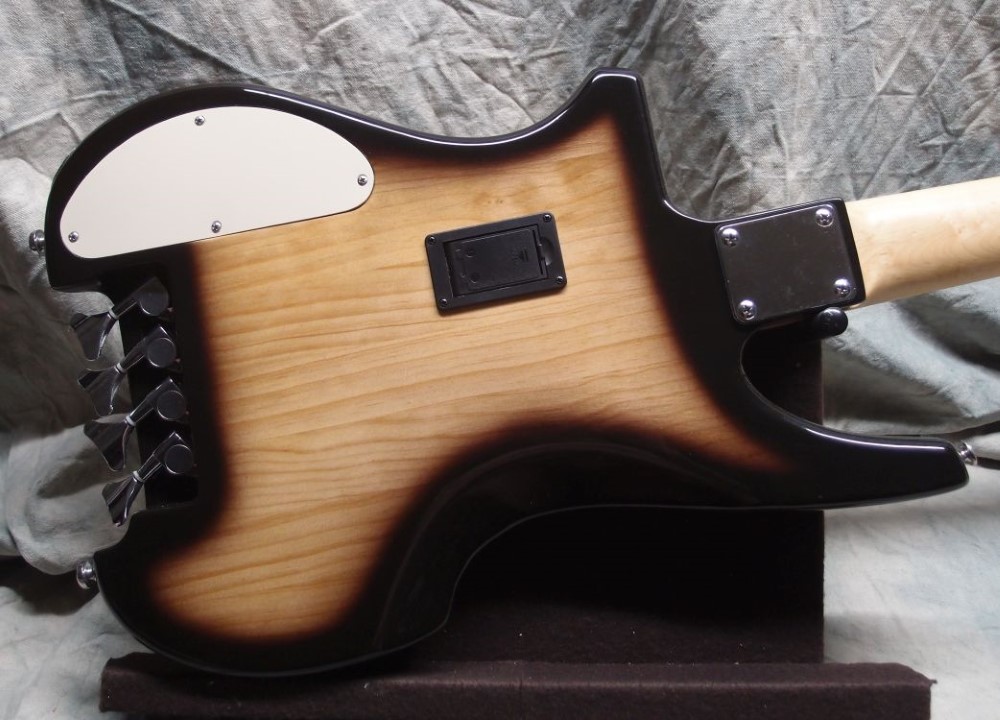
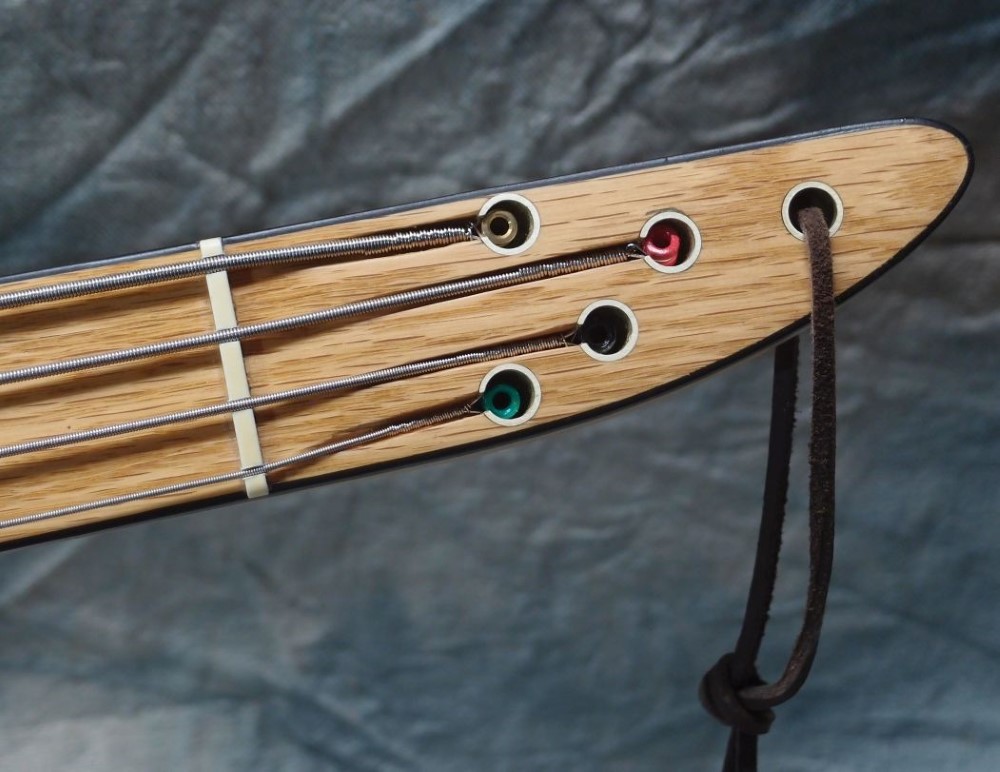
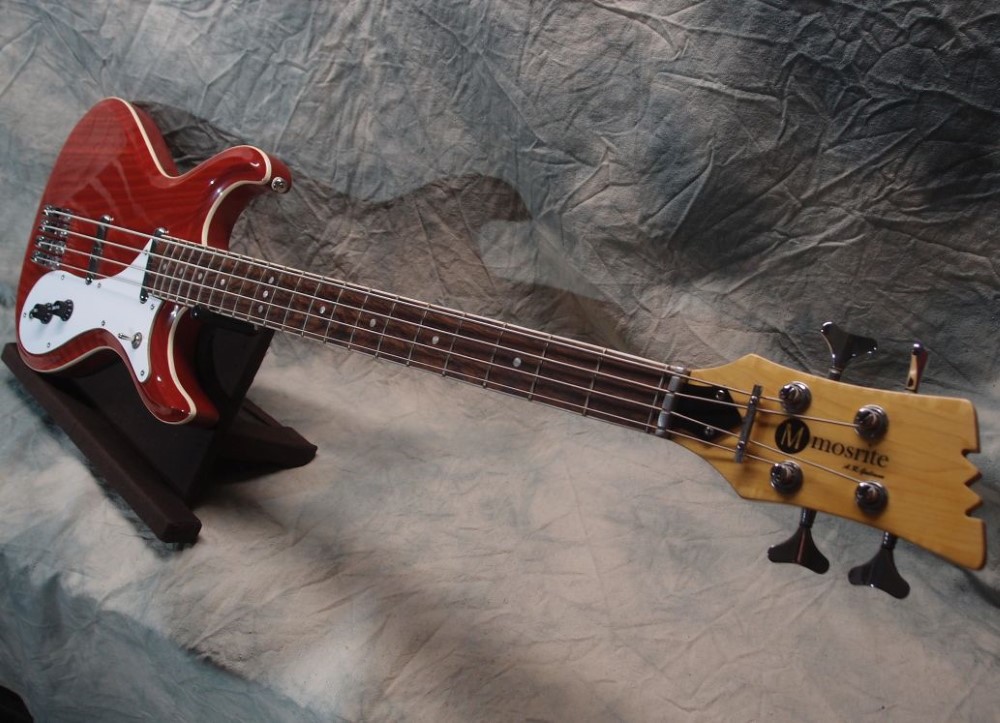
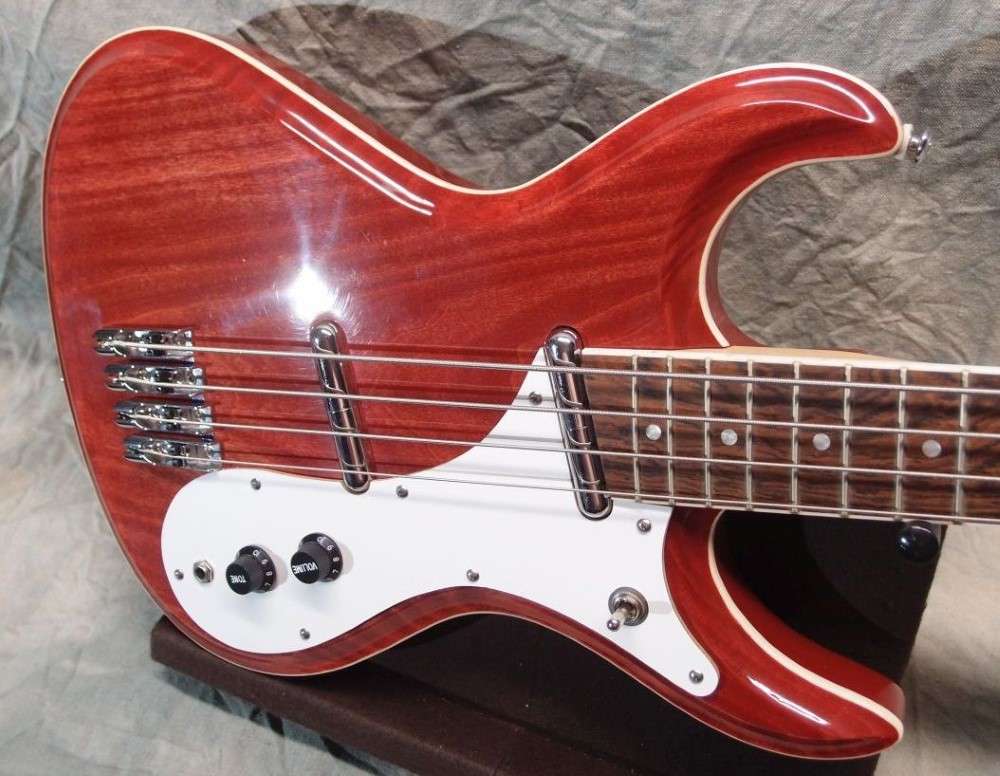
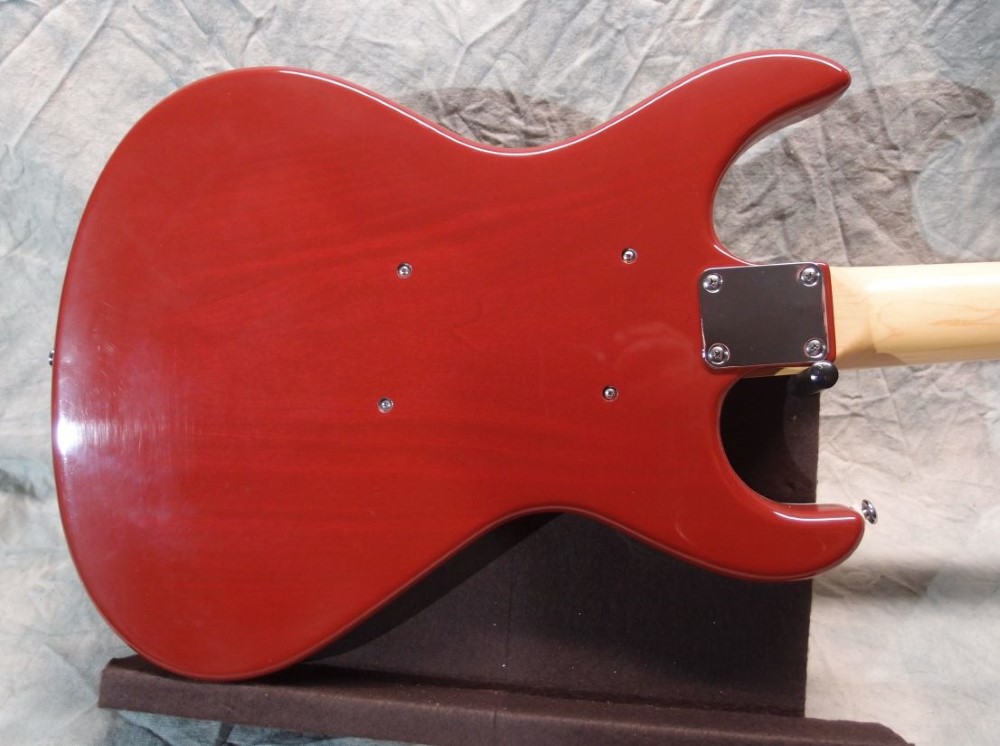
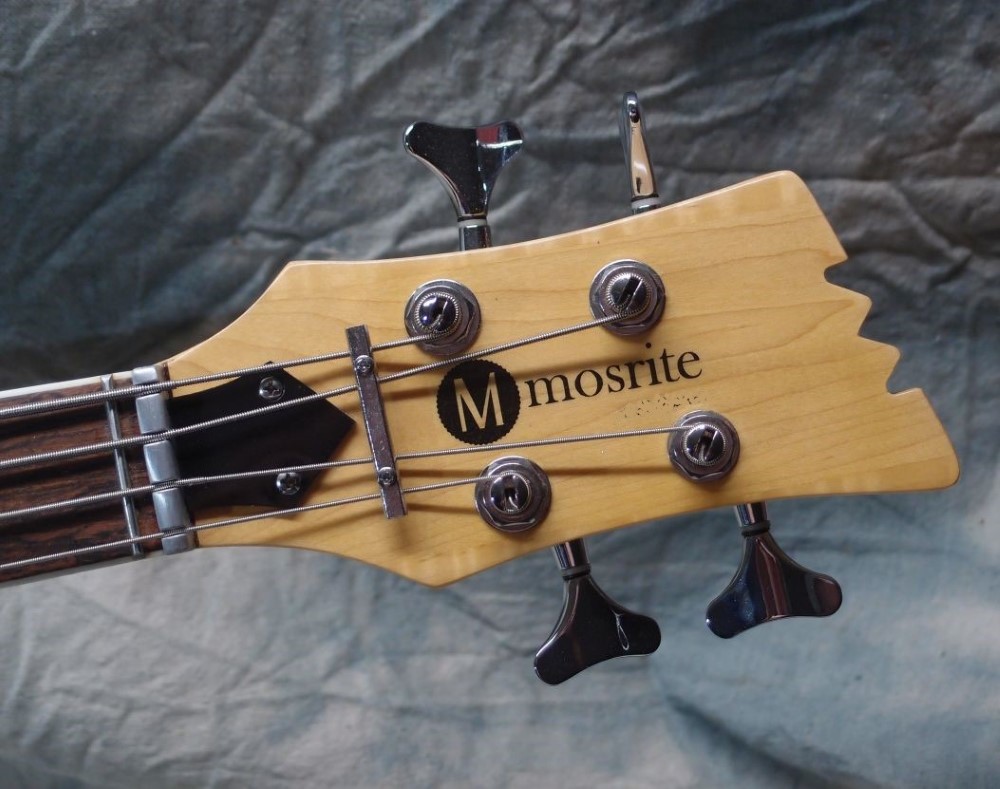
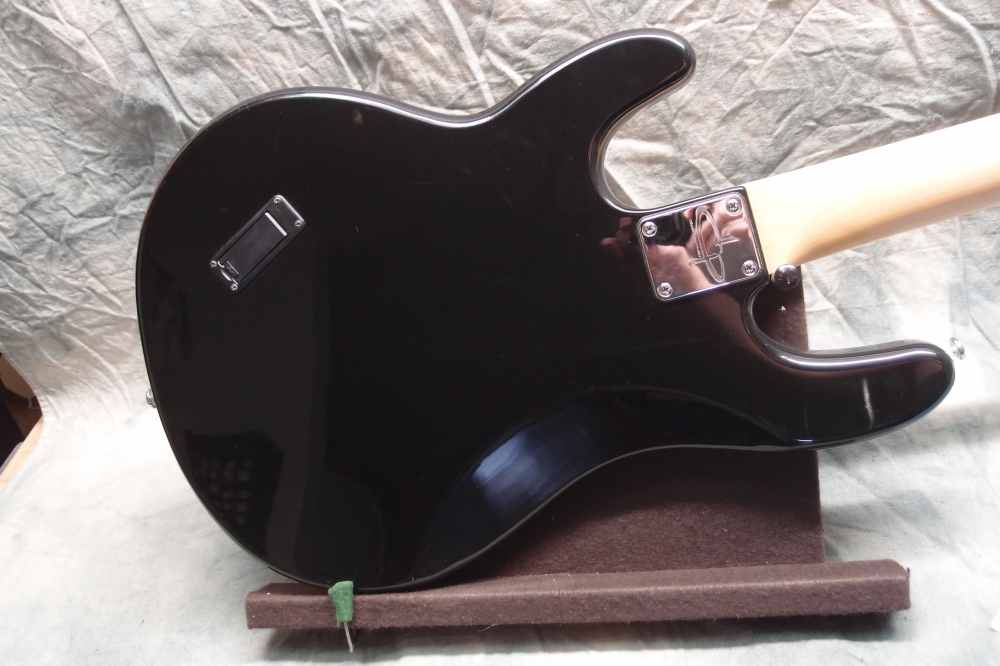
This started out as a broken Epiphone, one of the very nice Pro models. Turns out the Epi copy was a bit too authentic - it even reproduced the standard Gibson pop-off headstock. I removed the neck, re-finished the stump, routed out a neck pocket, and installed a Fender Mexico Precision neck. The pickups are stock, the active electronics are a replacement as the originals blew up. I also made the pickguard. The high frets are basically inaccessible, but the trade-off is much better balance.
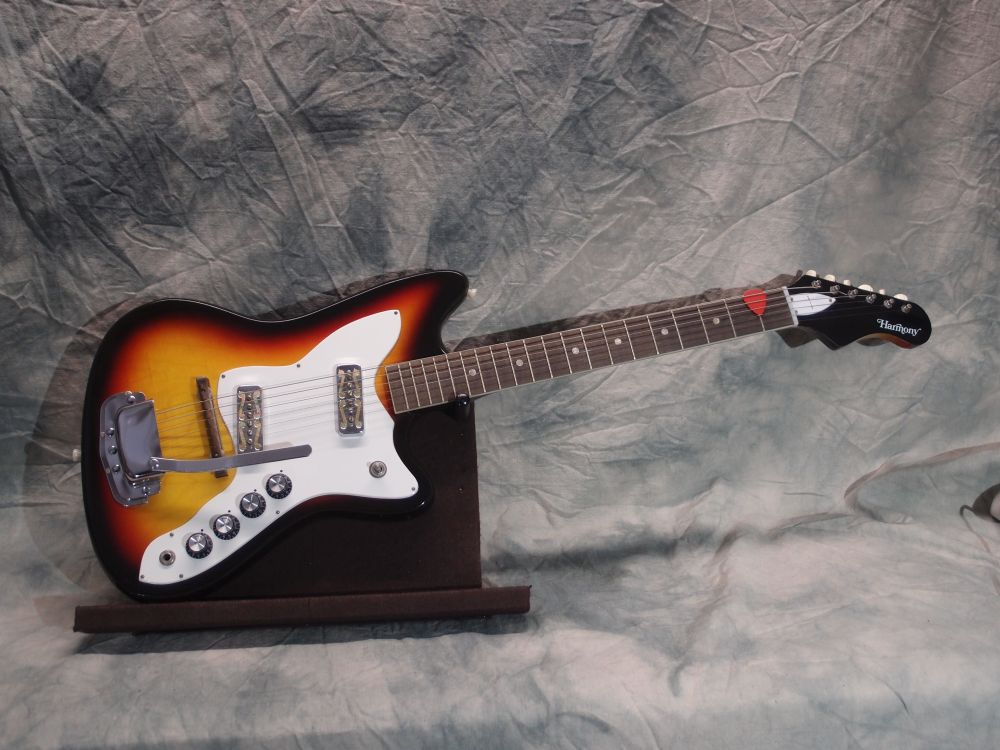
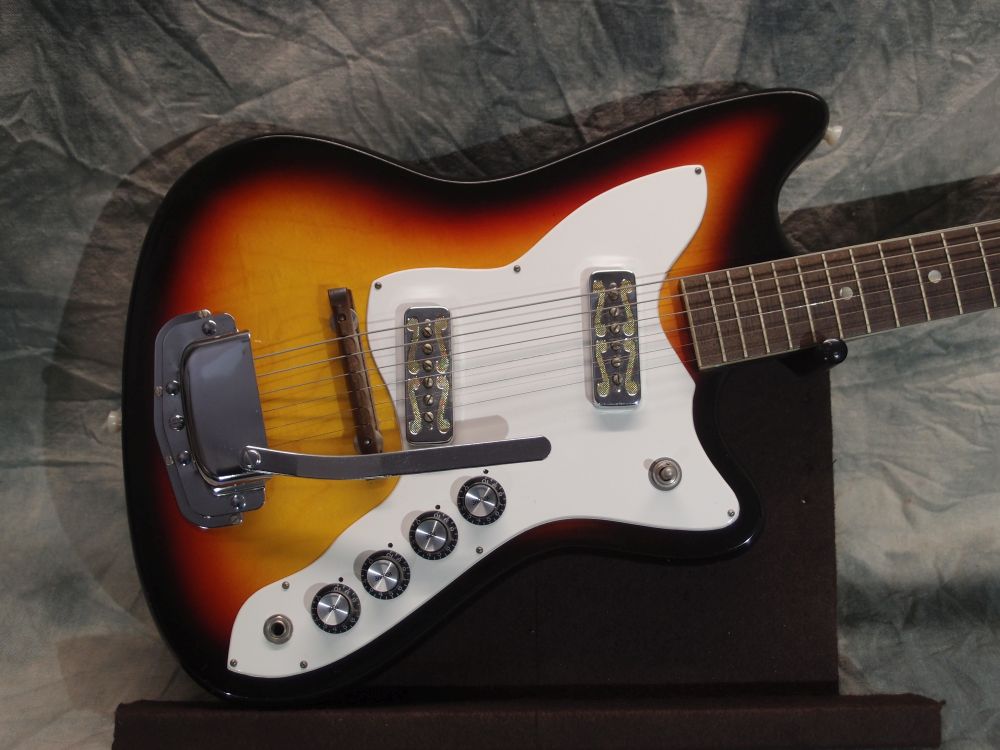
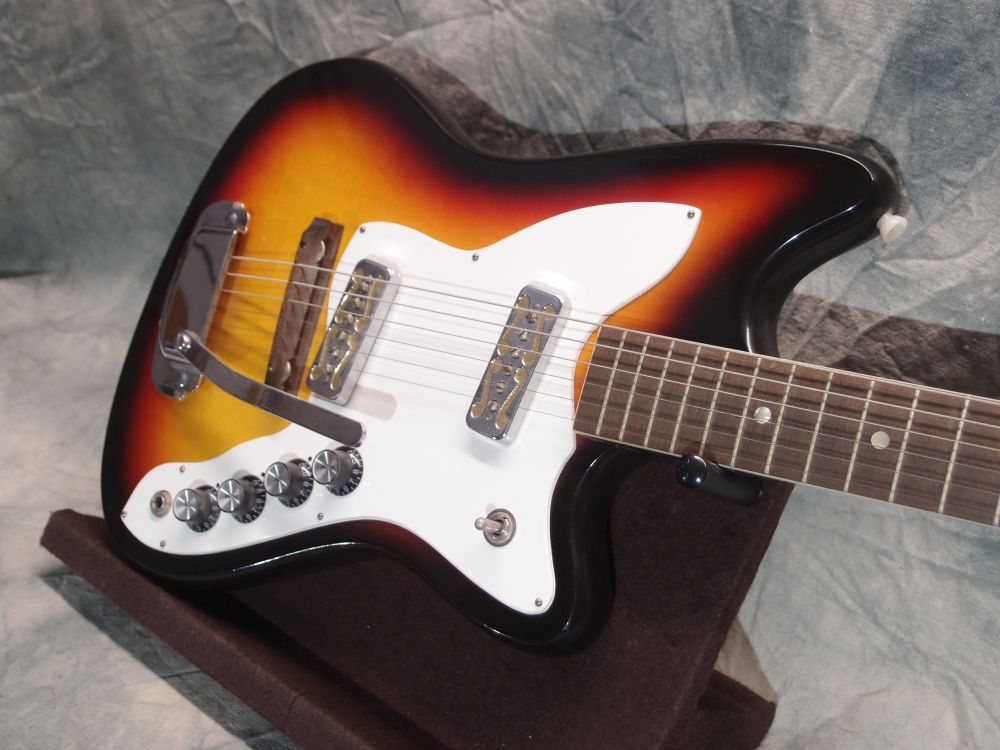
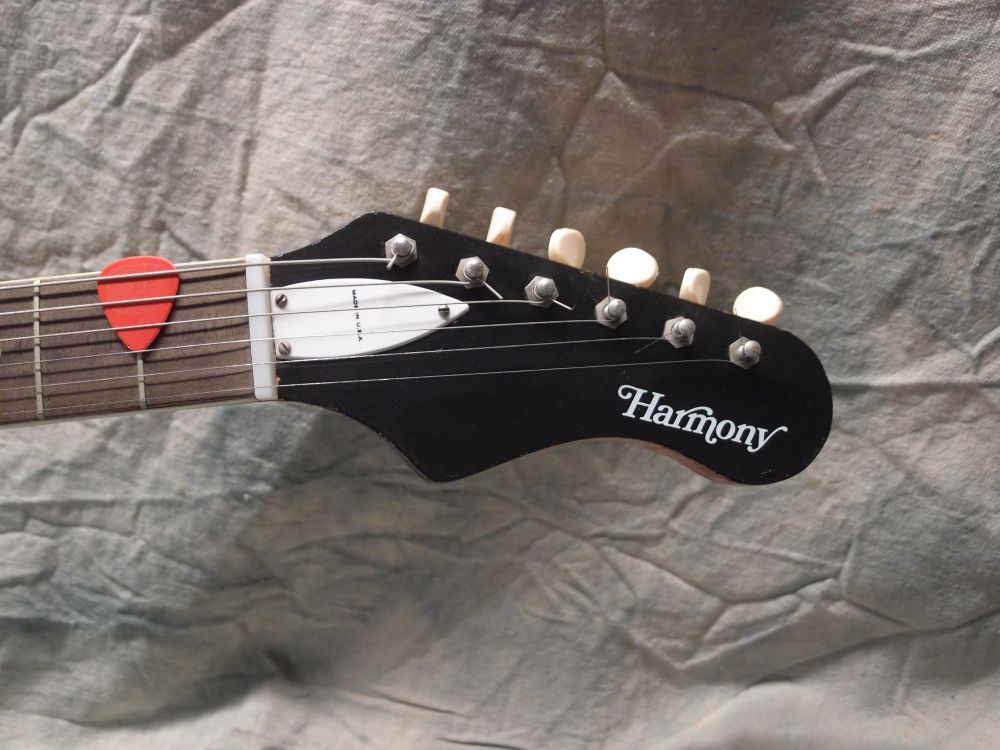
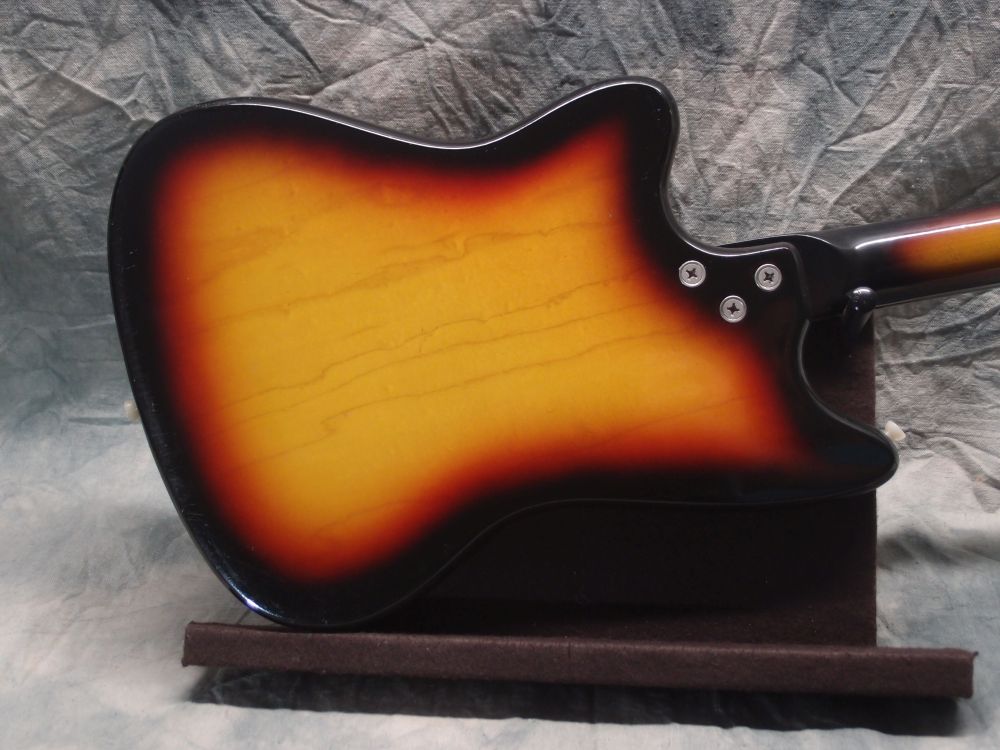
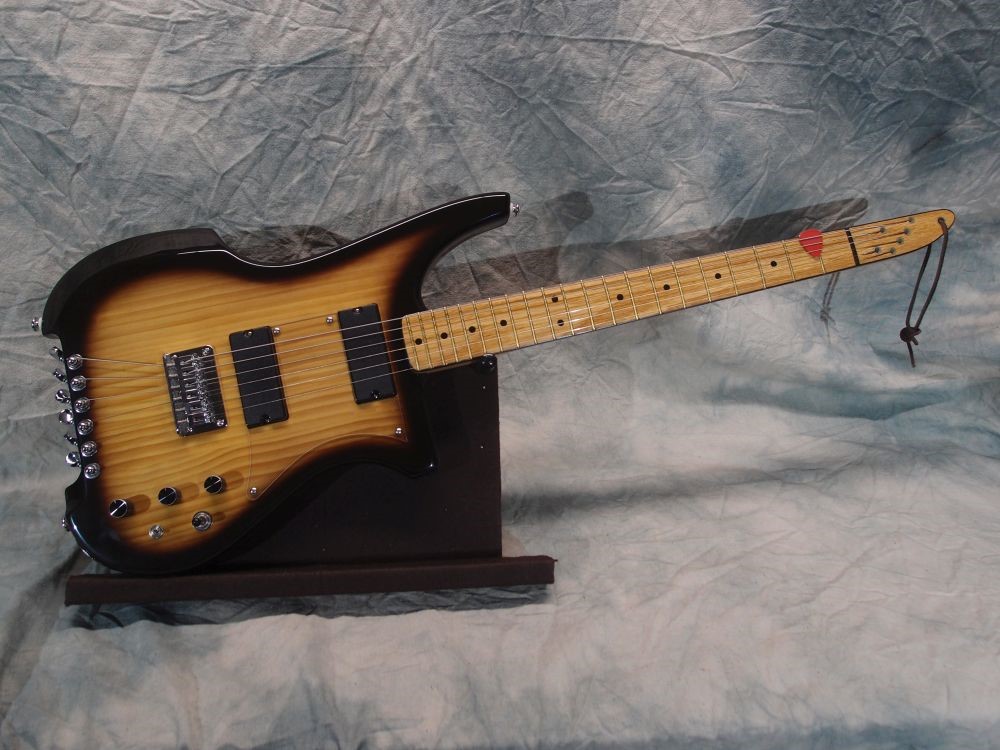
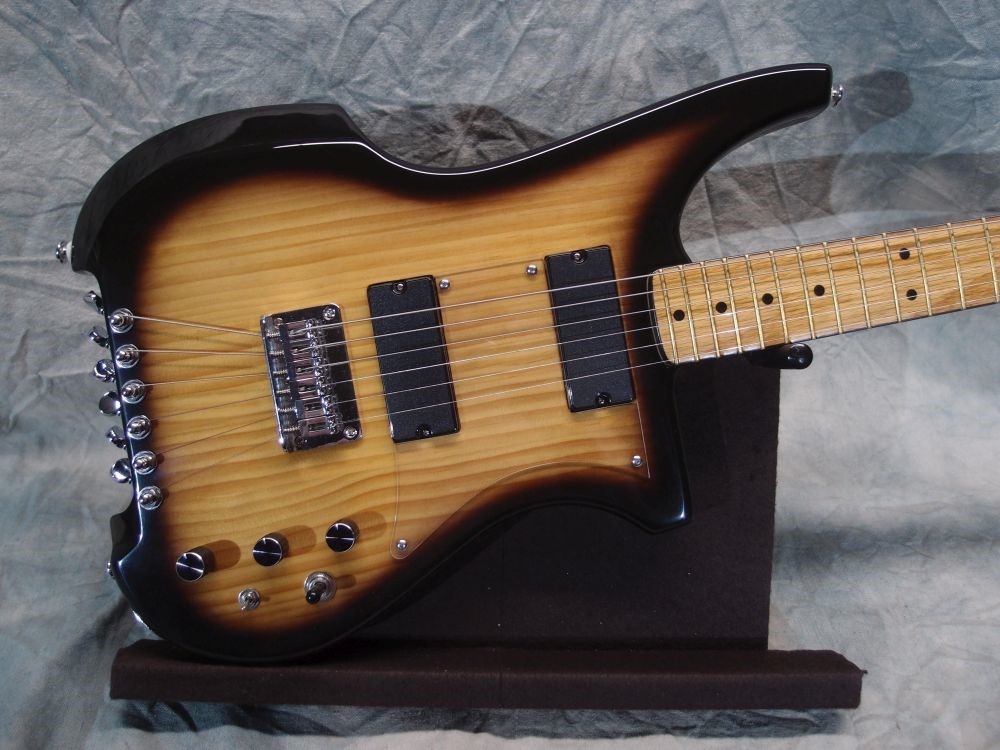
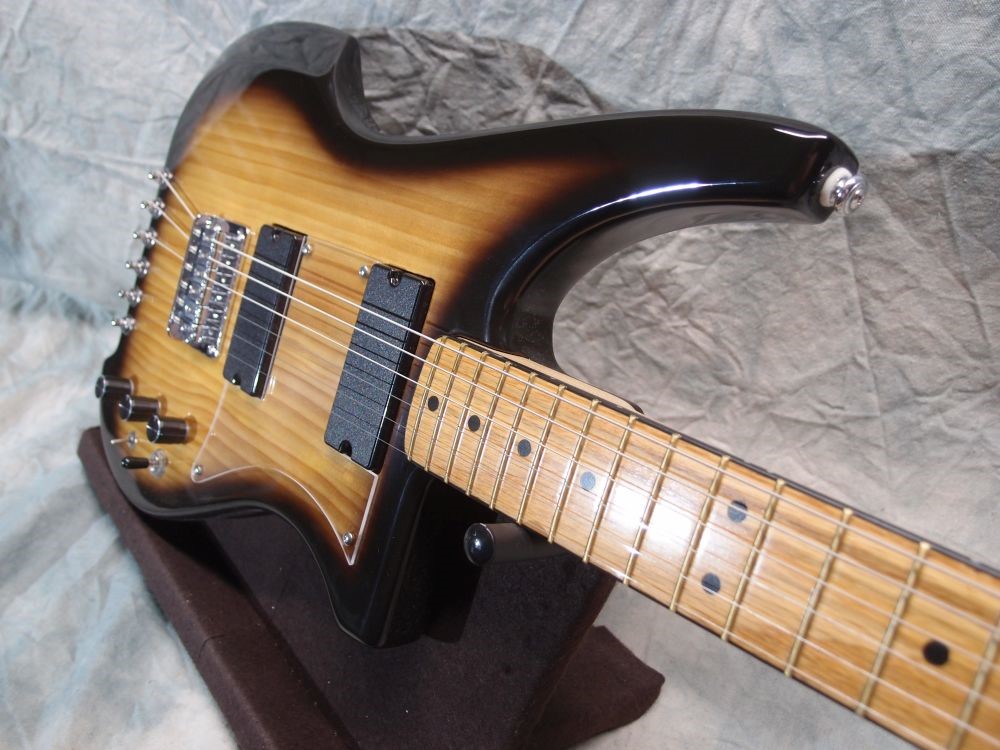
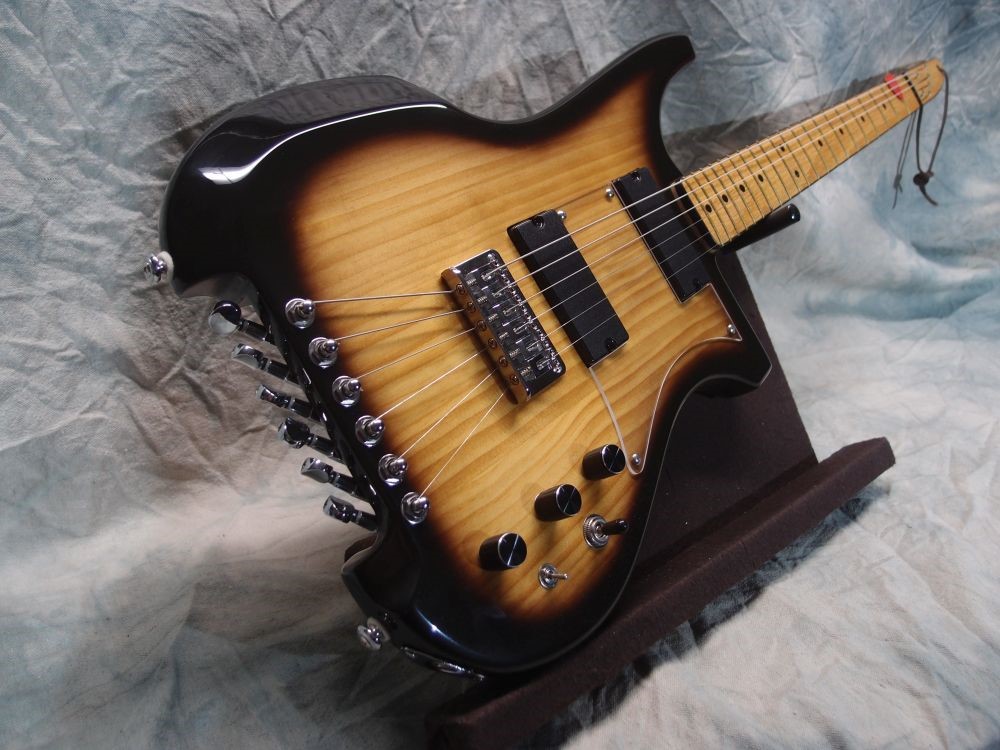
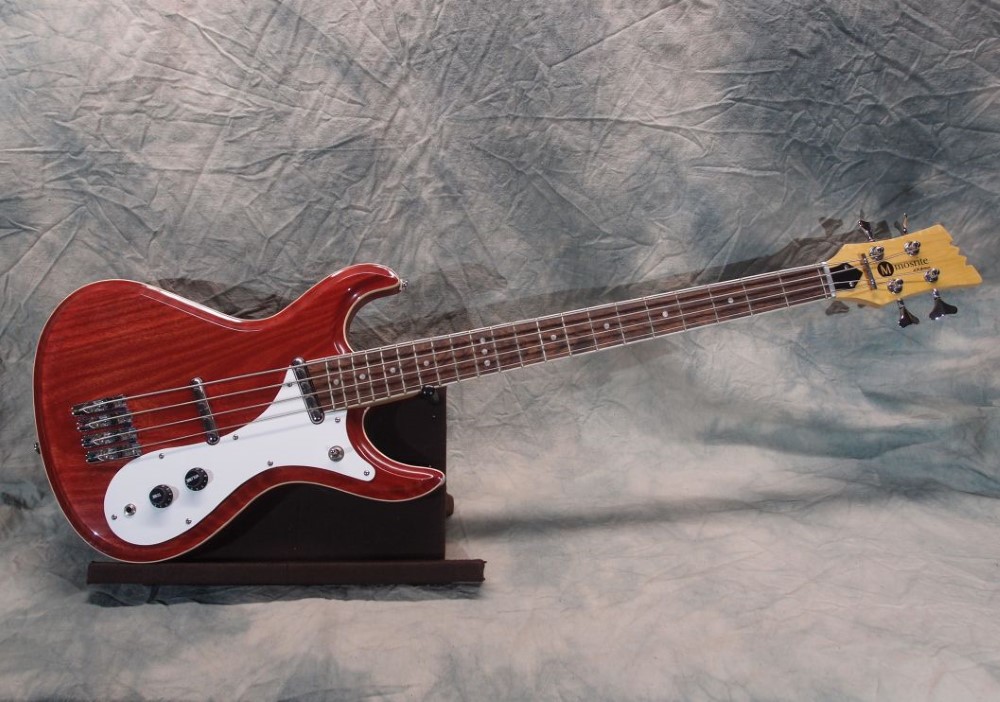
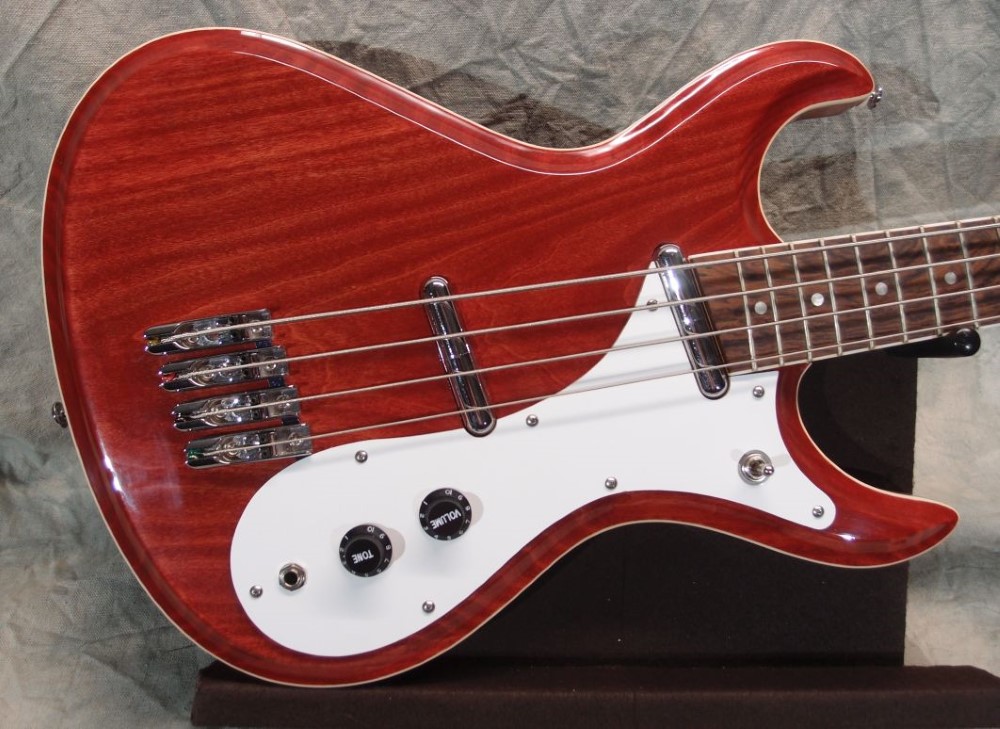
This pretty little thing is a Harmony H617 Bobkat. The H-bodied series of guitars, originally known as the Silhouette, began in 1963 and ended in 1973. This one is from 1972 or 1973. Harmony built a number of guitars for Sears under the Silvertone name, at first as a step up from the Danelectros, and ultimately replacing them. See the Silvertone 1478.
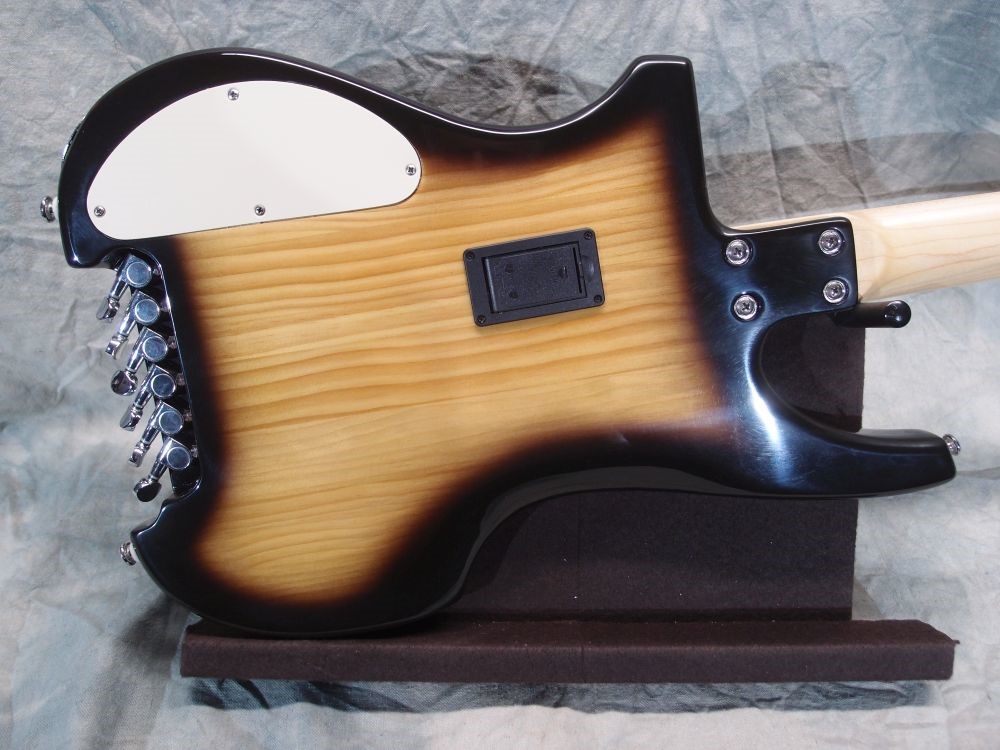
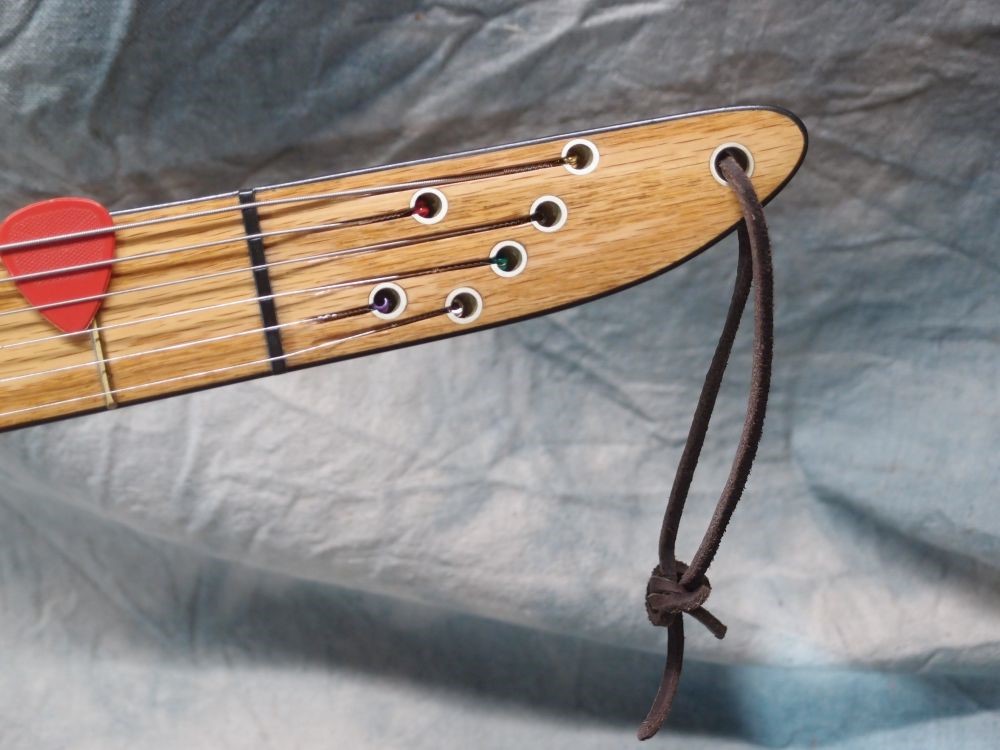
I was so pleased with the bass that I thought I'd try a guitar. This is a little more complicated, as there are six tuners rather than four, but it worked out well. The battery is for an Artec tone control that I wanted to try. More later ...
I went into the electronics, and reversed the leads on the volume control for a nicer 'sweep'. Then I started troubleshooting a problem with the passive tone control that turned out to be an interaction with the EXP circuit. Long story short, the EXP disables any tone control that is downstream from it. I moved the tone control upstream, and now it works fine. I have a separate review for the EXP tone control, I'm not all that impressed, but I'd say try it yourself, it's not expensive or difficult to install.
This one went through a long and torturous build process over almost two years. All I can say is don't believe the "advice" you find on talk_ass. However, in the end, it turned out to be a pretty nice instrument.
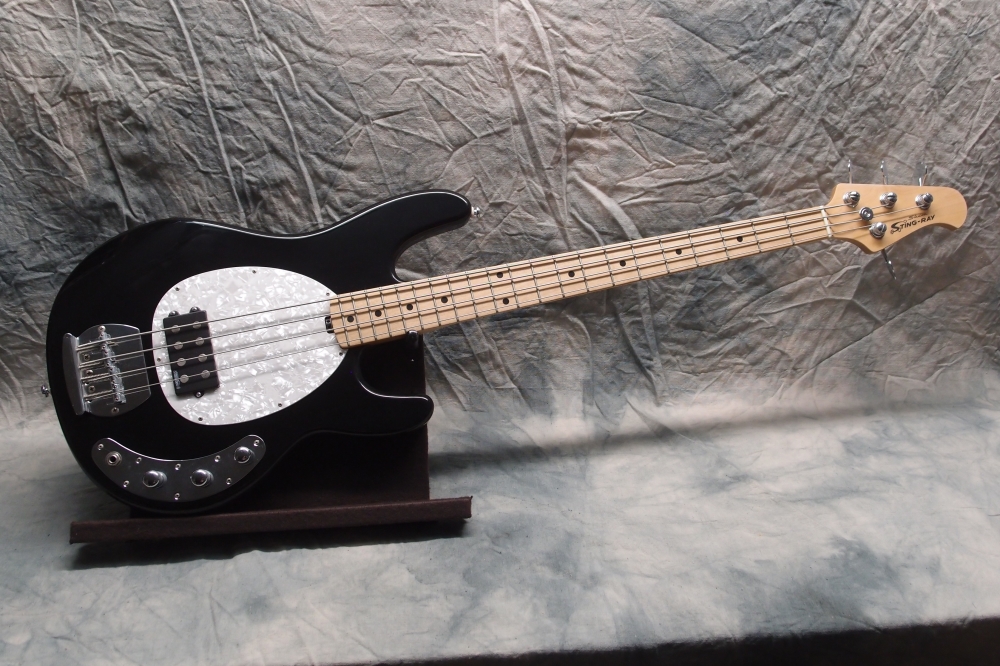
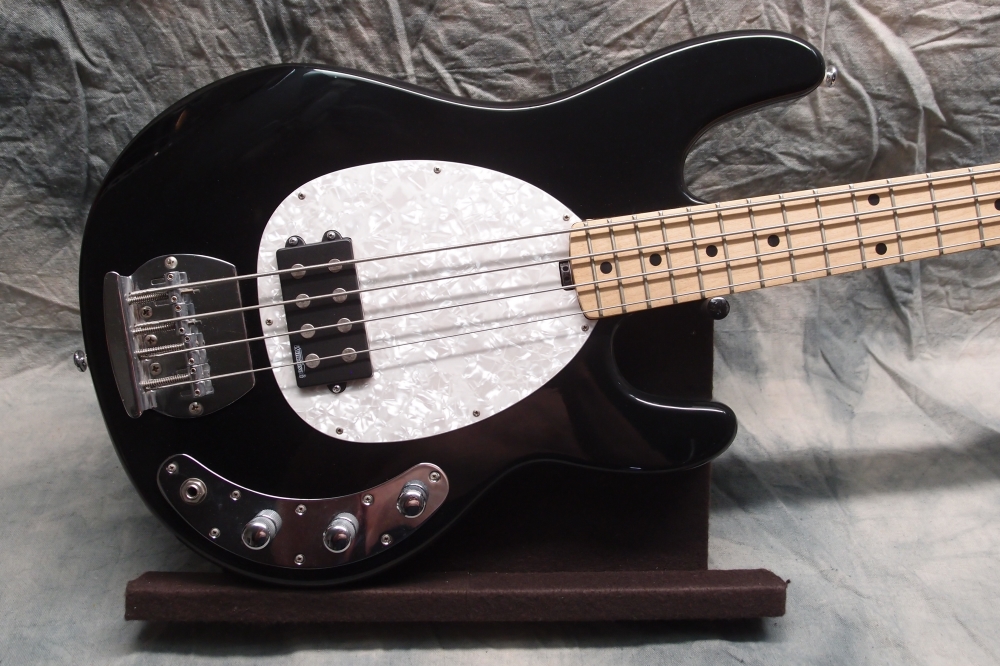
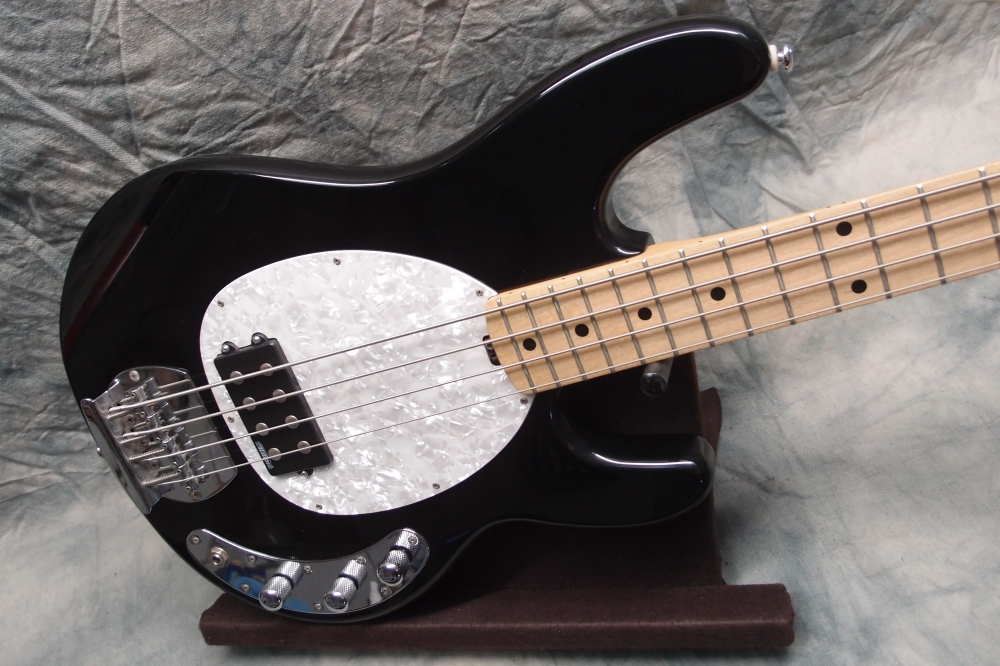
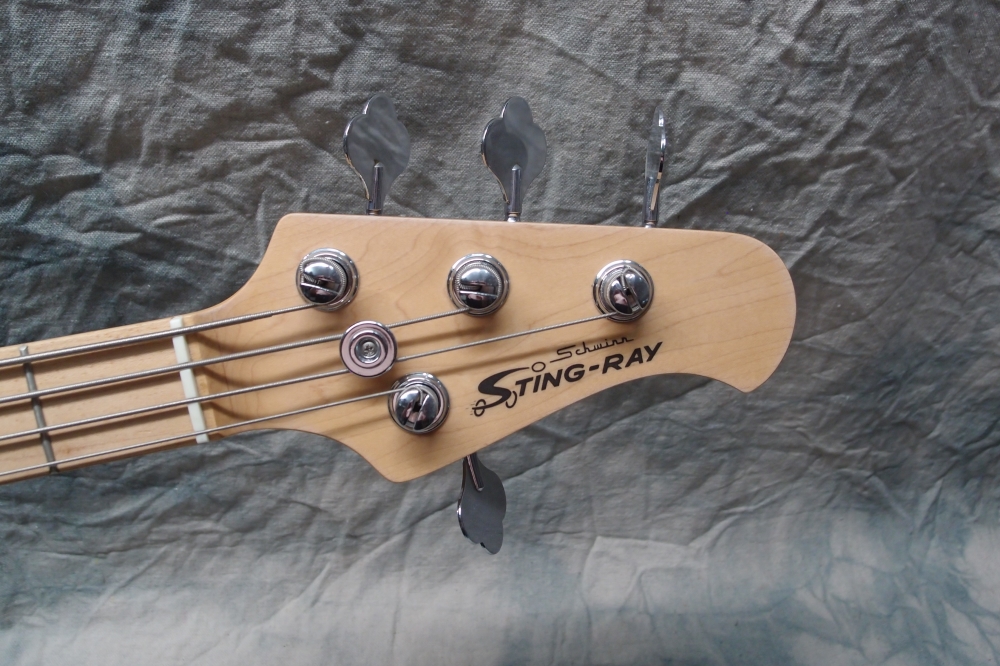
This OLP Stingray was one of the first basses I ever modded heavily. I routed a battery and a second pickup cavity, and did all sorts of experiments on it, before returning it to it's original single-pickup configuration, but with upgraded active electronics and pickup, and a nice new pearl pickguard.
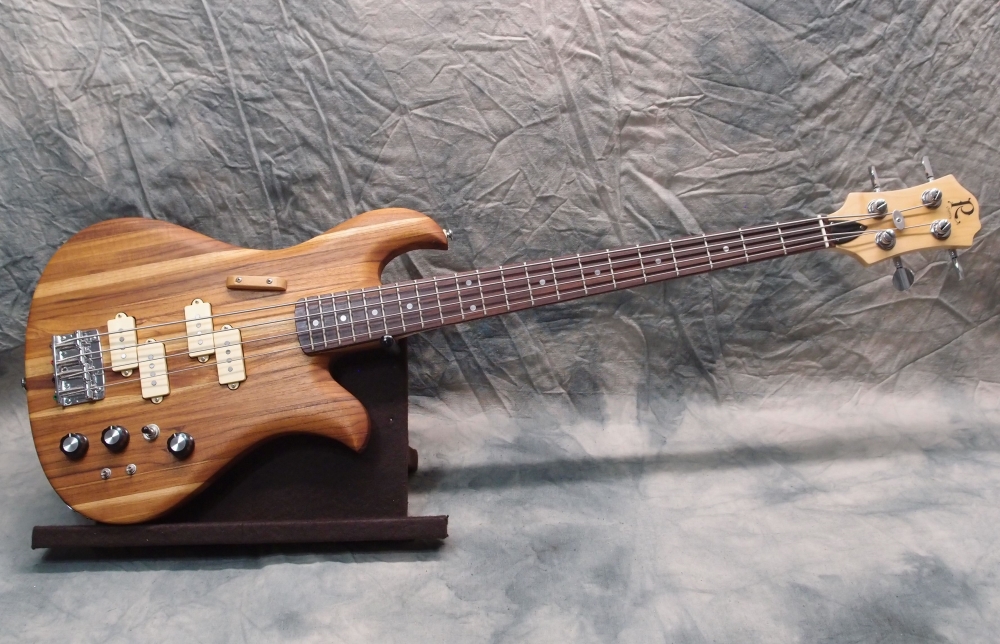
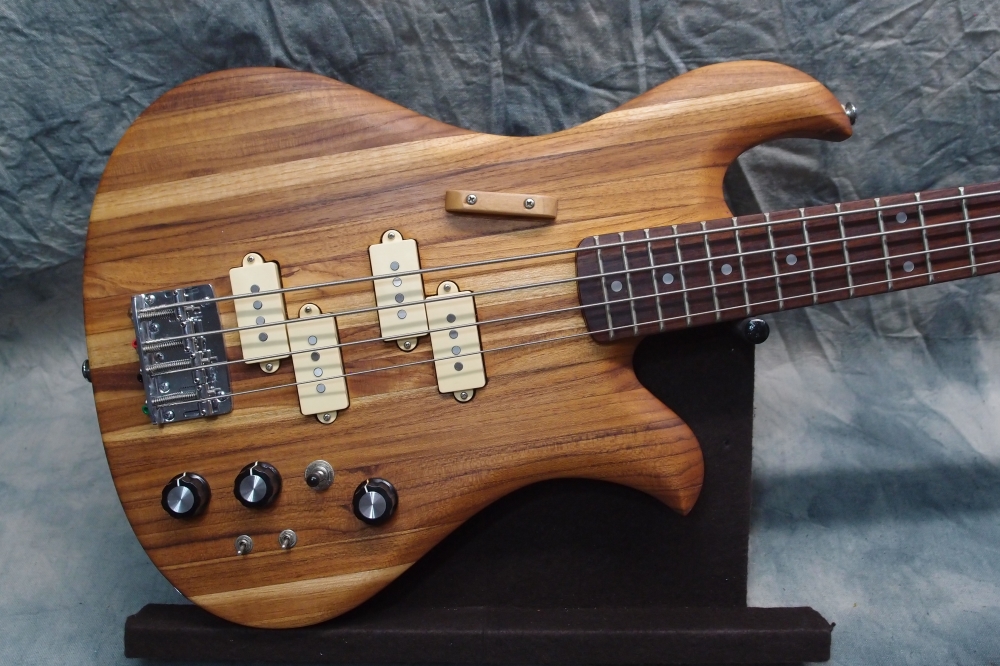
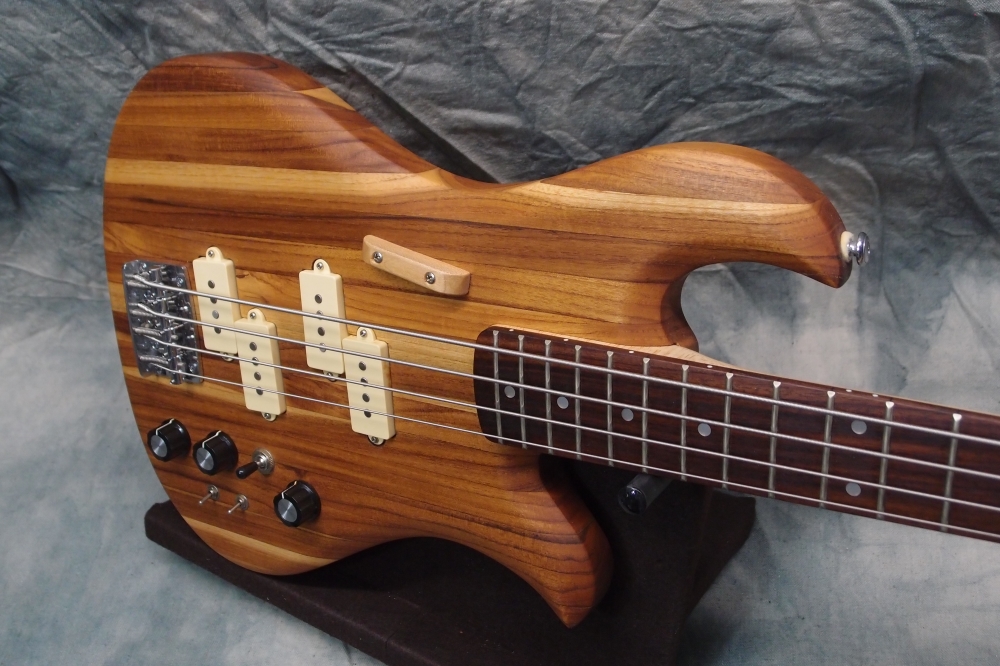
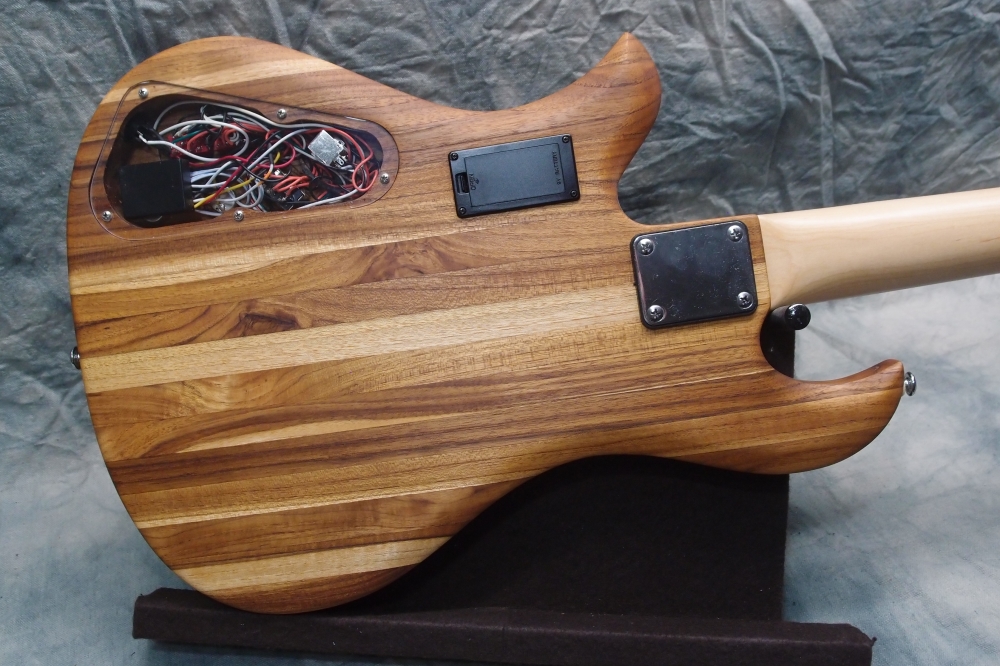
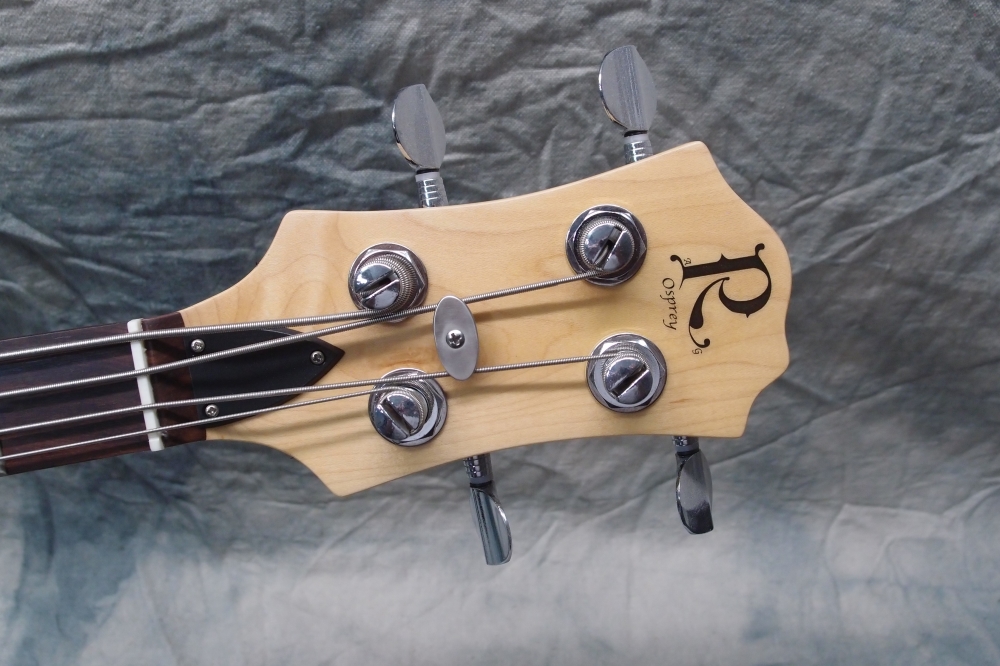
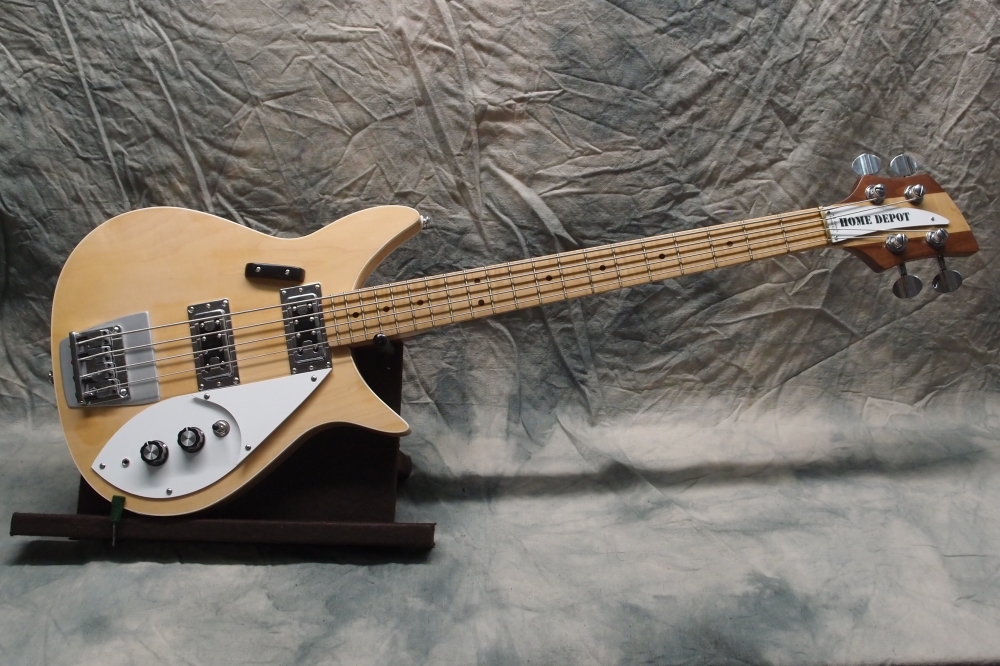
This beautiful instrument was built from a teak cutting board that I got for free from Home Depot for review. 32" Eden neck, active electronics. Teak is hard enough for a simple oiled finish. This one was built with a minimum of tools, mostly by hand, to show that it can be done and how.
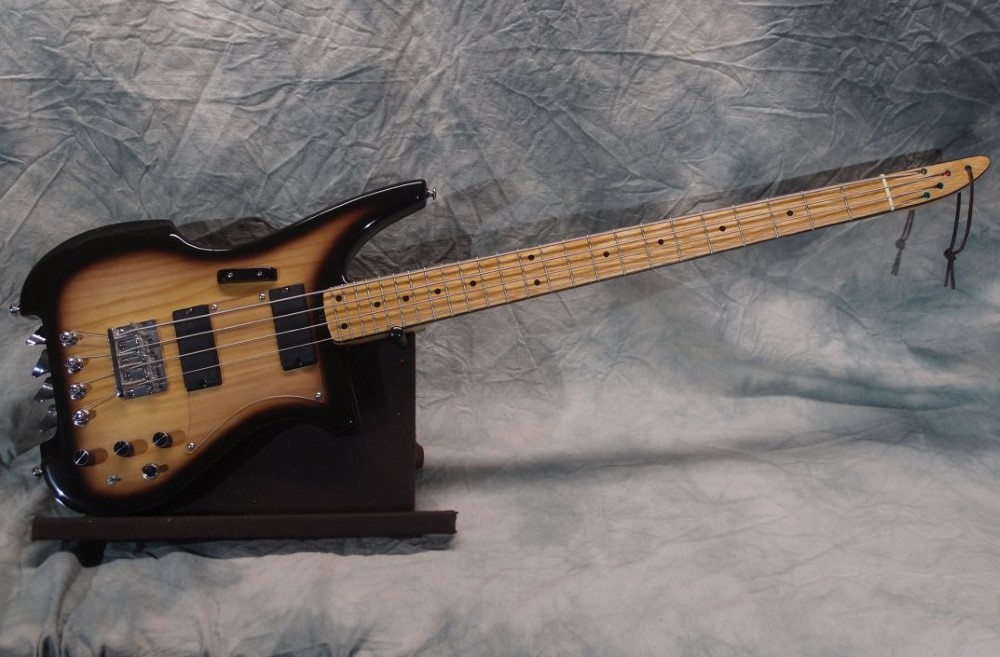
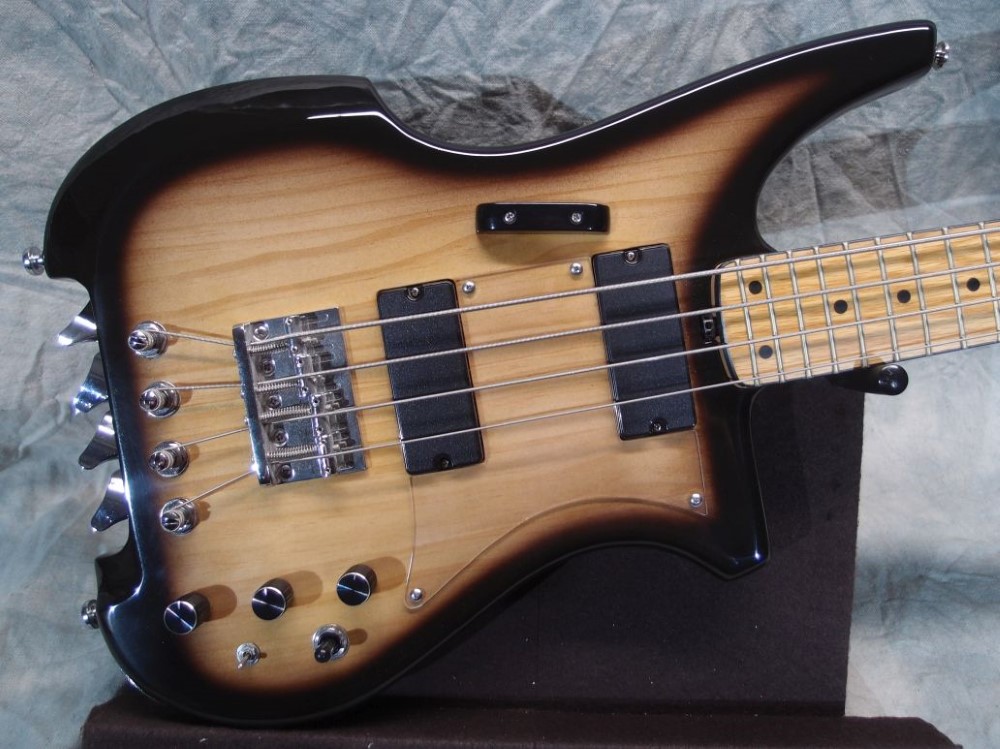
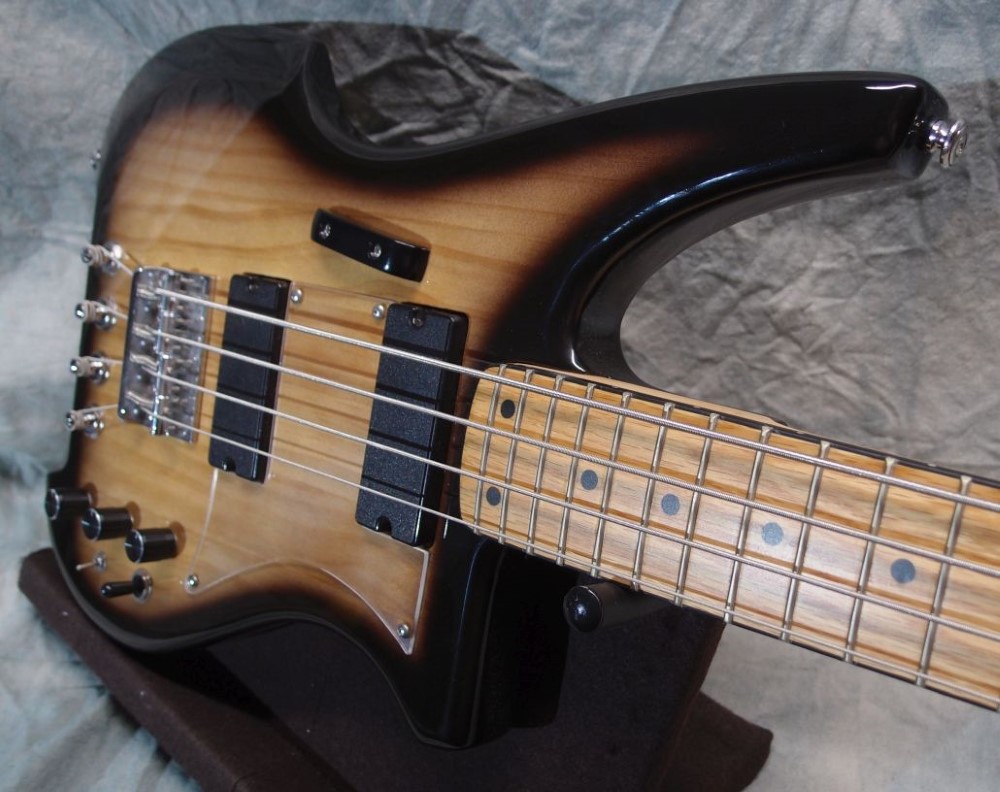
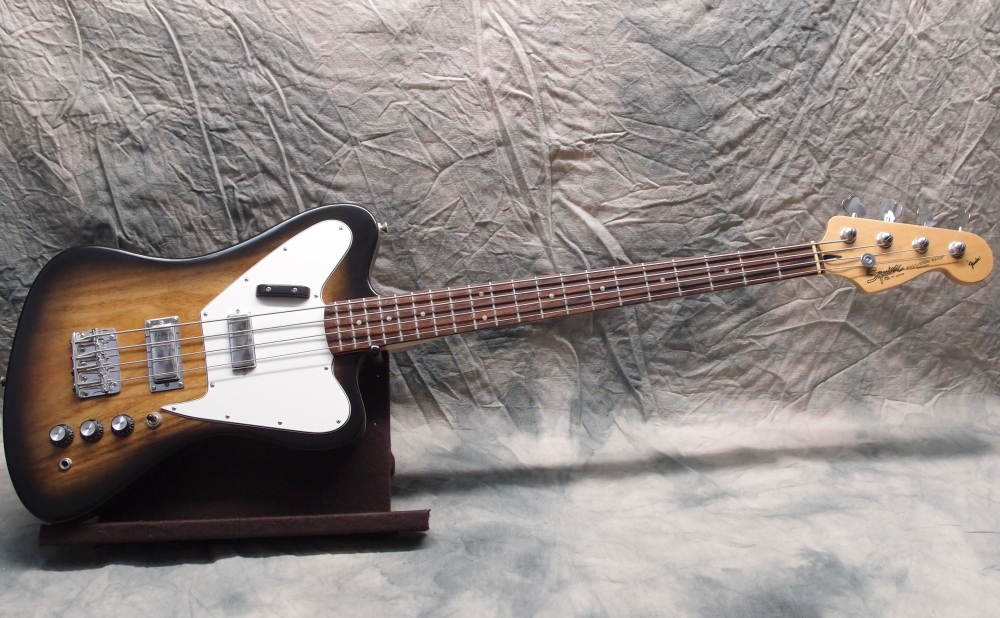
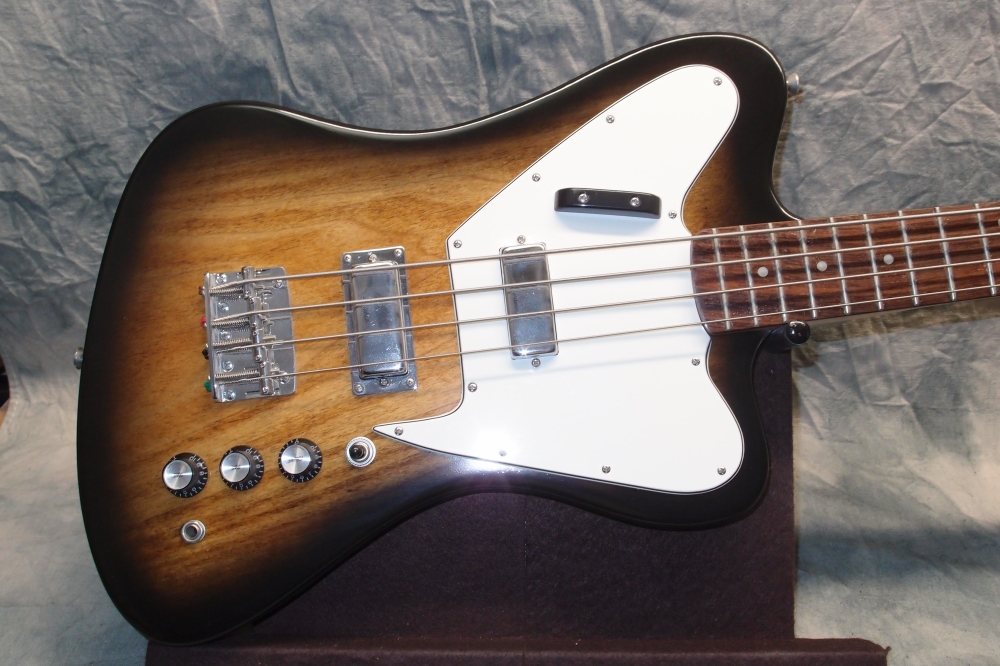
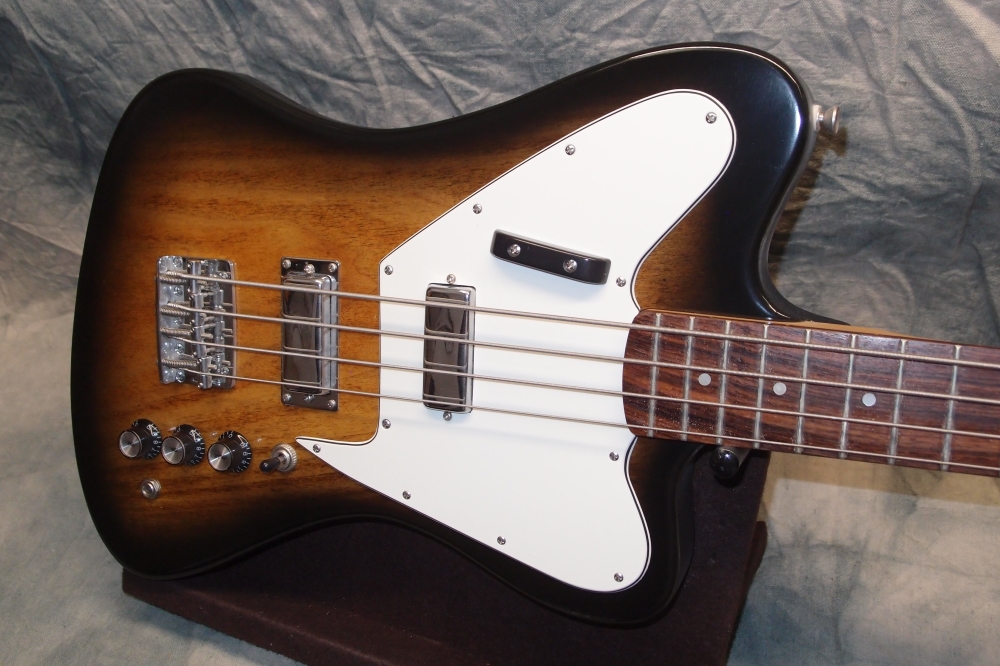
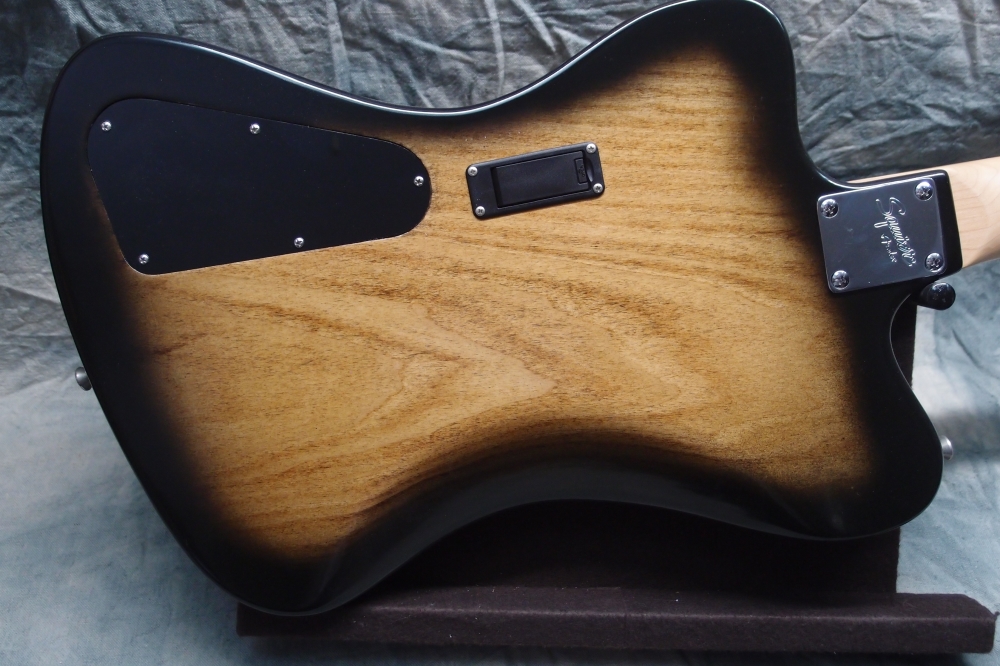
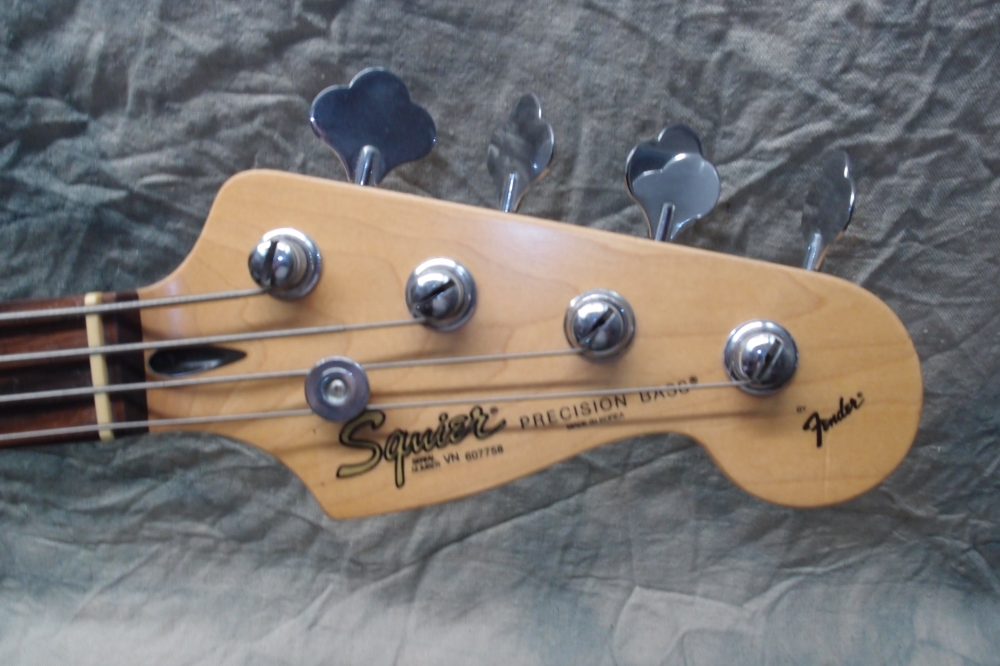
Solid poplar body, lightly stained and finished in polyurethane. Korean Squire neck, active electronics. Is it a reverse, or a non-reverse? Since this is a reverse of the original Thunderbird body ( more-or-less ) I say it is a reverse. If this is a non-reverse, then the original would have to be the reverse. Reverse of what? Makes no sense.
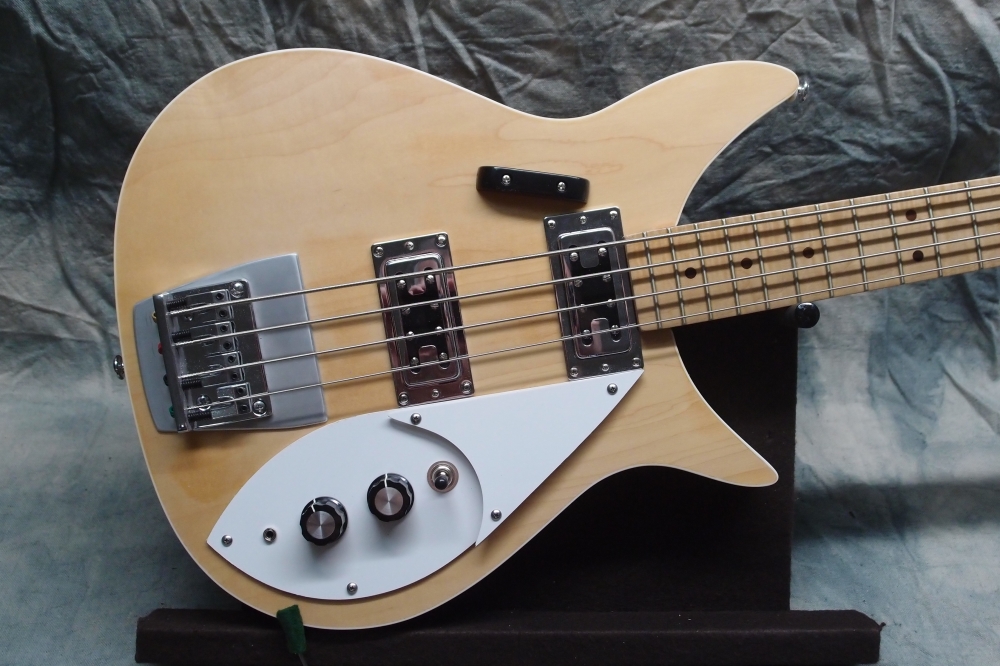
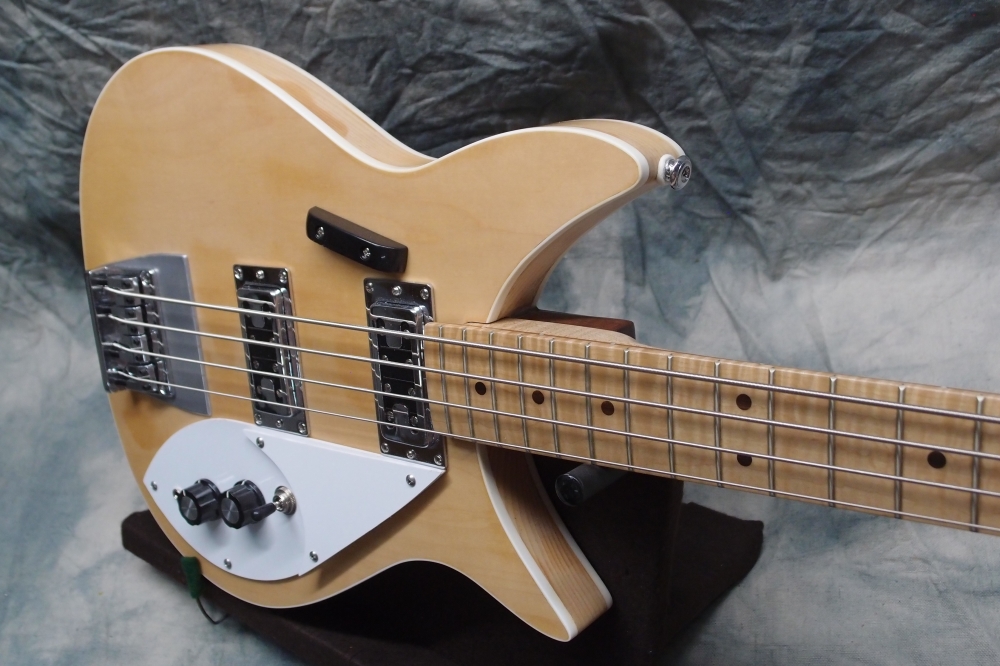
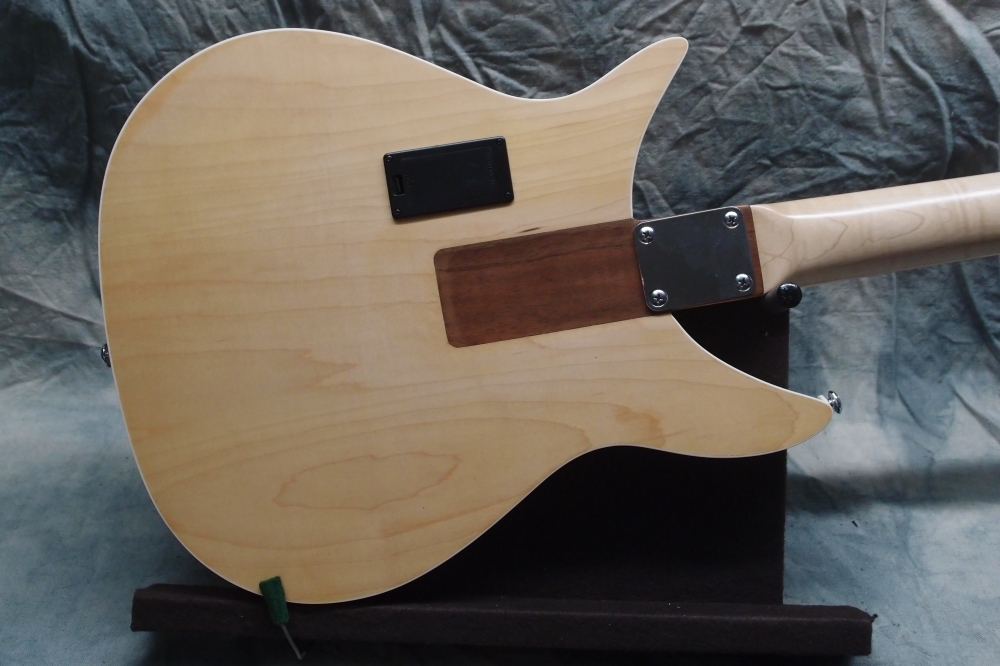
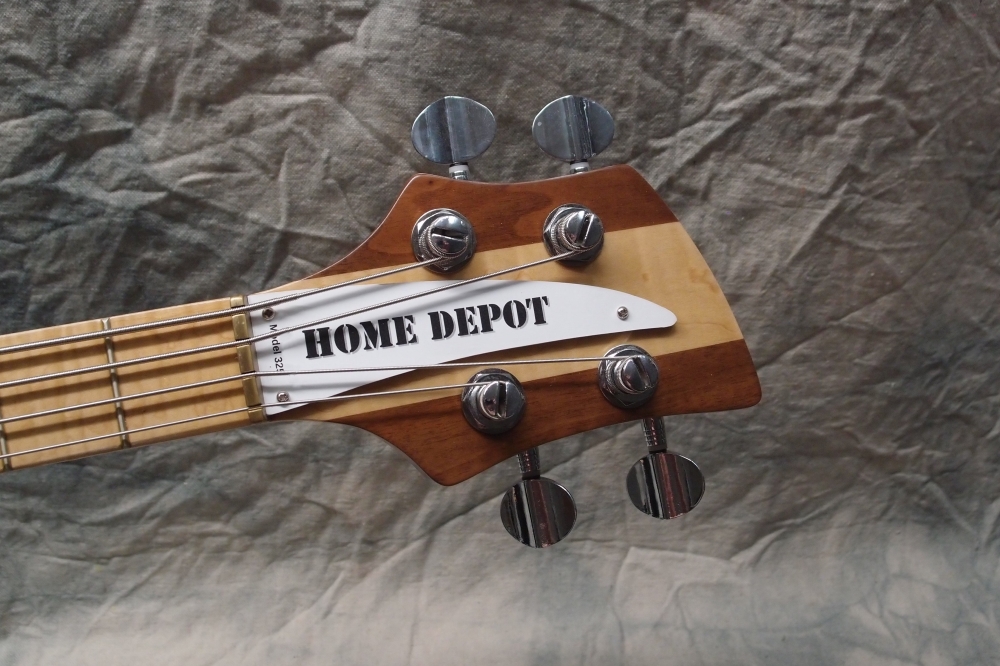
These were my first two tries at a 325 bass. Both are plywood over pine hollow-bodies. The one on the left - #1 - used an experimental neck mounting that I didn't like. The one on the right - #2 - suffered a router mishap. I took all the good parts and built the solid-body, and both of these spent years on the scrap heap.
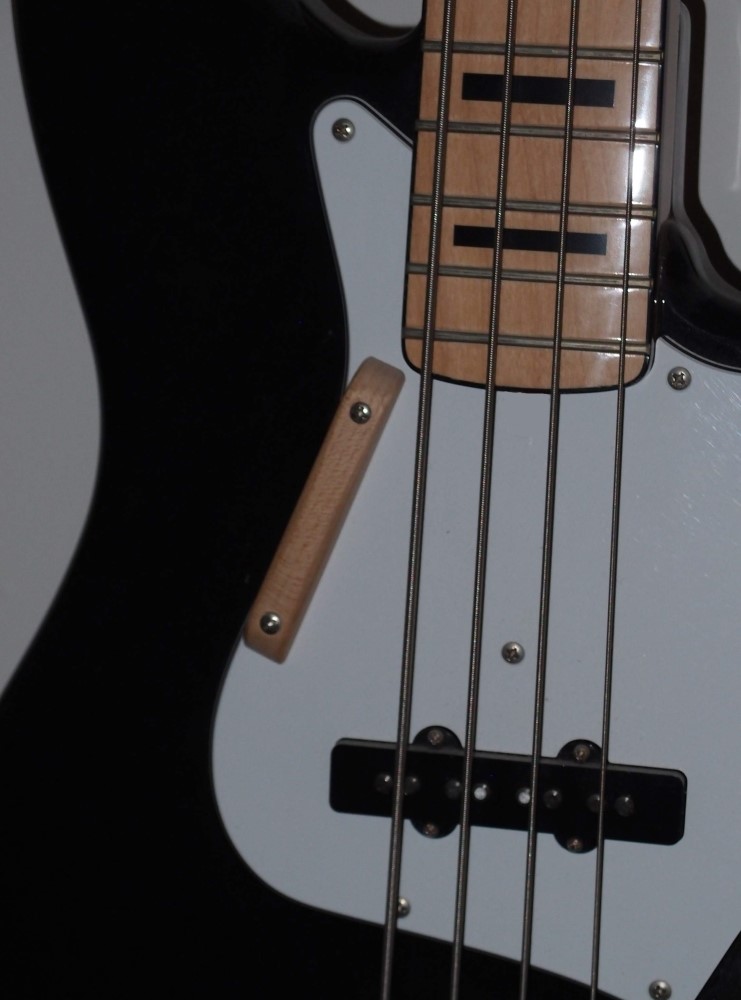
Here is how to add a no-damage thumb rest to any Fender bass. This one is made from a piece of maple scrap and two SS screws from the hardware store. You can wrap the original screws in tape and store them in the control cavity. Walnut also makes nice thumb rests. Just a few minutes on the belt sander.