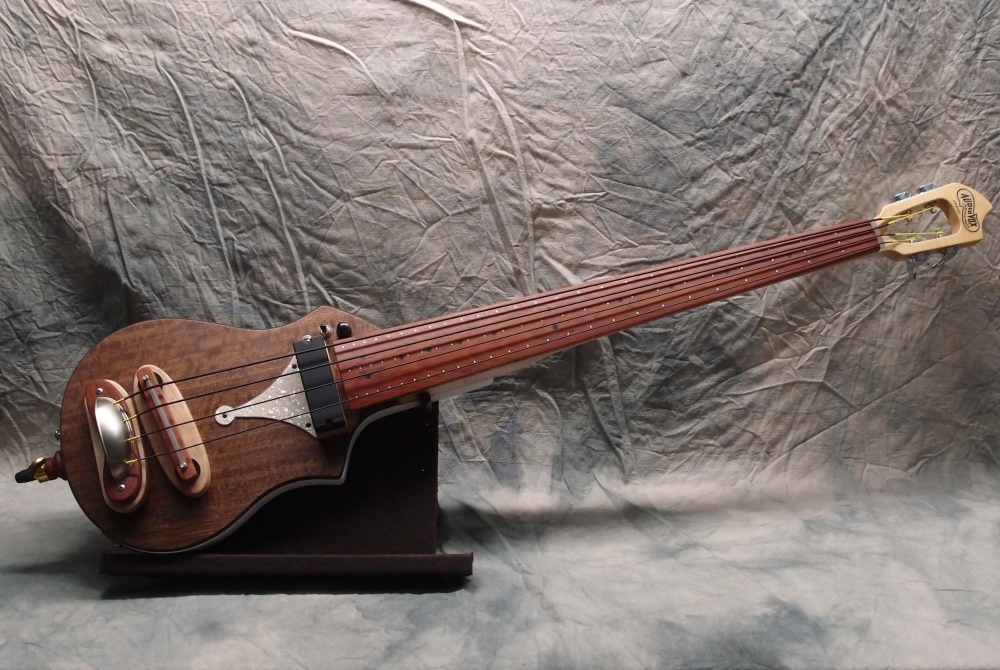
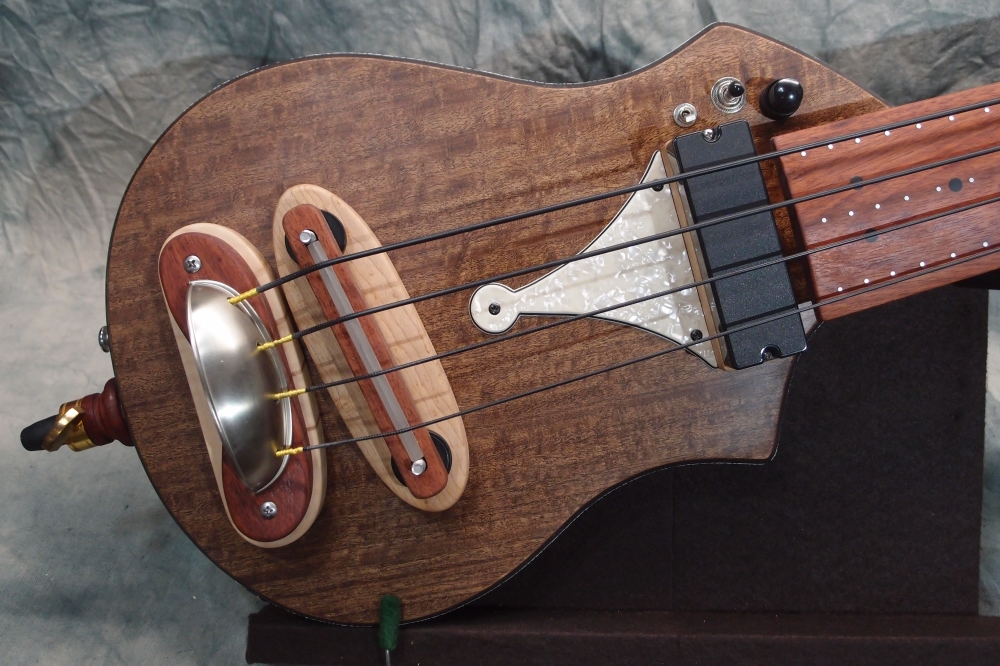
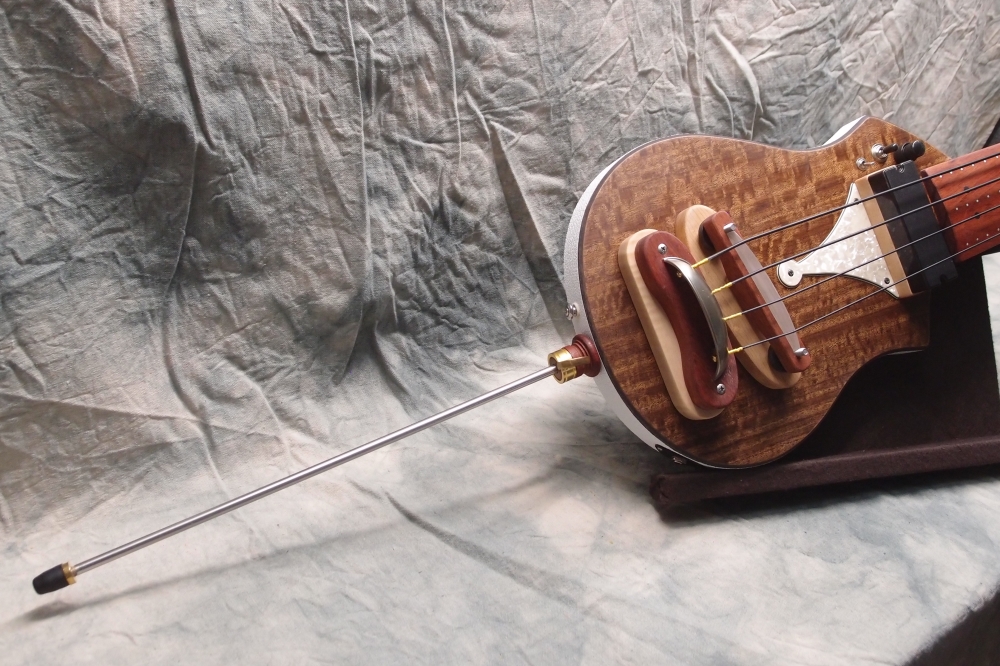
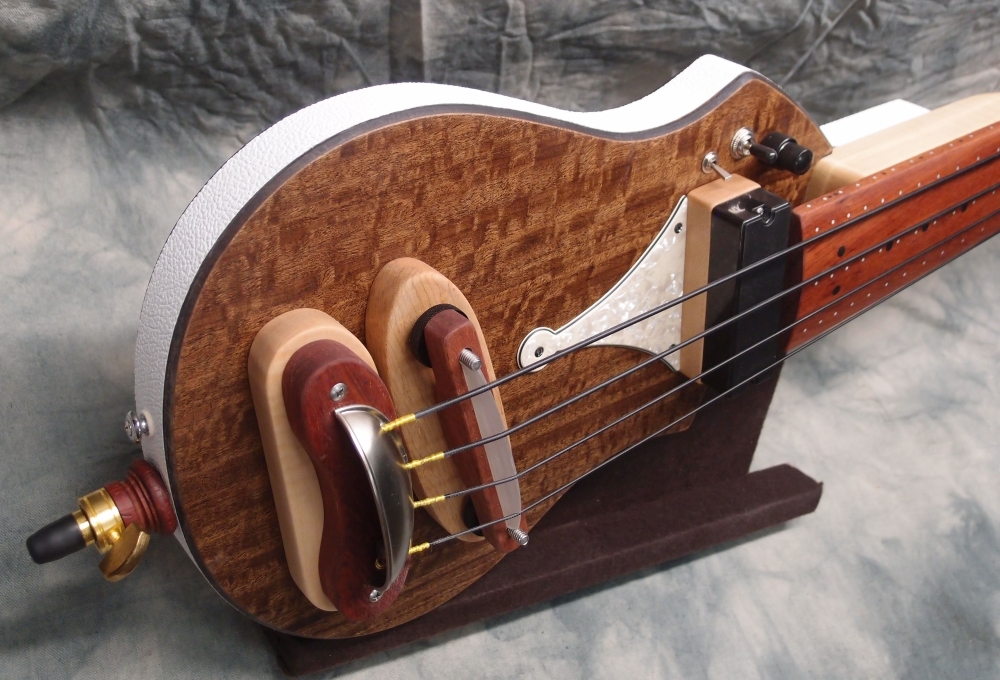
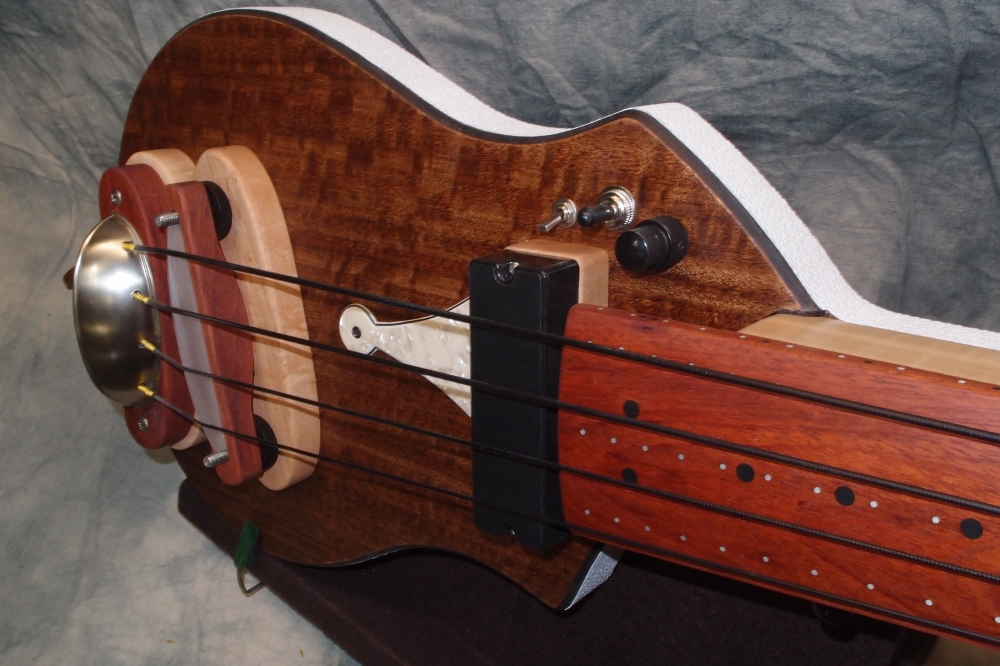
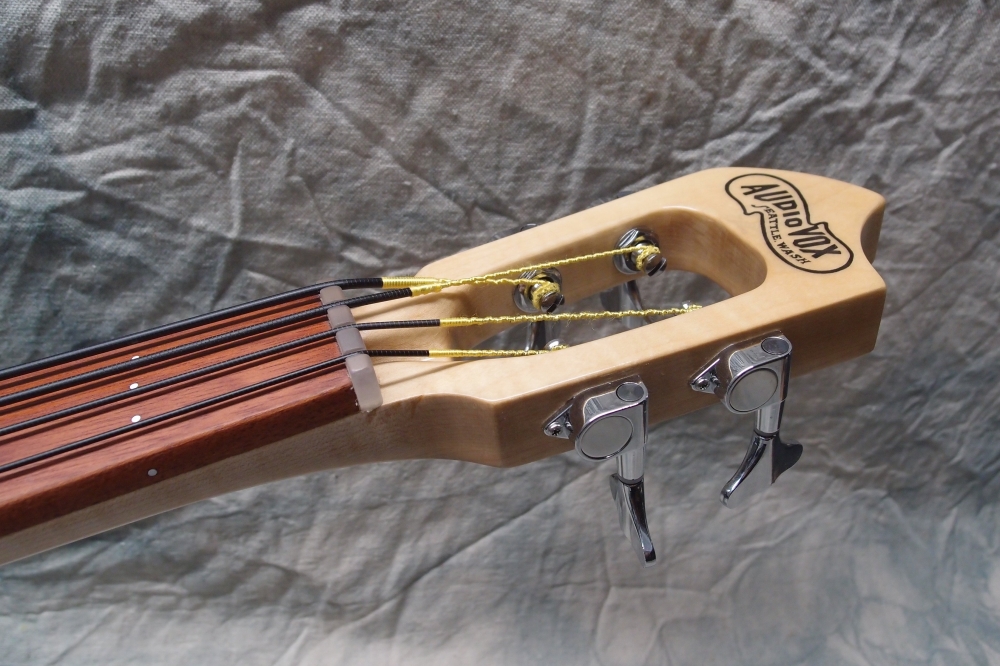
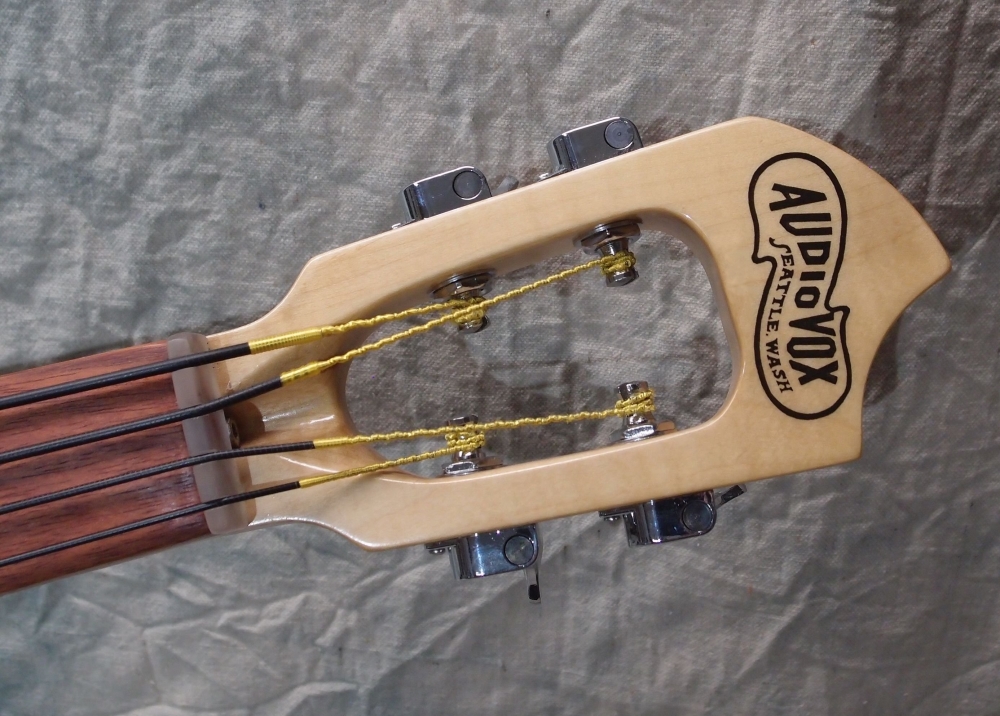
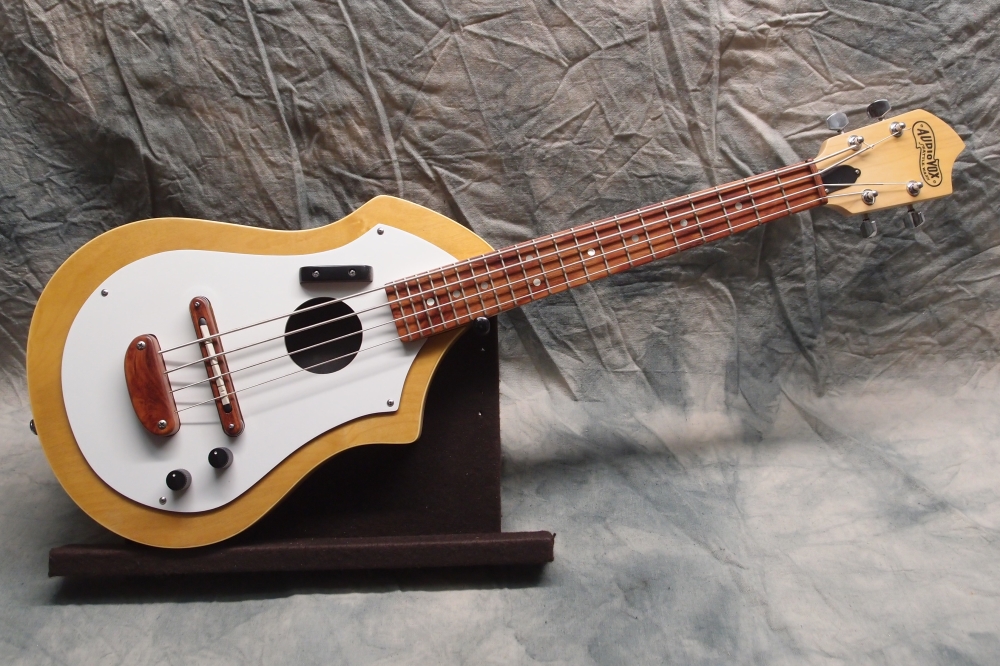
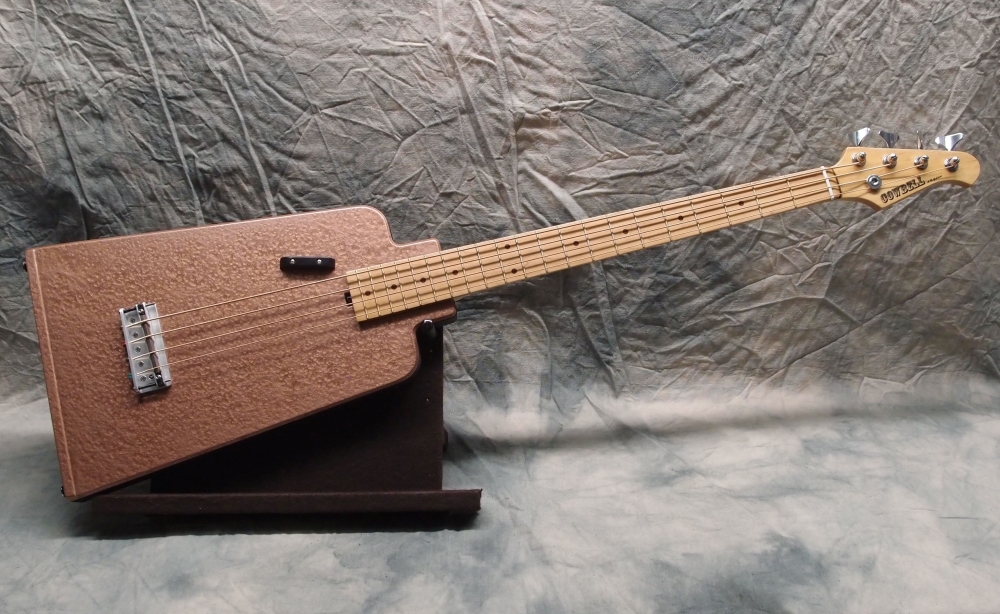
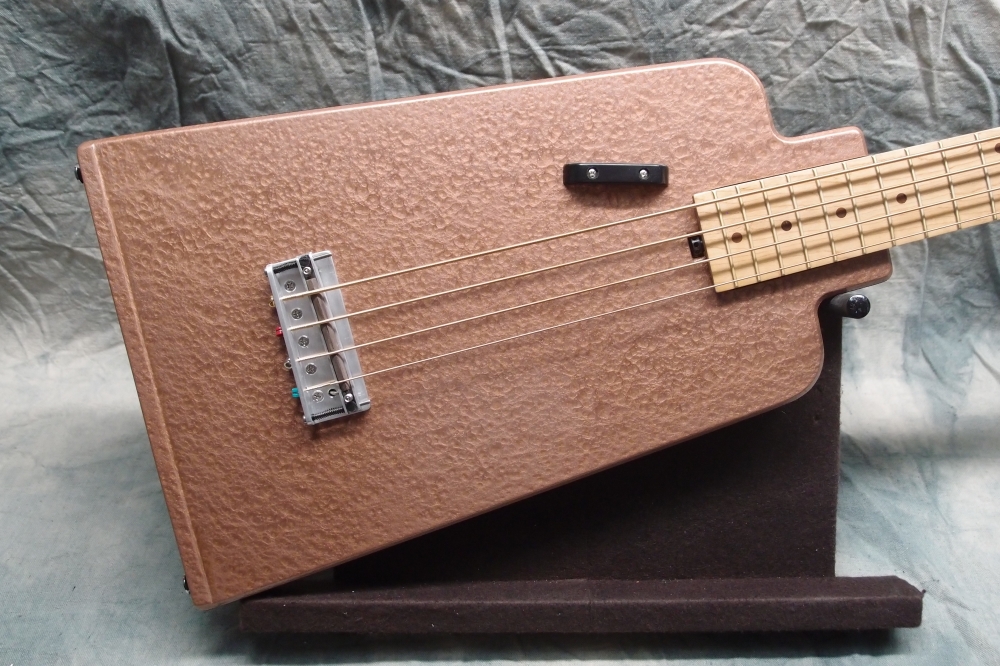
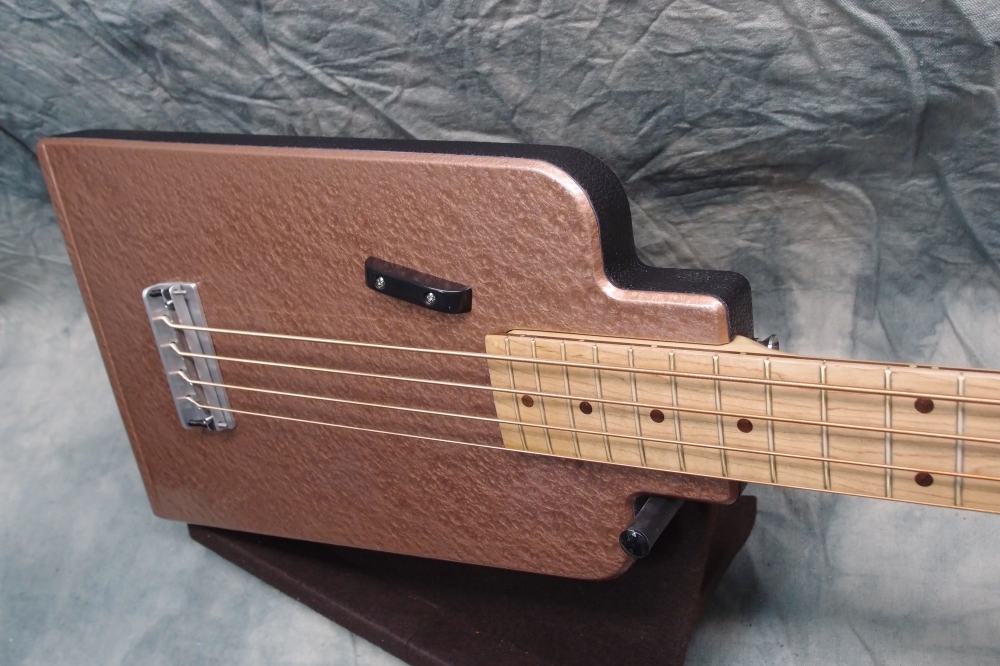
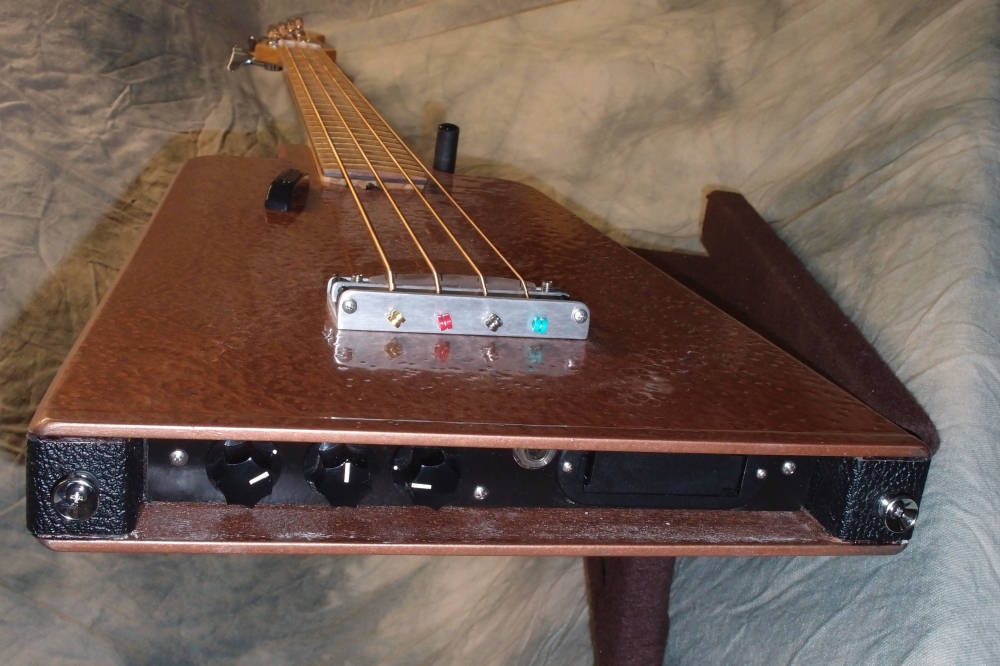
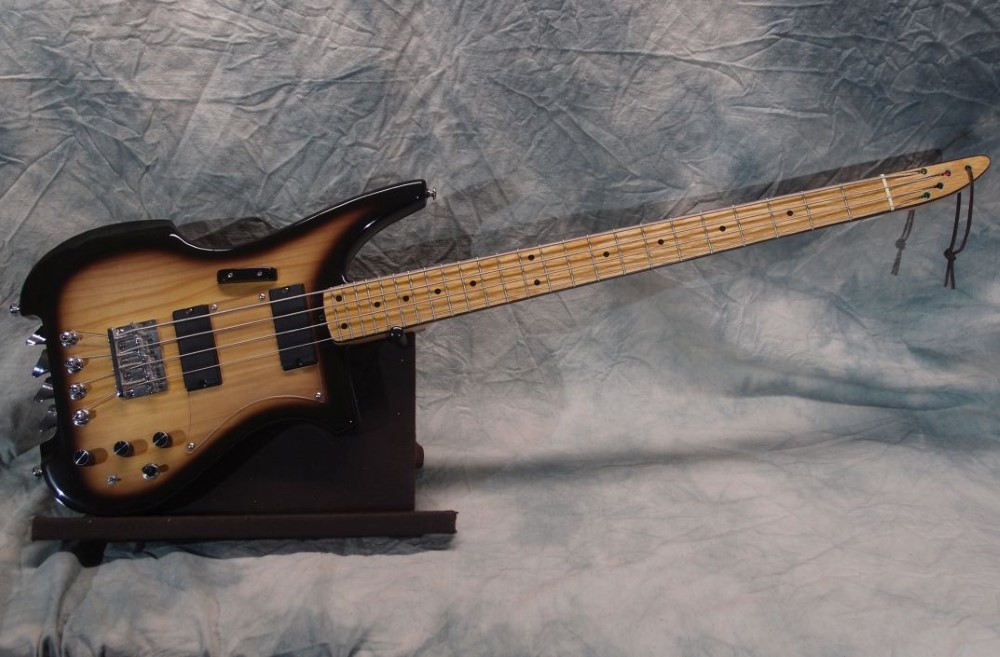
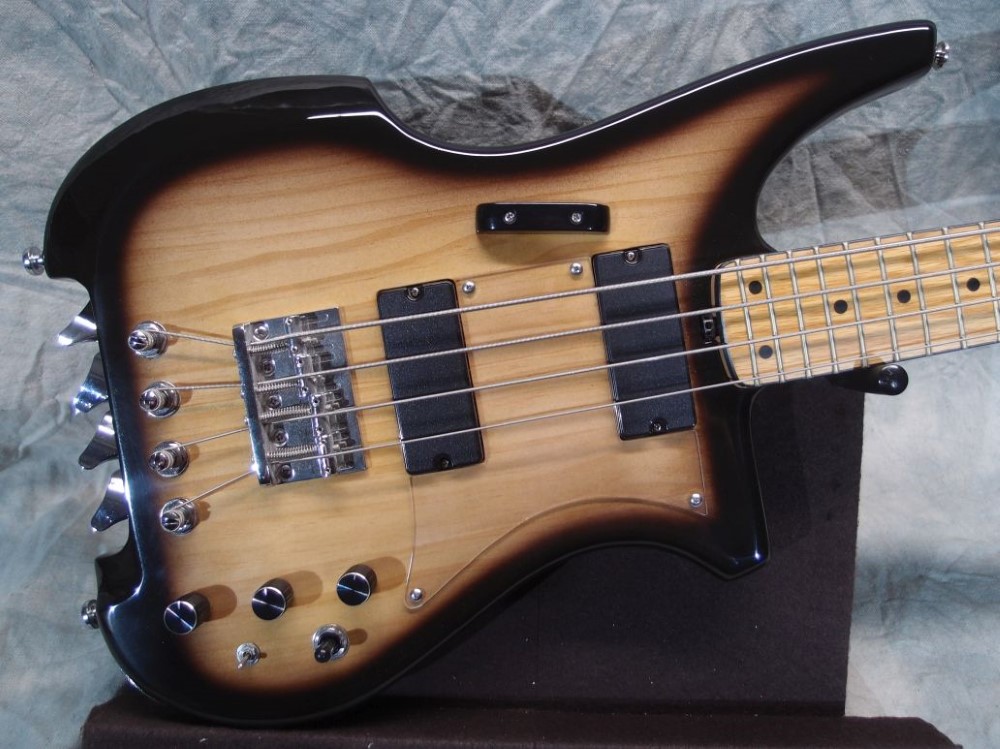
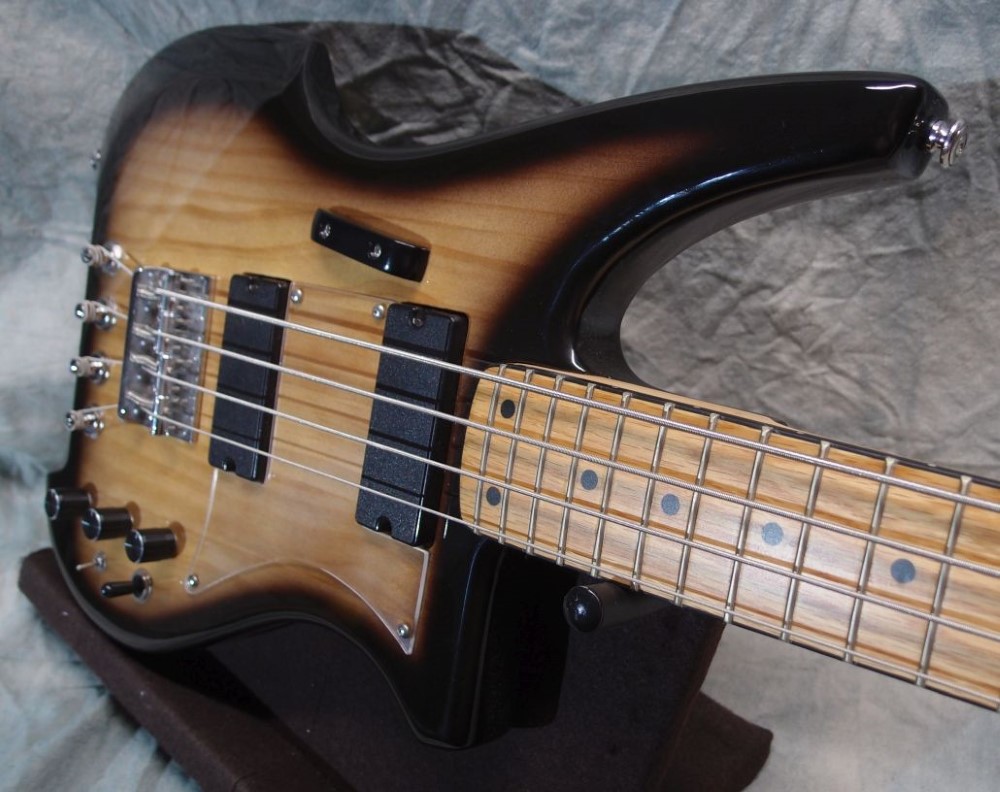
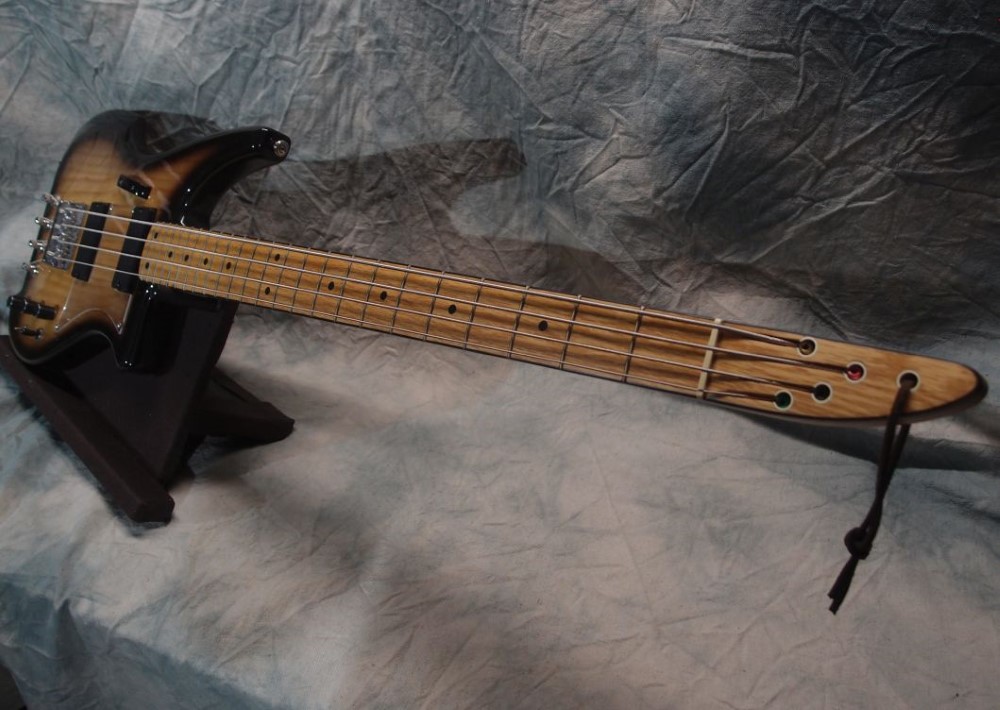
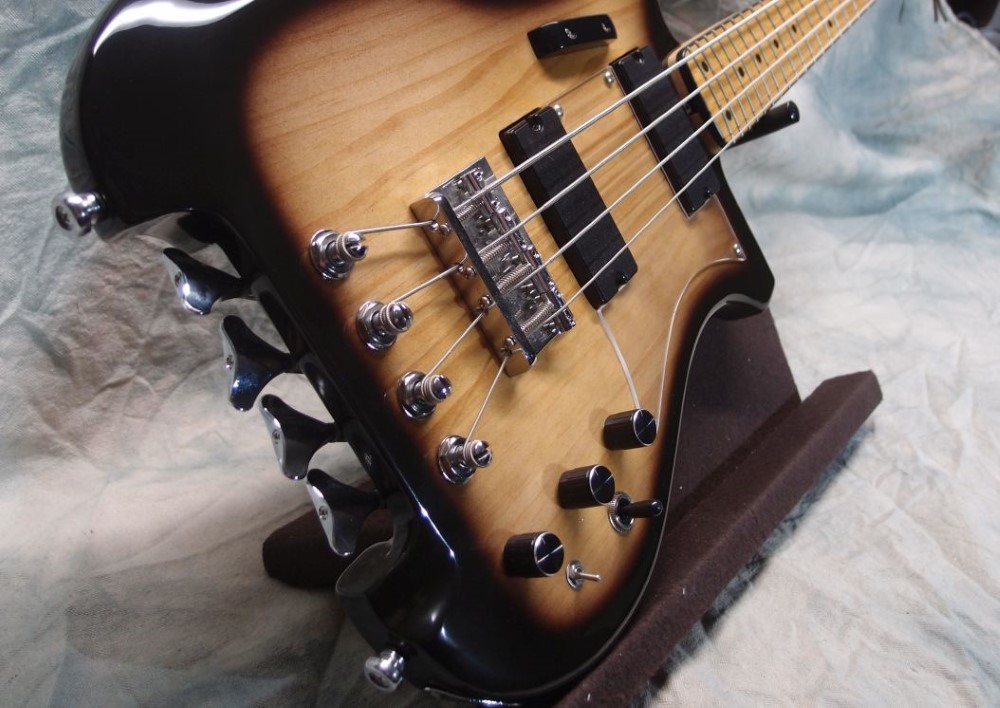
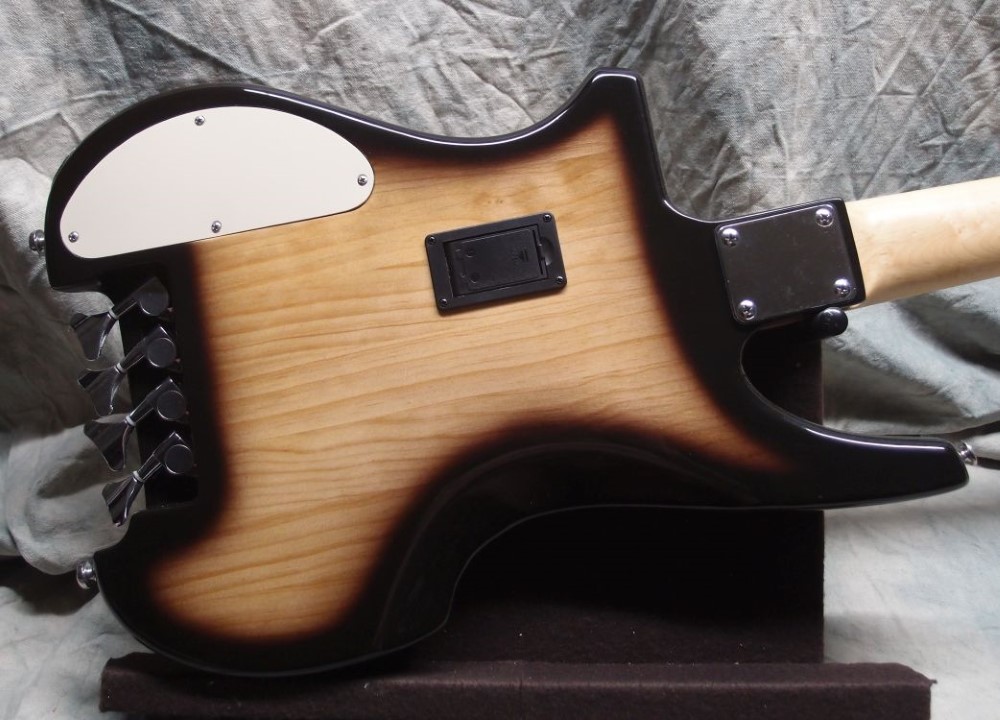
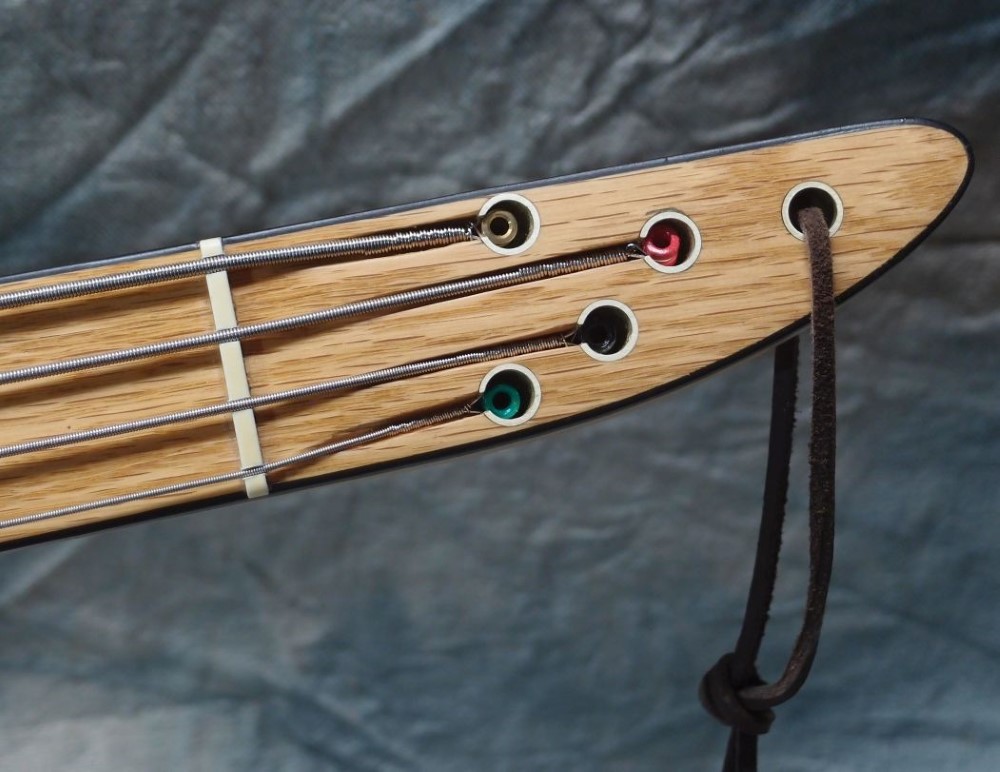
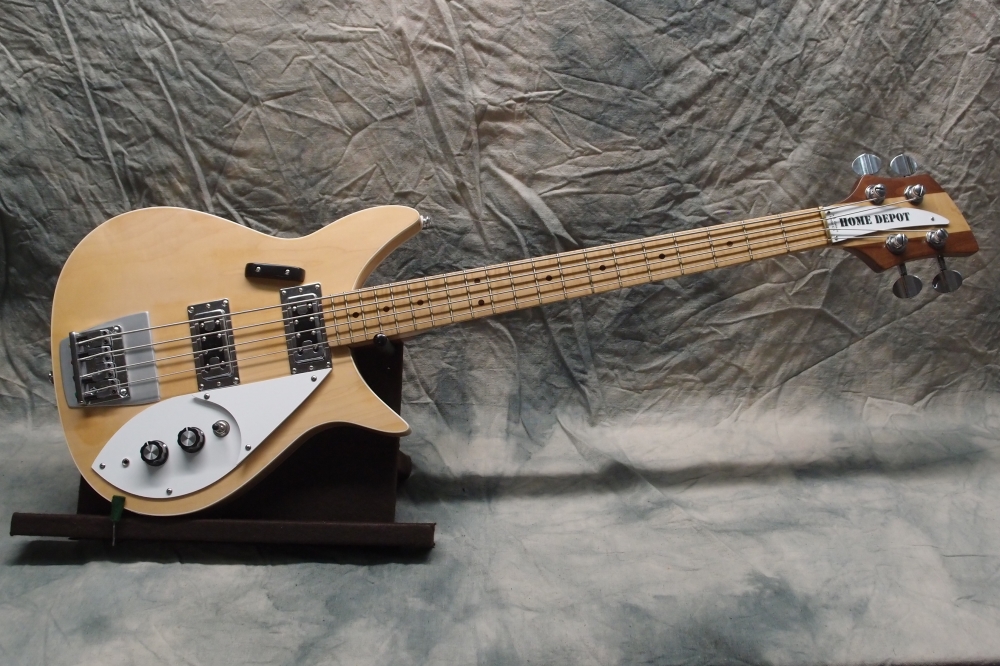
This is the biggest of the Audiovoxes, weighing in at a full 12 pounds, with a 36" scale. The neck is a Brazilian Cherry (Jatoba) floorboard over maple, with a straight cutout headstock. There are over 100 marker dots. The body is veneered masonite over solid plywood, with Danelectro-style Tolex binding. There are also strap buttons, this instrument can be played vertically or horizontally.
This bass is a 21" scale, with a piezo saddle mounted in an adjustable bridge. The soundhole is just for looks. The strings are metal-wound Kalas. The fretboard is cut out of the ugliest piece of wood I ever received. For such a small neck, I managed to cut around most of the ugly, and the result isn't half bad.
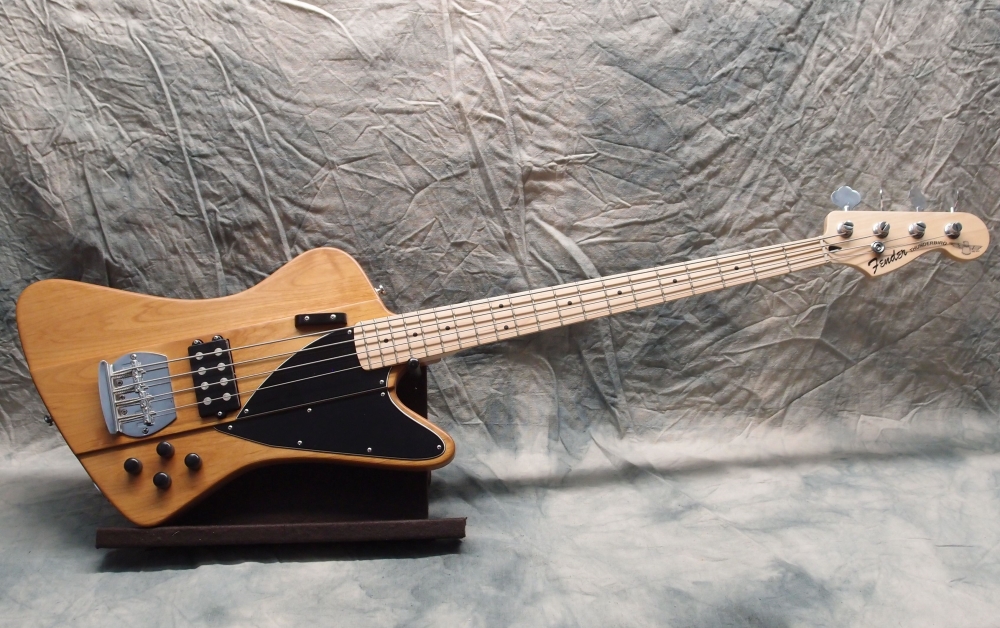
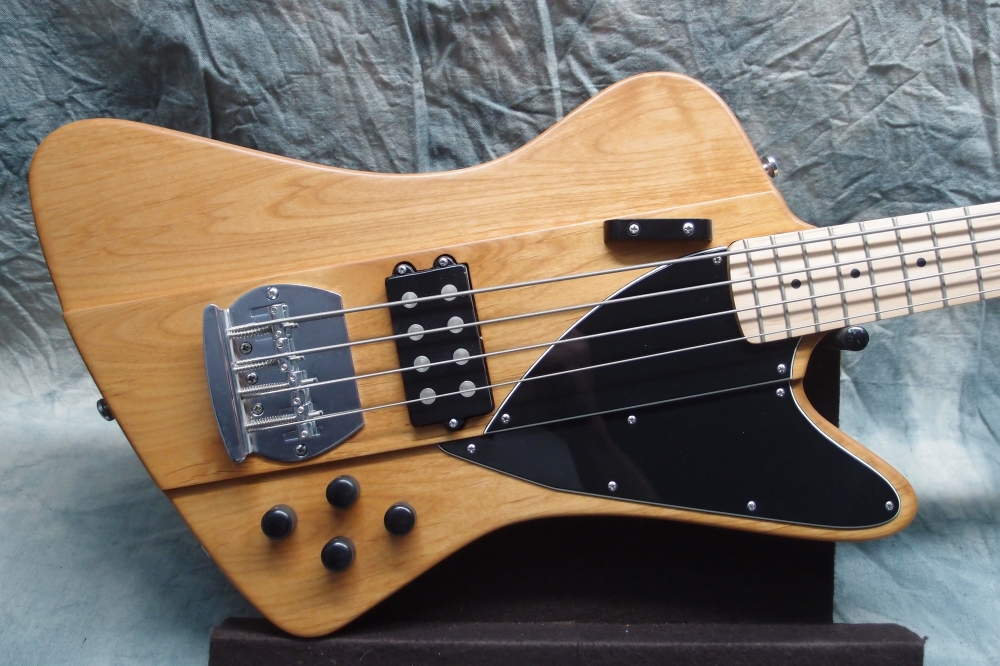
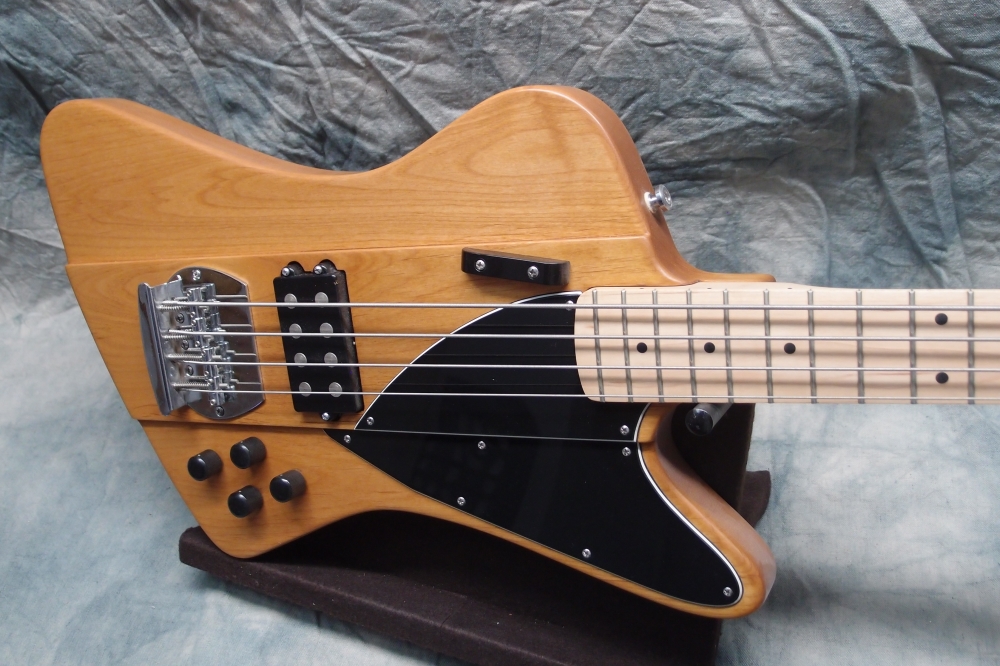
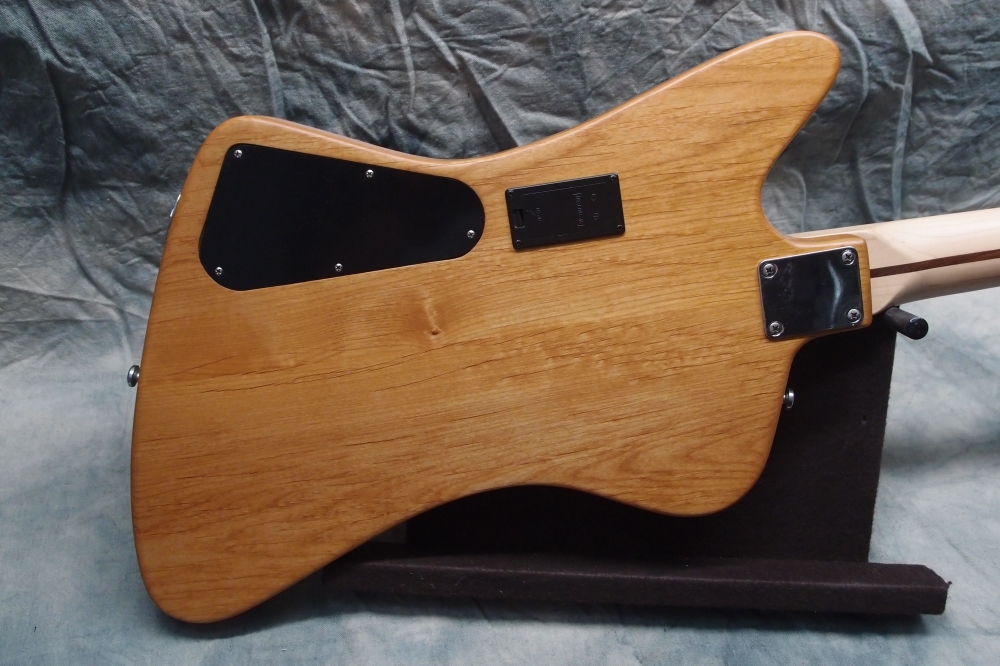
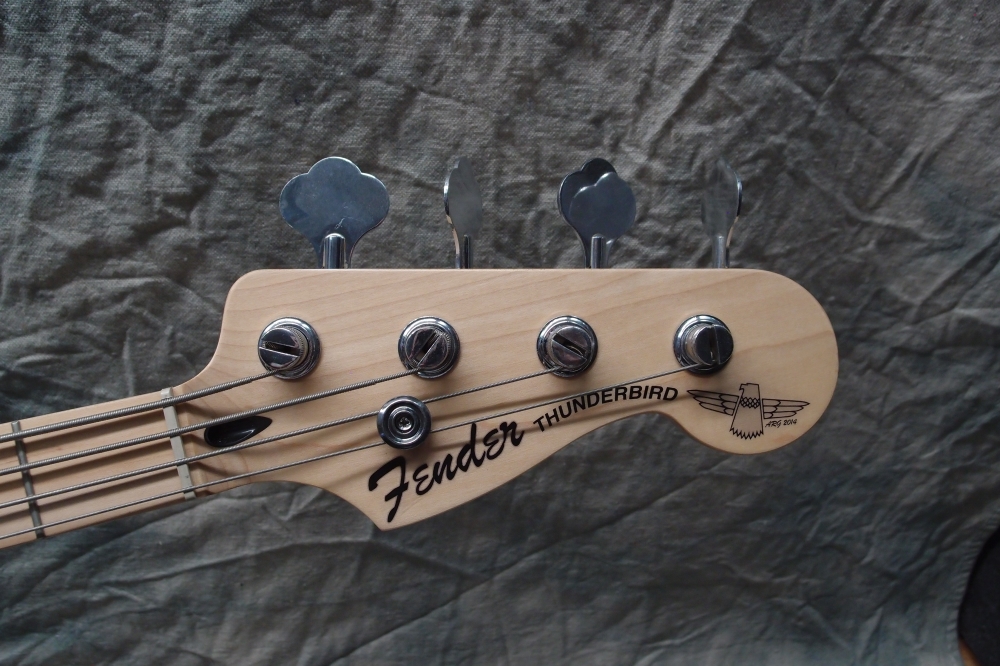
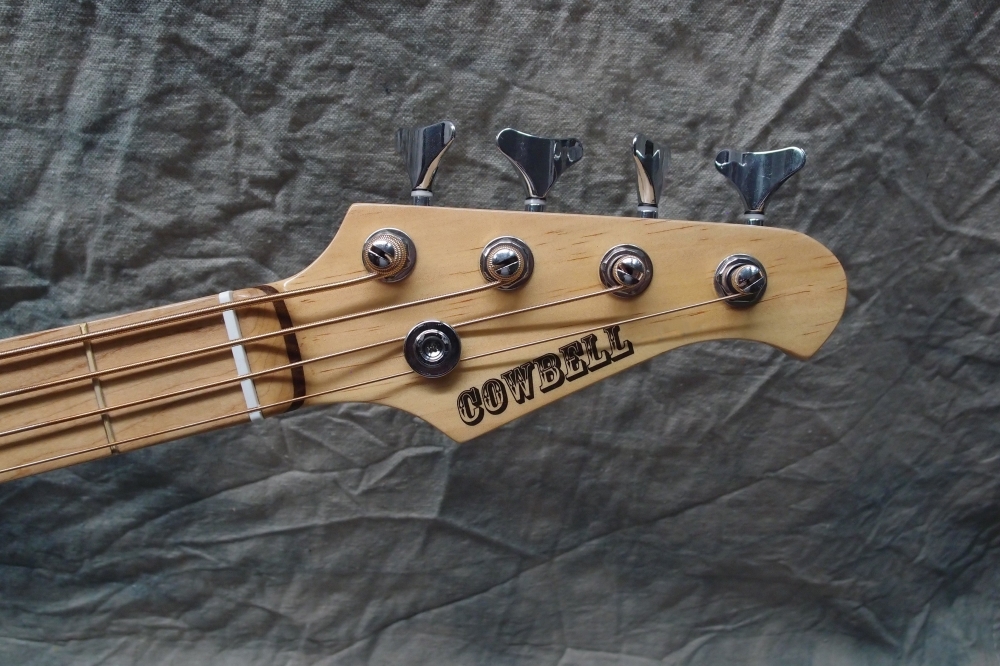
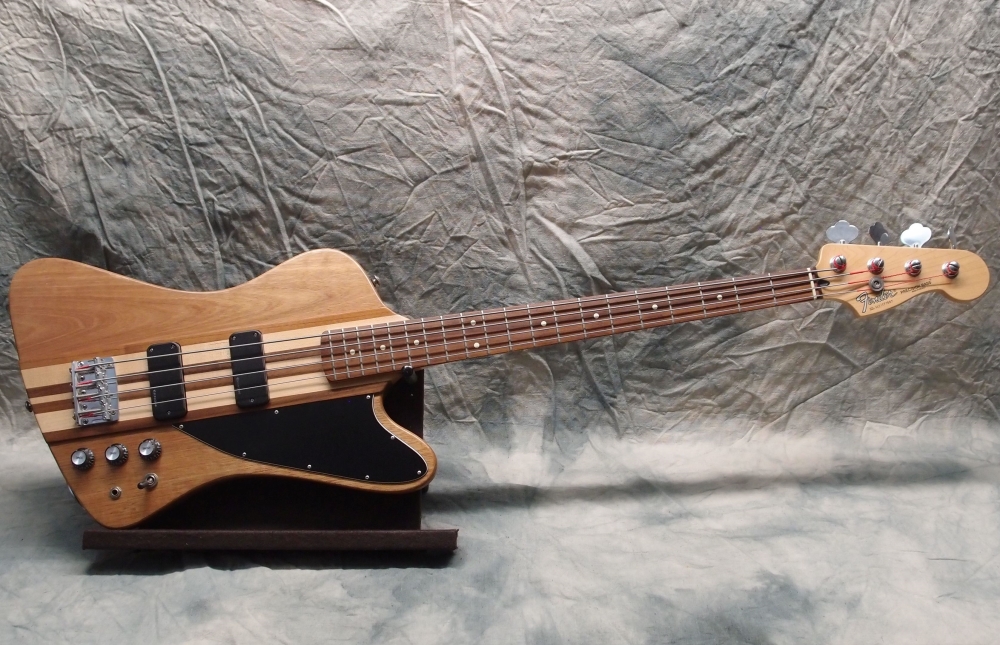
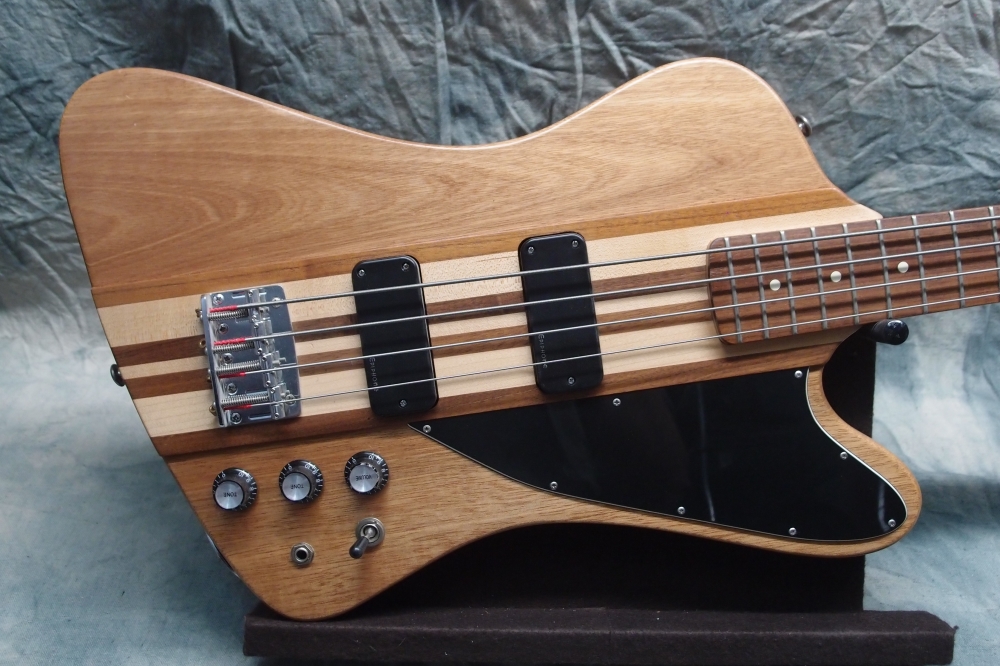
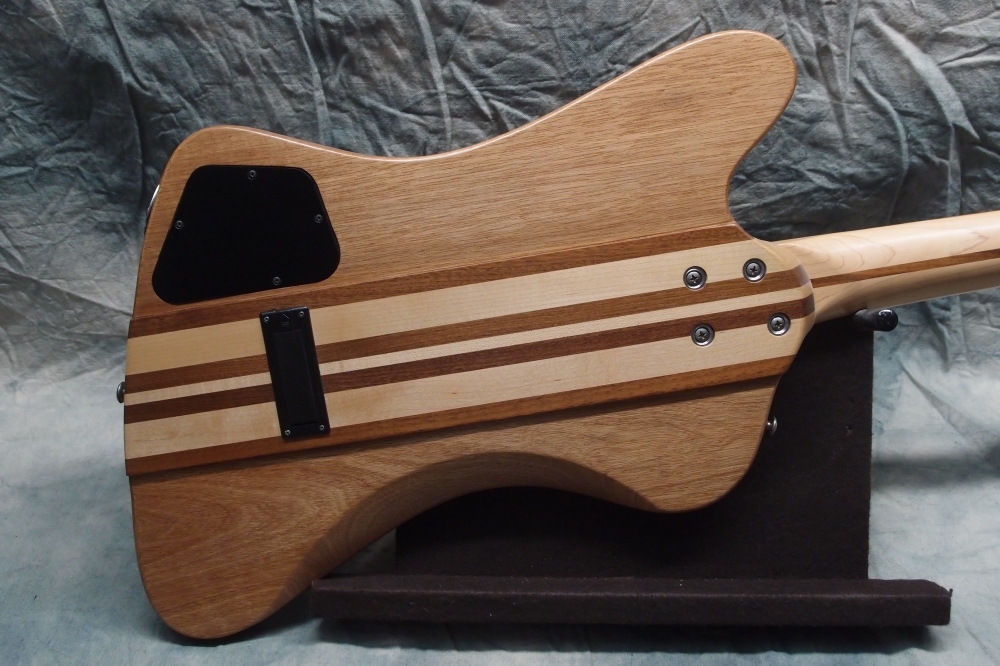
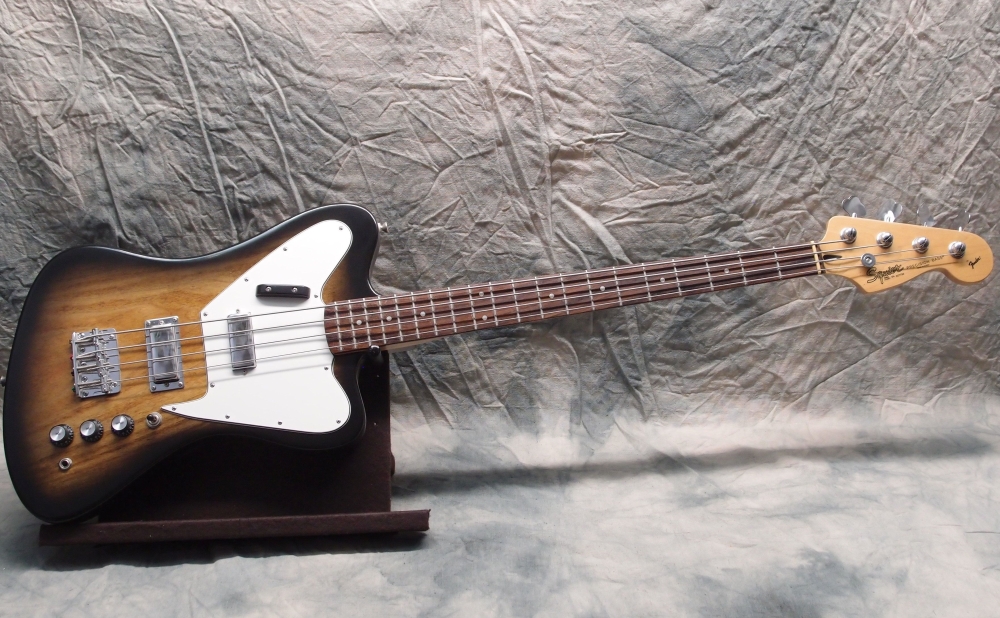
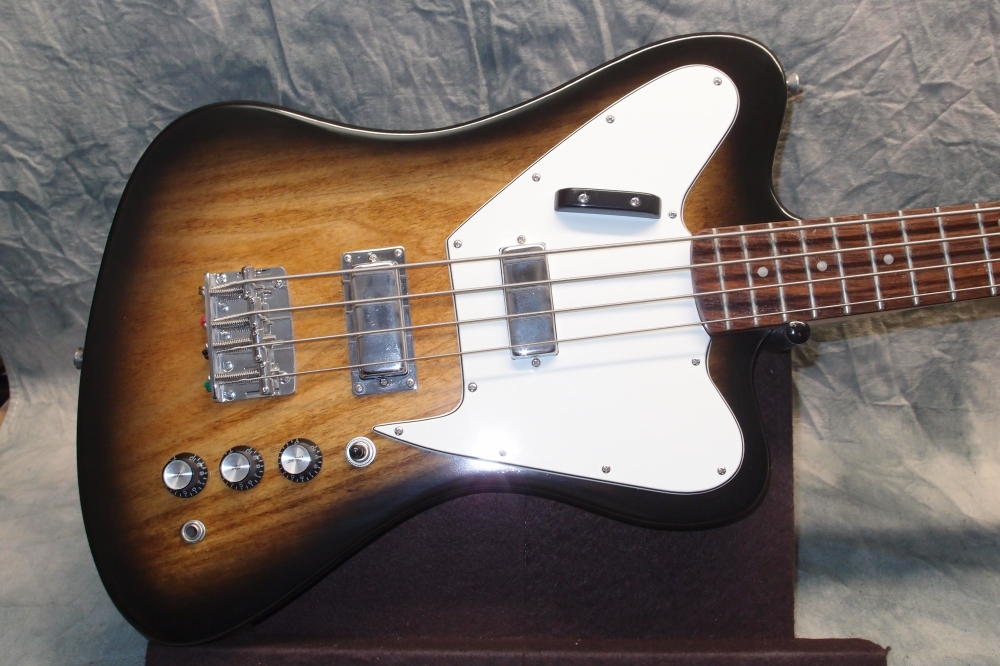
For those of you who thought my Stratocaster bass was an abomination, feast your eyes on this. The MusicmanBird. ThunderJazzRay. FenderManBird. I just call it FenderBird #2.
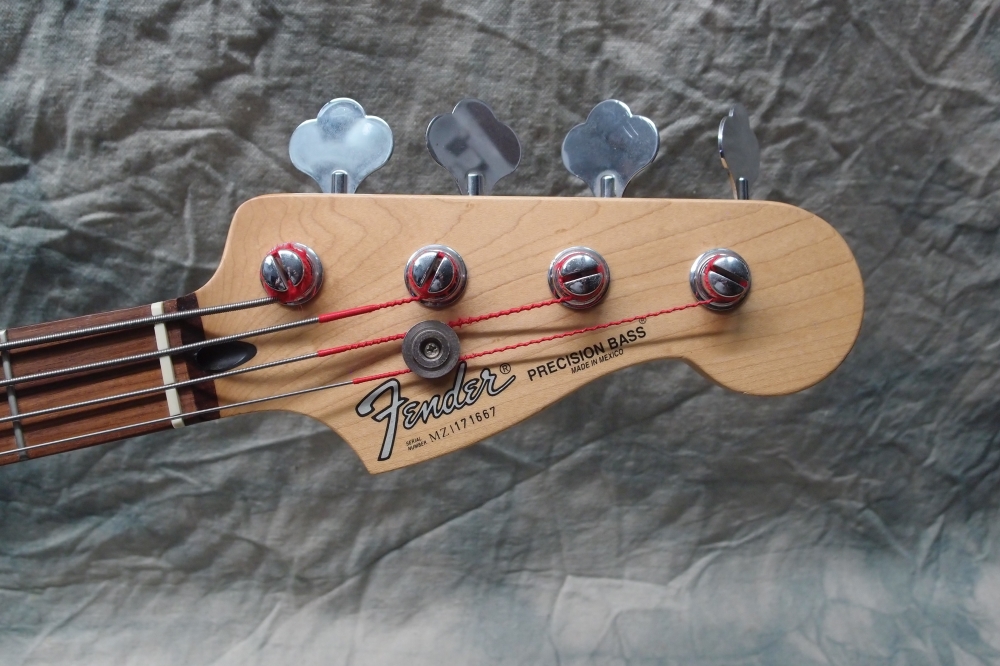
This started out as a broken Epiphone, one of the very nice Pro models. Turns out the Epi copy was a bit too authentic - it even reproduced the standard Gibson pop-off headstock. I removed the neck, re-finished the stump, routed out a neck pocket, and installed a Fender Mexico Precision neck. The pickups are stock, the active electronics are a replacement as the originals blew up. I also made the pickguard. The high frets are basically inaccessible, but the trade-off is much better balance.
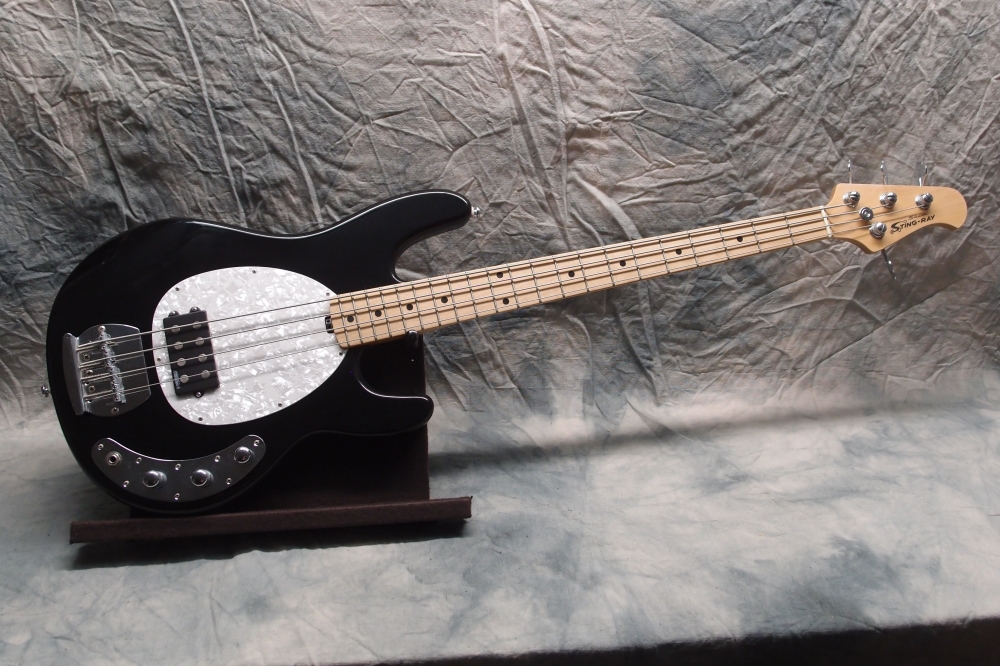
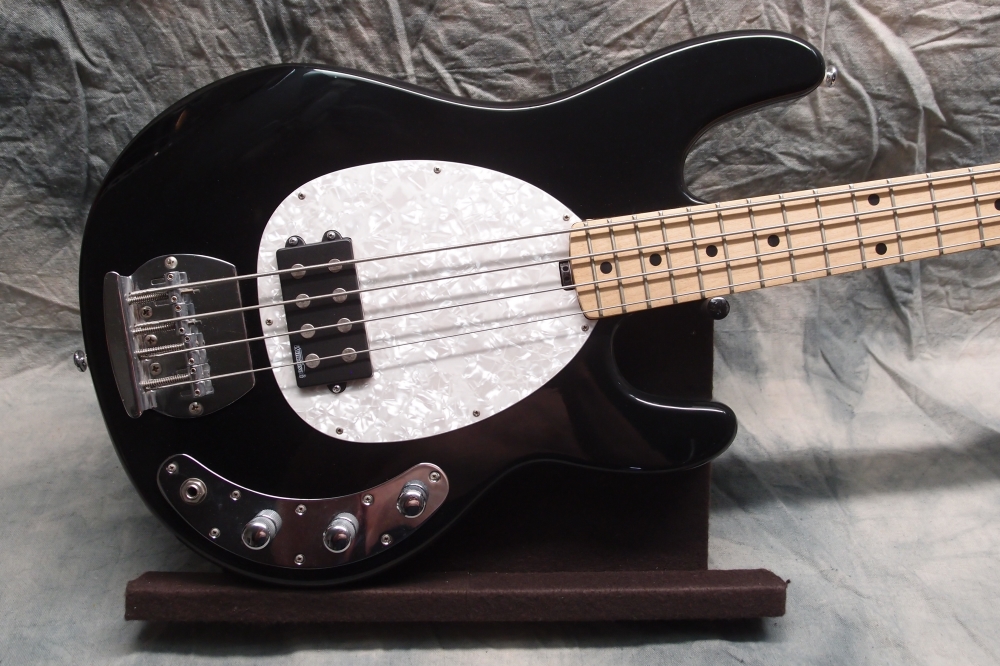
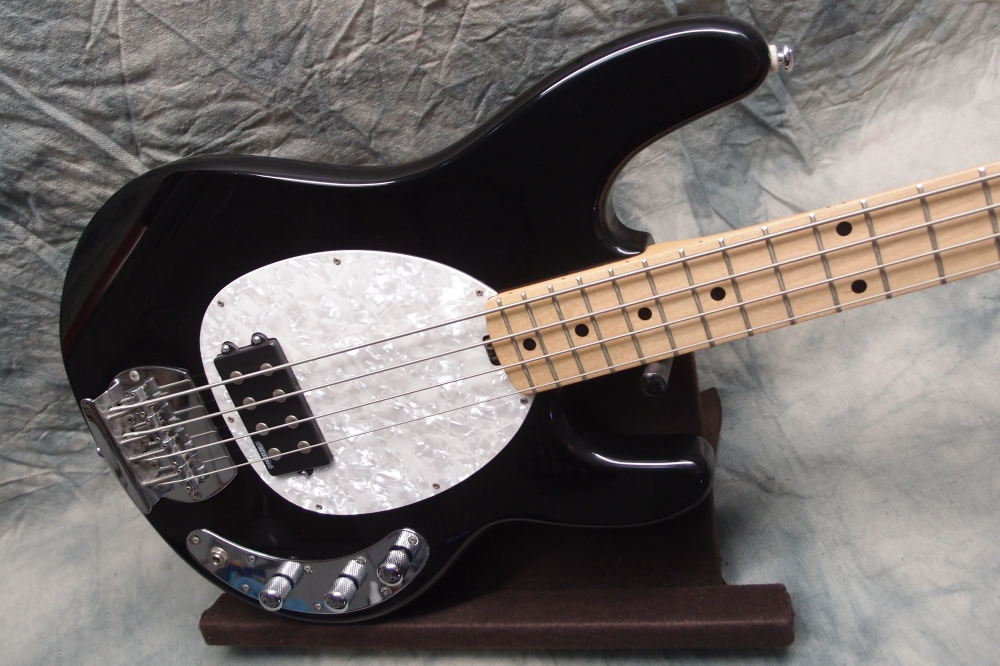
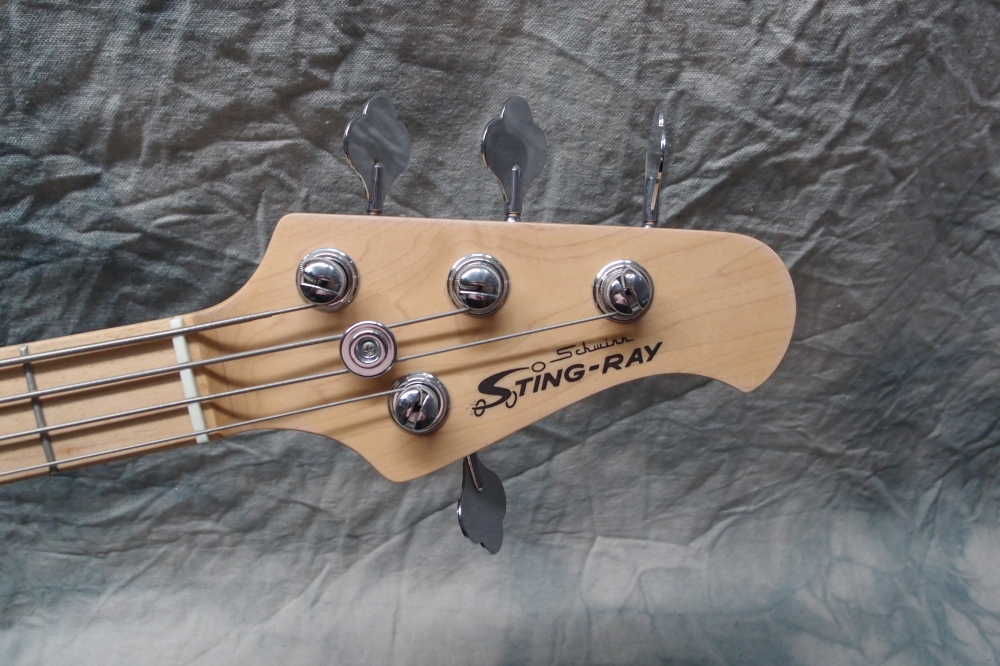
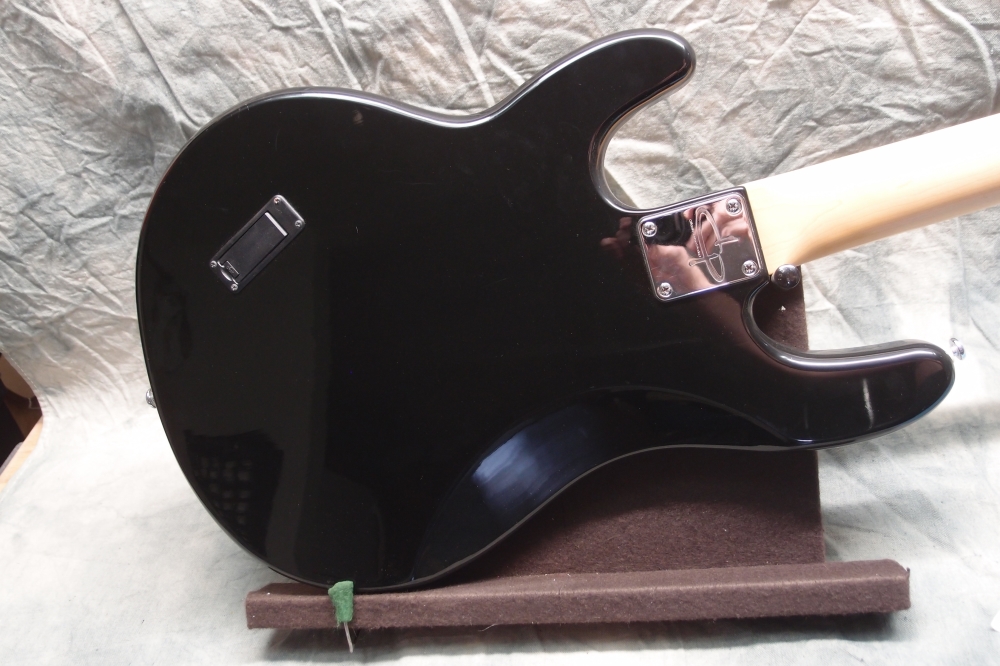
This OLP Stingray was one of the first basses I ever modded heavily. I routed a battery and a second pickup cavity, and did all sorts of experiments on it, before returning it to it's original single-pickup configuration, but with upgraded active electronics and pickup, and a nice new pearl pickguard.
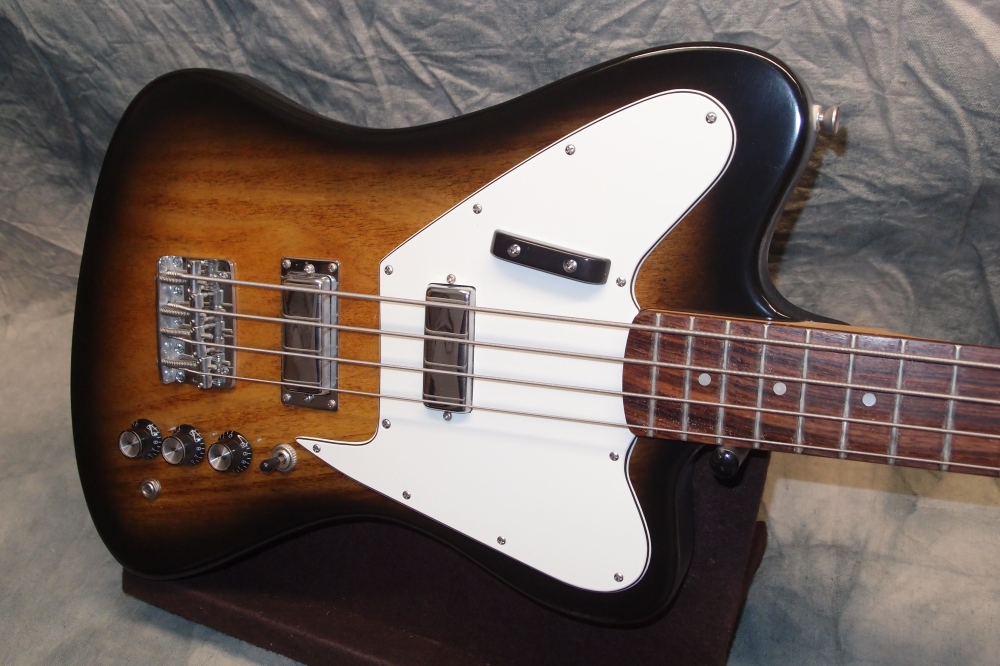
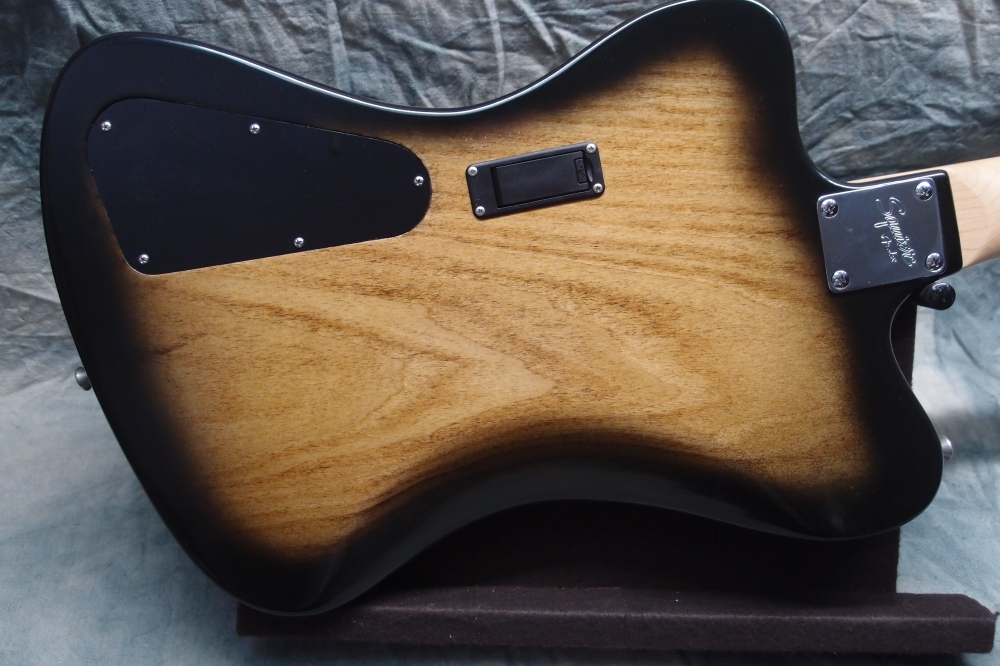
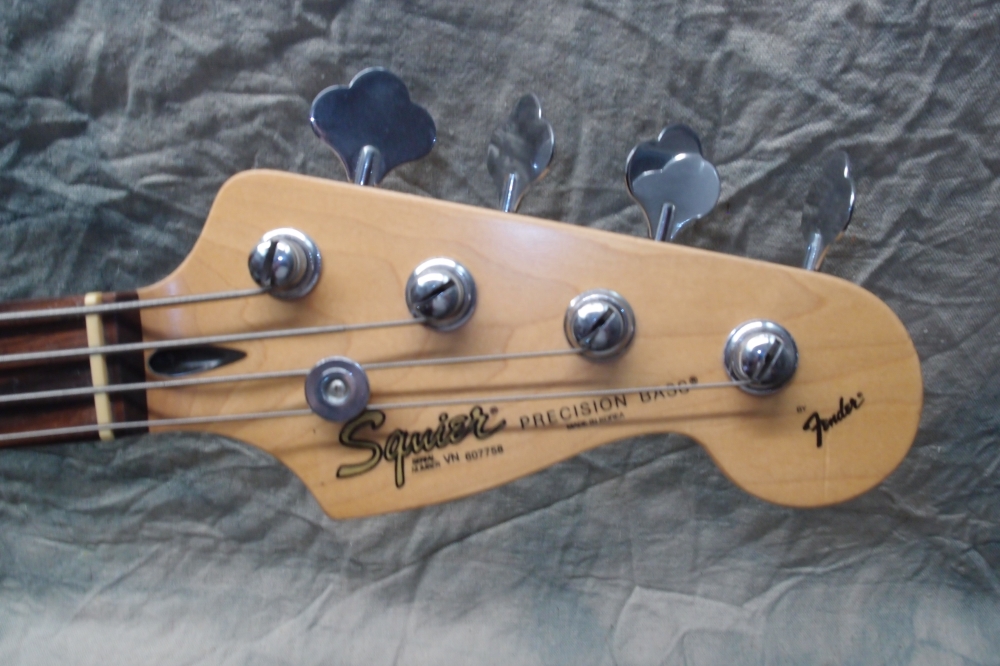
Solid poplar body, lightly stained and finished in polyurethane. Korean Squire neck, active electronics. Is it a reverse, or a non-reverse? Since this is a reverse of the original Thunderbird body ( more-or-less ) I say it is a reverse. If this is a non-reverse, then the original would have to be the reverse. Reverse of what? Makes no sense.
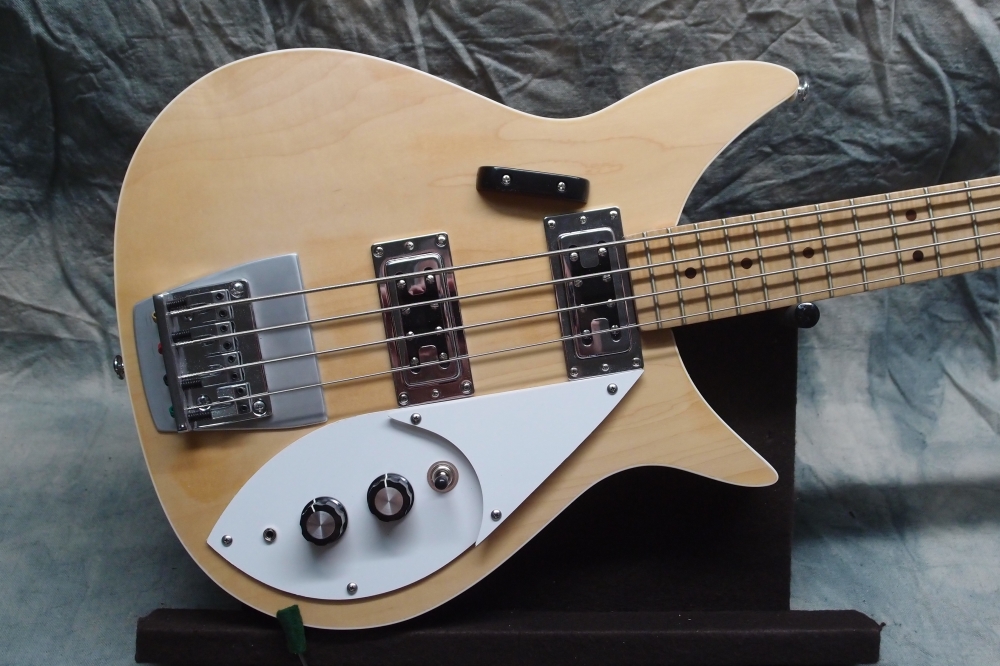
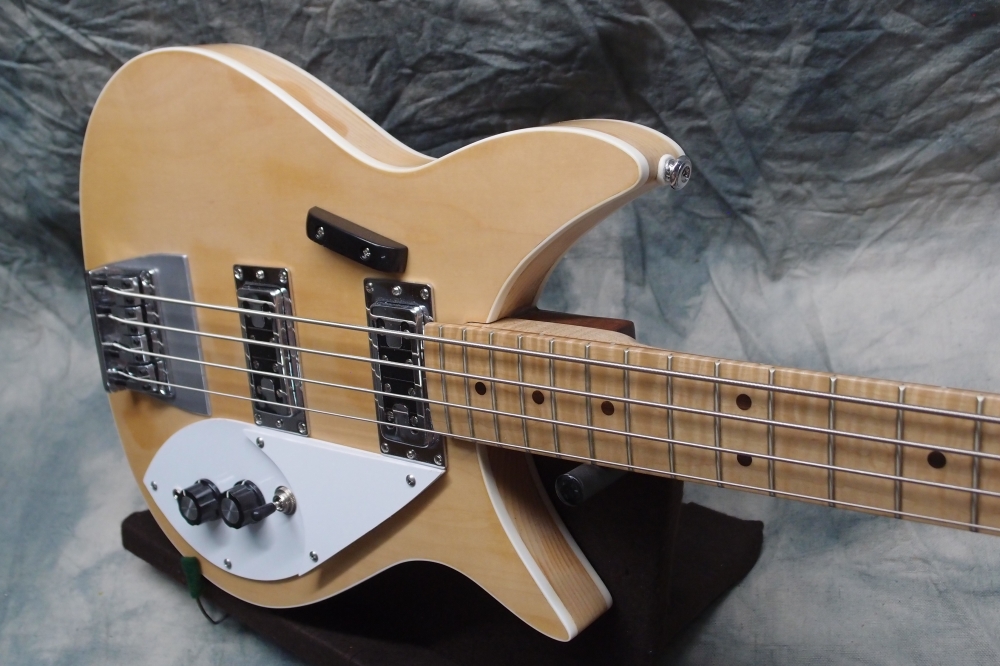
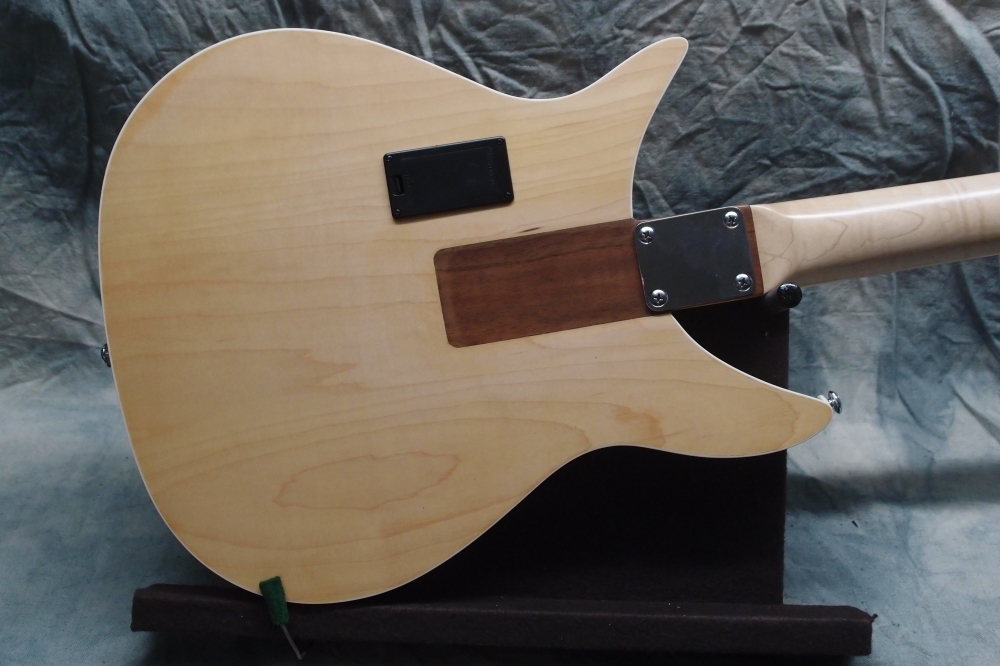
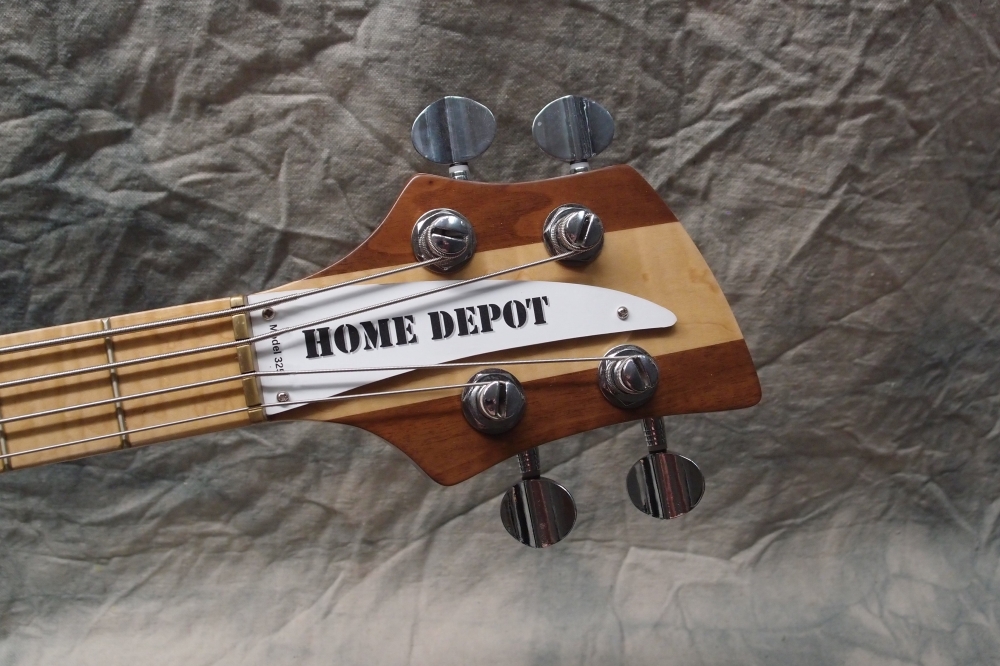
These were my first two tries at a 325 bass. Both are plywood over pine hollow-bodies. The one on the left - #1 - used an experimental neck mounting that I didn't like. The one on the right - #2 - suffered a router mishap. I took all the good parts and built the solid-body, and both of these spent years on the scrap heap.
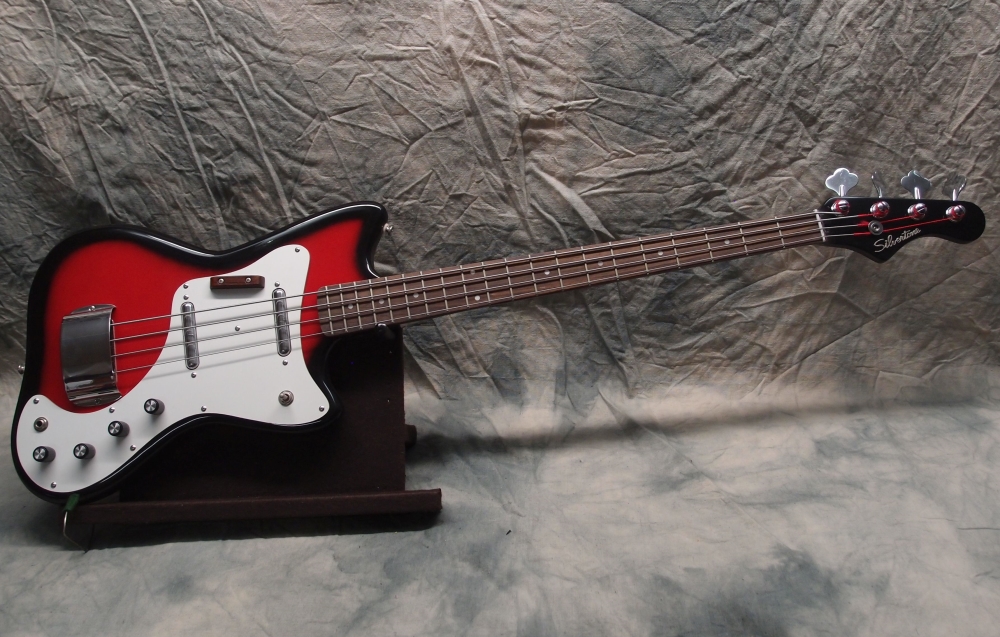
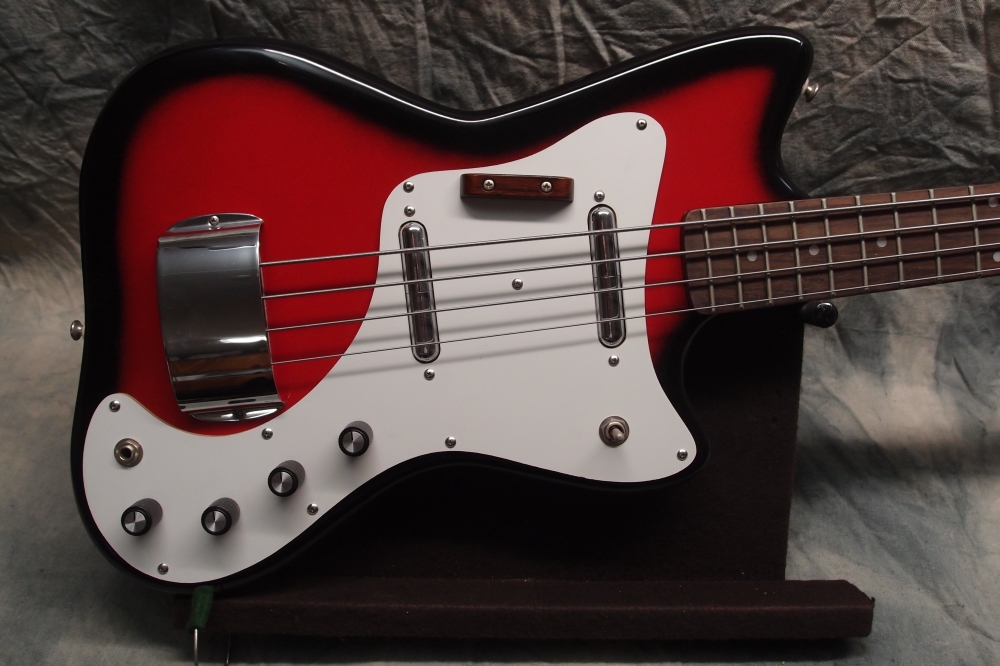
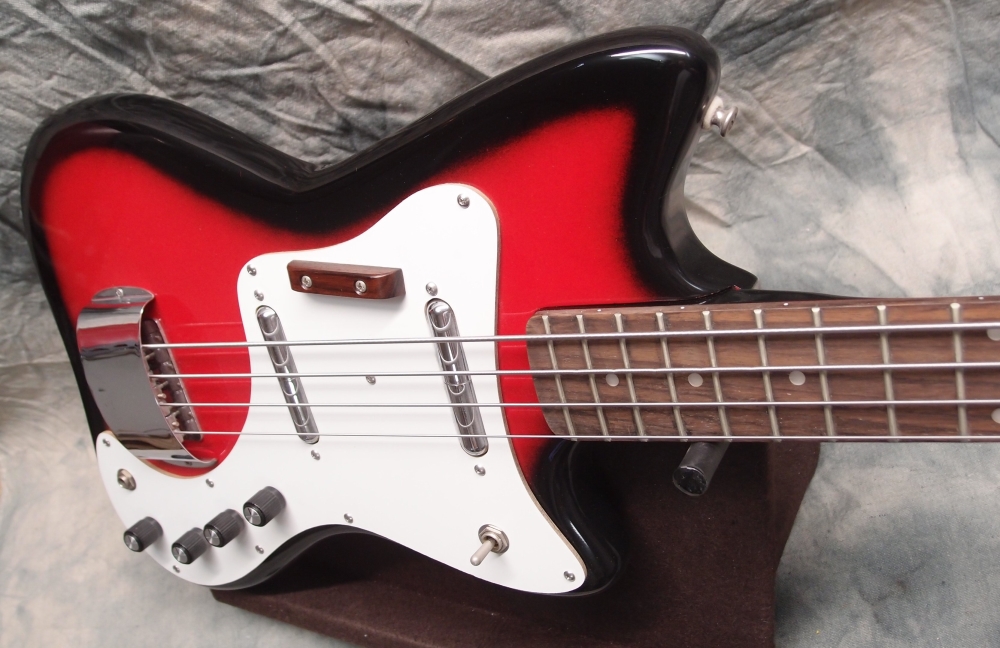
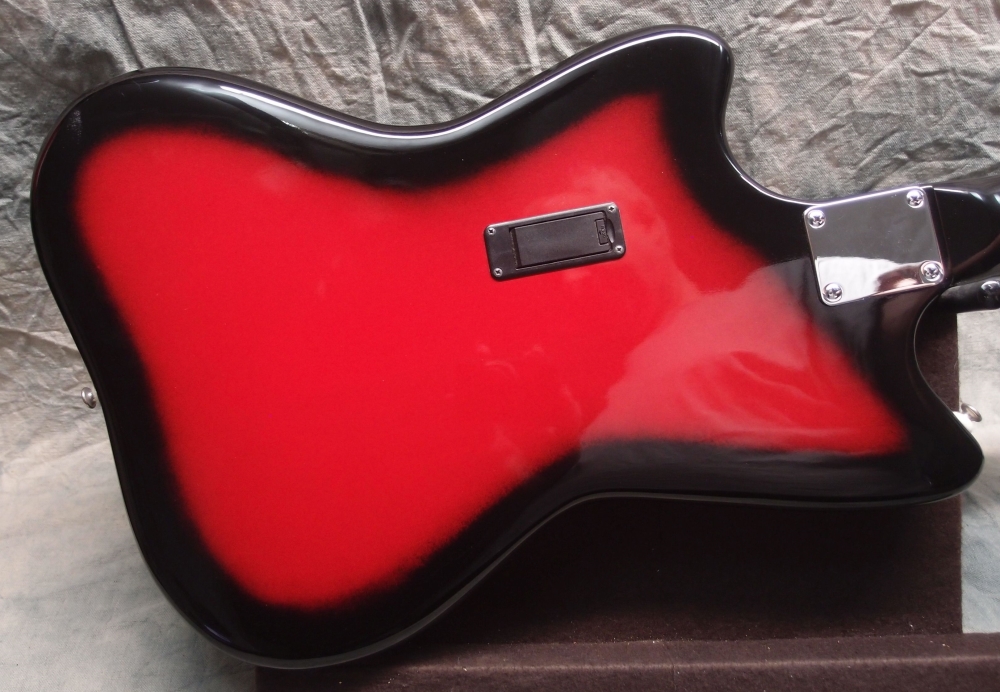
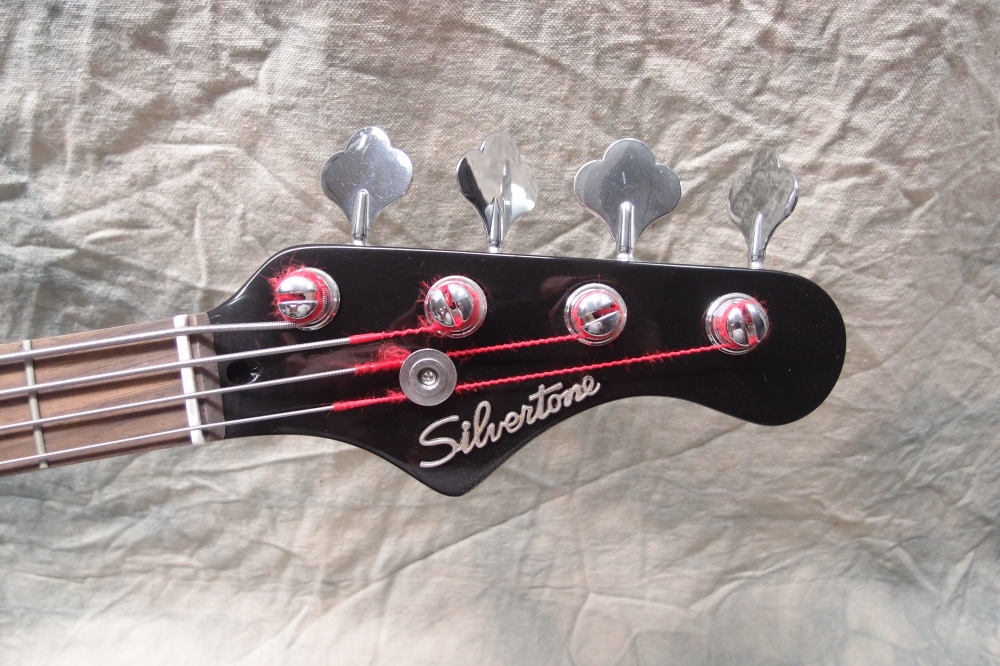
This is a project that took a long time, mainly due to the lacquer sunburst, which took several tries to get right. In the end, I even 'bursted the back of the neck. While it looks like an old Silvertone, it is actually thoroughly modern inside. 90's Danelectro lipstick pickups - the good ones, wired in series with a selector switch like they should be.
Fender has set their legal department against any and all possible targets. I have been hit by trolling internet lawyers before. It costs them almost nothing to attack you, but it can cost you a great deal to be attacked.
I don't think Fender has a leg to stand on in this case, but they have two things in their favor: their own lawyers, and a piece of complete insanity known as the Digital Millennium Copyright Act, or DMCA.
All they need to do is find the right judge somewhere - anywhere - and this case is a go, and they will probably win. It could go on for decades in appeals, all the while damaging Fender's intended victims, so that Fender wins even if they lose.
Such is our legal system, and I want nothing to do with this, so I have taken down all my Fender projects until this shakes out. Sure, I only built a few things for myself, and I'm not selling anything, but for the price of a stamp they can reach out and touch me, and as I said, I've been there before. The American legal system is not about laws, it is about lawyers.
Fender makes nothing from sales of used guitars. I say boycott all new (retail) Fender products. That includes: Bigsby, Charvel, DeArmond, EVH, Fender, G&L, Gretsch, Jackson, PreSonus, and Squier. If you want a new Fender-style instrument, buy a Music Man. Or buy used.