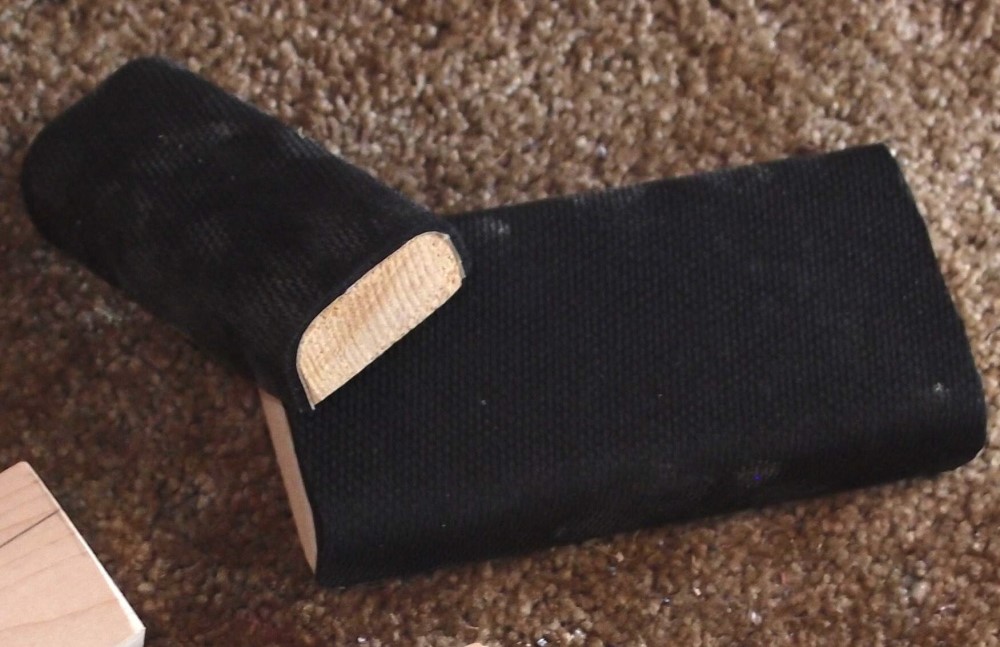
Such a simple idea, yet it makes a world of difference in finishing. StewMac - feel free to copy this design, I've copied enough of yours!
Sanding blocks are 1/8" neoprene foam (mousepad) glued over 1x2 & 1x3 scrap pine, with 1/4" roundovers ( makes 3/8" roundover with padding. ) Use waterproof contact cement. The large block is sized for 1/4 of a standard sheet of sandpaper, and will also take half of a 1/3 sheet piece. Small block works well for details, inside horns, etc. The neoprene grips the sandpaper exceedingly well, wet or dry, and has just the right amount of 'give' for very fine sanding.
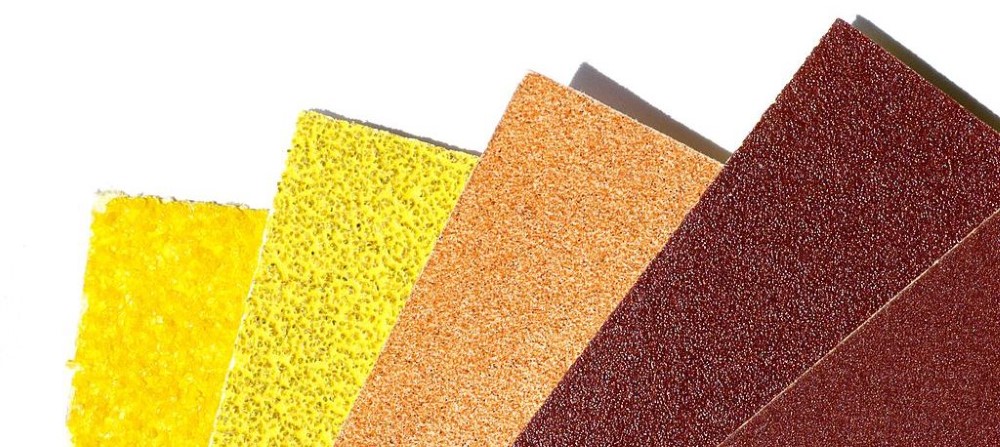
Sanding is one of the most important aspects of woodwork, and luthiery. In general, if there is a choice of method between sanding and something else, routing for example, sanding is much safer and preferable.
I took a drive over to Harbor Freight - purveyor of fine {sarcasm} Chinese tools & hardware - and picked up this little drill press. With a coupon, it cost me just over fifty bucks. This is not what I would call a good drill press, in fact, it is pretty crappy. The base and the table are stamped, not forged, and small. The quill travel is a measly two inches, parts that should be steel are aluminum, parts that should be aluminum are plastic, vibration is excessive, and the 3/8" chuck has a disconcerting wobble to it. I knew all that when I bought it, and I never would have if I did not already have a much better one, or at least a decent one. What I wanted from this drill press is small size and lightweight, so I can add it to my inside workstation, and not have to leave the heat/ac to go drill a hole in the garage. This press weighs well under 40 pounds and doesn't take up too much space on my inside workbench. My 'good' drill press is not something you'd want to move around a lot.
Questions or Inquiries?
Just want to say Hello? Sign the .