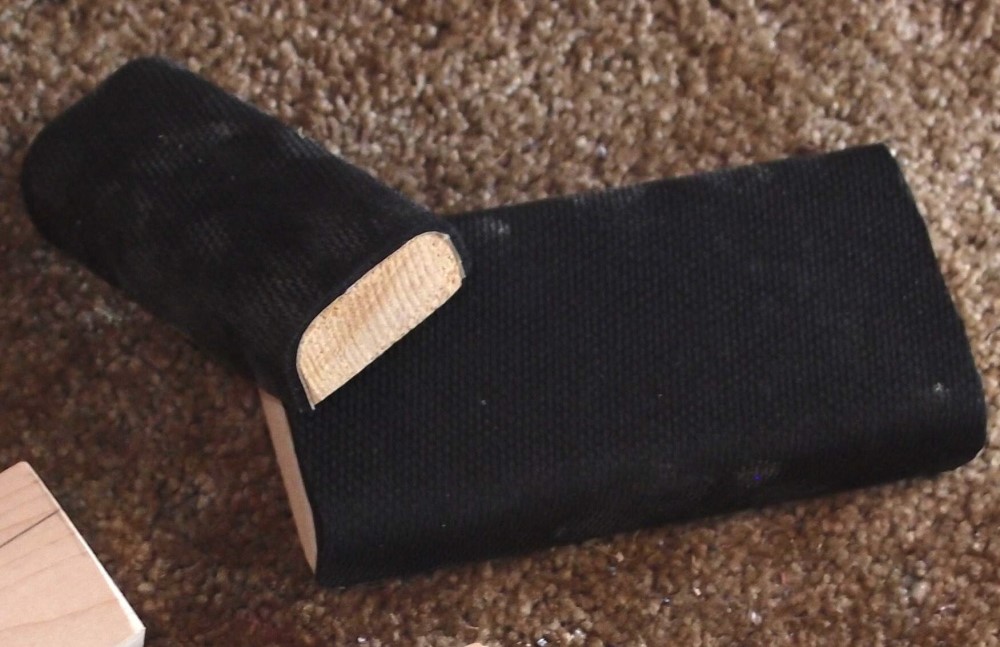
Such a simple idea, yet it makes a world of difference in finishing. StewMac - feel free to copy this design, I've copied enough of yours!
Sanding blocks are 1/8" neoprene foam (mousepad) glued over 1x2 & 1x3 scrap pine, with 1/4" roundovers ( makes 3/8" roundover with padding. ) Use waterproof contact cement. The large block is sized for 1/4 of a standard sheet of sandpaper, and will also take half of a 1/3 sheet piece. Small block works well for details, inside horns, etc. The neoprene grips the sandpaper exceedingly well, wet or dry, and has just the right amount of 'give' for very fine sanding.
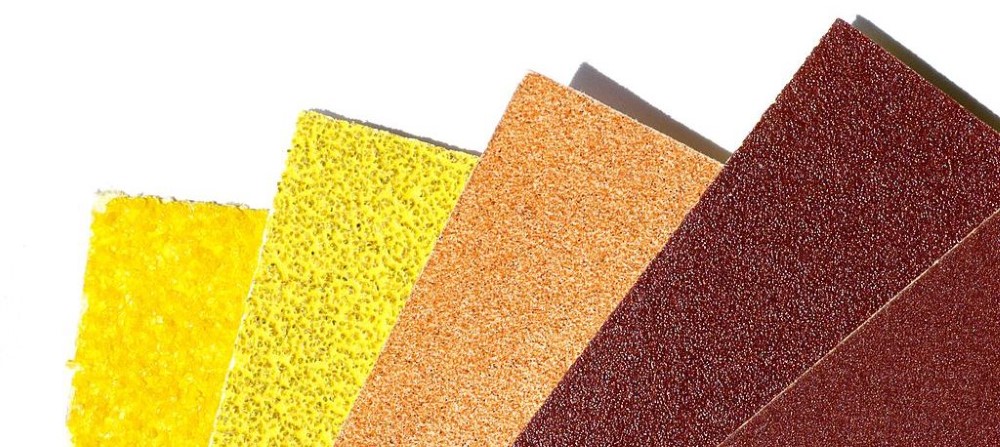
Sanding is one of the most important aspects of woodwork, and luthiery. In general, if there is a choice of method between sanding and something else, routing for example, sanding is much safer and preferable.
It would be really great to be able to do spellchecking right inside WordPress. Specifically, it would be great to be able to check the entire site in one shot. That would require something working from inside, ie, a plugin.
I looked at a lot of spellchecking plugins, and I didn't find one that was acceptable. It's not that they don't actually work, but every one seems to cause non-fatal errors, and I don't want faulty code running on the site. But I could still use some sort of tool, as this website is cobbled together from a huge mass of forum posts that were not all written with the greatest care.
Finally, I tried a browser extension: Grammarly. Grammarly adds spell checking to any html input field. This adds spellchecking to the WordPress editor. The downside is that it only checks one page at a time, and that page has to be open in the editor. That's not that bad, you'd have to open the page to fix anything anyway.
Questions or Inquiries?
Just want to say Hello? Sign the .