Doing Things Wrong

Basic Tools

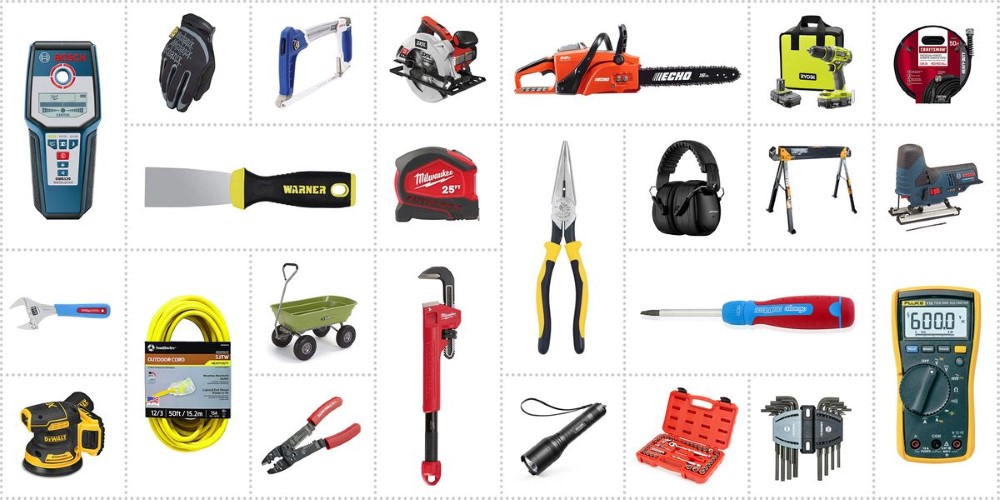
For a minimal woodworking workshop, I would say:

  • hand drill & basic hand tools
  • small drill press and accessories
  • scroll saw or jigsaw or both
  • belt sander, handheld or benchtop or both
  • dremel & accessories ( or my little Harbor Freight Grinder )
  • a big toolbox that you can fill with files, rasps, scrapers, sanders, drill bits, and everything else
  • vacuum cleaner with a hose ( steal from wife )

None of these need to be expensive - Ryobi, Skil, and Black & Decker will do just fine. Even Harbor Freight, although I have doubts about the longevity of their power tools. The results you get depend a lot more on your skill with the tool than how much you paid for it.


Comments on Basic Tools

Questions or Inquiries?

Just want to say Hello? Sign the .

Submit a Comment

Your email address will not be published. Required fields are marked *


Click image to replace if unable to read.

Enter the digits from the image above, except for the last one:

This site uses Akismet to reduce spam. Learn how your comment data is processed.


image
The plate is an old piece of phenolic I had lying around - very stiff stuff. The 'legs' are pine scrap, in whatever width works.​

The Reverse Routing Jig holds a router above the workpiece, which is secured to a flat smooth surface below. I use an old piece of countertop, not a carpet, as in the picture. By sliding the router over the workpiece, you can mill the face of the piece. Height is adjustable by changing the legs. This jig is very useful for milling Fender-style headstocks. It is also possible to cut angled headstocks by blocking-up the workpiece and using the longer legs. This jig is basically an upside-down router table, with one great advantage - you can see what you are doing.