Photo Studio
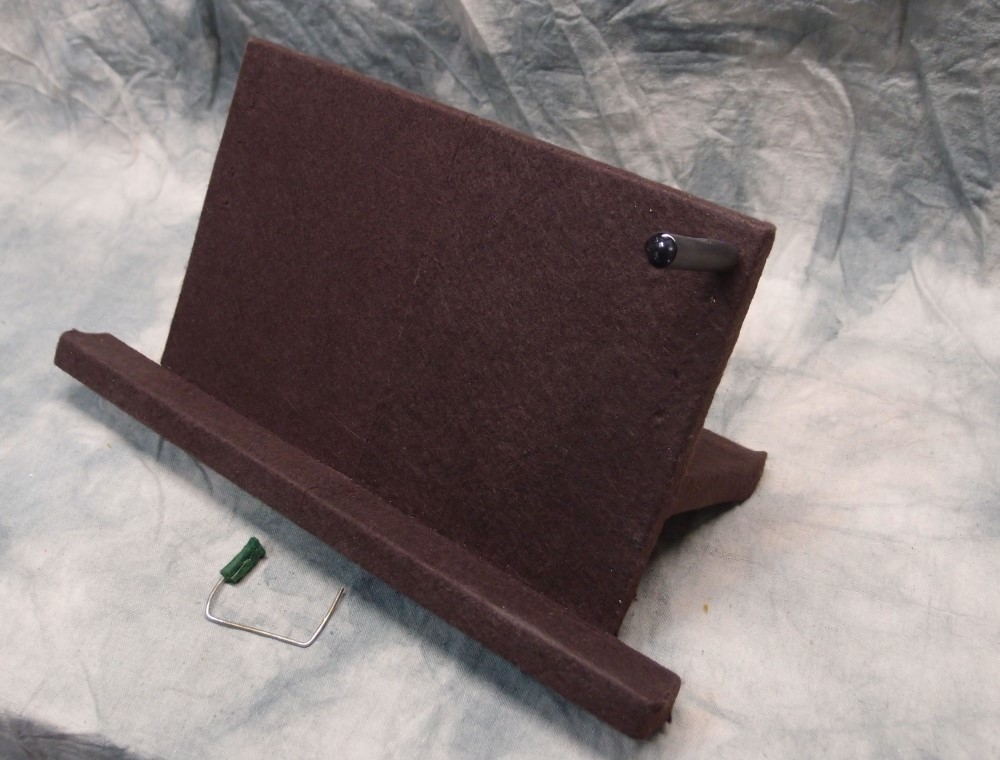
This is a stand you see in a lot of the photos. I cobbled it together from scrap and a dollar's-worth of self-adhesive felt. The neck support is just a padded bolt that adjusts up and down on either side. The stand fits everything from the most bloated Jazz bass body to my smallest Audiovox. It is not a secure stand by any means, just a temporary support for photography. The angle avoids most reflections.
The stand rests on a backdrop I made by tie-dying a drop cloth. At the top, I sewed a pocket for an old shower curtain rod. I never ironed out the wrinkles, I like them. This is all set up on the workbench, with the bright work light above and a couple of extra lights pointed at the ceiling to reduce shadows.
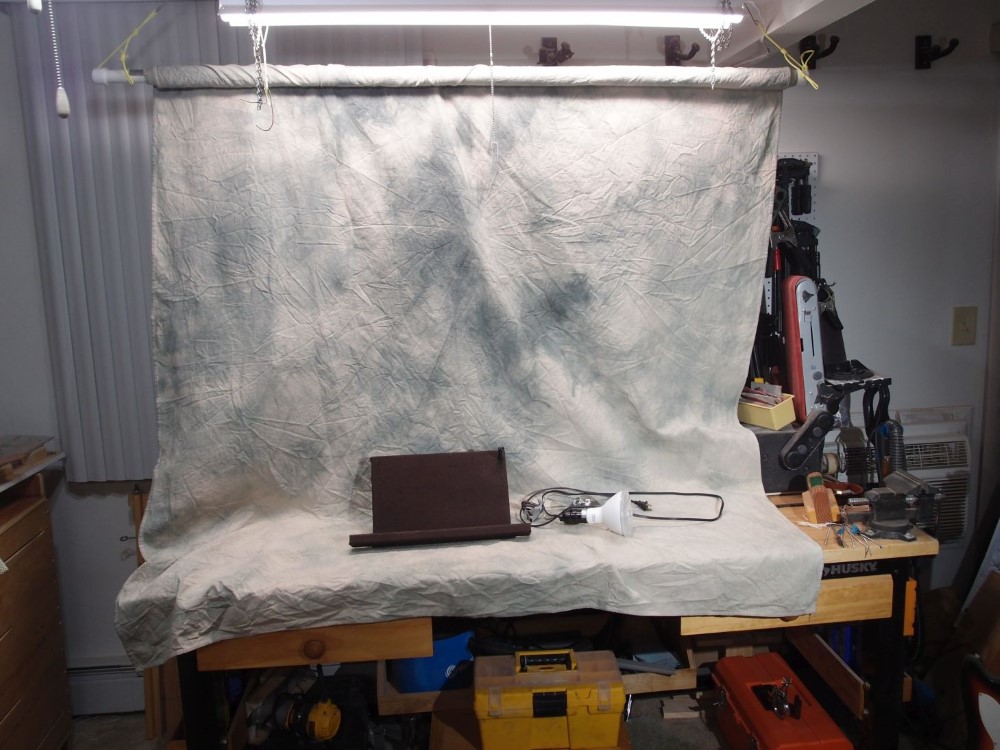
Here is the entire photo 'studio'. The workbench already has a bright overhead light. Next to the stand is a five-dollar photo light - a clamp-on with a daylight LED flood bulb. I have two - the other is illuminating the scene. With the overhead light and two strategically-placed floods, all 'daylight', I have nice even white lighting with no shadows or glare. I generally turn off the rest of the room lights, which can reflect in shiny surfaces.
Questions or Inquiries?
Just want to say Hello? Sign the .