Active Tone Controls
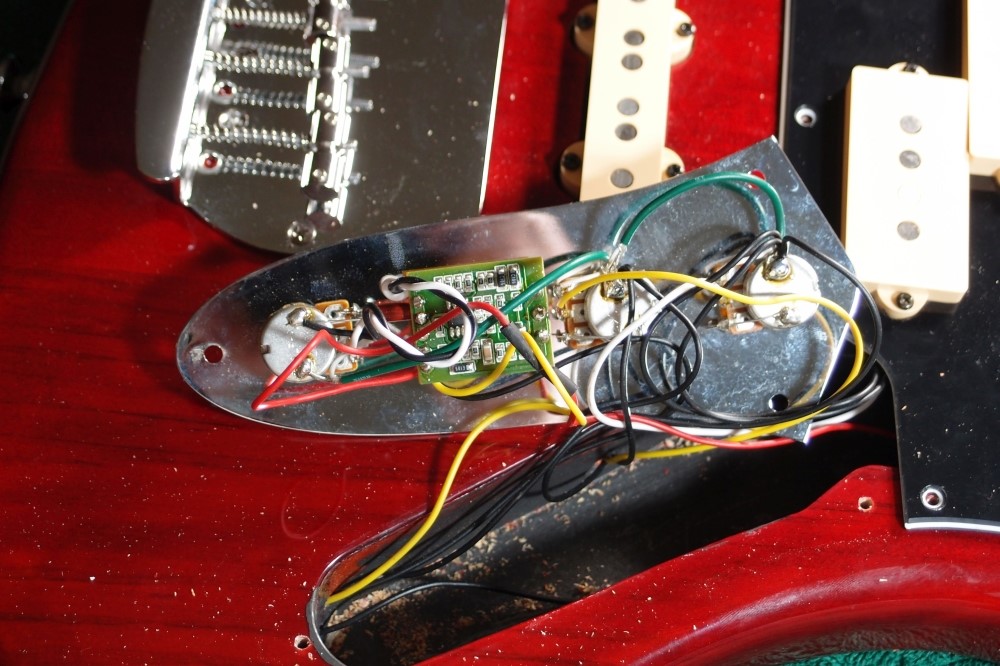
Active tone controls offer one thing that no passive control can do - boost. You can get them in one, two, or three bands. The latter can come with mid-frequency controls, which gives you nearly as much tone-shaping as your amplifier. Who doesn't want more of everything?
A great source for active tone controls is guitarfuel.com. This guy sells really great active controls, in all kinds of configurations. You can buy direct or find his ebay store. I’ve used a lot of these circuits and even done some prototype testing for him.
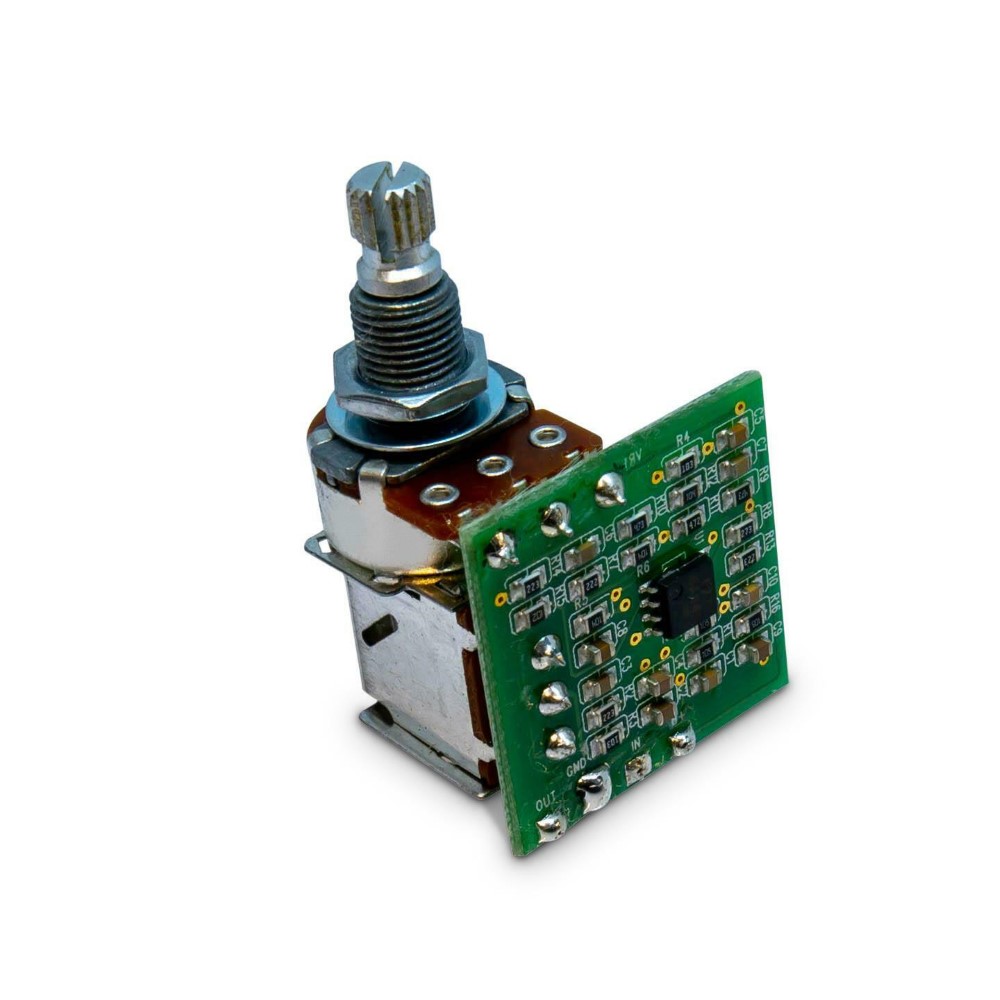
The boards themselves resemble Artecs, but are made to custom specs. They are hi-impedance, suitable for piezos as well. Very compact – should fit anywhere, I squeezed one into a Tele. Simple installation, everything is pre-wired as much as possible.
Artec electronics are excellent, quiet, and very reasonably priced. I’ve also used some Belcat and no-name circuits from eBay. Very hit and miss, especially the unbranded ones. A number of them died during installation, or maybe even shipping. You get what you pay for.
I’ve built a number of Franken-basses with SBK pre-amps, and they are great – very quiet, with a wide range on the tone controls. The price may not have much snob appeal, but they are great circuits, and actually easier to install than all but the simplest build-your-own passive circuit. I’ve fooled around with a number of other low-priced active controls, and the SBKs are MUCH better than any of them. Highly recommended.
Oddly, I put one in a guitar and found it was wasted and took it back out and put it in a bass. The guitar just didn’t seem to benefit from active circuitry like a bass does.
https://ebay.com/str/guitarfuelperformanceproducts
Questions or Inquiries?
Just want to say Hello? Sign the .