August 27, 2020
Crushed Oyster Shell
August 27, 2020
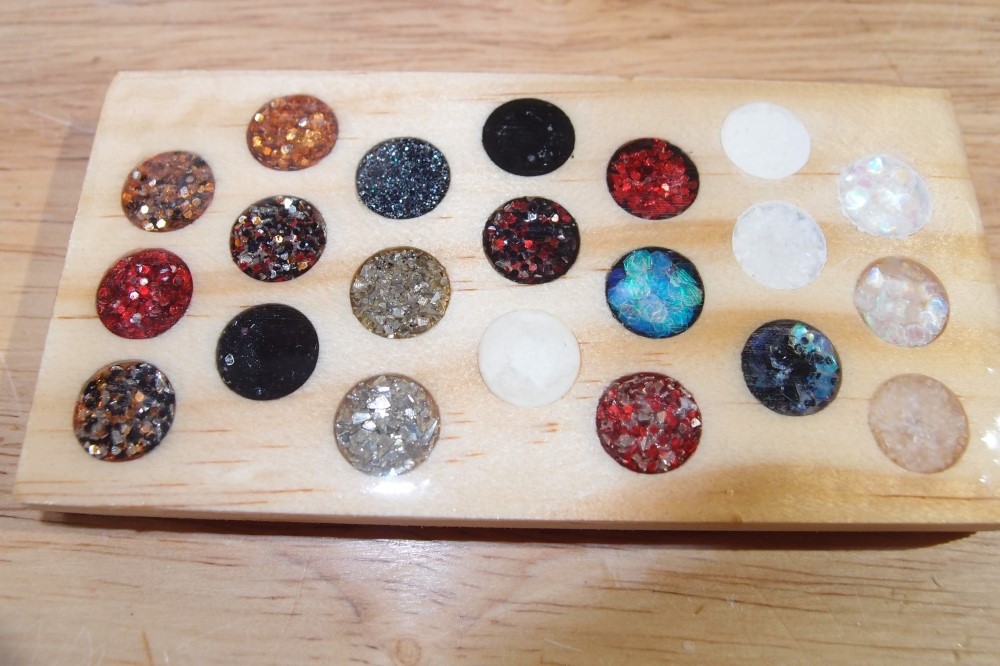
I went to a beach nearby and collected some oyster shells to try out as an inlay material, the same as I have been doing with glitter. I'm looking for something light-colored, but all the white glitters reflect garish pinks and greens.
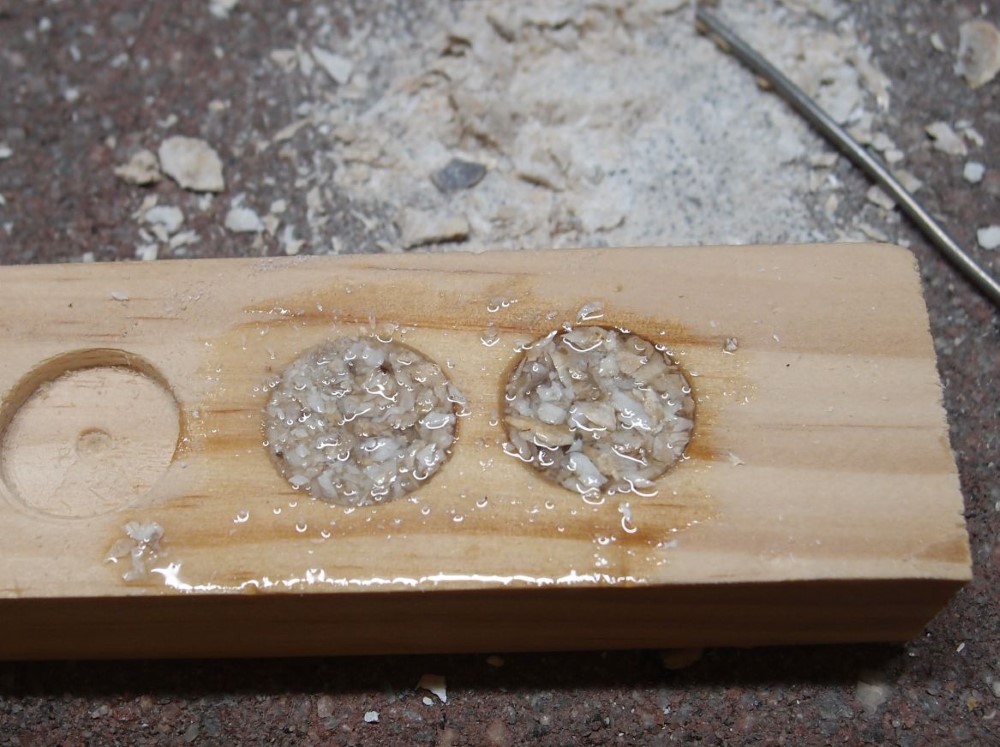
I carefully crushed a small shell and used the result to make the two inlays above, which are still wet. The one on the left is a finer grit than the one on the right. I was worried that the highly acidic CA might react with the calcium in the shells and just make a fizzy mess, but that did not happen at all. The calcium will probably speed the curing reaction. I hope it doesn't slowly bubble. I'll see in the morning.
There hasn't been a live oyster in these waters in over 100 years, although attempts are being made to re-introduce them. That means this shell is at least that old, and should have exceptional tonal properties. The place where I got these was once famous for its oysters.
There are other shells I could try if this works, although I'd have to go a little further to get them. Crushing enough oyster to do an entire neck would be a fair amount of work. Freshwater mussels would also work. Baking soda will make a pure white inlay, but flaws are inevitable and hard to hide. The shell inlay should hide any flaws very well.
Update:
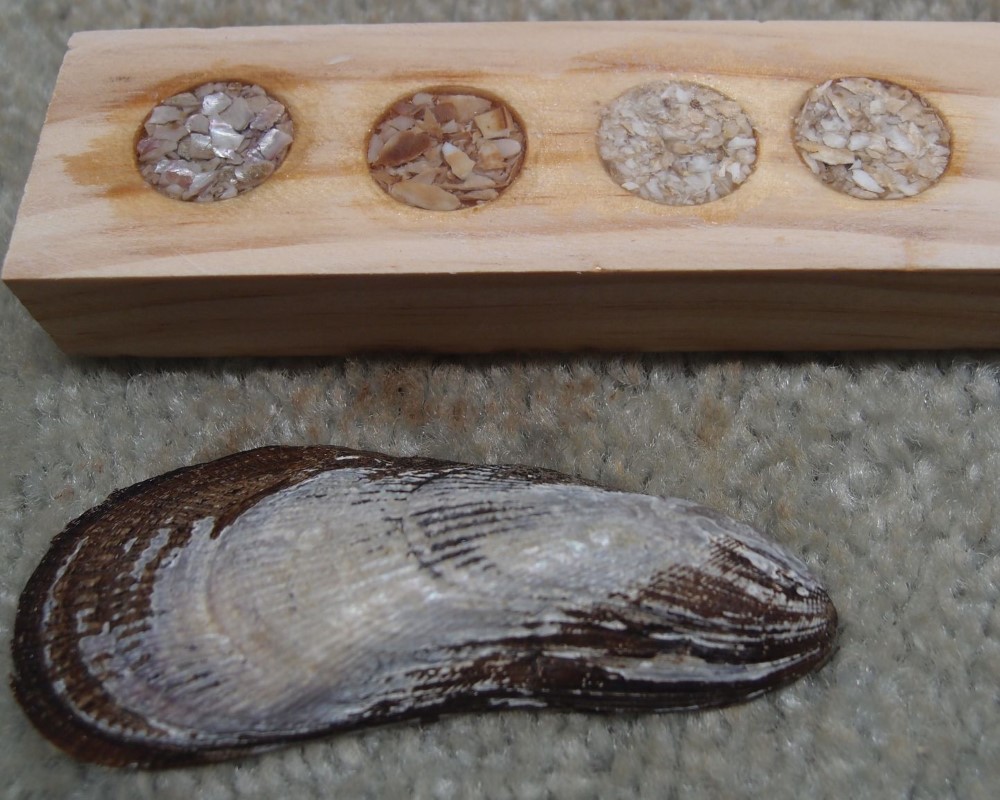
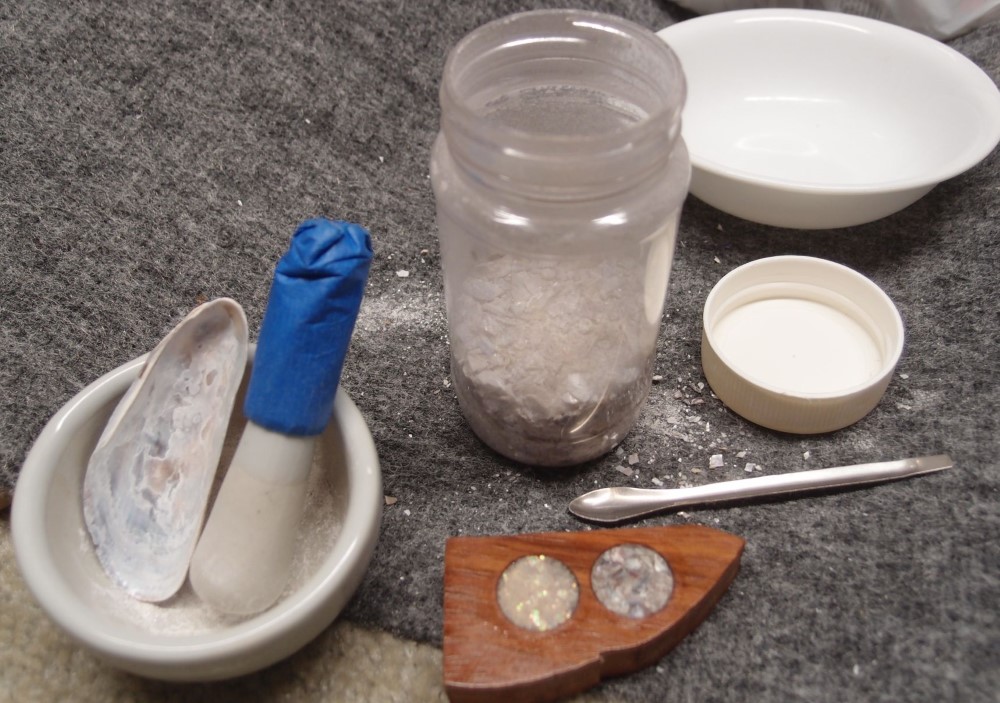
The oyster shells are kind of plain, no pearl to them. I wonder if that is because they are so old. There are no newer ones around though. I did pick up a couple of other shells, and I really like the one on the left. That is a Ribbed Mussel, also pictured. It has a nice pearlescence that you can even see in the picture. These shells are common as dirt everywhere except where I got the oysters. The only problem is the dark skin, but that can probably be wire-brushed off. The other test is a slipper shell. This was a crappy one, they are often nice and pearly too. When I get a chance, I'll do some more beach-combing. The shell material causes the CA to set up very fast, which is a definite advantage over glitter.
I also ordered a little mortar and pestle, so I can grind the shells better. It would take a lot of shell to do a whole neck. You can buy ground shell on eBay, but it just looks like white sand to me. This is more fun.