June 6, 2020
Still Loothering
June 6, 2020
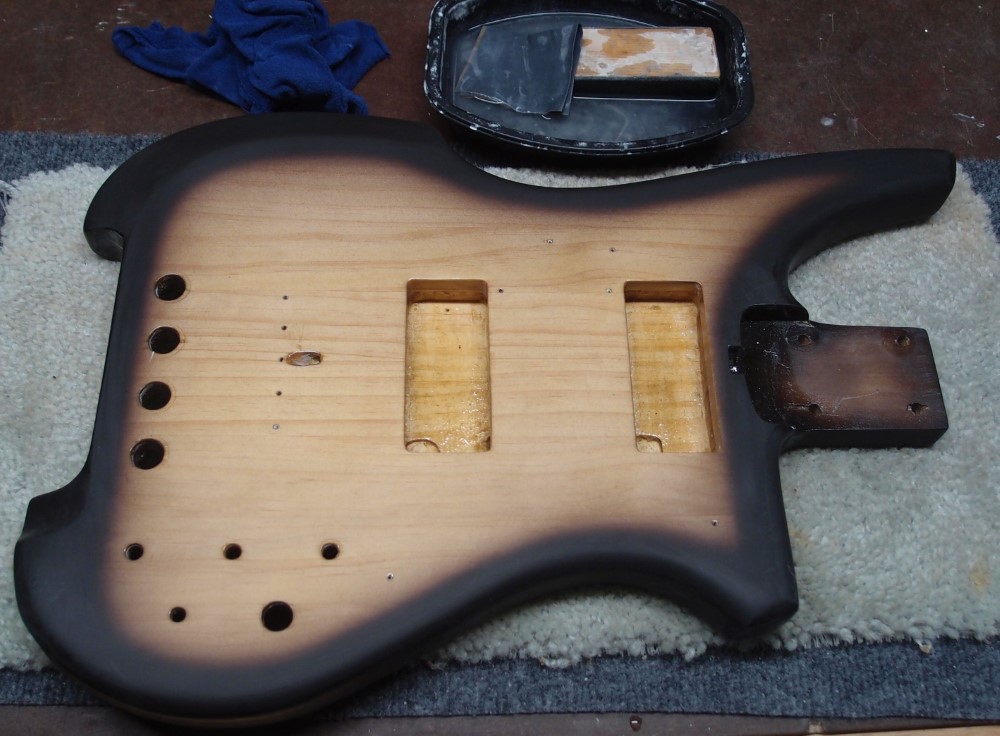
This is the Kubicki bass body from last year (?) It is now wearing a nice chocolate burst and a thick coat of OIL-BASED polyurethane. It has been hanging up for over two months, and I figure the poly is 99% as hard as it will ever get.
I just finished wet-sanding to get out the orange-peel and dust nits. A quarter-sheet of good quality 1500 ( not Chinese ! ) and my small sanding block made from 1x2 and mousepad rubber, see it in the laboratory section. The matte finish now is very nice, but I'm not done yet.
I remind everyone that this body is built up from Radiata pine 2x2s, from Home Depot. Now that the edges are covered, you'd be hard-pressed to tell it is not an expensive single-piece blank from some luthiery supply place. This wood is really great to work with, much better than alder or poplar. Of course, the tone is "radiant".
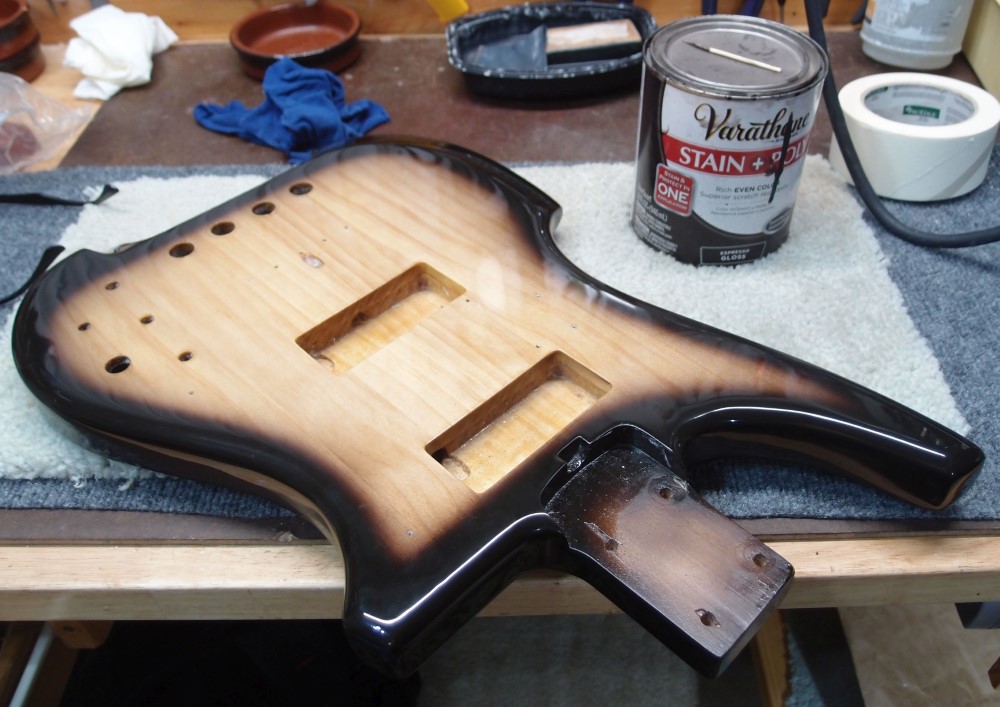
That's better, a nice shine. Needs a bit more work in some spots, then it will be ready for re-assembly.
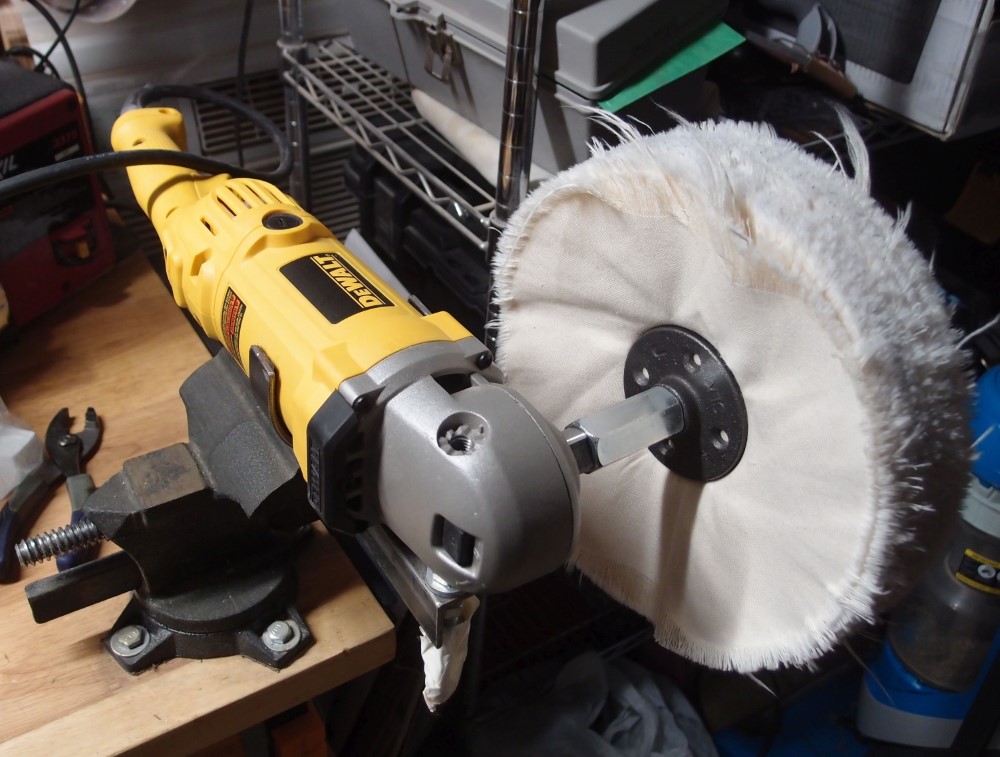
This is my dry-polishing setup, also described in the laboratory. One thing about this rig is how surprisingly quiet it is.
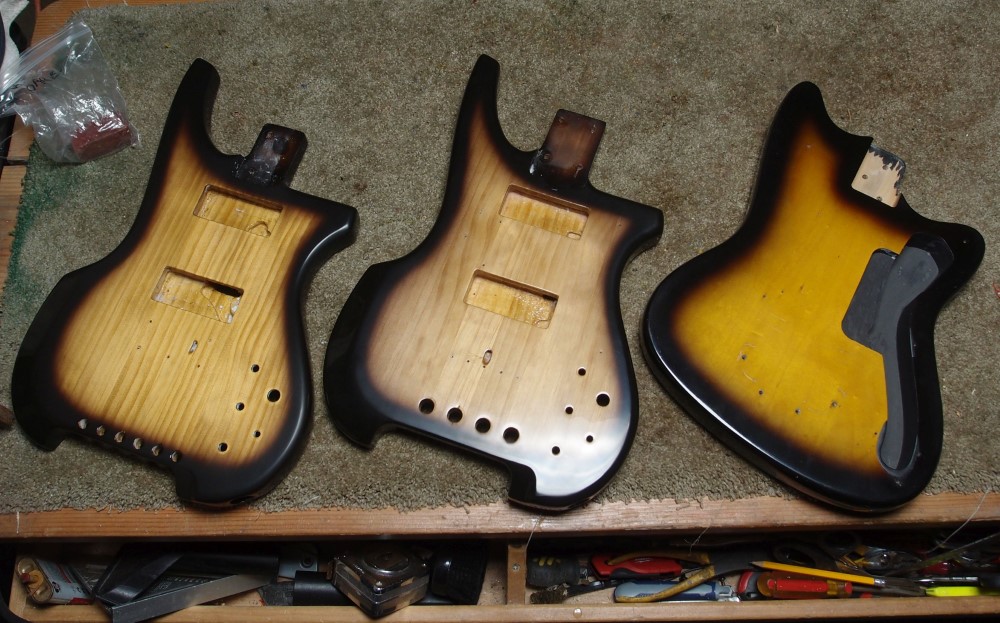
While I was at it, I decided to do the guitar body as well. These are all sanded 1500-2000 and then rough-polished. Block sanding on the faces has made them as flat as glass. A bit of touching-up, and then final polishing will make them shine.
On the right is an old Harmony body that I got on eBay a long while ago. I gave the lacquer the same treatment. Lacquer polishes much faster than tough poly, and scratches up just as fast. A project for someday ...