Acoustic Bass ?
Rather than design an acoustic bass according to luthiery principles, which are basically 500 years of "we do it this way because we've always done it this way" together with 50 years of "there is no other way", I would like to design an acoustic bass like a loudspeaker. Plenty of bookshelf speakers and subwoofers are about the same volume as a guitar.
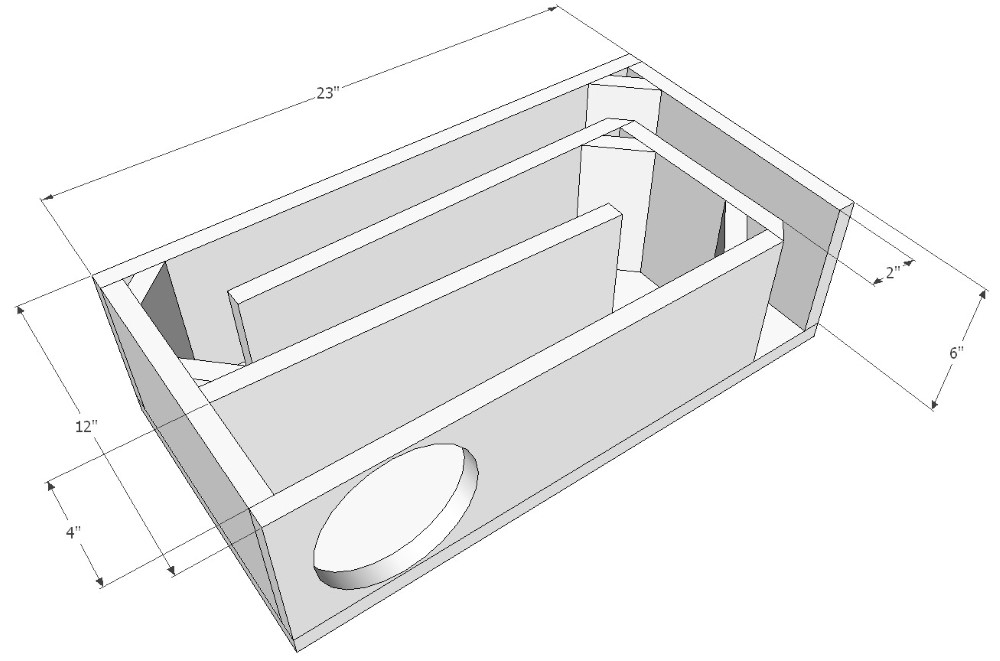
There is a good deal of proven engineering in loudspeaker design. I would use a trapeze tailpiece and a floating bridge on a masonite top. That would be the 'driver'. Masonite seems to resonate well at lower frequencies, better than plywood. Probably tune the body volume to around 200 Hz. But most of all, rather than a plain soundhole or basically useless F-holes, I would construct a tuned port, probably exiting the side to leave the entire front free to resonate. The port might have to be folded to fit inside. Or perhaps a folded horn inside the body.
I don't think the sides contribute anything, I would make them heavy from stacked plywood. Probably want the back to be pretty heavy too, so that it doesn't flex and soak up the vibration. You want the air pumping in the port. In other words, designed like a loudspeaker, not a guitar.
All of the acoustic basses I've ever seen are just overgrown guitars, with seemingly no optimization for lower frequencies except size. There are a number of ways that are used to produce bass efficiently from a small enclosure, and I have never seen any of them applied to a bass, just the same old "make it bigger".
Perhaps the vibrating bridge is not enough power to make a port or horn work. Could cheat and use a piezo with a 5-watt amp and a small bass driver.
That's about as much as I've thought of it yet, but there are lots of design tools on the internet. Any audio design experts out there? Save me some trouble and tell me why this wouldn't work.