Doing Things Wrong

Reverse Routing Plate
image
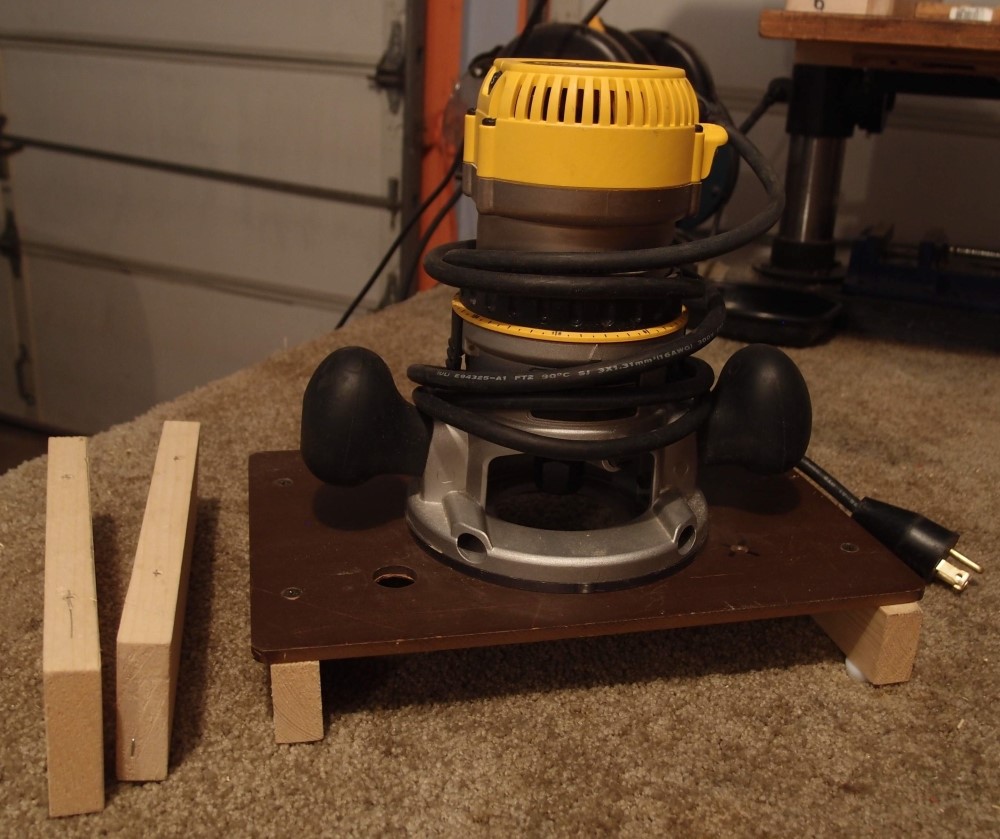
The plate is an old piece of phenolic I had lying around - very stiff stuff. The 'legs' are pine scrap, in whatever width works.​

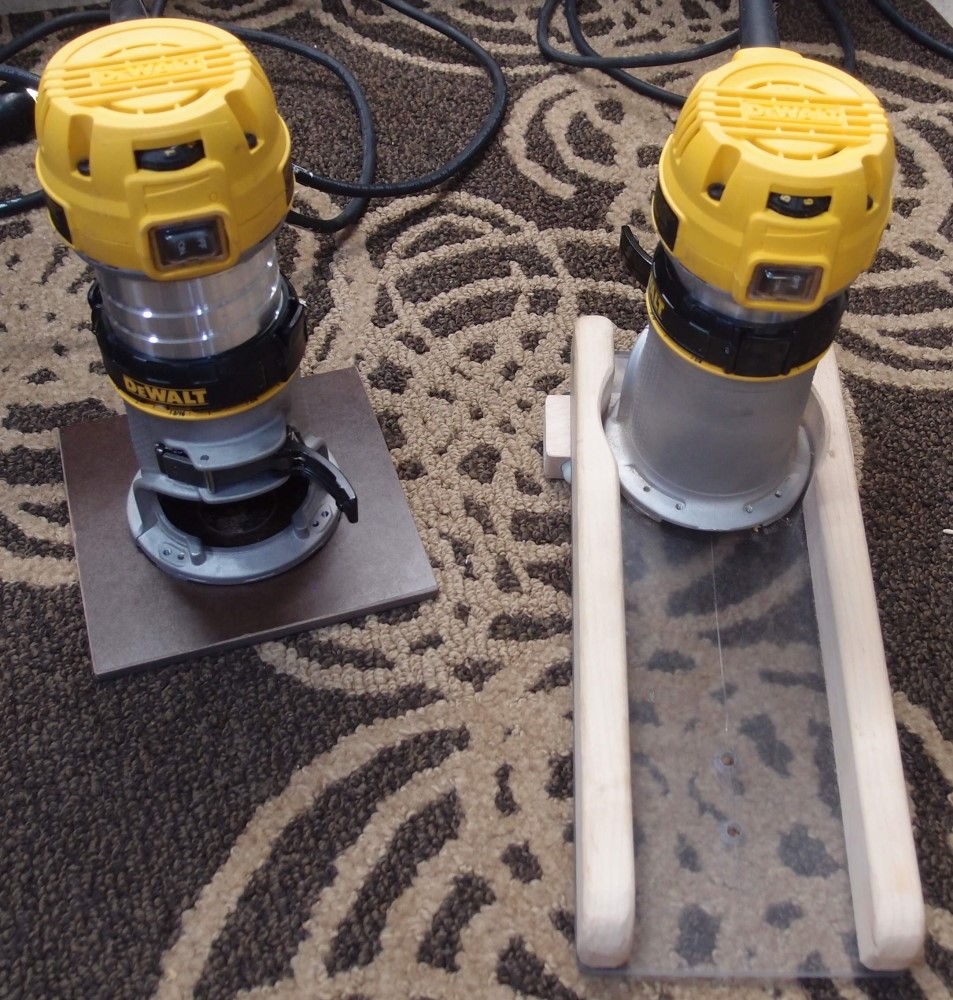
The Reverse Routing Jig holds a router above the workpiece, which is secured to a flat smooth surface below. I use an old piece of countertop, not a carpet, as in the picture. By sliding the router over the workpiece, you can mill the face of the piece. Height is adjustable by changing the legs. This jig is very useful for milling Fender-style headstocks. It is also possible to cut angled headstocks by blocking-up the workpiece and using the longer legs. This jig is basically an upside-down router table, with one great advantage - you can see what you are doing.
image

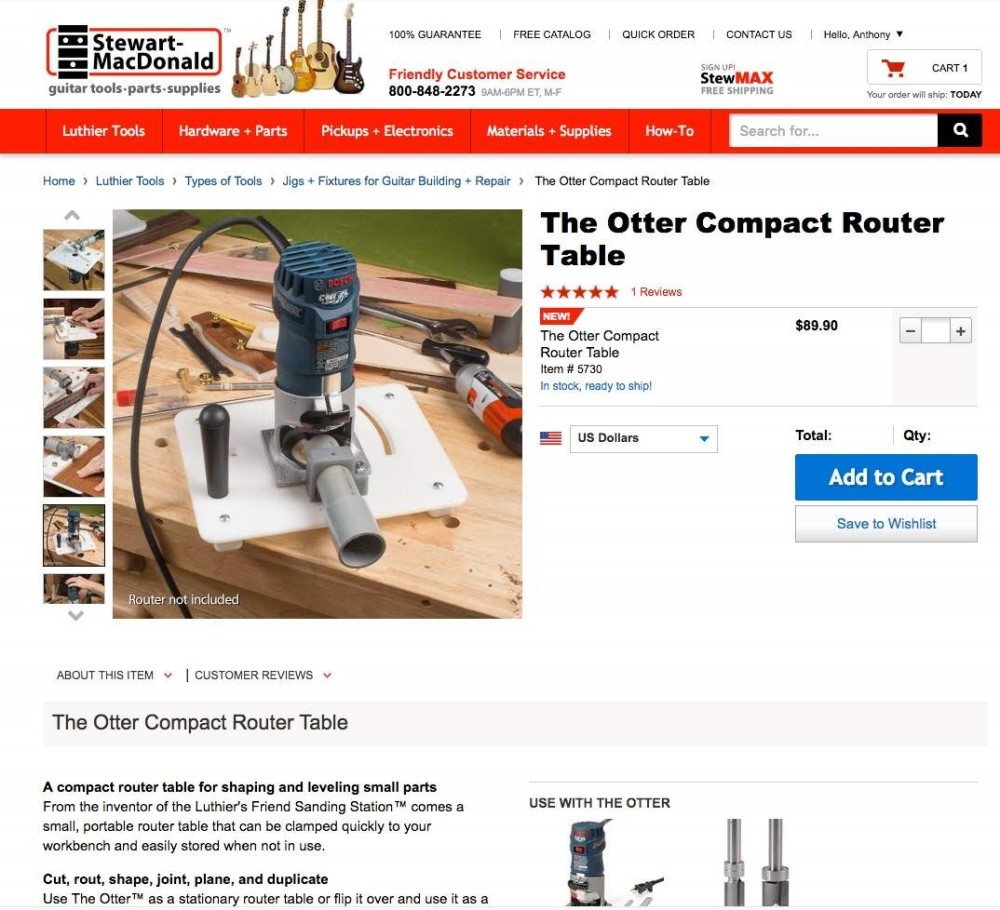
This is such a versatile jig that StewMac actually copied it. I had my original version posted online well over a year before they came out with theirs. Imitation is the sincerest form of flattery.

Comments on Reverse Routing Plate

Questions or Inquiries?

Just want to say Hello? Sign the .

Submit a Comment

Your email address will not be published. Required fields are marked *


Click image to replace if unable to read.

Enter the digits from the image above, except for the last one:

This site uses Akismet to reduce spam. Learn how your comment data is processed.


image

It's time to glue up some necks. First I radius-sanded the fretboards to 12 inches with my DIY sanding block. The StewMac board started with a 16" radius, which was easy to do. The other board started flat and was a lot of work to do entirely by sanding, not to mention a mess of nasty rosewood dust. For a flat board, better to rough it out with a router, and then finish by sanding. I'm not much of a cook, but the little kitchen timer has a thousand uses.