Doing Things Wrong

Files & Rasps

image

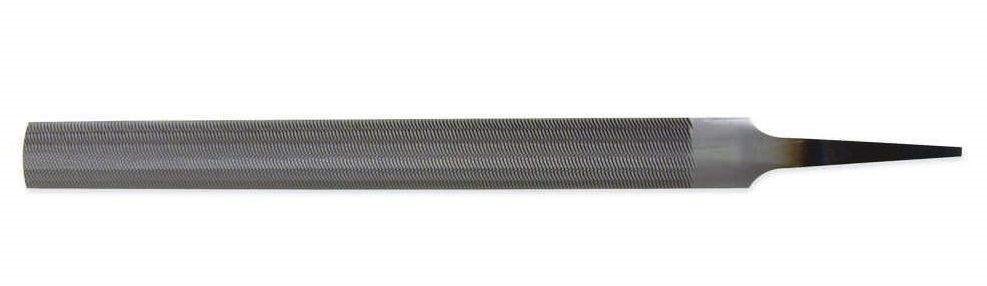
This is a half-round bastard file from Home Depot. Half-rounds have the most aggressive teeth of any file, on both sides, but not as dangerous as rasps. Mine see as much use as all the others put together - they are terrific on wood. I have no problem sanding out the marks from the file. The last couple of necks here were done a lot more with the half-round than the Japanese files. These come in 6, 9, and 12-inch sizes; all are useful.
image

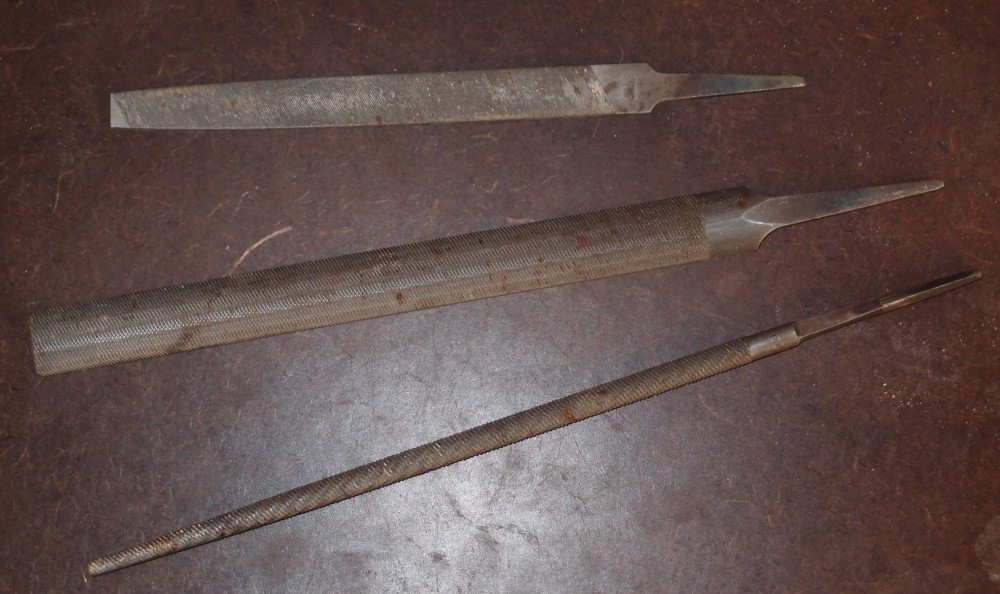
Here's a trick: files usually go dull near the end, that's where they get used the most. If you have an angle grinder or some other kind of ceramic cutter, just cut an inch off, smooth over the cut end, and you have a new file !!! Home Depot recently gave me a little angle grinder that would cost as much as three or four good replacement files. Like a bench grinder, this is a tool that quickly pays for itself. You can also grind the end of a file into a handy little chisel. Always remember to grind the burr off the handle of a new file.

Comments on Files & Rasps

Questions or Inquiries?

Just want to say Hello? Sign the .

Submit a Comment

Your email address will not be published. Required fields are marked *


Click image to replace if unable to read.

Enter the digits from the image above, except for the last one:

This site uses Akismet to reduce spam. Learn how your comment data is processed.


The skunk stripe is the walnut strip down the back of many 'classic' guitar necks. It is an indication of the type of truss rod within: A single steel bar in a curved channel. To create a perpendicular force, a truss rod needs two members: one in tension and one in compression. The skunk stripe rod uses the neck itself as the compression member. This was originated on a guitar neck and then extended to the bass. The problem is, a bass neck is much longer and less stiff than a guitar neck and is under much greater compression. The last thing you want to do is add more compression. Also, using two dissimilar materials for the two members inserts a host of issues, and using steel against wood, that's just hideous. The wonder of the skunk stripe is that most of the time you get away with it, despite how awful the design is. Of course, it is very cheap and easy to manufacture, in a factory setting.