June 25, 2020
The Matching Guitar
June 25, 2020
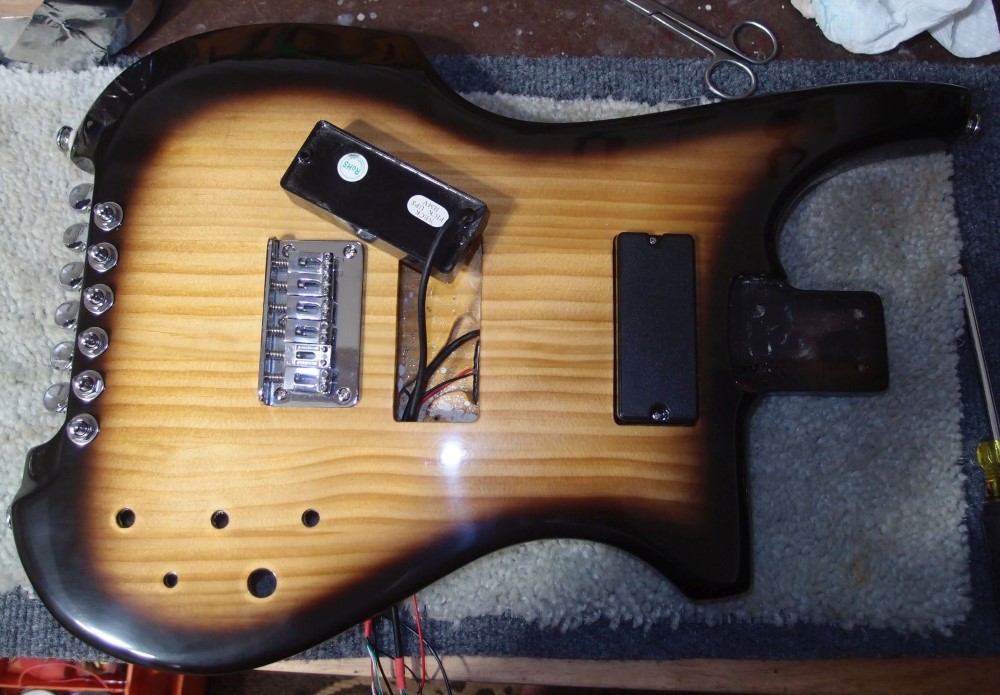
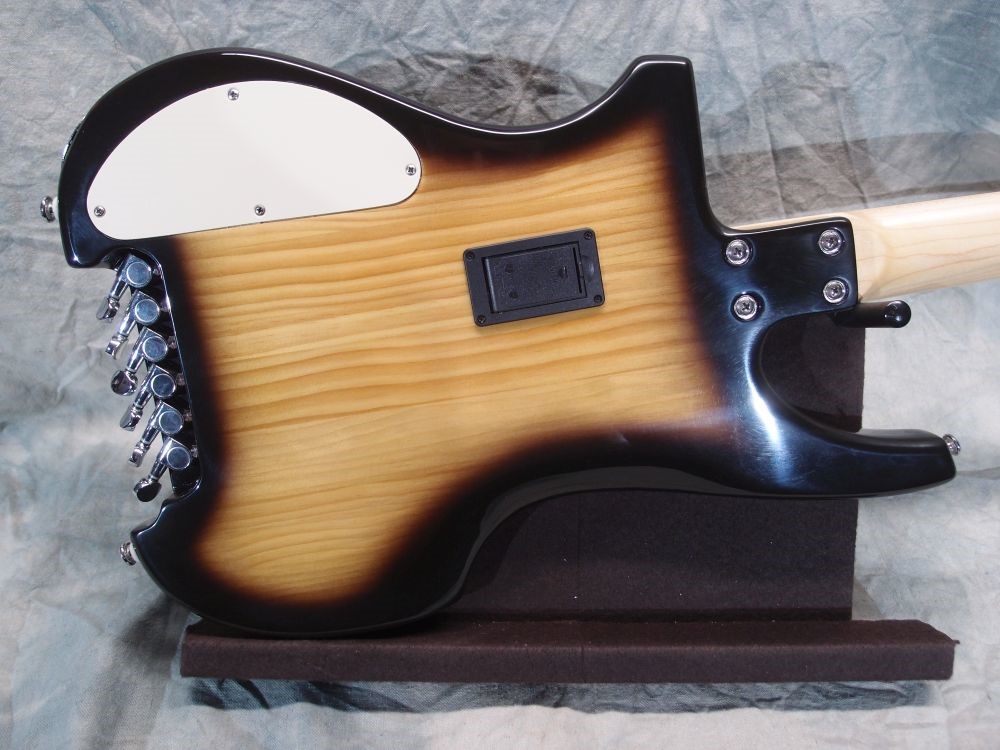
I started putting together the Kubicki guitar. So far, just simple mechanical stuff: tuners, bridge, pickups, etc. In this picture, you can see how the wires pass through the battery compartment and everything collects under the bridge pickup and then goes into the control cavity. Soldering tomorrow.
These are the same pickups as the bass. Bass and guitar are just one octave apart; guitar pickups work just fine in a bass, and vice versa. I have used tons of guitar pickups in basses. To be honest, I can't remember what these are, just Chinese cheapies.
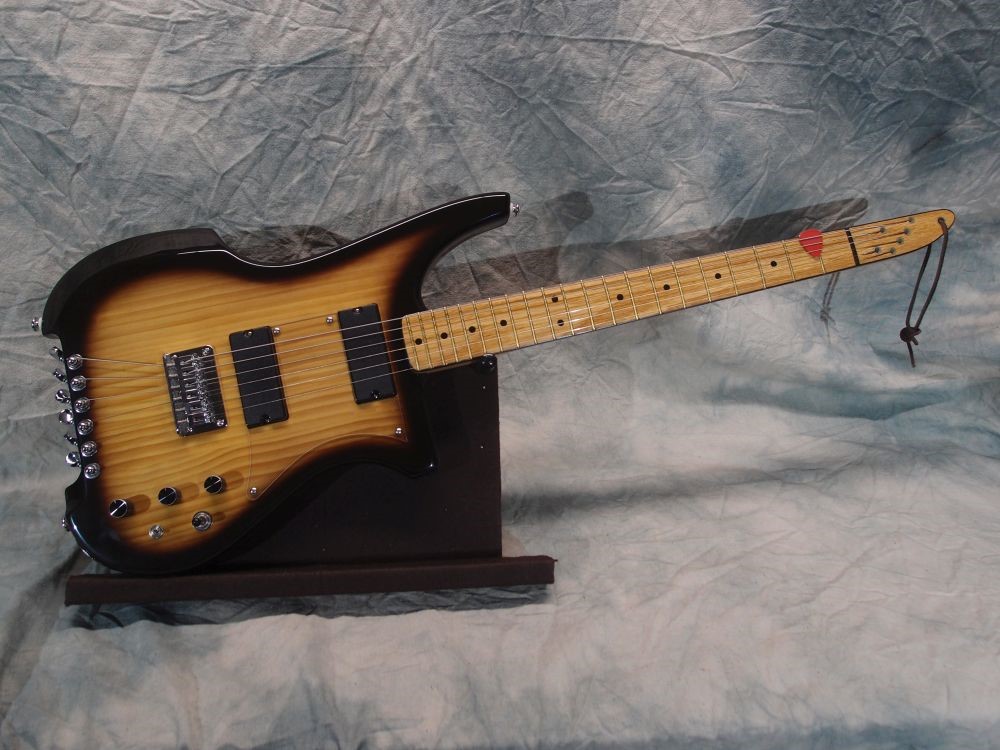
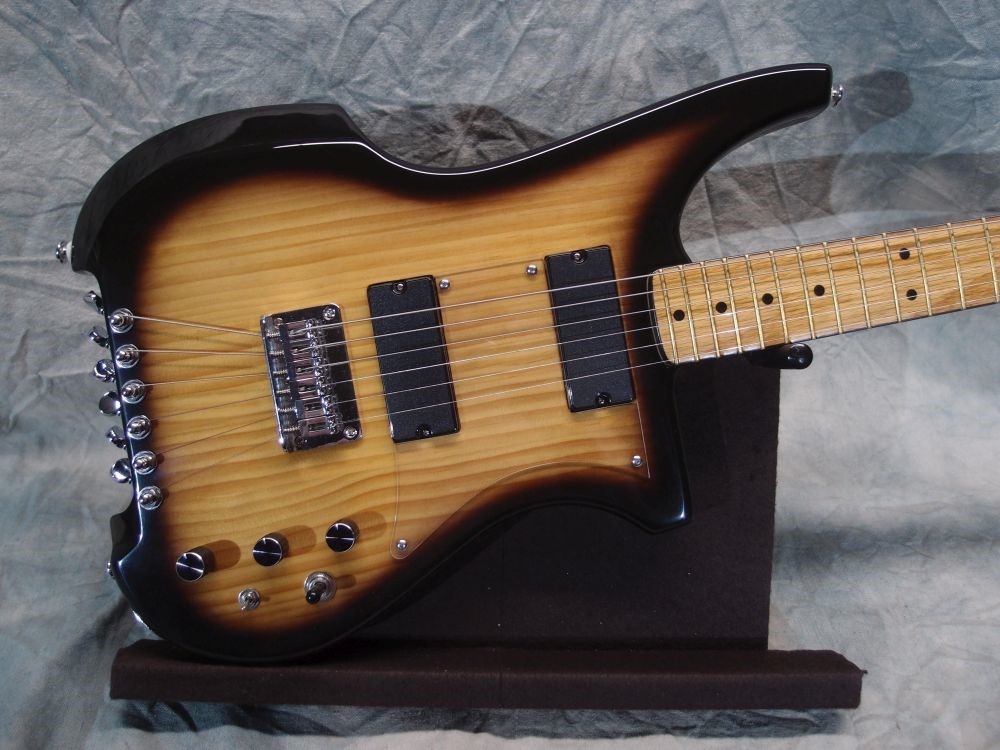
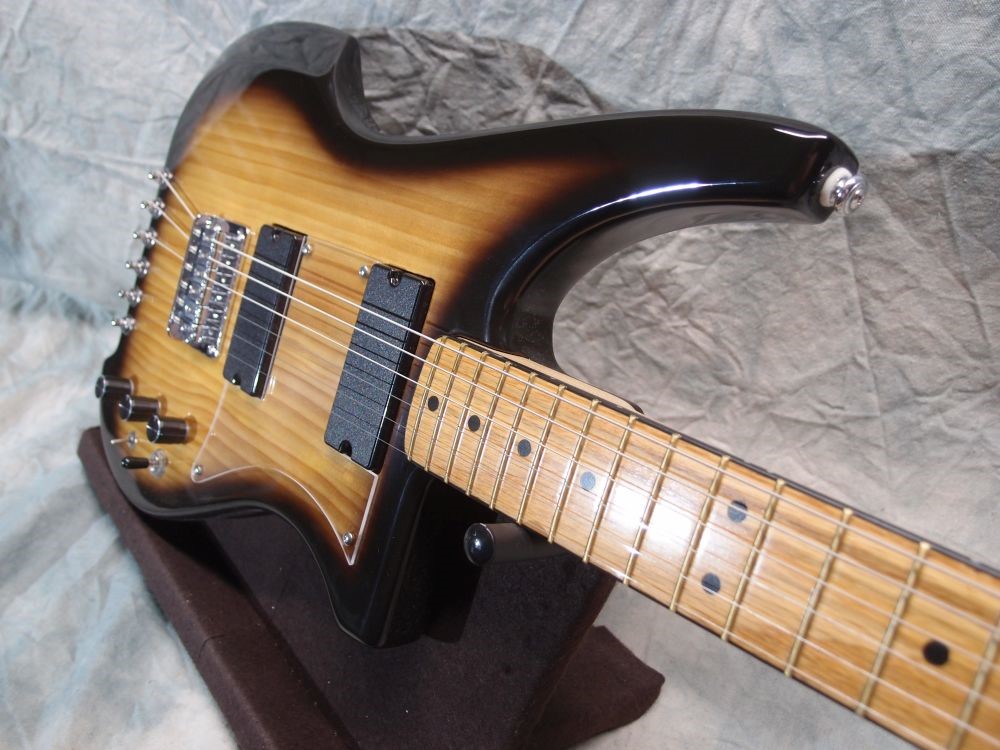
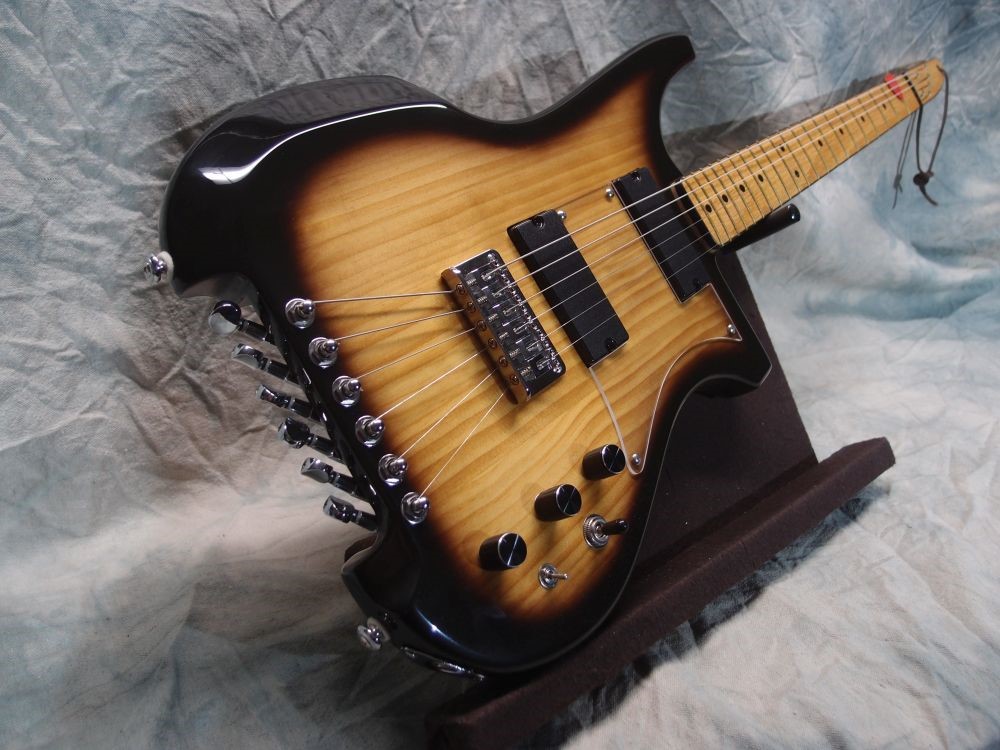
I think the dark brown burst over the pine grain, with heavy ambering from the oil-based poly, comes out very pretty. What do you think?
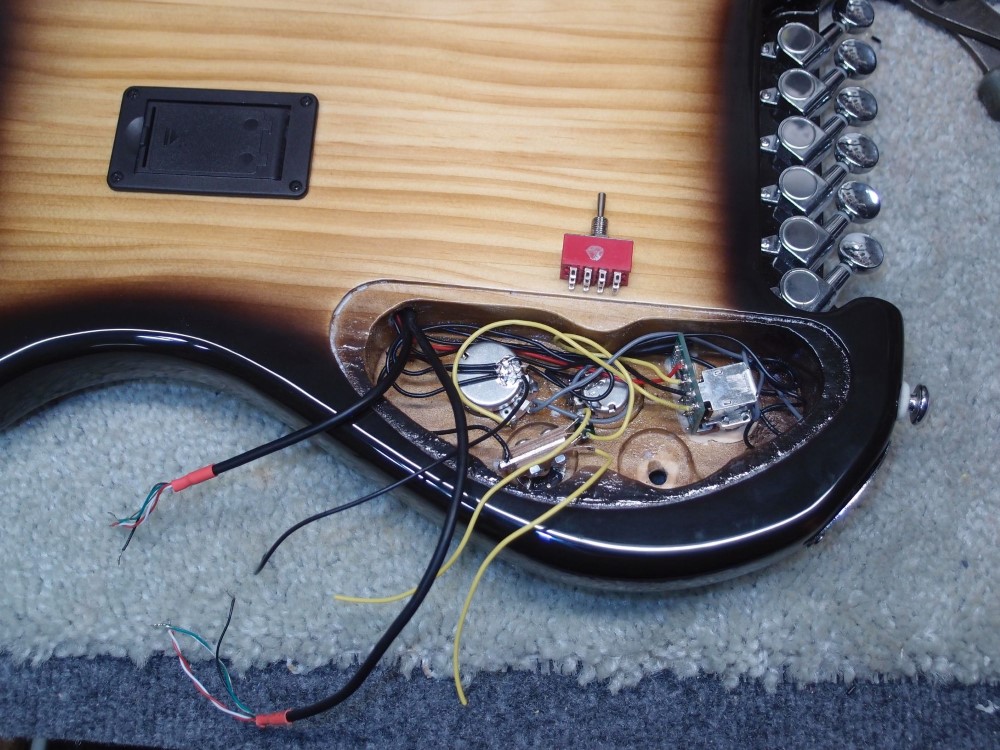
This one is not as bad a rat's nest as the bass. The active circuit is an Artec EXP tone control. This is a double-ended control, in that it goes from mid-boost at one end to flat to mid-scooped at the other end. It was a very tight fit in this relatively thin body with no pickguard and a recessed control cover. I had to Dremel-out some wood on the back side, which left the pot shaft sticking out quite a bit on the other side. I then had to modify the knob to make it sit normally. Alles Gut !!!
The pickups will go through the series/parallel mode switch, the same as the bass. From there to the selector switch, and then direct to the EXP, so that it always sees the raw signal without volume or tone. The EXP goes to the volume control and then out, with a standard passive tone control taking up the last knob. The EXP has a pull-bypass, and I used a stereo jack to lift the ground of the battery when it is not plugged in. I always leave the wires a few inches long in case I need to take something apart. All the ground wires collect in a big puddle of solder on the back of the volume control. This is easy and gives a theoretically good 'star' grounding configuration. Actually, I don't think that matters, I just did it because it is easy.
I'm tired of soldering, I'll do the last part later. There are a lot of connections on the last switch, but I have a diagram color-coded for these pickups, so it is a no-brainer. I'll have to scan the diagram and post it up here for future use.
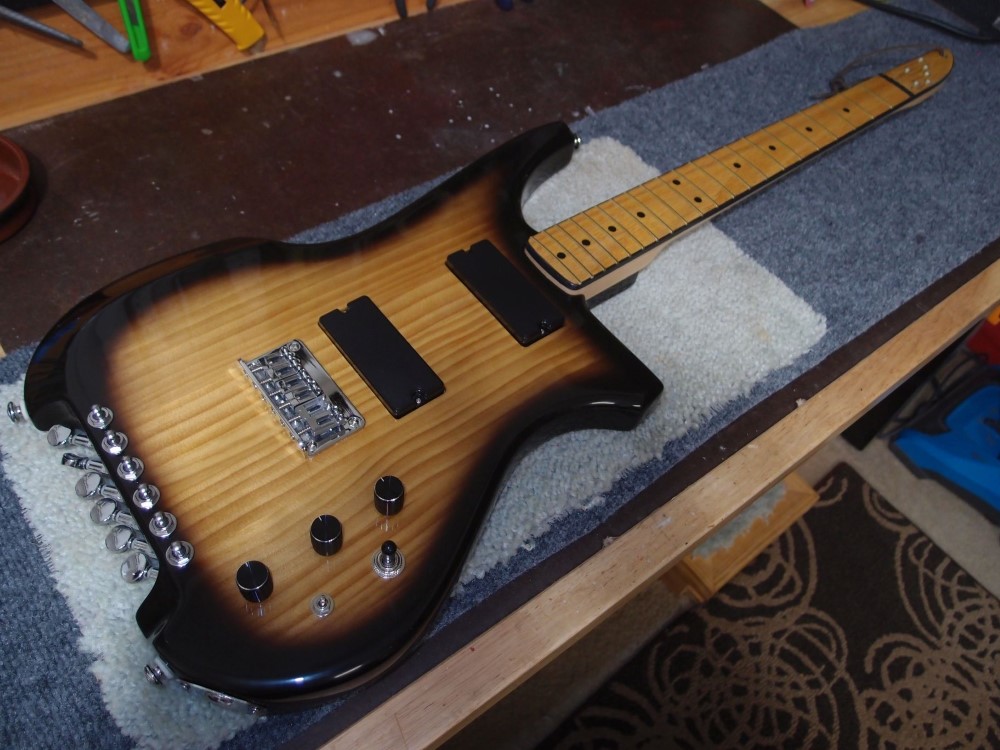
The wiring all works, so I closed it up and put the neck on. I still need to make a clear pickguard. That will be easier without the strings. Looking good, baby brother to the bass.
One interesting note: the active tone control seems to disable the passive one. It is probably something to do with the output impedance of the active tone control, passive controls are fussy about that, they don't work at too low an impedance. If I bypass the active control, the passive one becomes THE tone control, and works fine. I actually like that, so a happy accident.
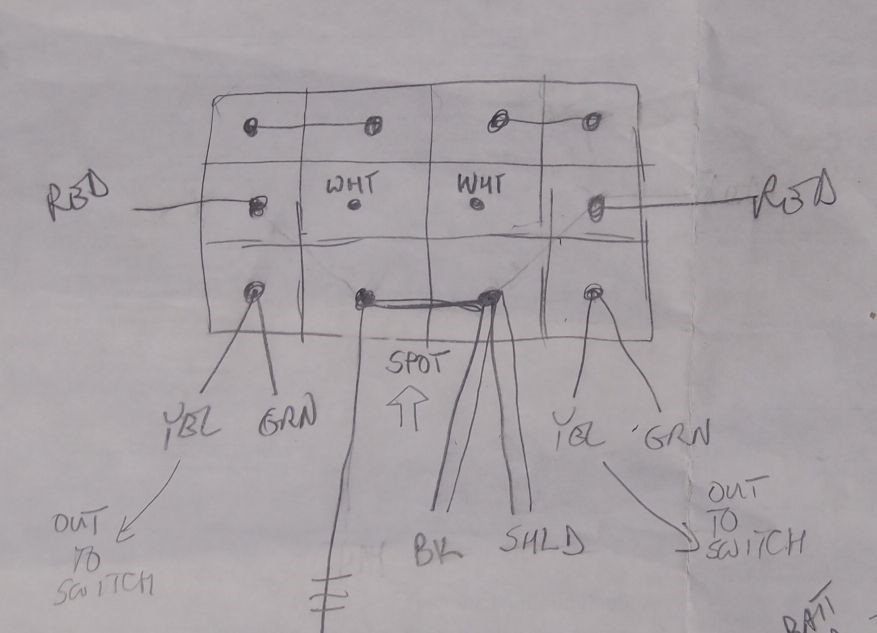
Before I forget and lose the paper - the wiring diagram for the mode switch with these pickups. That's enough for today.
I just took a look at talk_ass. Now, instead of banned, I am 'inactive'. I liked banned better, inactive makes me sound lazy.