September 3, 2020
Walnut Fretboards
September 3, 2020
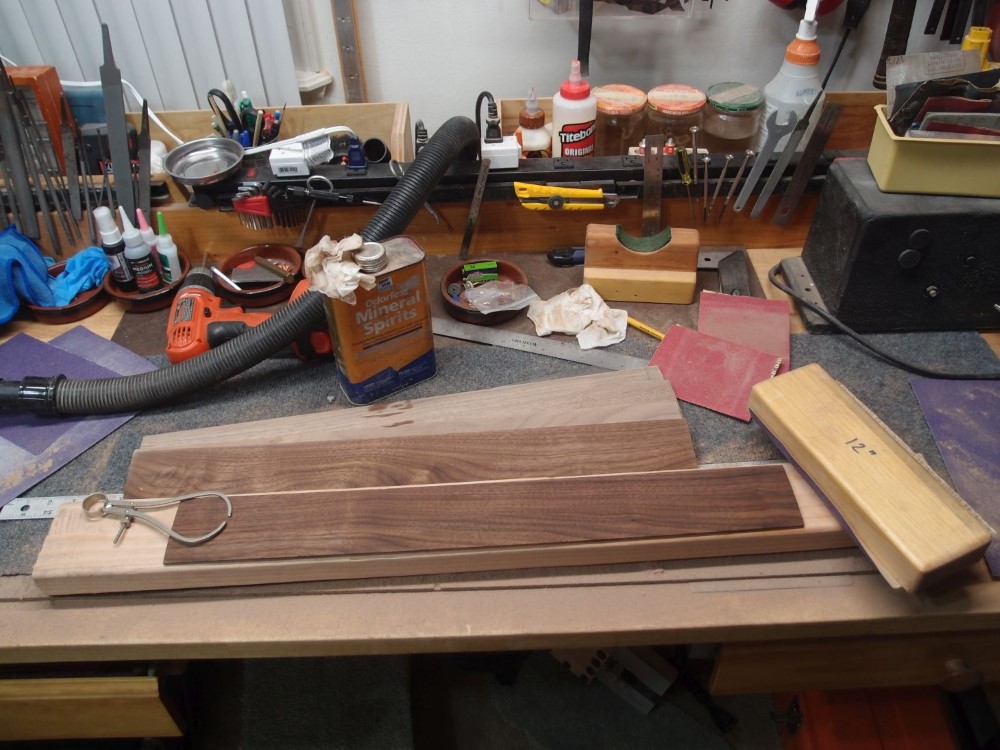
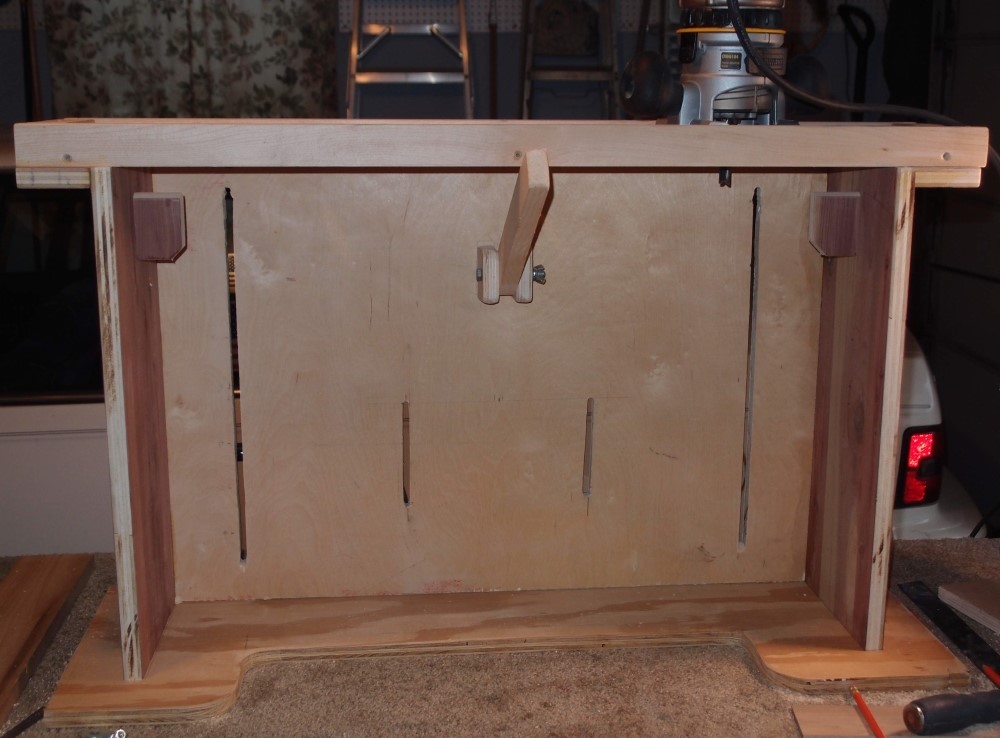
I cut these five blanks on my fretboard jig a long time ago. Now I finally want one, so I pulled one out at random, and it turned out to be the worst of the batch. By worst, I mean it was thin in the middle and thick at the ends, probably because it is not perfectly flat and and sat on the jig with a slight bow that I didn't notice.
I got out a radius sanding block and went to work on it. The calipers at the left now say it is even down the center, and my eye says it is even down the sides. Then I pulled out the other four boards and gave them the same treatment, but they were all pretty good already.
The board I first chose came out rather thin, not a good candidate for inlaying, so I picked the one in the front. That one is wetted down with mineral spirits to see the finished color. I'd say it is a pretty good imitation of rosewood. Walnut is not oily like rosewood, it is dry. It is also not as insanely hard as rosewood, but still hard enough to hold frets just fine, and much easier to work.
After I cut fret slots, I'm going to inlay this board with seashell for practice. I fully expect to produce a usable piece that I will save for a future project. Assuming that works, I'll do the same with my last Jatoba board for the new Ric project.