Hollowbody Construction
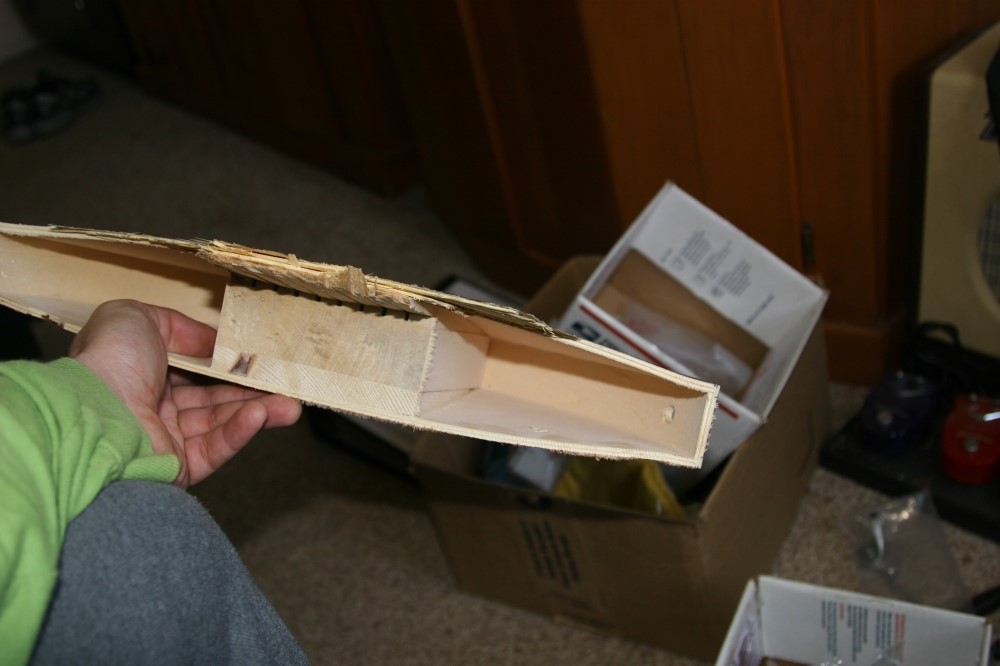
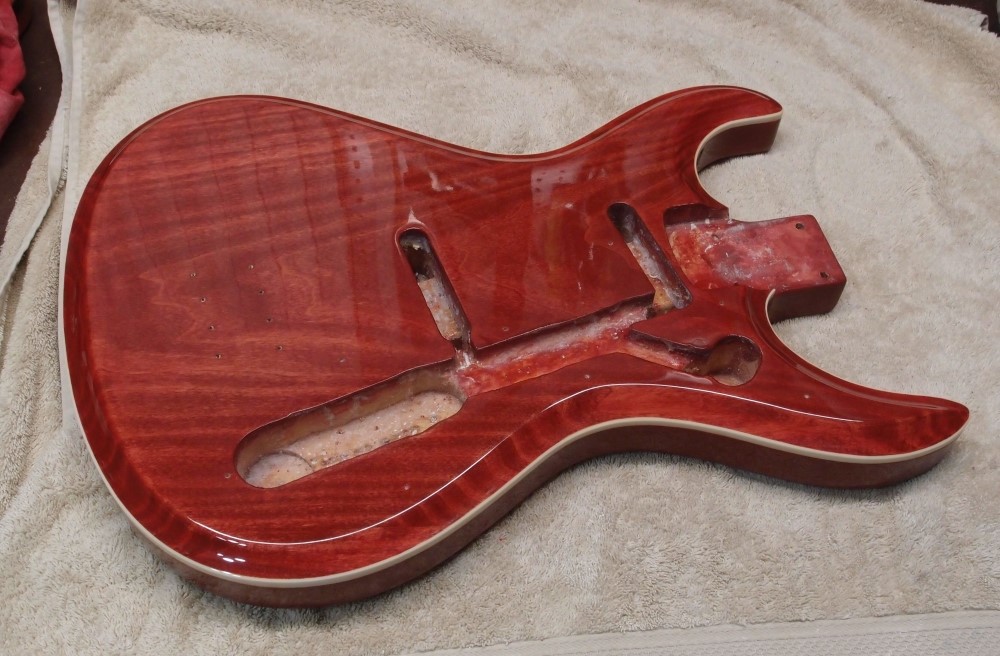
This is a ruined factory semi-hollow-body that I salvaged all the hardware from and then cut up. You can see many construction details here. Someday I'll build something nice with all the hardware.
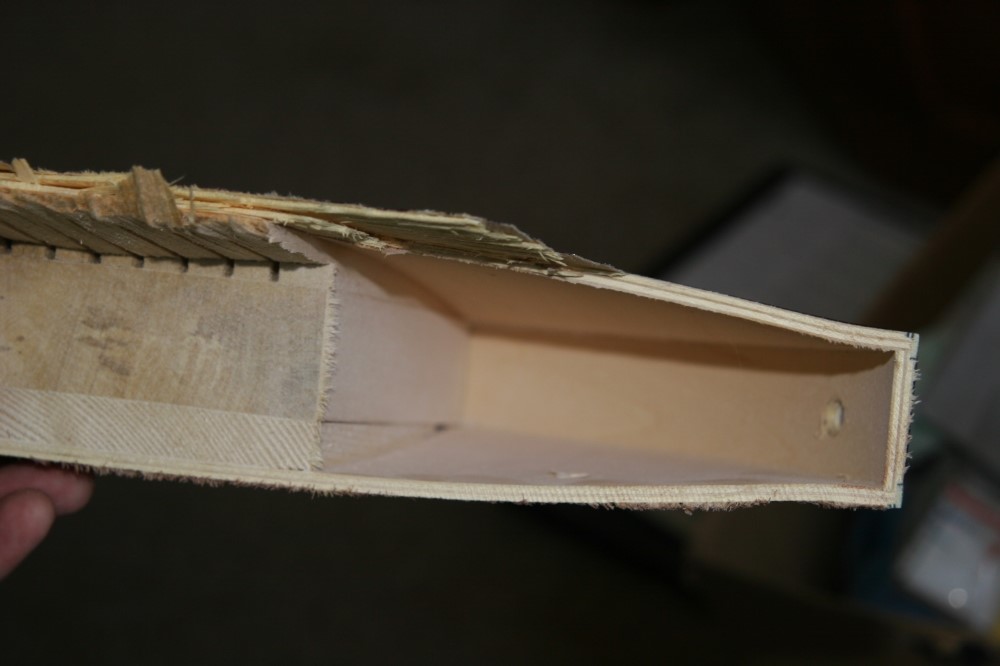
This is a Gibson-style arch-top semi-hollow-body, with a solid wood core. You can see that the main shell is all thin plywood. Notice how the layers of the sides are oriented perpendicular to the faces. A true hollow-body would have bracing for the top and back like an acoustic and lack the solid core. The idea behind this was to give it acoustic-like properties and feel, without the horrible feedback that true hollow-bodies are prone to under high amplification.
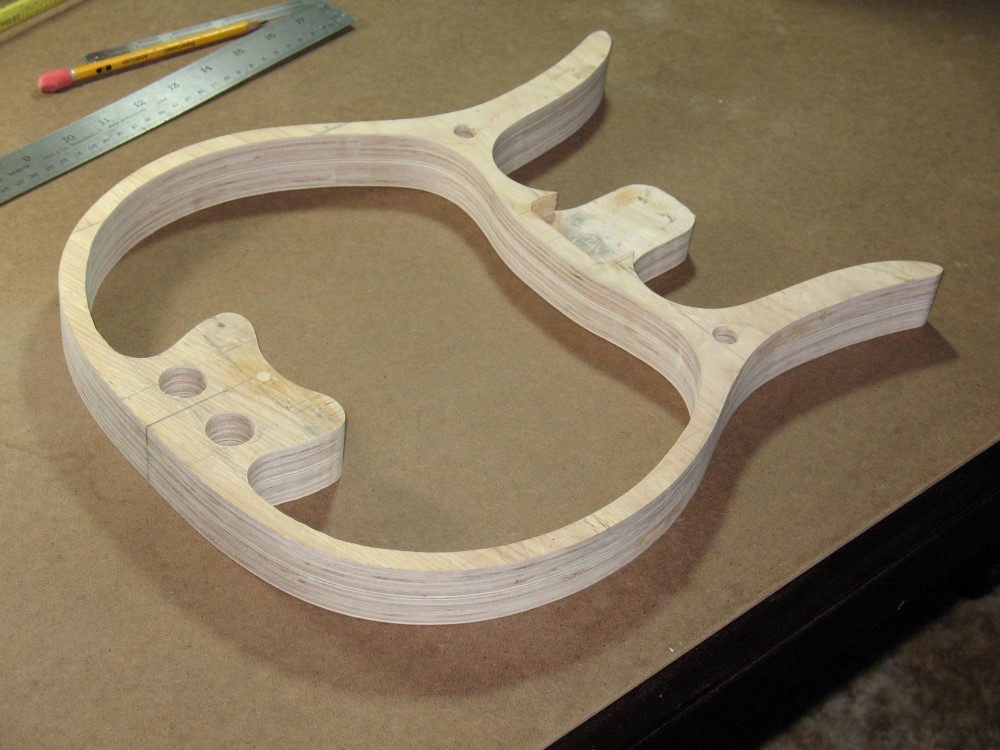
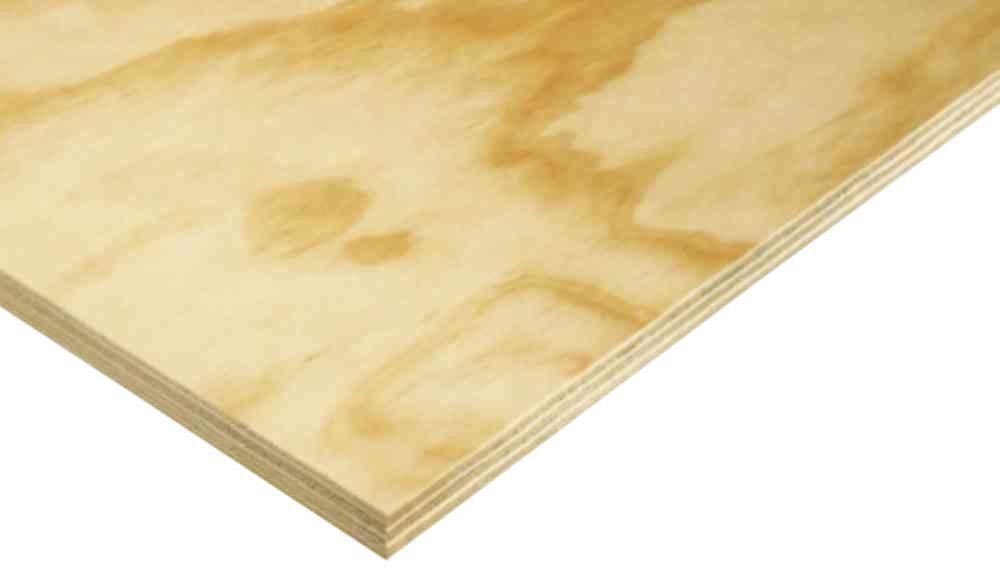
Here is a different hollow construction where the sides are cut from sheet plywood. In this case, the layers of the sides are oriented parallel to the faces. This is a very strong construction, but the plywood grain is not terribly attractive and tends to pull through any finish over time. This can be lessened using Bondo, but the real solution is either veneer or binding.
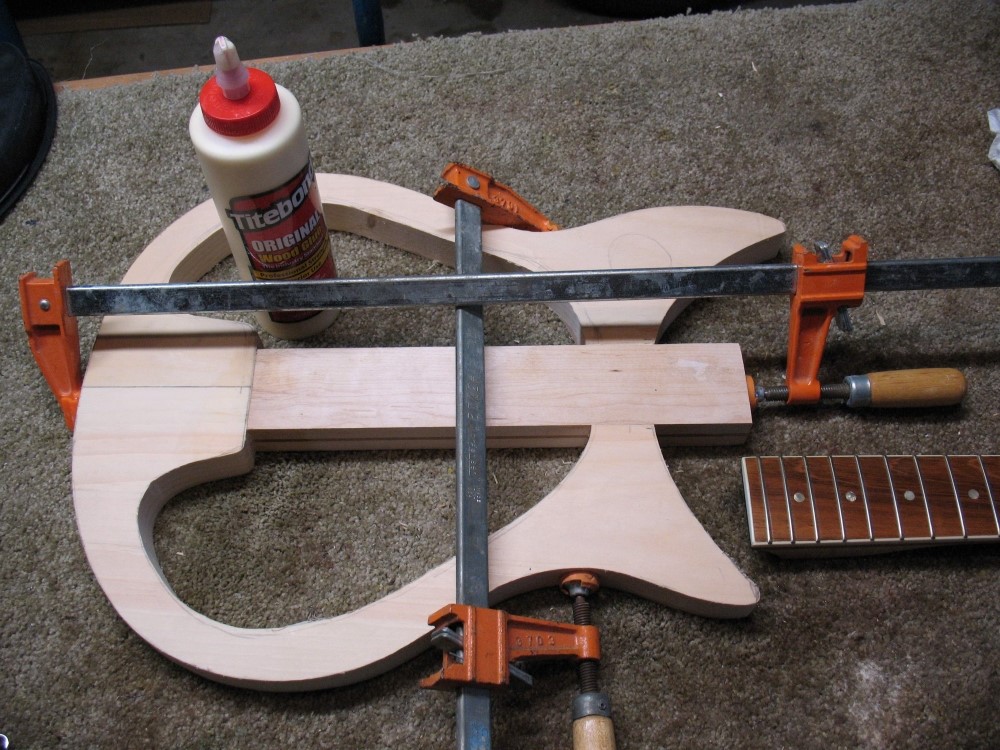
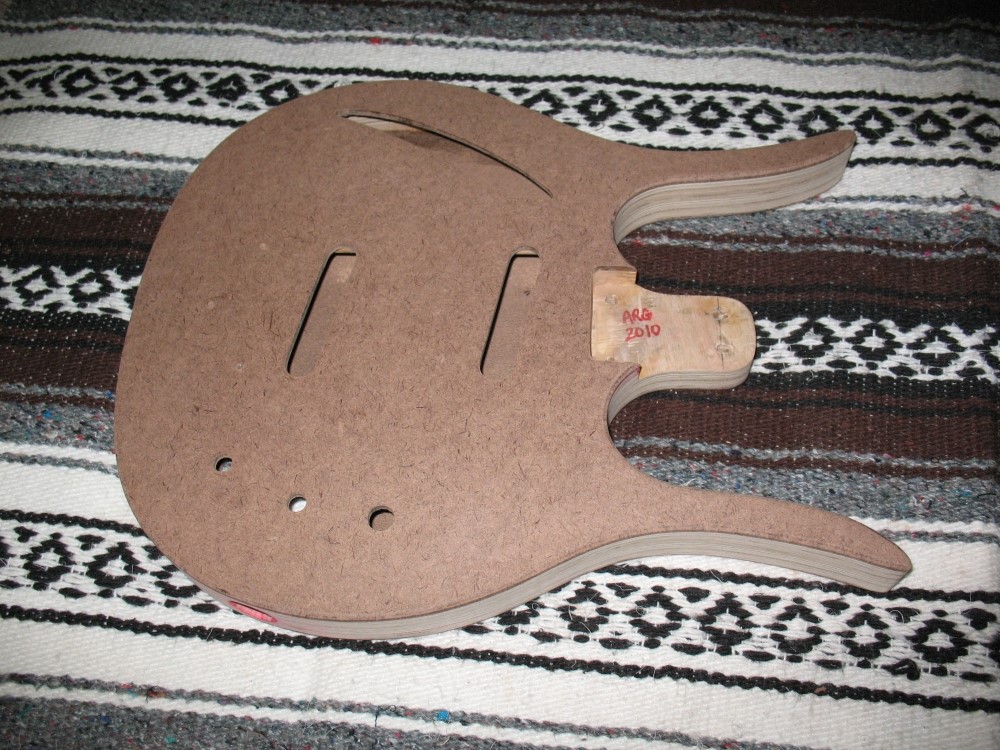
This is a very similar construction, substituting 1" thick white pine for plywood. The sides are much thicker than the plywood design, as they might crack over time if they were too thin. I also used a hardwood core to support the neck and strings. The pine is not unattractive and can be left exposed, or painted.
With this kind of construction, the faces may be wood, cabinet-grade plywood, masonite, or anything you like. I have seen guitars constructed like this with clear plastic faces. The nice thing about this sort of construction is that all the materials can come from the hardware store. You can build several guitar frames from a full sheet of plywood.
Questions or Inquiries?
Just want to say Hello? Sign the .