


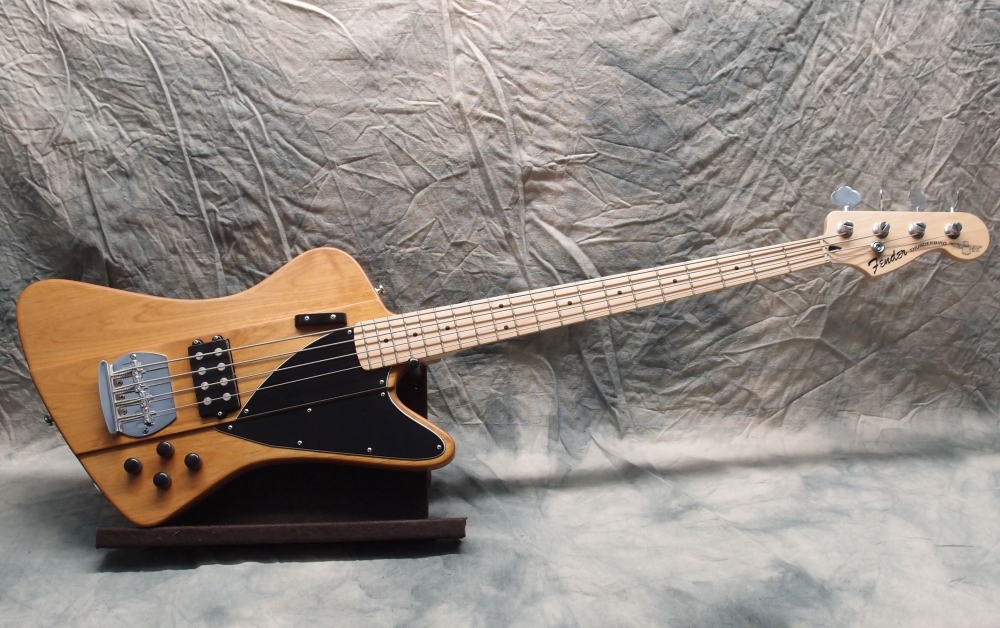
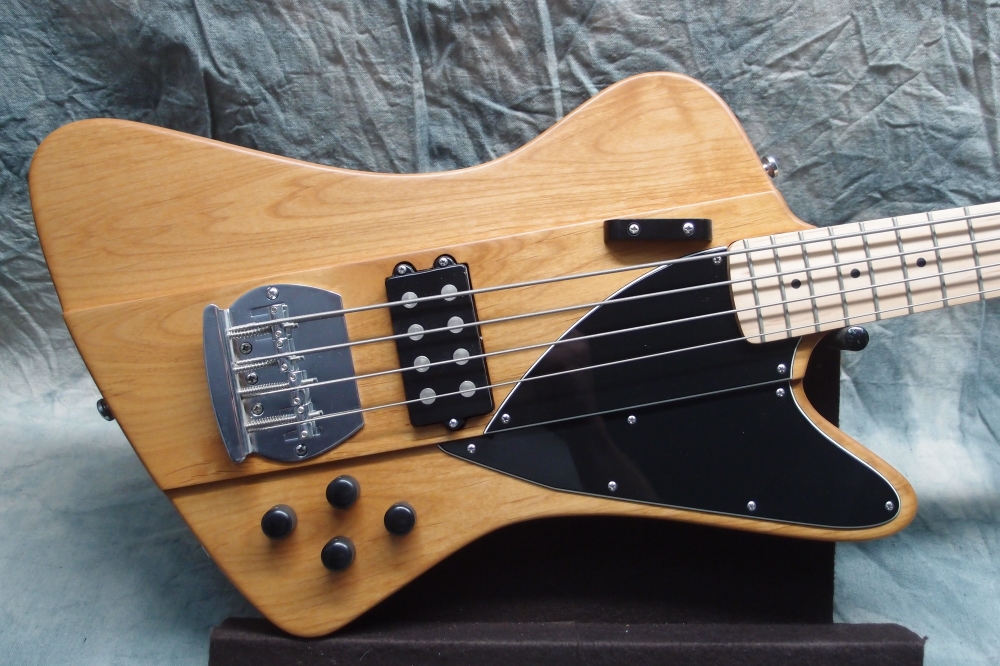
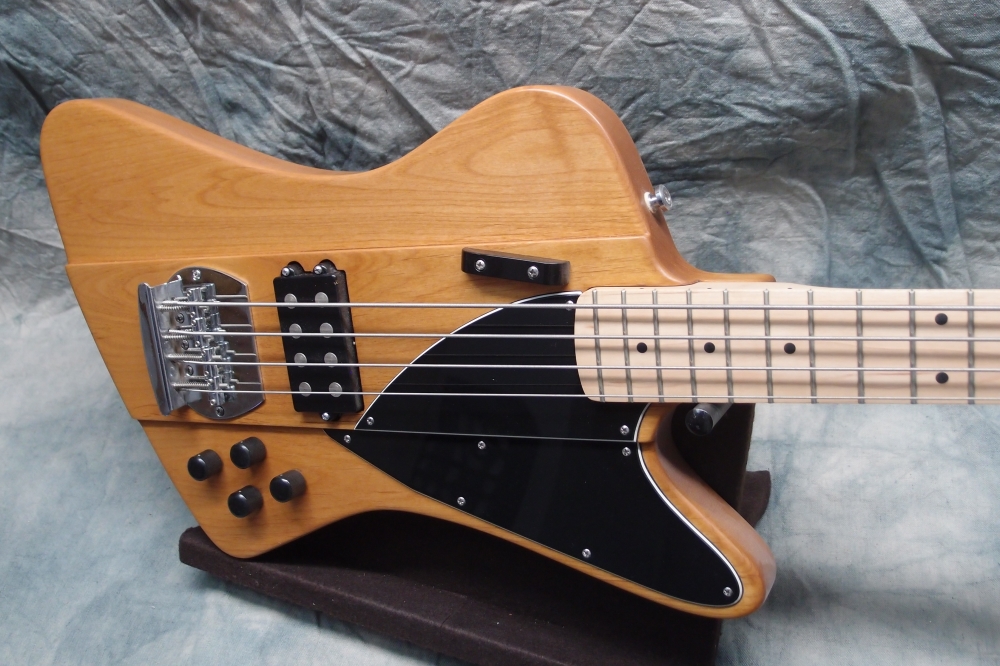
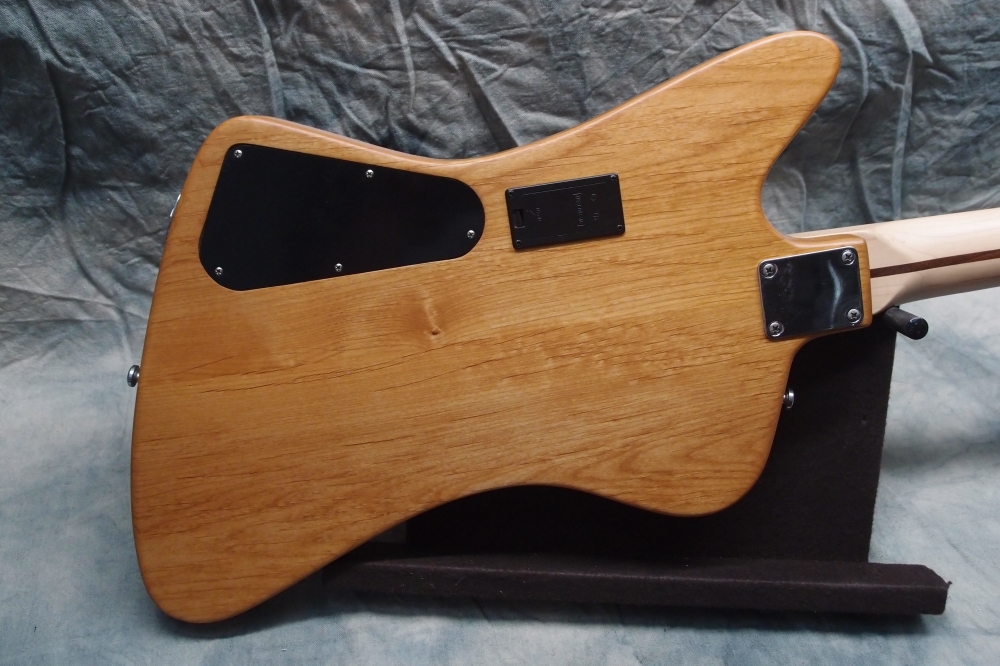
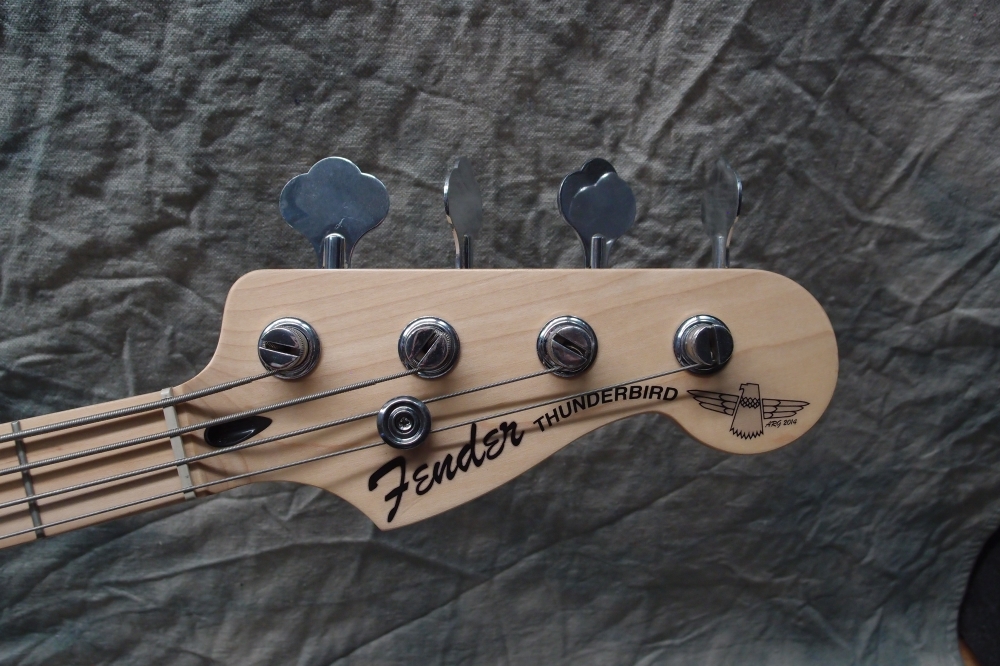
For those of you who thought my Stratocaster bass was an abomination, feast your eyes on this. The MusicmanBird. ThunderJazzRay. FenderManBird. I just call it FenderBird #2.
More: Cherry Fenderbird ...
Basses built with the standard scale length of 34 inches.
For those of you who thought my Stratocaster bass was an abomination, feast your eyes on this. The MusicmanBird. ThunderJazzRay. FenderManBird. I just call it FenderBird #2.
More: Cherry Fenderbird ...
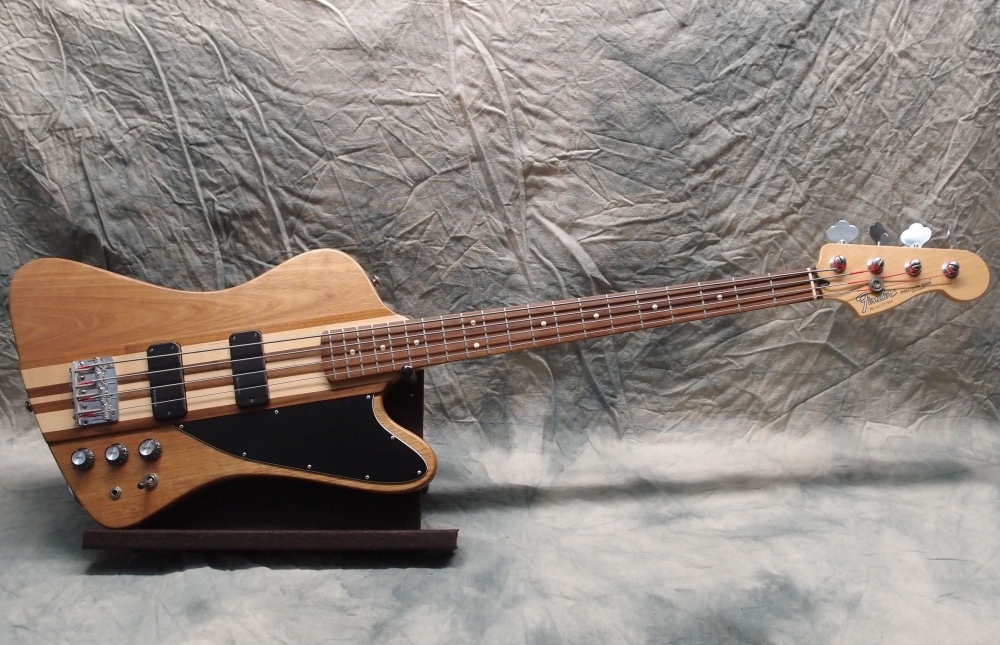
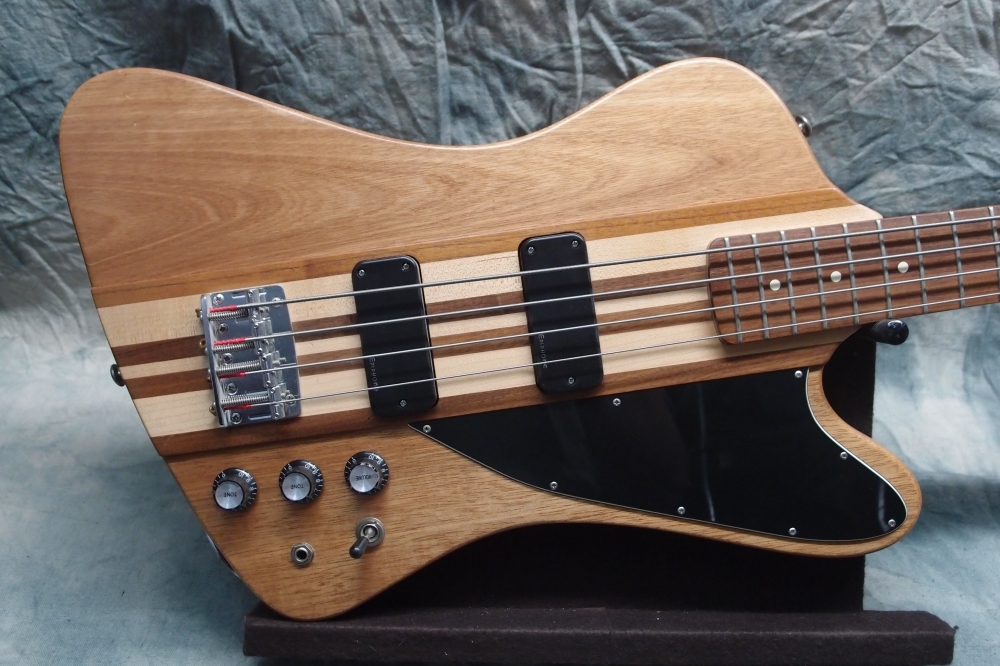

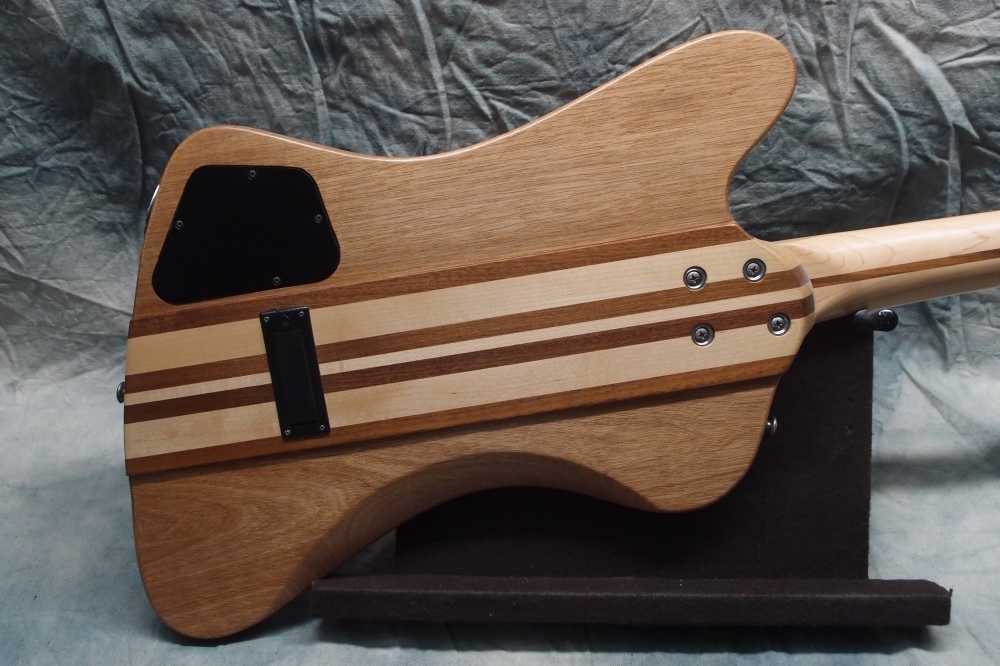
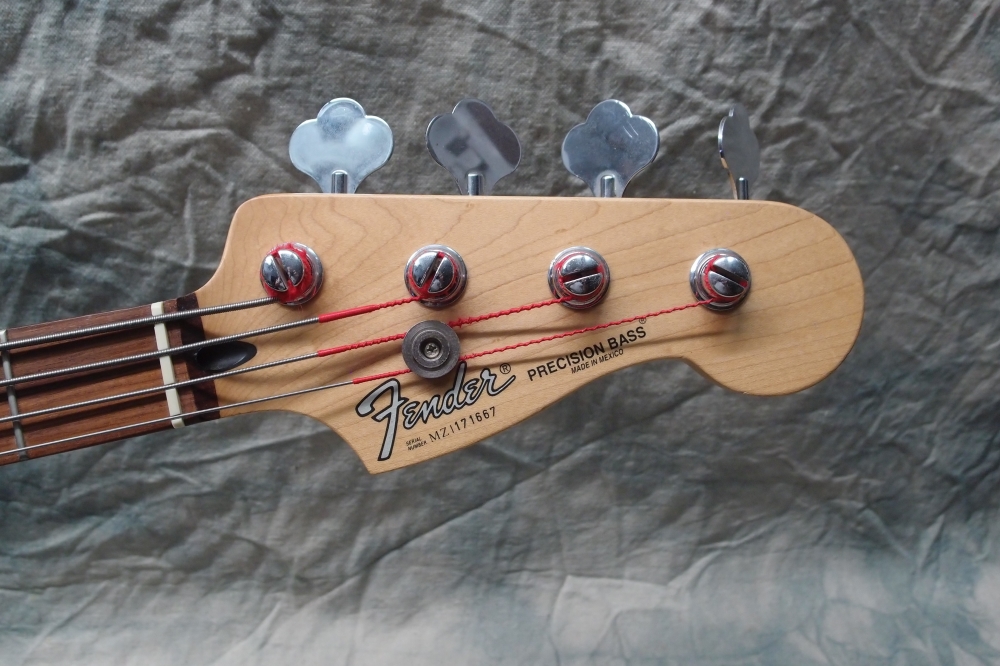
This started out as a broken Epiphone, one of the very nice Pro models. Turns out the Epi copy was a bit too authentic - it even reproduced the standard Gibson pop-off headstock. I removed the neck, re-finished the stump, routed out a neck pocket, and installed a Fender Mexico Precision neck. The pickups are stock, the active electronics are a replacement as the originals blew up. I also made the pickguard. The high frets are basically inaccessible, but the trade-off is much better balance.
More: Epiphone Fenderbird ...
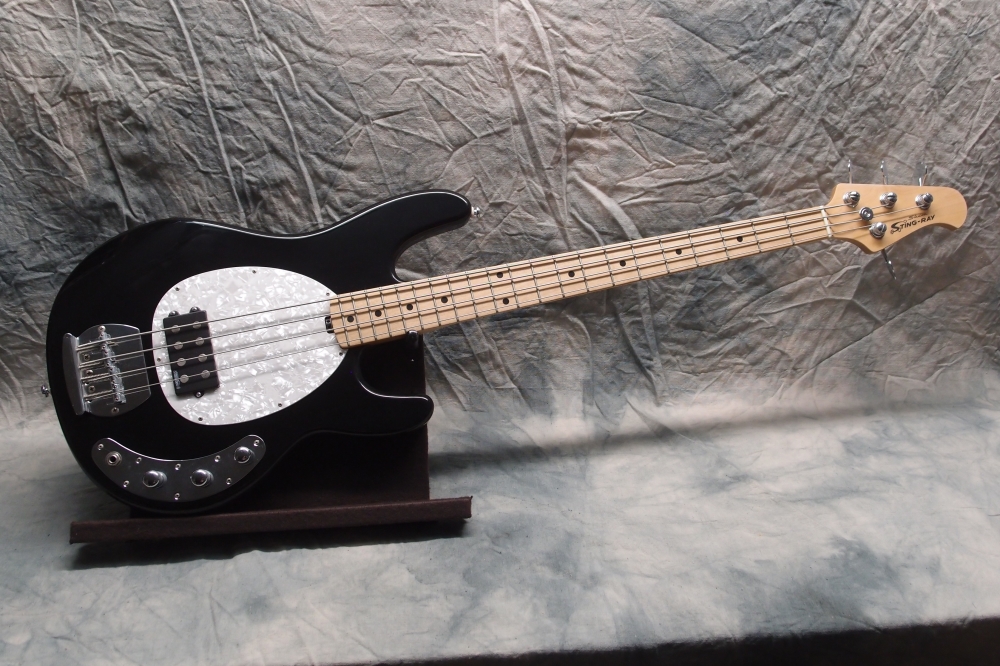
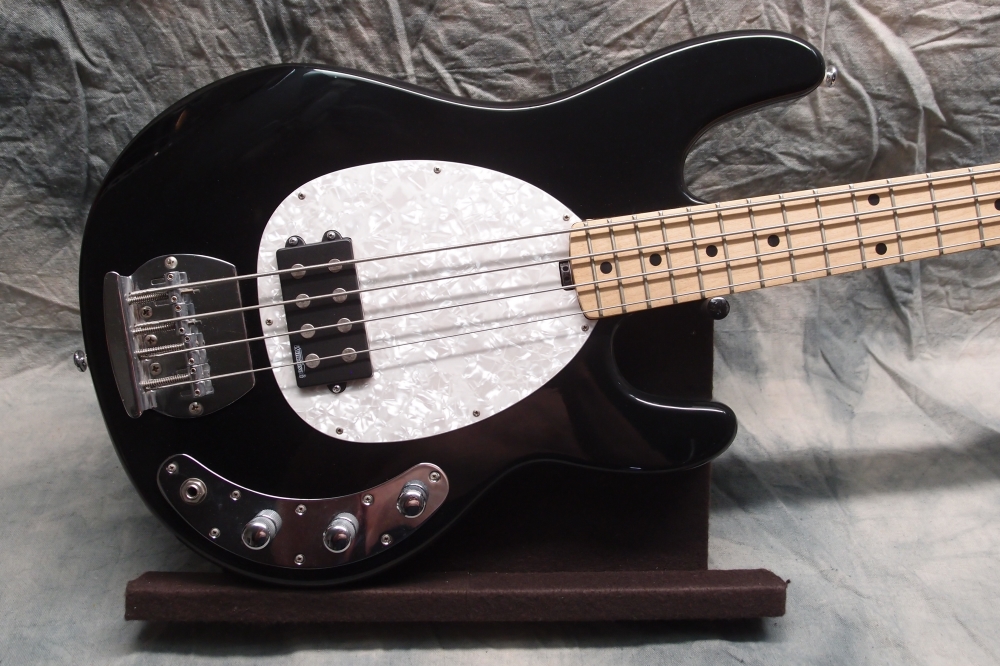
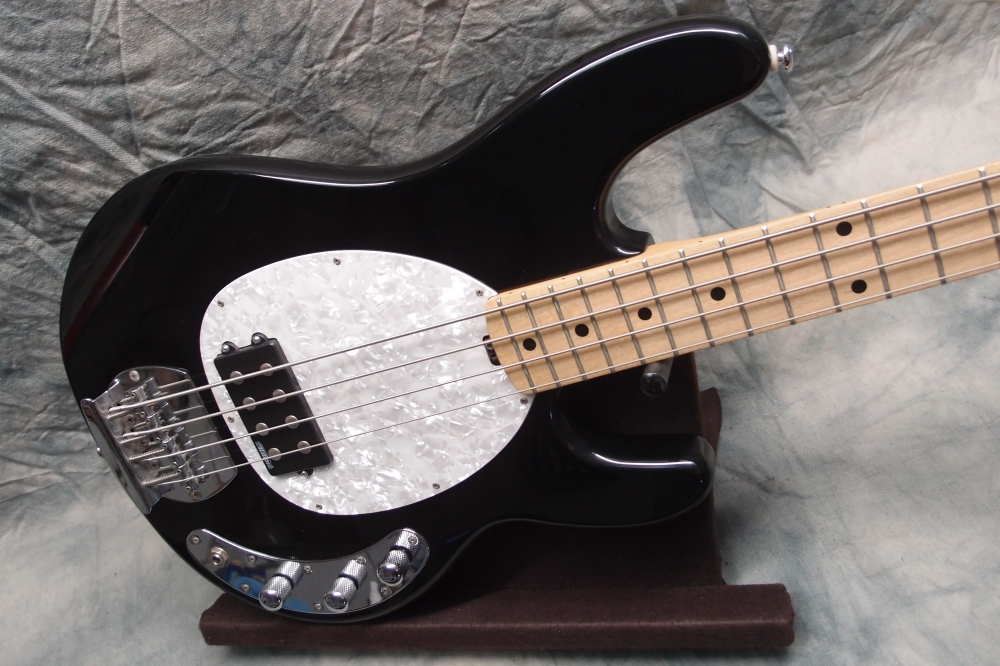
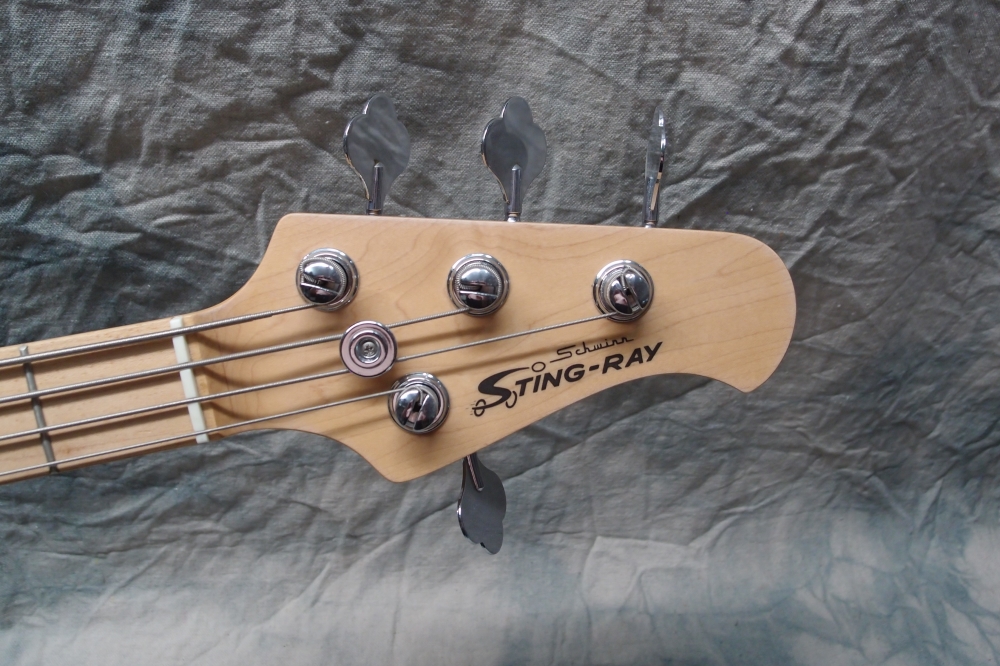
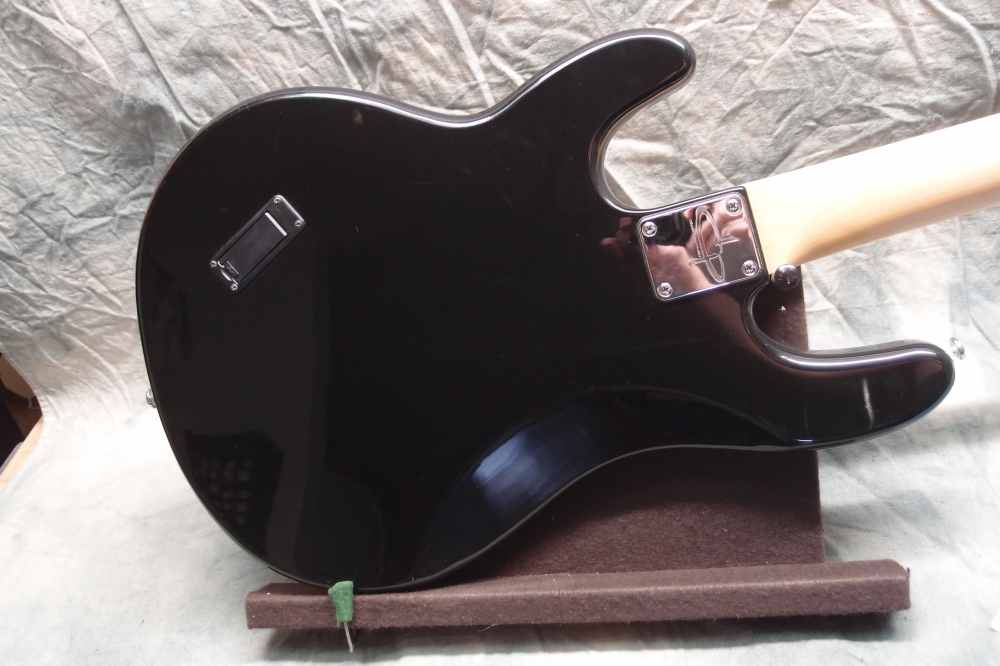
This OLP Stingray was one of the first basses I ever modded heavily. I routed a battery and a second pickup cavity, and did all sorts of experiments on it, before returning it to it's original single-pickup configuration, but with upgraded active electronics and pickup, and a nice new pearl pickguard.
More: Musicman Stingray Bass (OLP) ...
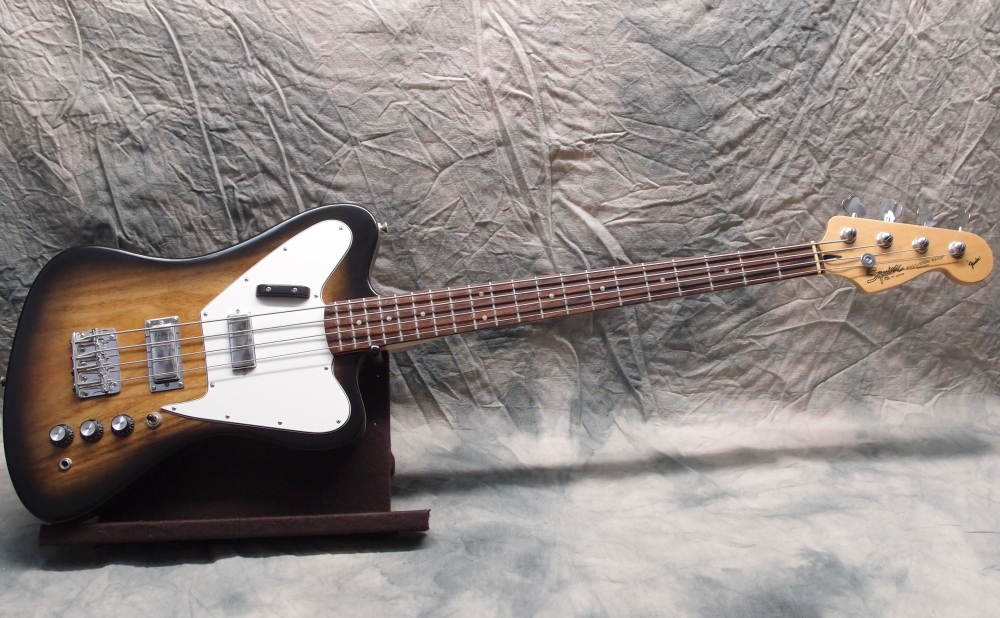
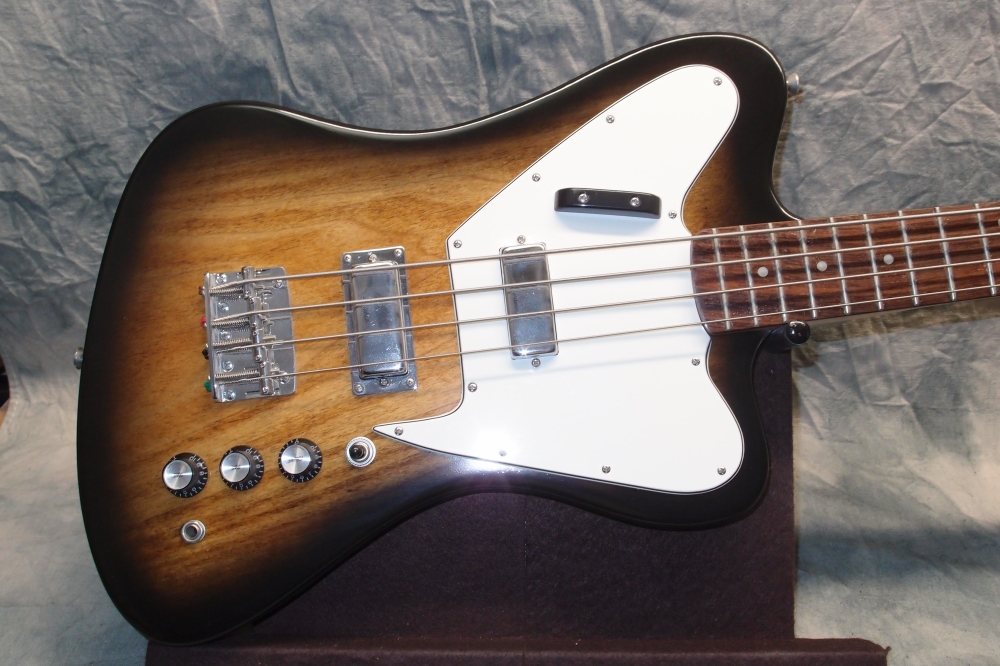
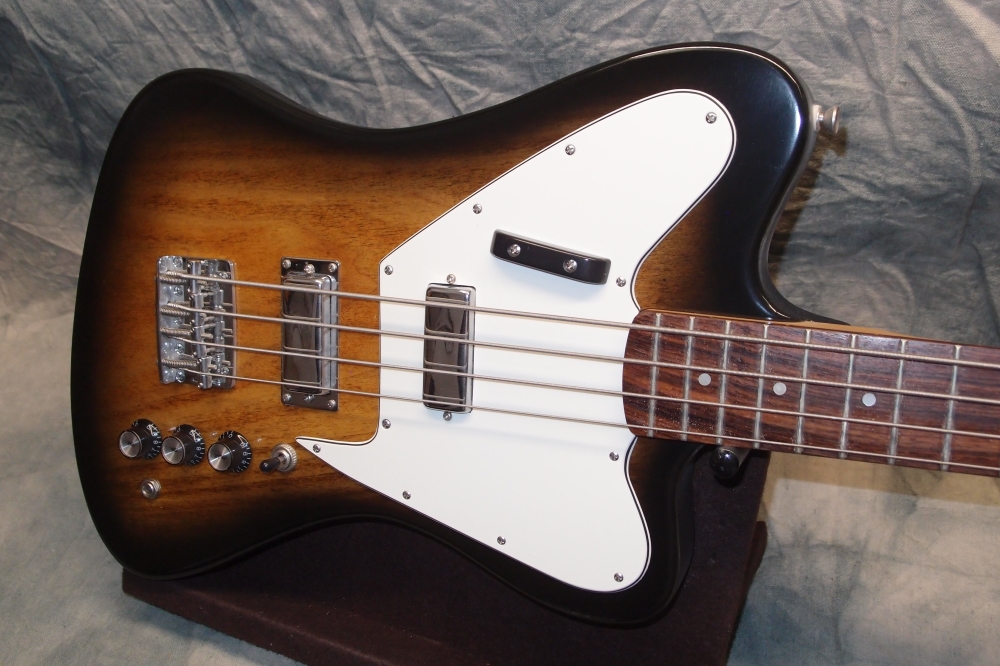
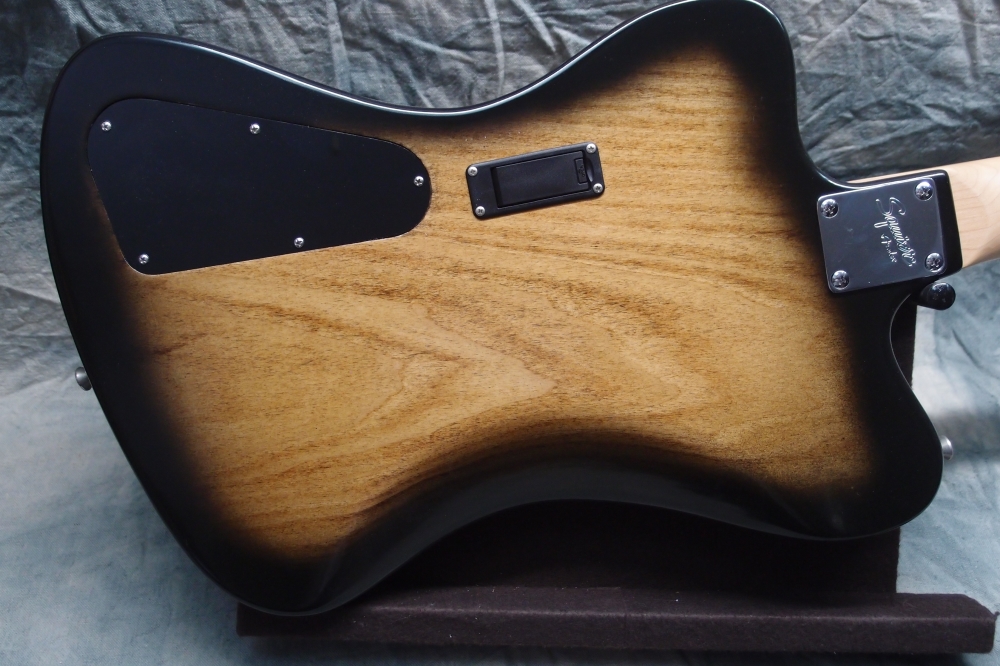
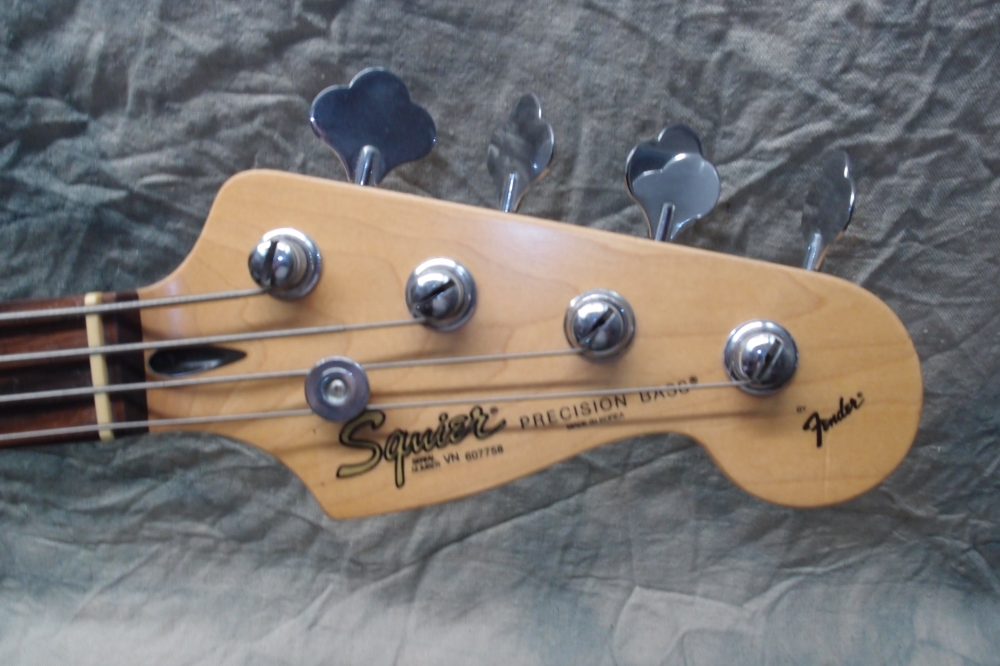
Solid poplar body, lightly stained and finished in polyurethane. Korean Squire neck, active electronics. Is it a reverse, or a non-reverse? Since this is a reverse of the original Thunderbird body ( more-or-less ) I say it is a reverse. If this is a non-reverse, then the original would have to be the reverse. Reverse of what? Makes no sense.
More: Reverse Fenderbird ...
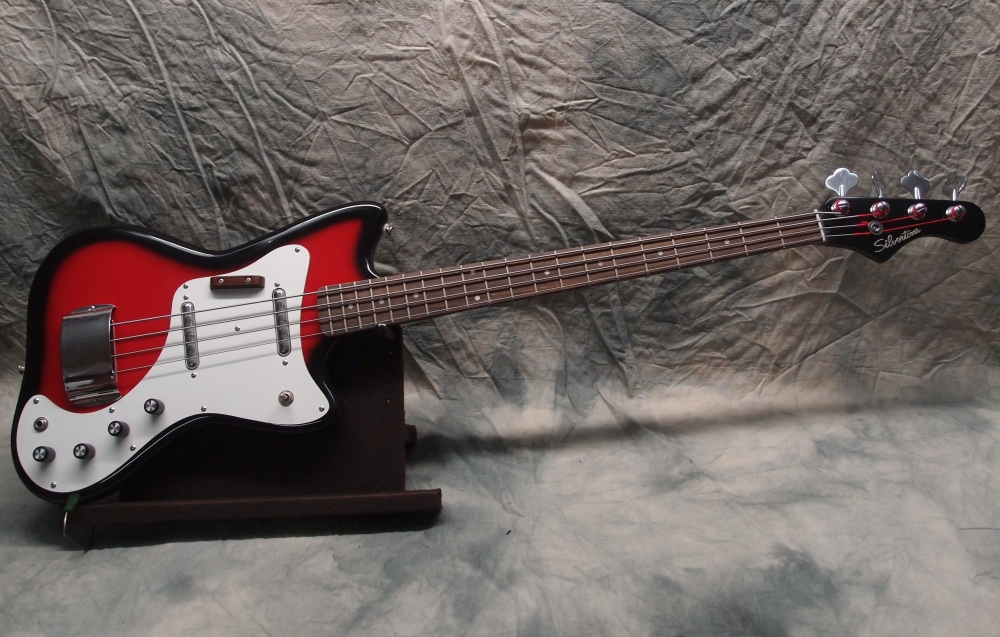
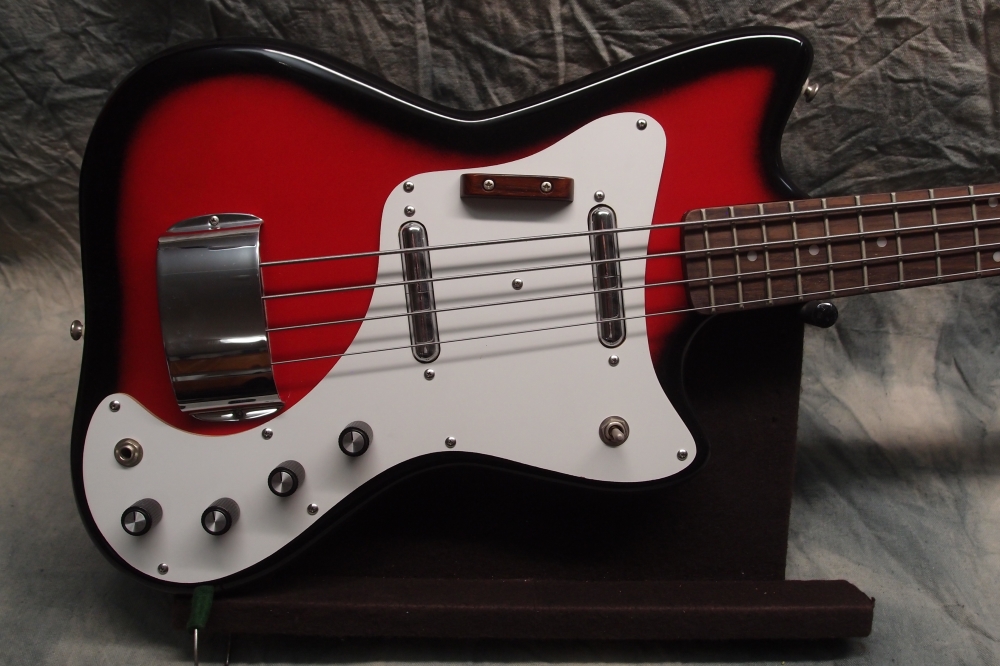
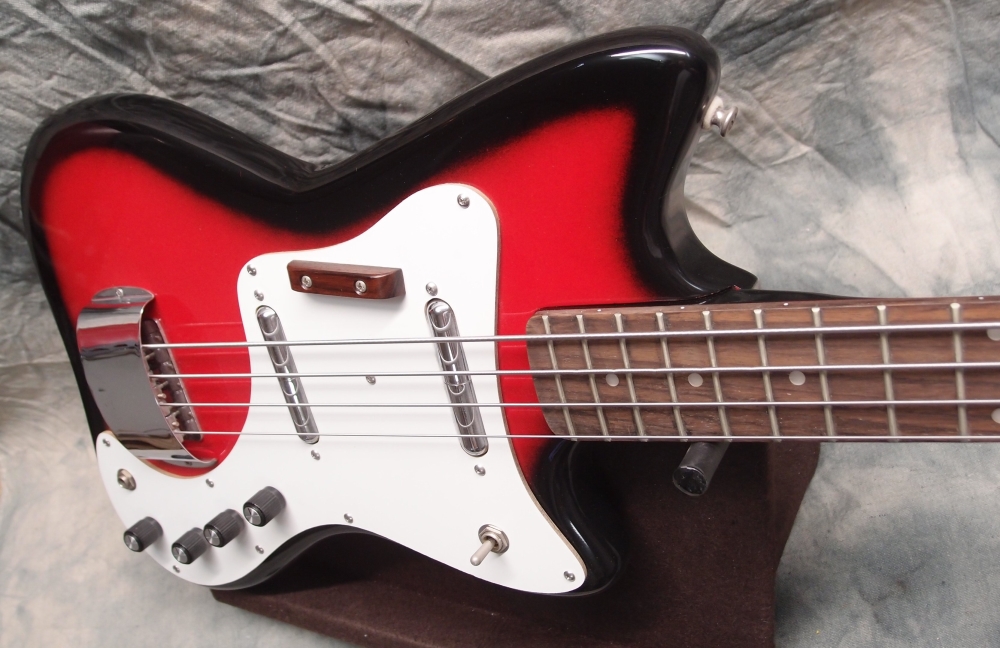
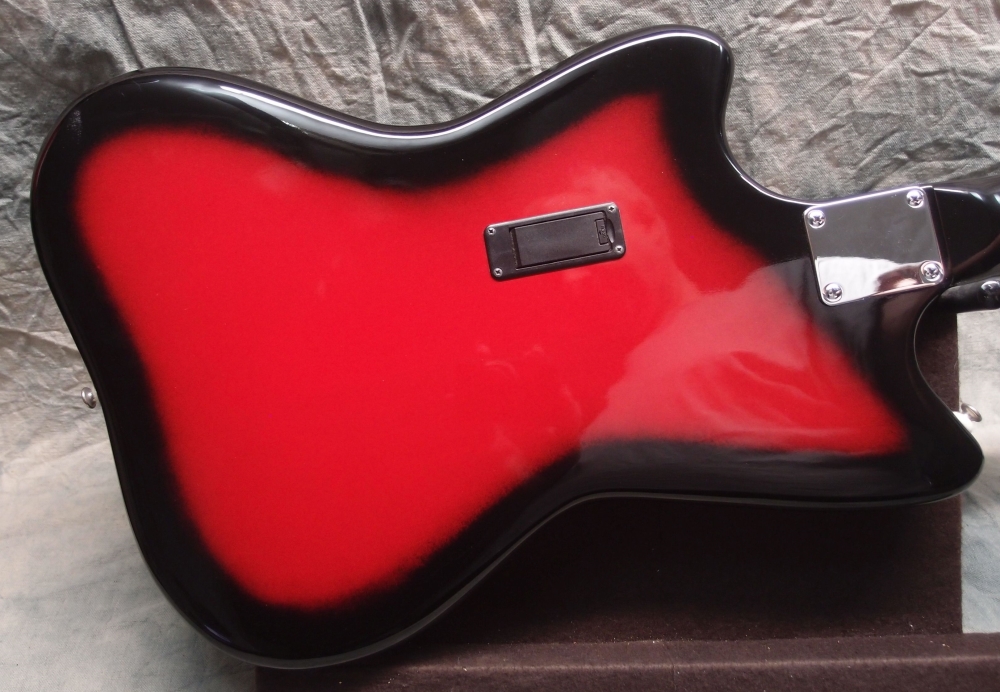
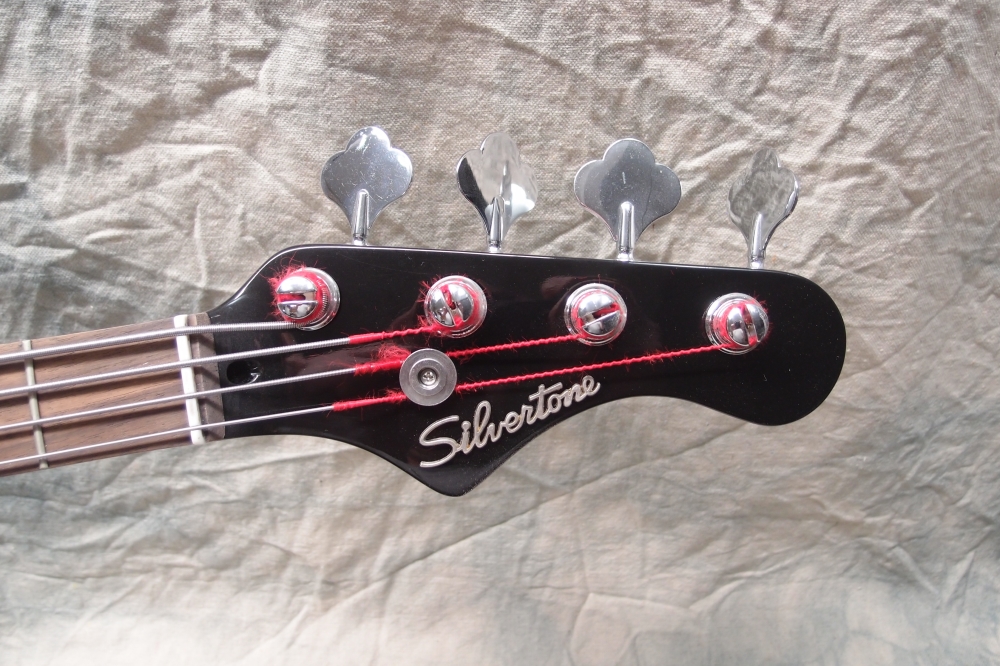
This is a project that took a long time, mainly due to the lacquer sunburst, which took several tries to get right. In the end, I even 'bursted the back of the neck. While it looks like an old Silvertone, it is actually thoroughly modern inside. 90's Danelectro lipstick pickups - the good ones, wired in series with a selector switch like they should be.
More: Silvertone 1443 Bass ...
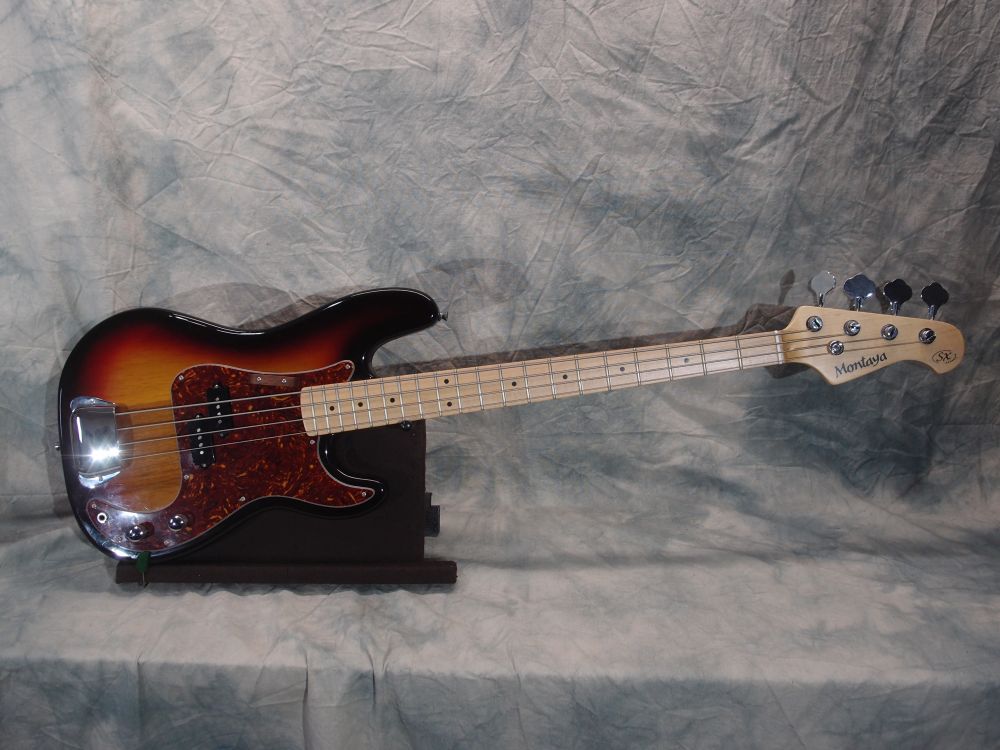
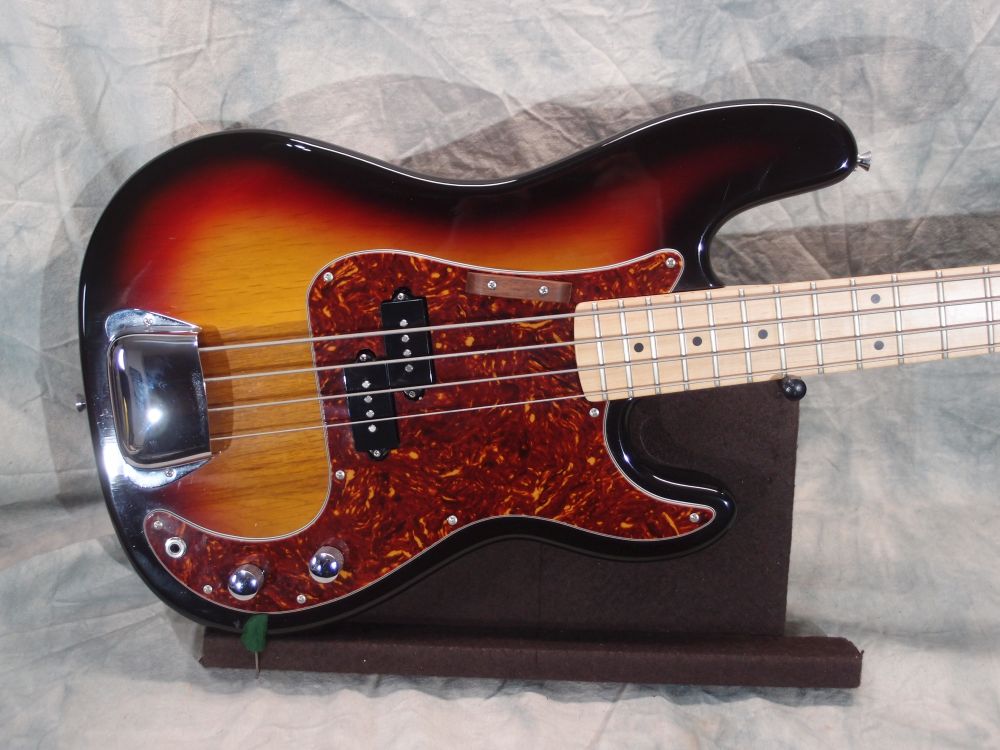
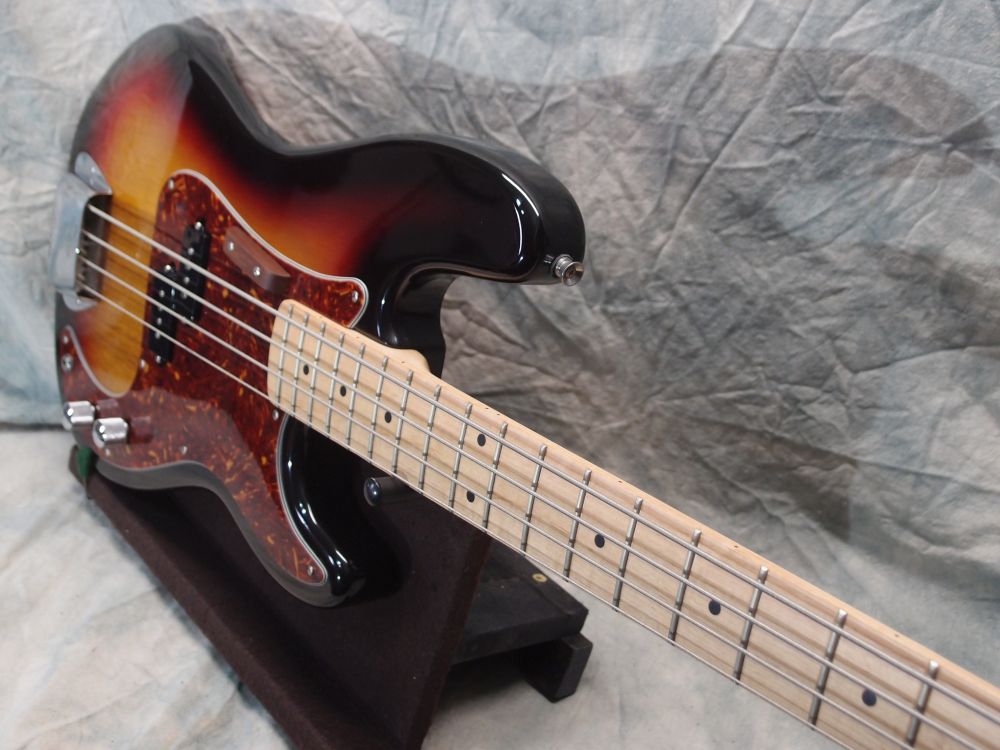
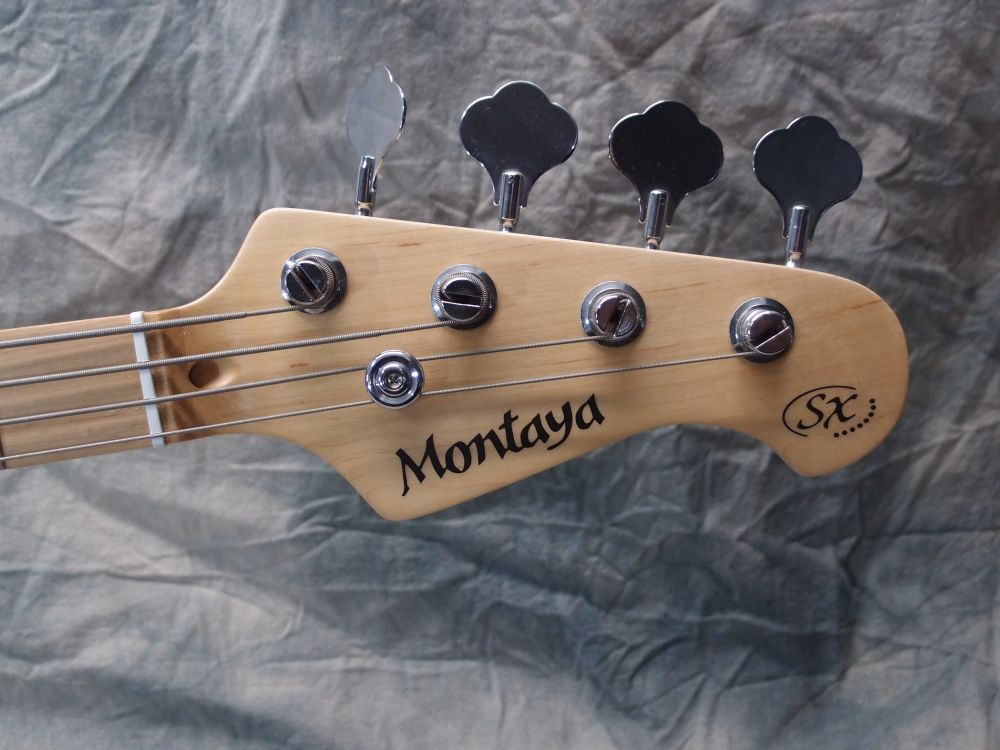
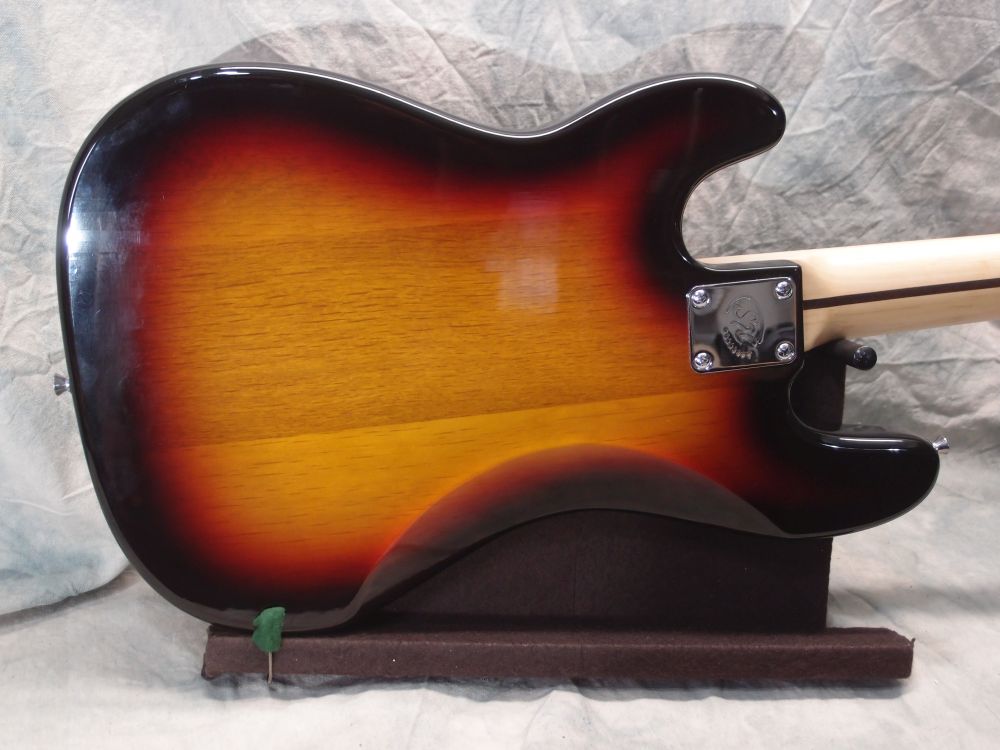
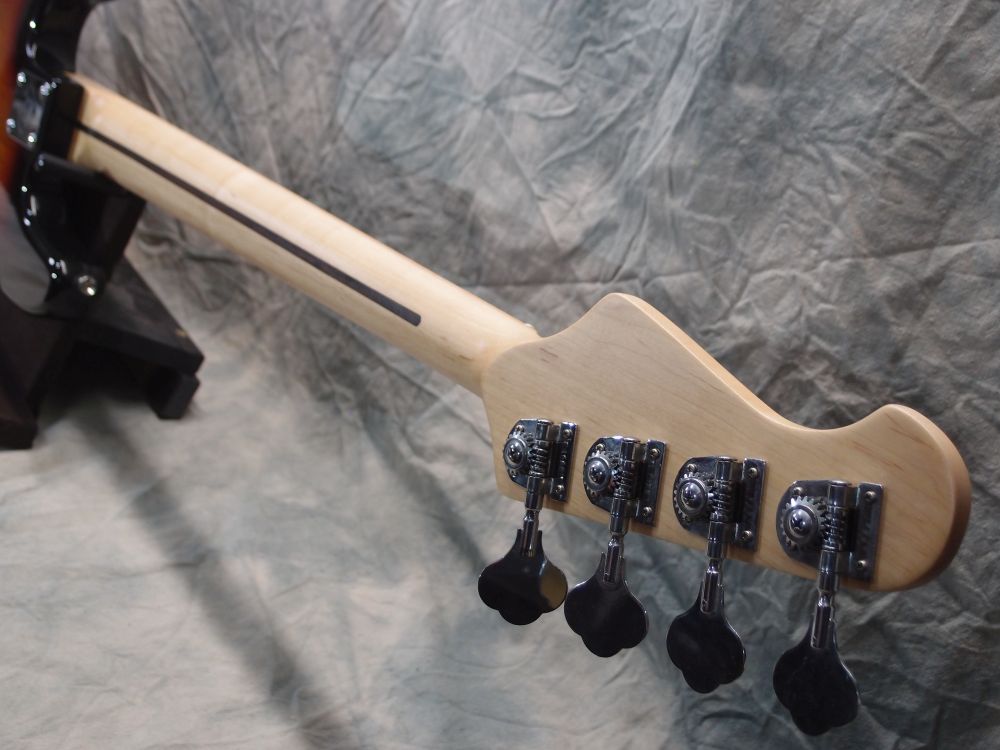
This is my attempt to recreate my very first bass, a "Montaya", as well as one of my first ventures into 'modding'. These SX's are great instruments. For 109 bucks you get an alder body with a beautiful 3-tone sunburst, a decent neck, functional bridge & tuners, and a flawless finish. What you don't get is any kind of useable pickups or strings. On this one, I installed a USA Fender pickup, my favorite d'Addario strings, and gave it a careful fret dressing and setup. I also added the tortoise pickguard, rosewood thumbrest, and ashtray for the looks only. At the time, I was going purely from memory, but I later found a picture of the original, and I got it dead right.
More: SX SPB-57 Ursa Bass ...
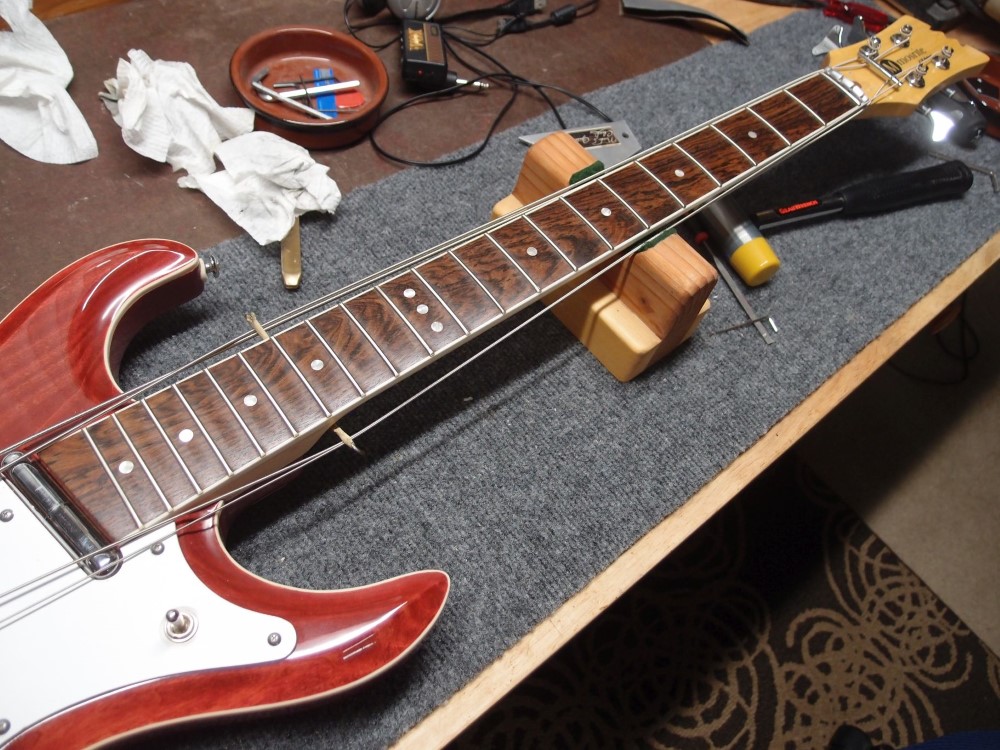
I like to let a new build lie for a month or two to settle-in before doing any serious setup work. I have four projects now that need to be set up. The first to go on the operating table will be the Mosrite bass.
More: Setting Up the Mosrite ...