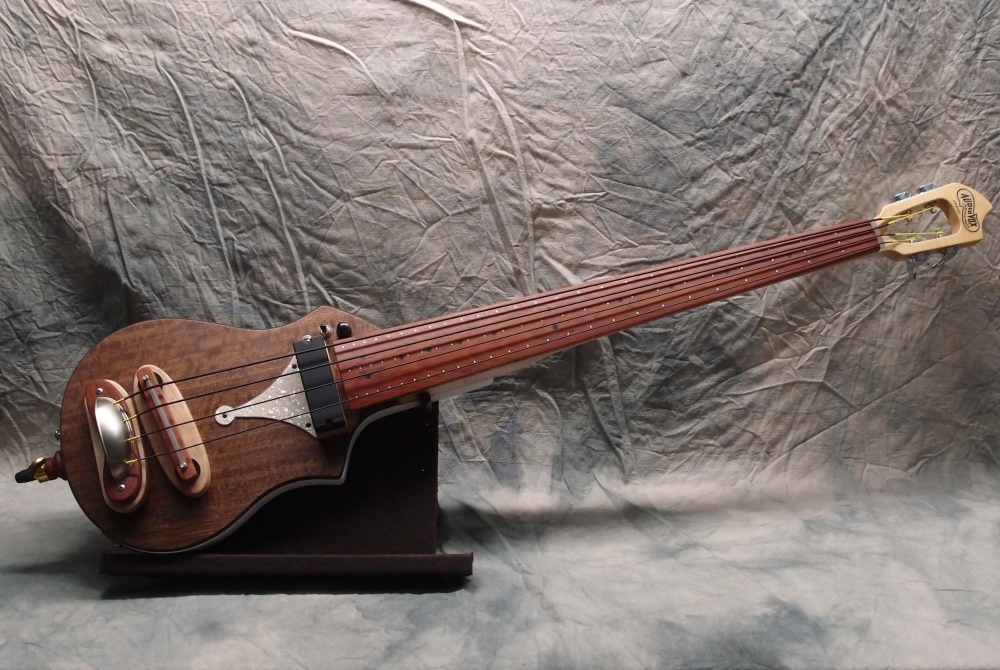
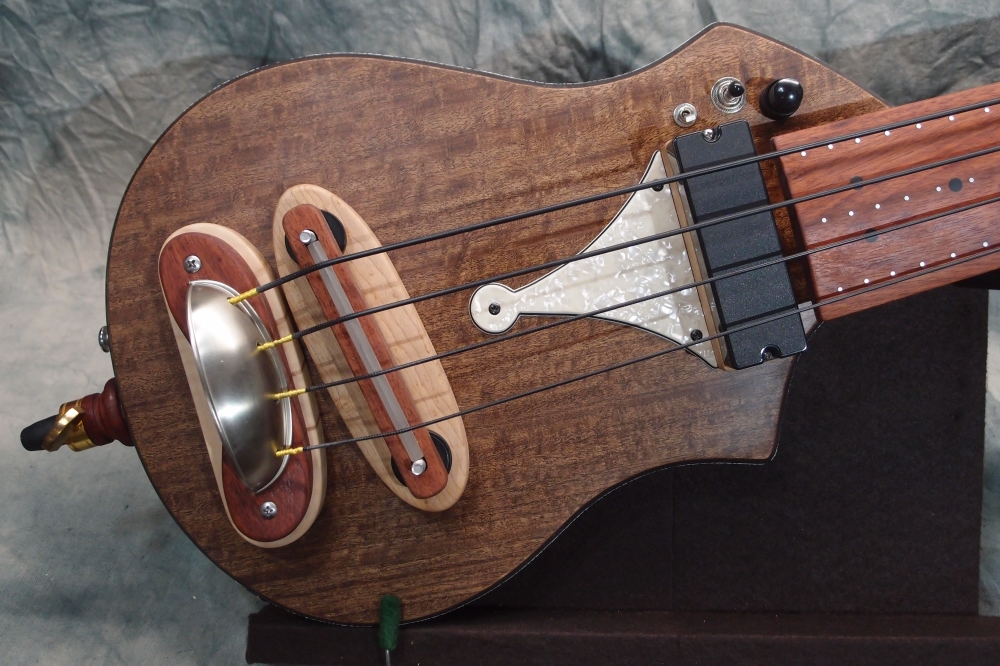
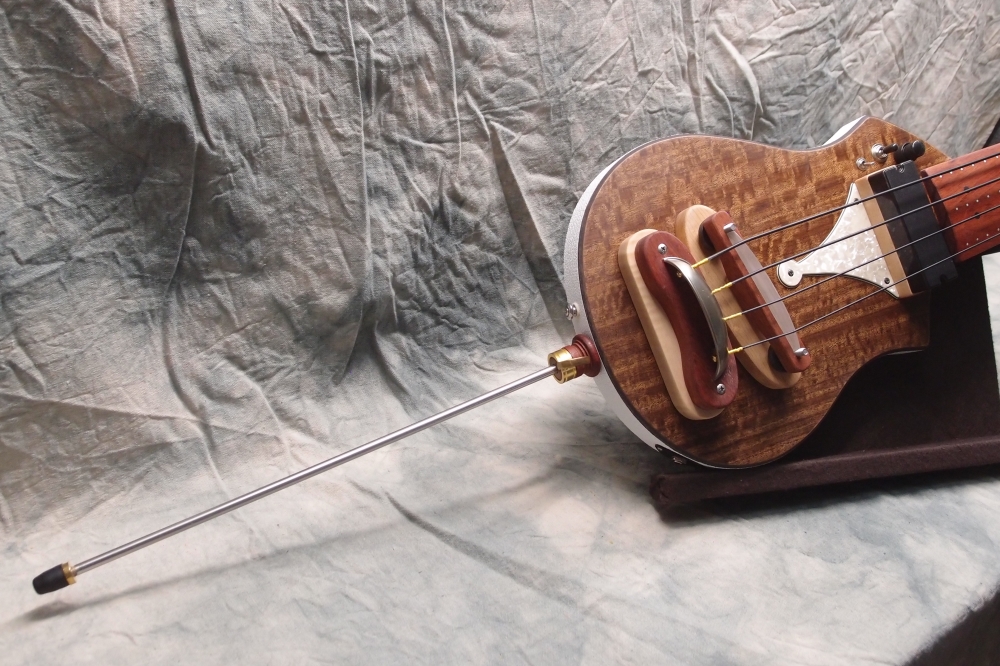
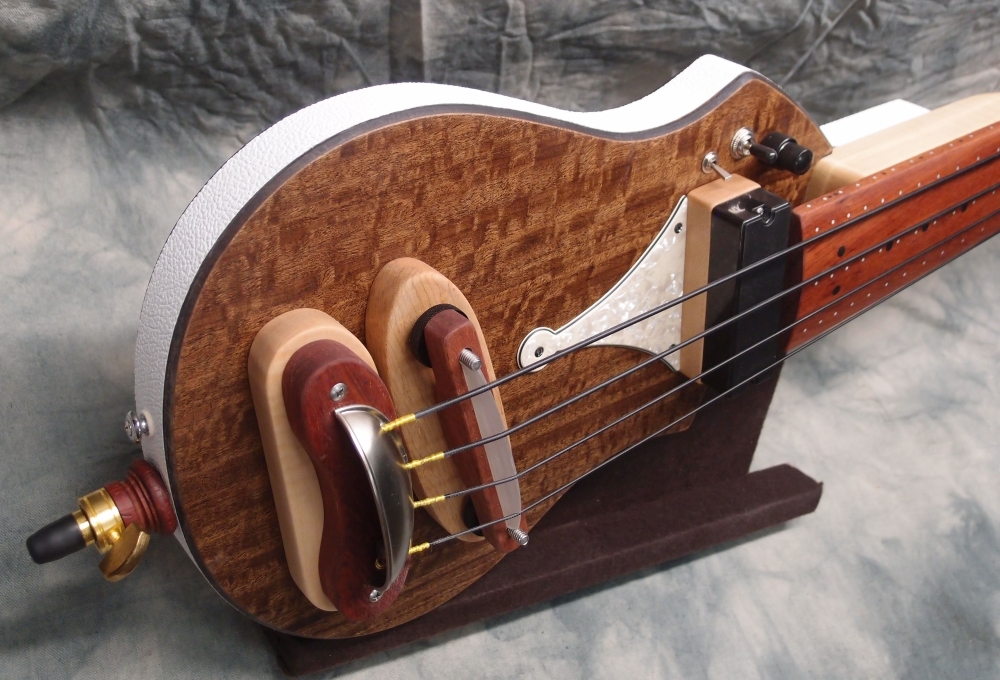
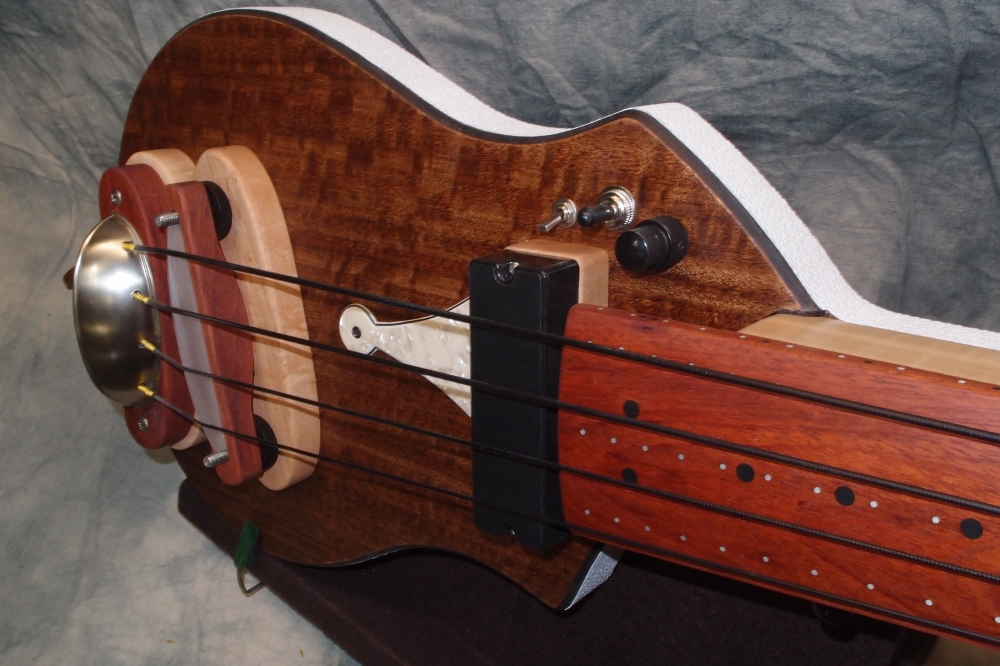
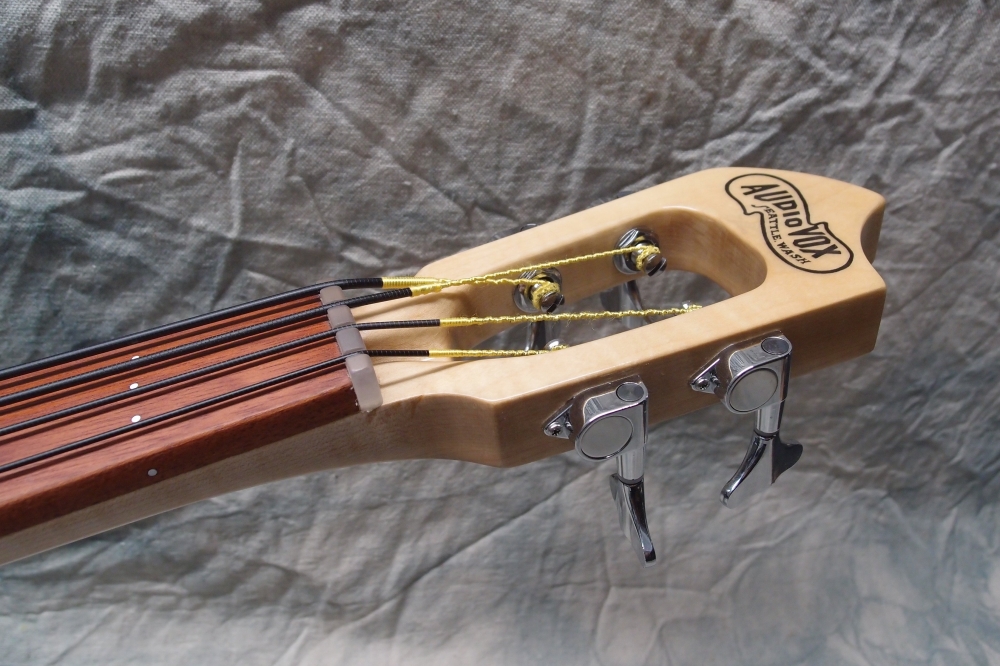
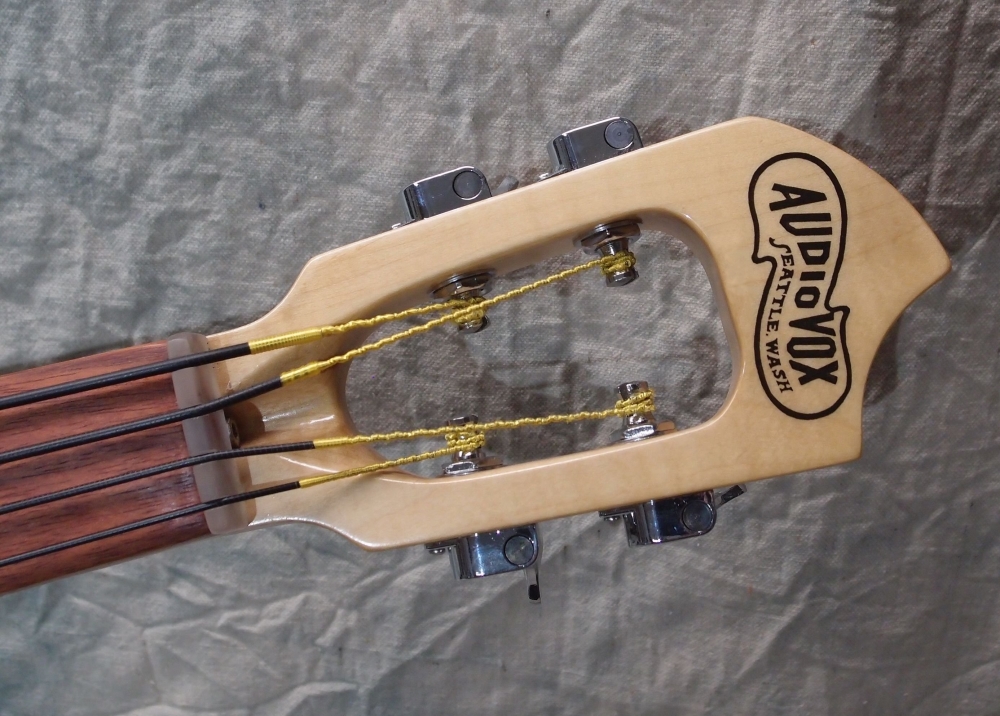
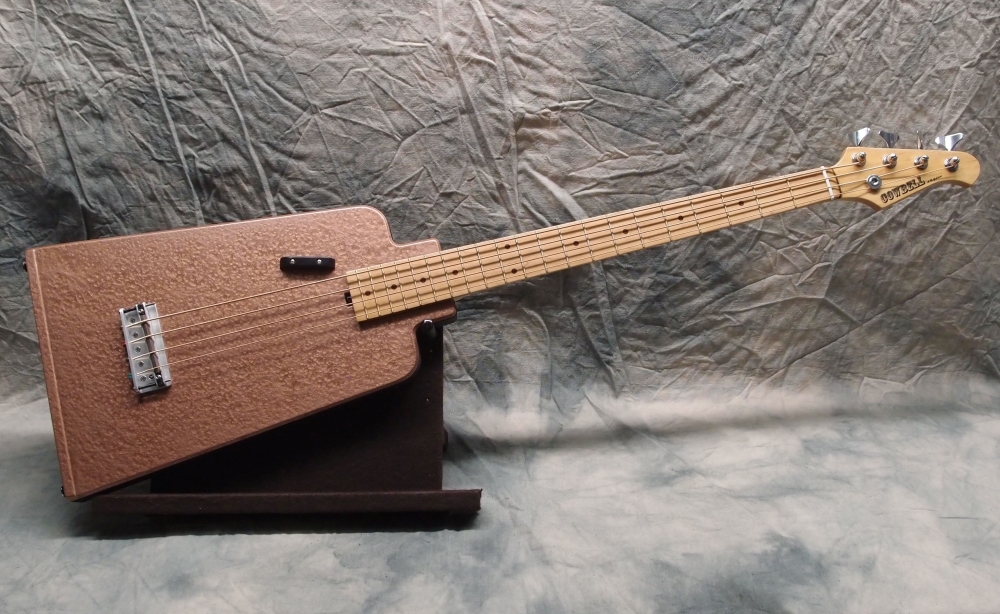
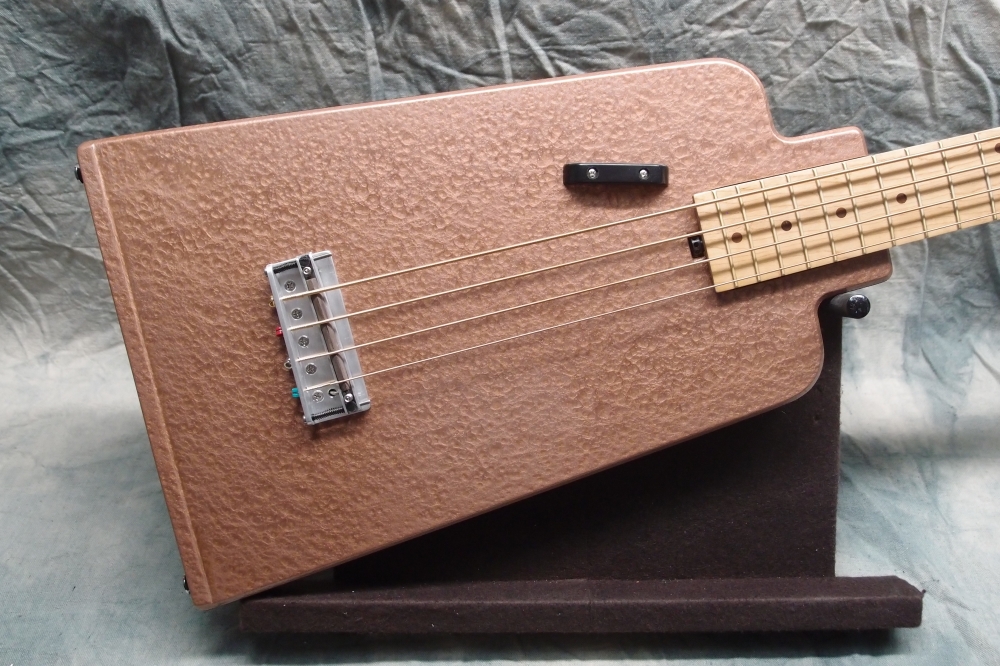
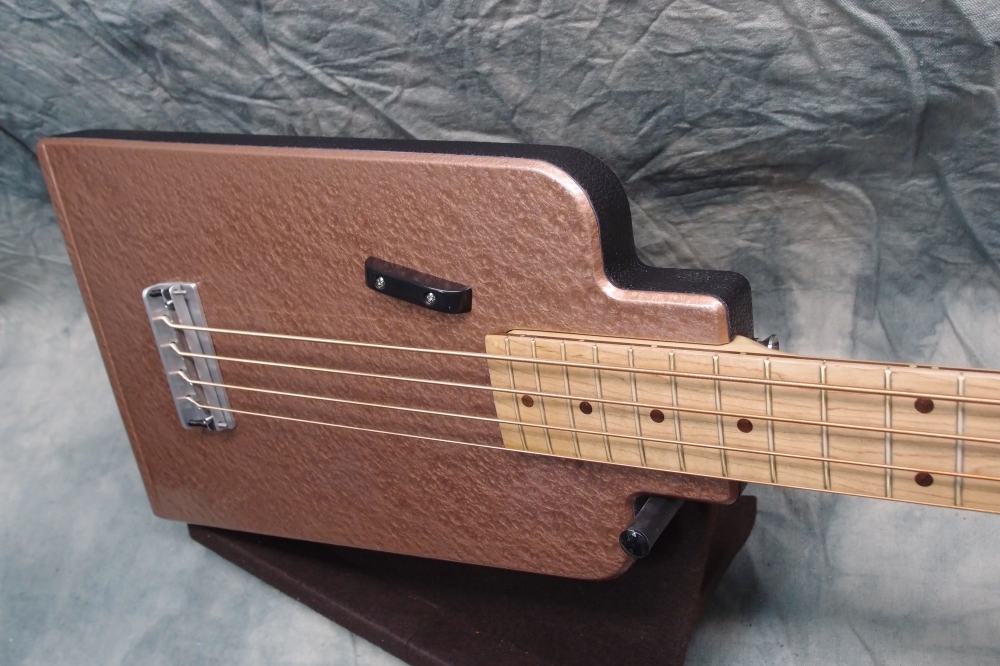
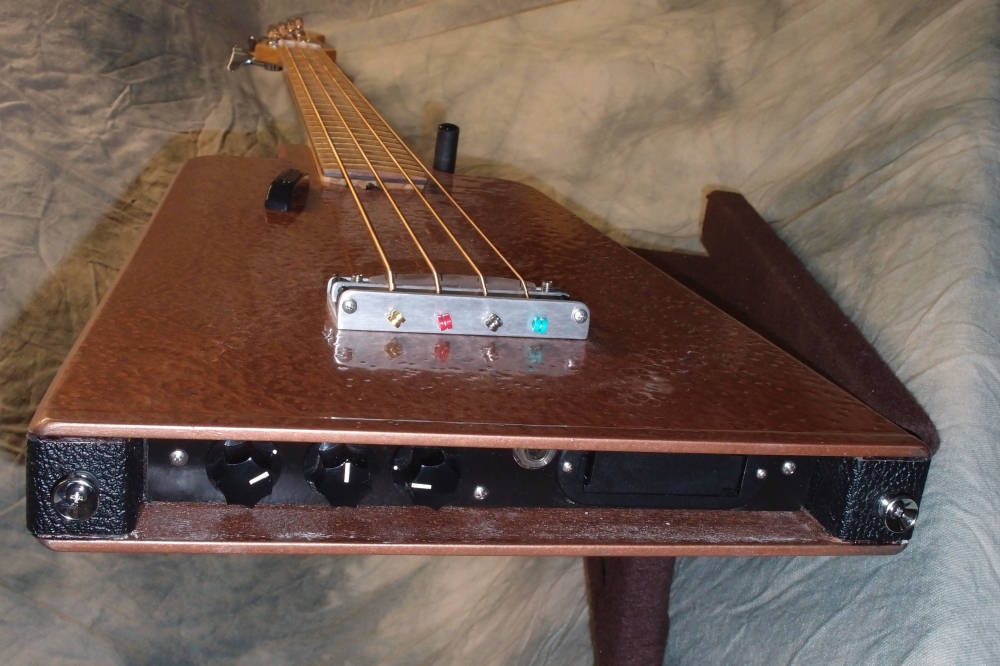
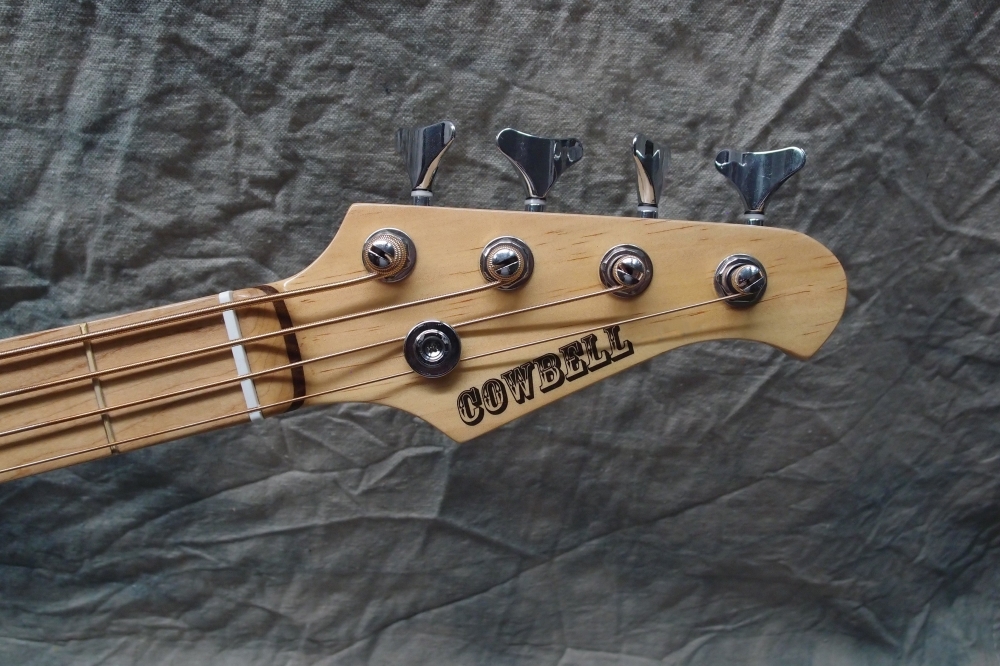
This is the biggest of the Audiovoxes, weighing in at a full 12 pounds, with a 36" scale. The neck is a Brazilian Cherry (Jatoba) floorboard over maple, with a straight cutout headstock. There are over 100 marker dots. The body is veneered masonite over solid plywood, with Danelectro-style Tolex binding. There are also strap buttons, this instrument can be played vertically or horizontally.
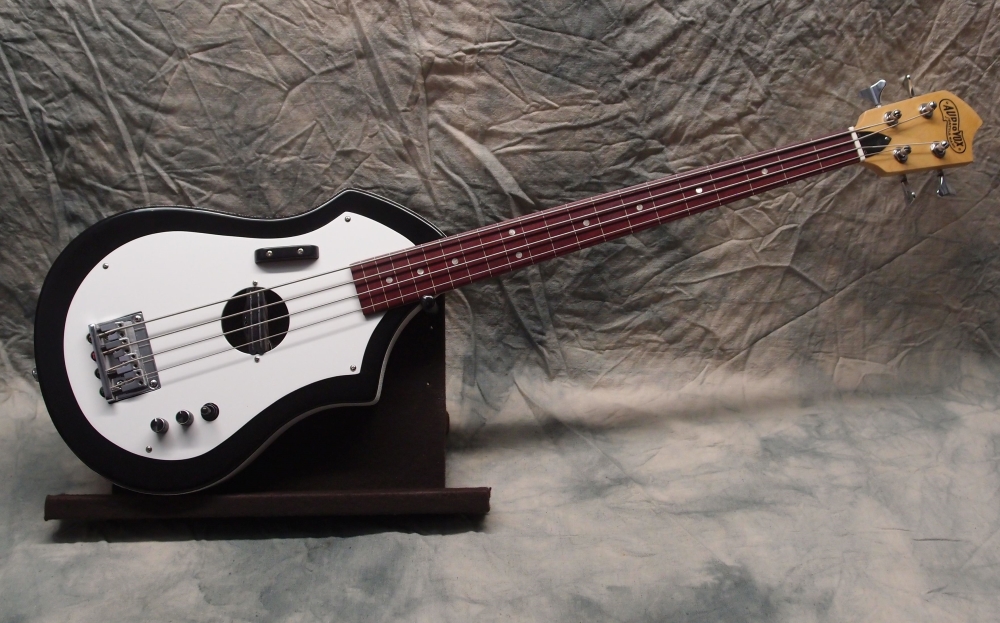
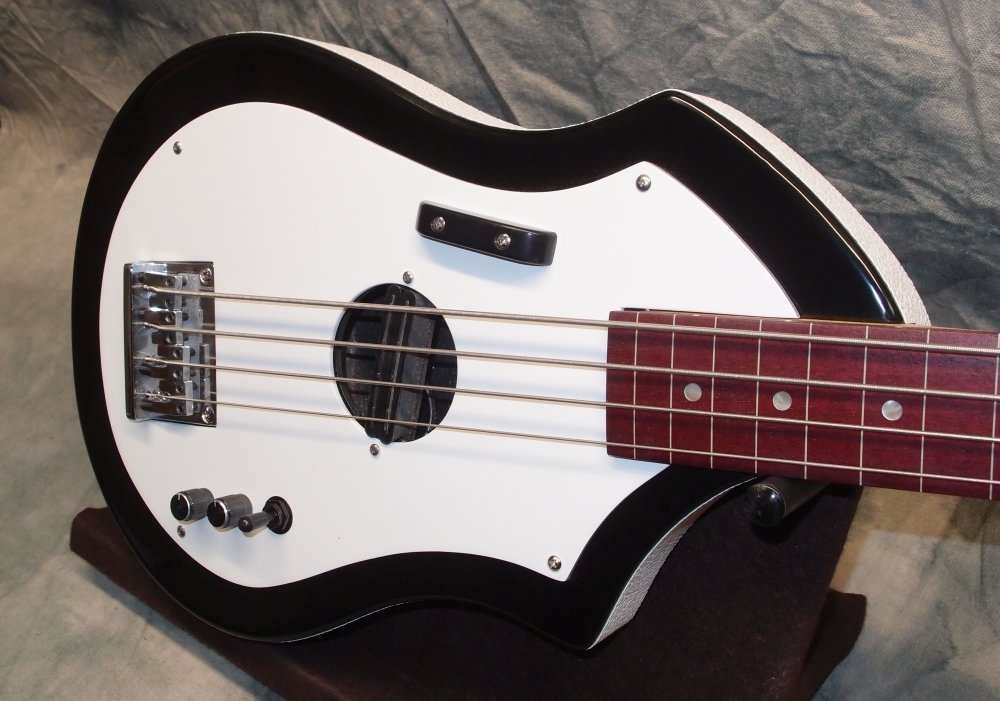
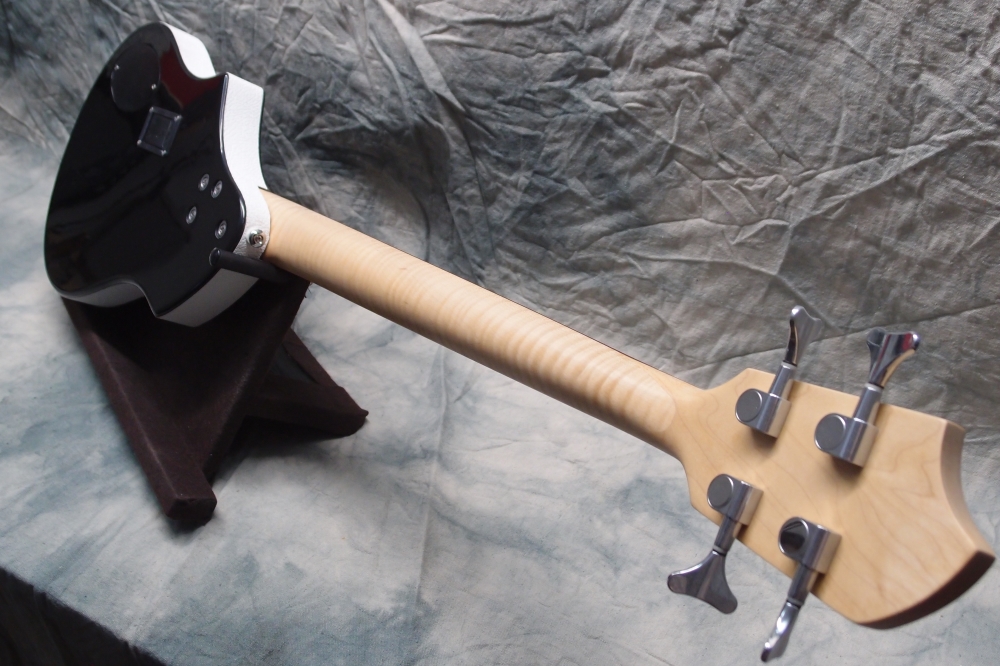
This one is almost identical in construction to the Danelectro-style - masonite over chambered plywood body, masonite pickguard. The neck is purpleheart over maple, with plastic fret lines. The soundhole merely serves as a pickup mount, and the pickup was just insurance against never getting the intended piezo system to work. Eventually, I did get it to work, the piezo is incorporated in a modified bridge, and sounds great. 30" scale.
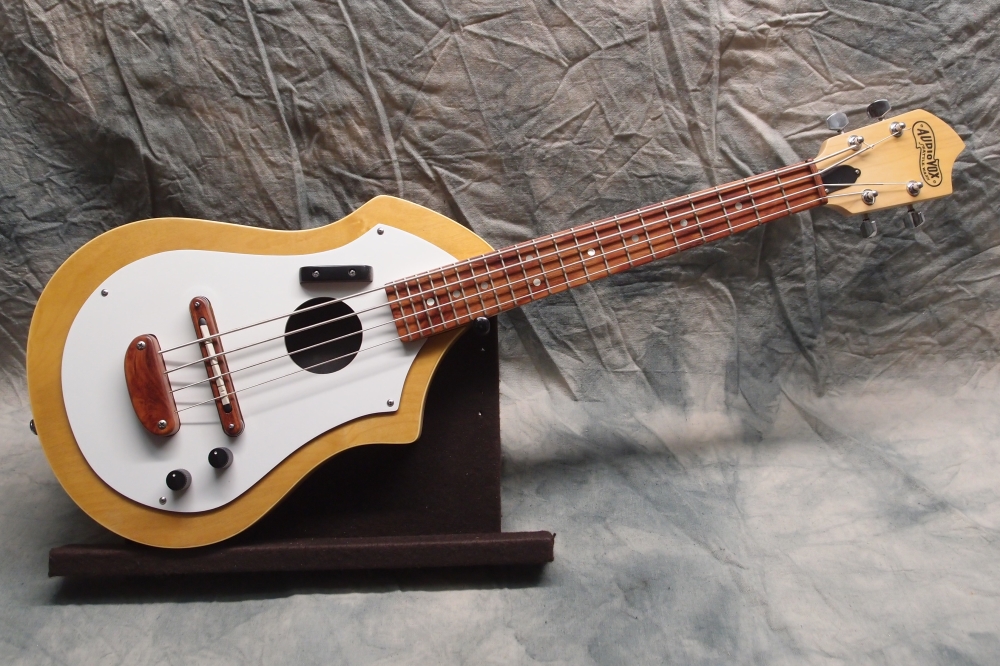
This bass is a 21" scale, with a piezo saddle mounted in an adjustable bridge. The soundhole is just for looks. The strings are metal-wound Kalas. The fretboard is cut out of the ugliest piece of wood I ever received. For such a small neck, I managed to cut around most of the ugly, and the result isn't half bad.
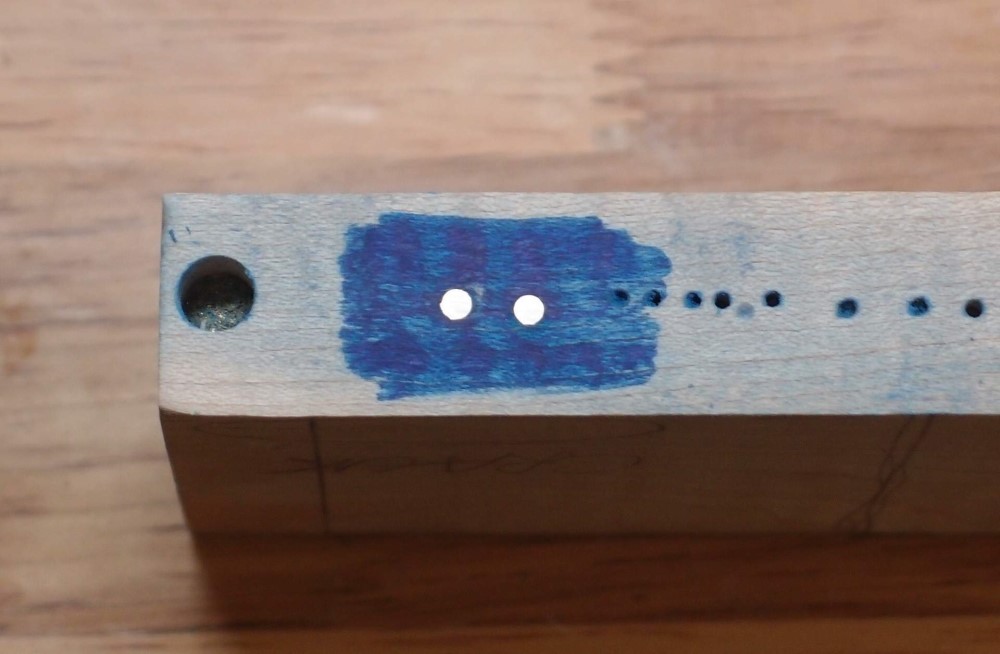
In addition to my alternative marker dots, I'm also looking for 'non-luthier' alternatives to side markers, and here is one. These are bits of 3/32" brass rod, set in a piece of scrap maple as a test. Foot-long lengths of 3/32" and 1/16" rod are available from hobby shops for around a buck; they are used by model builders. I pre-drilled the holes, tapped the rod in like a nail, and cut it off slightly proud. Working the brass is just like dressing fret ends, in fact, you could do it at the same time. I also found some aluminum rods on eBay. At the size of a dot, aluminum should come out looking just like pearl. This is like Danelectro used to do back in the '60s. Steel would be much harder to work, and also prone to corrosion, so I wouldn't use ordinary nails, but small brass ones would work. Always pre-drill hardwoods. I pushed in a dimple with a pointed scribe, then deepened it with a spring punch before drilling. Chuck the drill bit so just a 1/4" protrudes. That will keep it from flexing, which can be a problem at these sizes.