Air Compressors
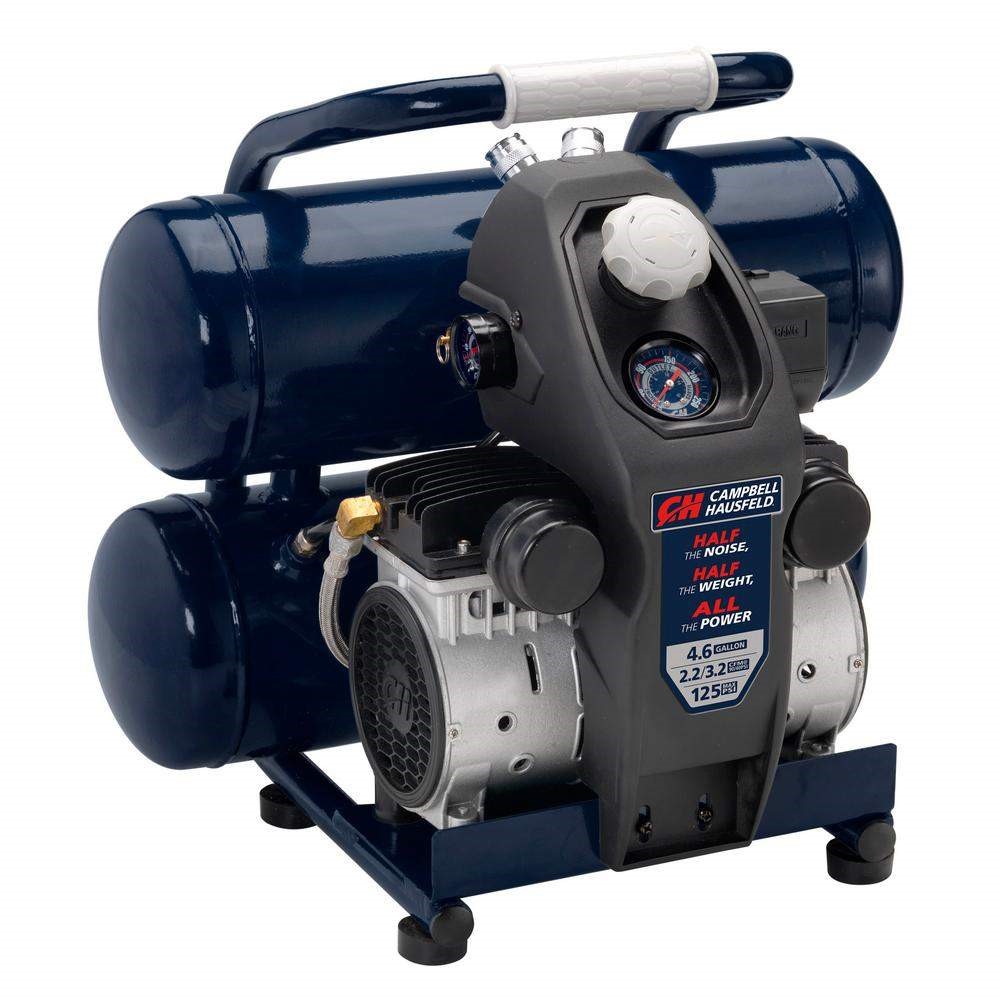
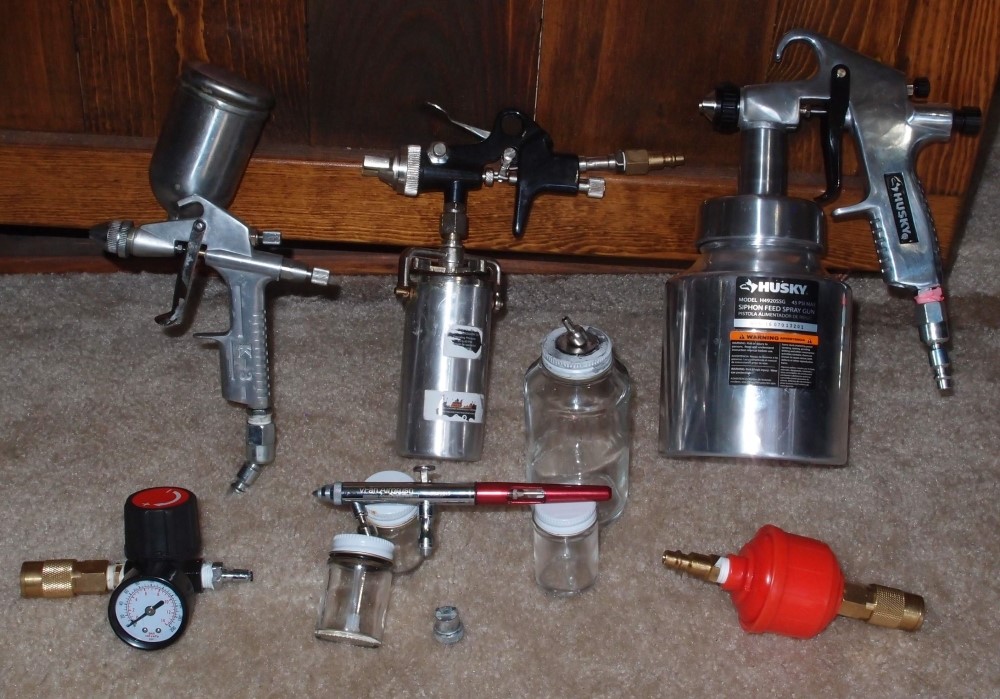
Spraying with a compressor is so much better than the choking clouds of toxic gas that come out of a rattle can. I only use those for small parts and necks. I really recommend you invest in a good quiet compressor like mine, and a couple of inexpensive spray guns. For fine work, like bursts, I use an airbrush. I am lucky and get all of this stuff for free, thanks to Home Depot. Even the poly I am using right now.
A compressor like this has many other uses as well, not the least of which is car tires. Gas station air pumps now have credit card slots on them !!! *** !!! I just aired up both the car and the truck and my neighbor, in the driveway for free. In the process, I found the spare tire lock on the truck was hopelessly frozen and had to smash it off to lower the spare and fill it up for the first time in 20 years. It was empty, about 5 psi. Glad I found that out in the driveway, and not on a roadside in the dark in the rain with no tools! I don't think anybody is going to steal my 20 year old rusty steel-rimmed Firestone temporary-use spare. Sometimes locks are more trouble than they are worth.
The most amazing thing about this particular compressor is how quiet it is.
Get a straight air hose for spraying. You don't want to be constantly fighting with a coiled hose when doing something like this. I also have pivoting connectors on all the hose ends, they're only a buck or two extra and give you that much more flexibility. Don't forget to use a filter/water trap on the compressor.
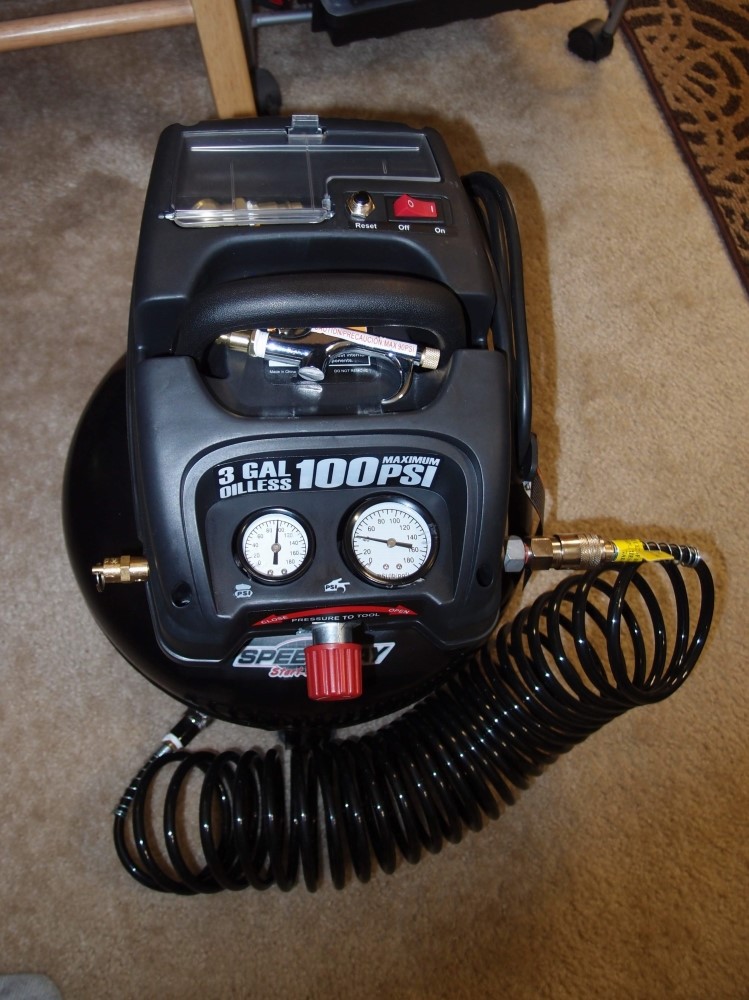
This is a little air compressor the Home Depot gave me. It is noisy, like most compressors, but perfectly adequate to run an airbrush or small paint gun. You can get something like this for well under $50; it included the hose and the fittings and tools shown as well. Later I got this much the better compressor above, also free:
Questions or Inquiries?
Just want to say Hello? Sign the .