July 19, 2020
Radiatabacker Part IIa
July 19, 2020
A lot of work for not much to show
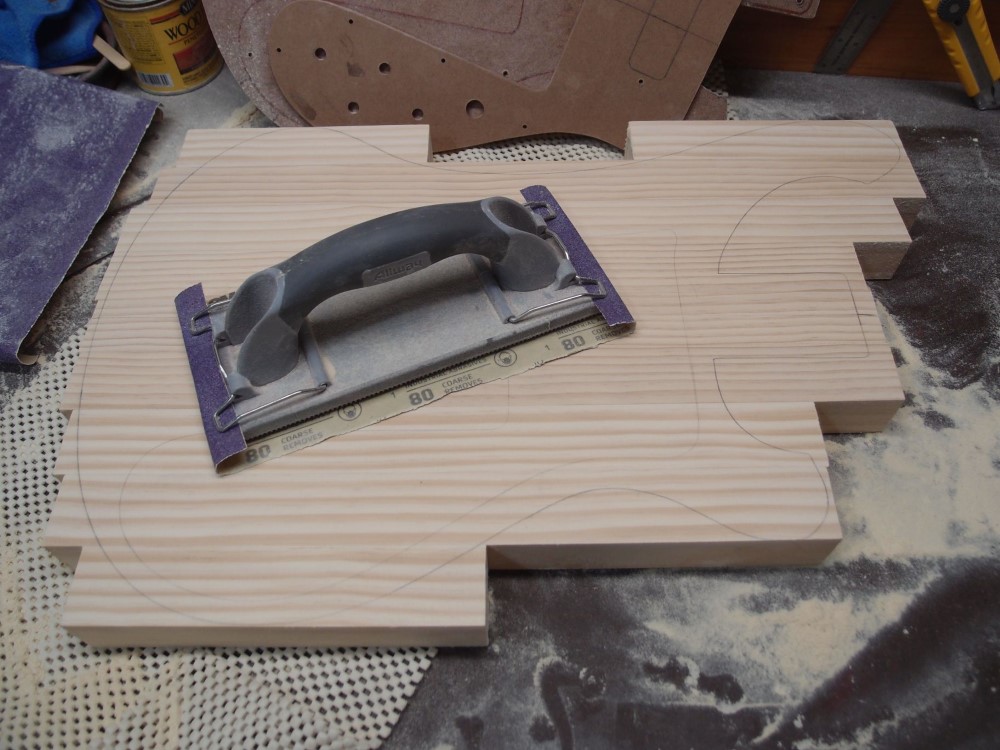
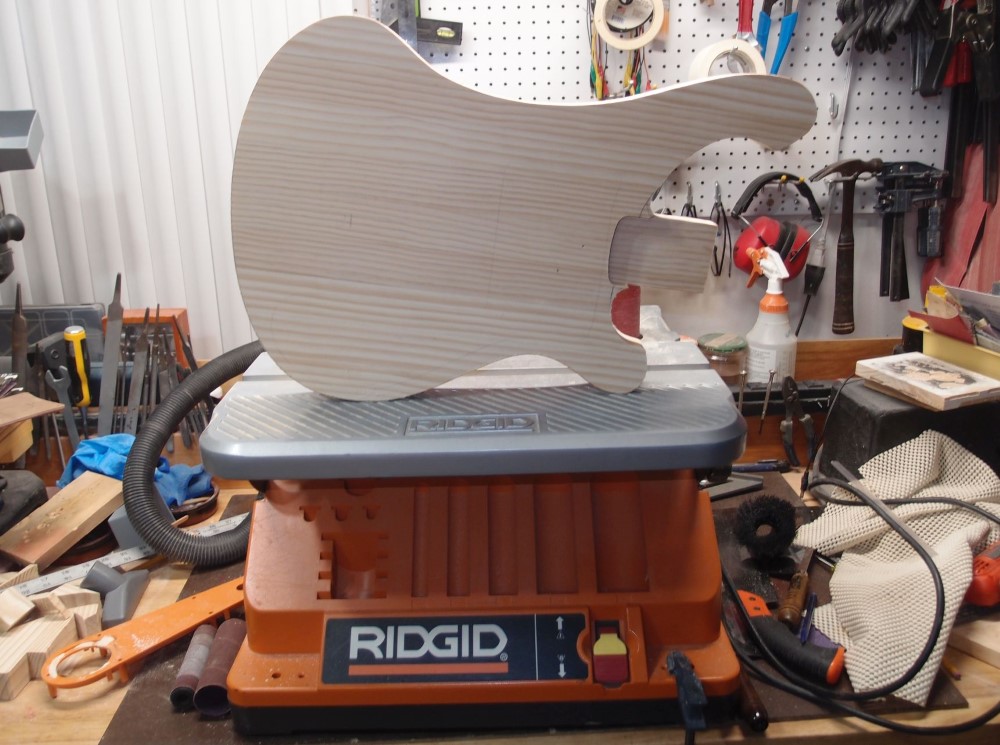
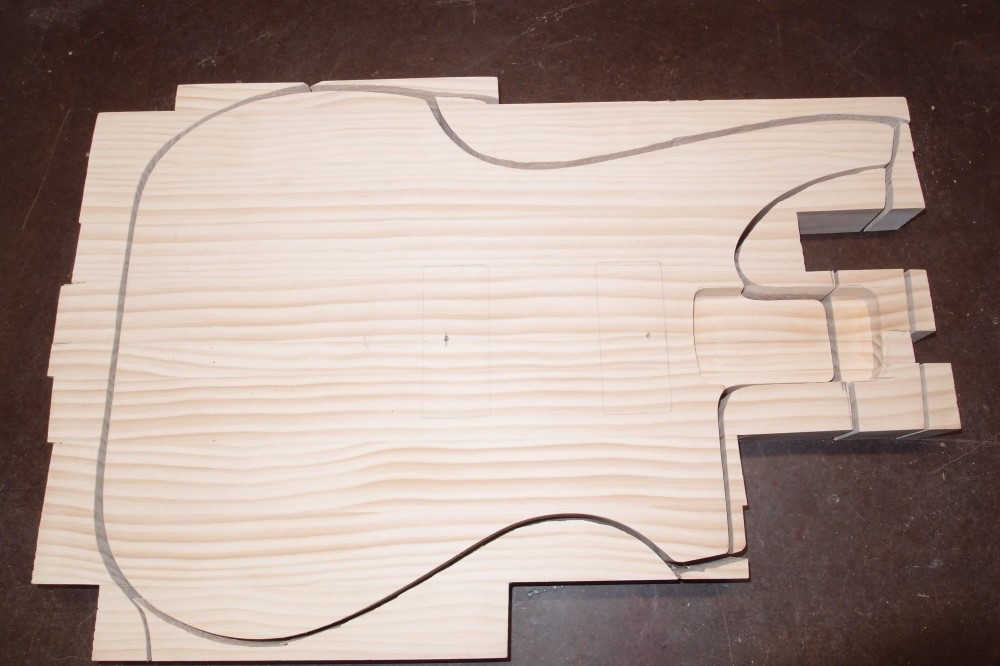
I made some small adjustments to the outline, and finished the neck mounting. And a lot of sanding. The drywall sander is a godsend, it works much better than a block, and really saves your hands. But my arms feel like lead.

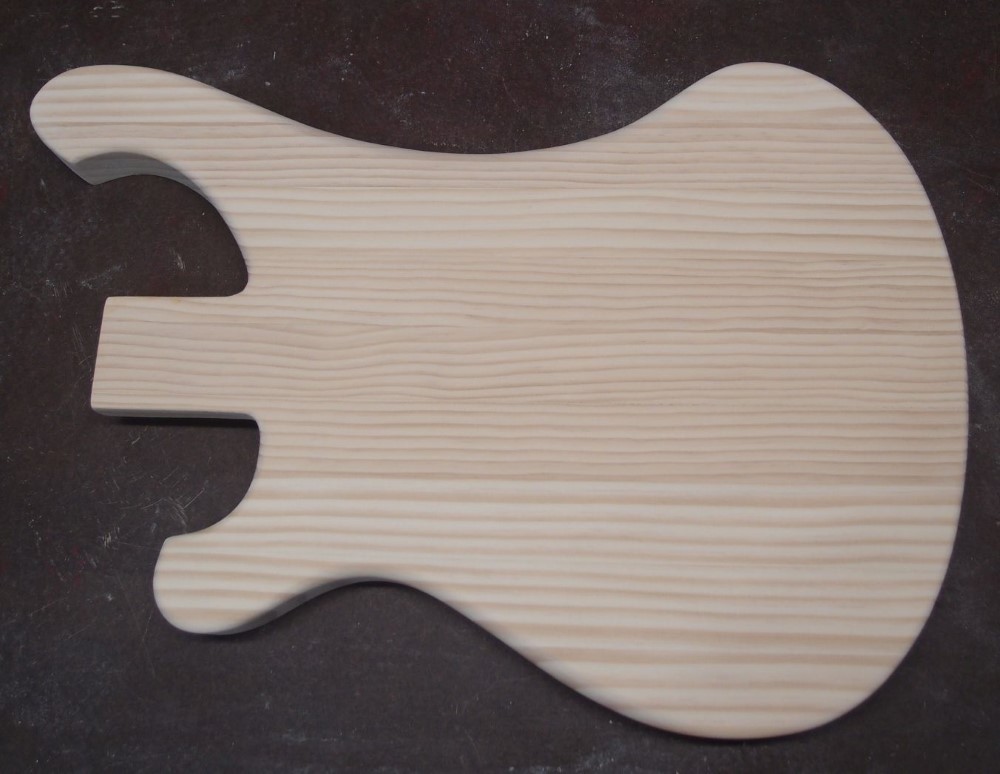
I also did the roundovers on the back, a mix of 1/4" and 3/4". You can see the small fillets I left at the base of the neck mount. I could have squared those corners with a file, but this will be less prone to crack the finish. The neck will cover them.
And a lot more sanding on the back, I found a spot where the belt sander had dug too deep. It's as flat as a mirror now.
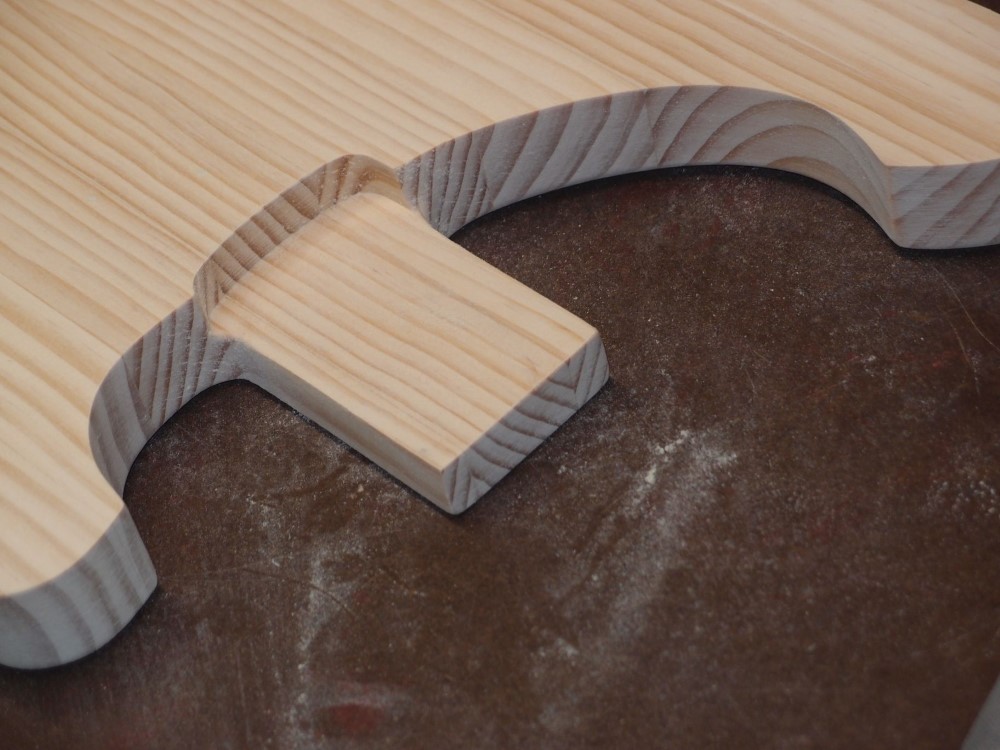
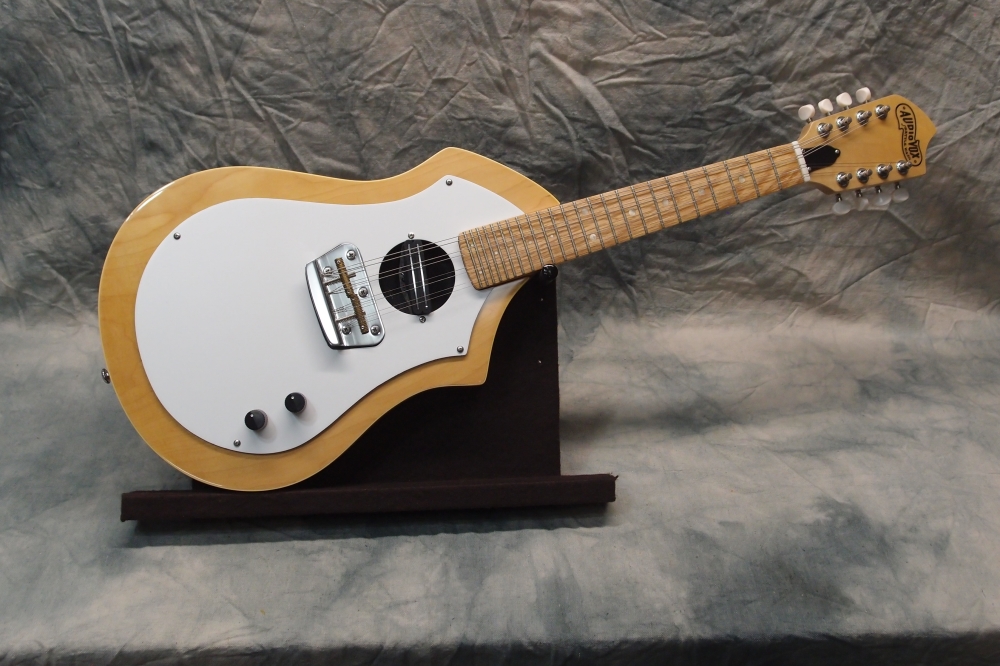
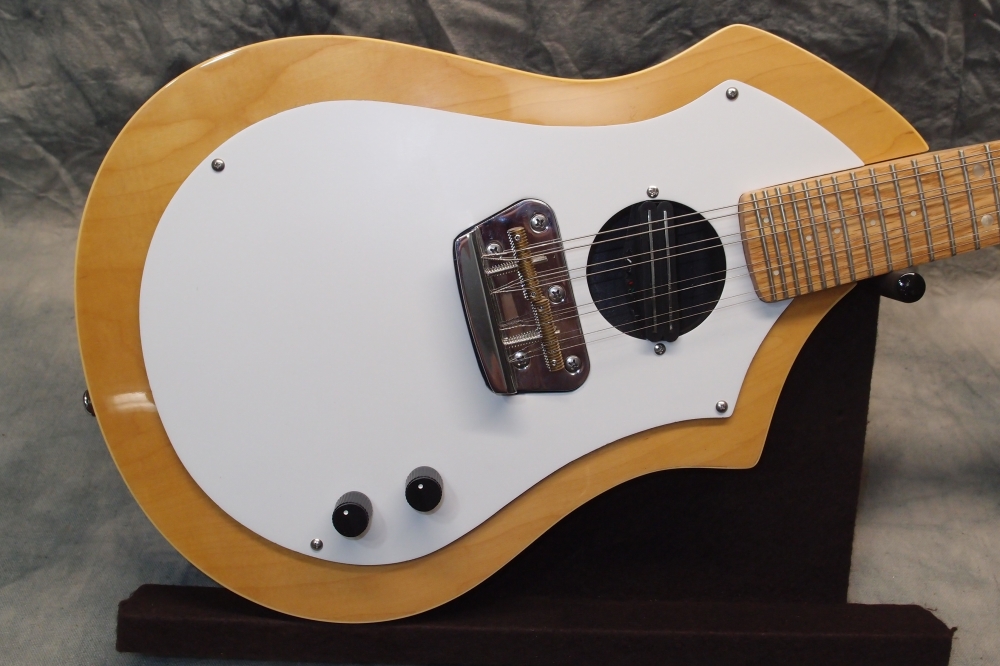
Detail of the neck mount and horns. I'll use a standard Fender mounting plate for the added strength, since this body is rather thin. The front body edge will get binding. Now I think it's time to start roughing-out a neck. Fortunately, I have a model right at hand that I can simply copy - the Superfreak. Speaking of which, that one is ready for final assembly.