Doing Things Wrong

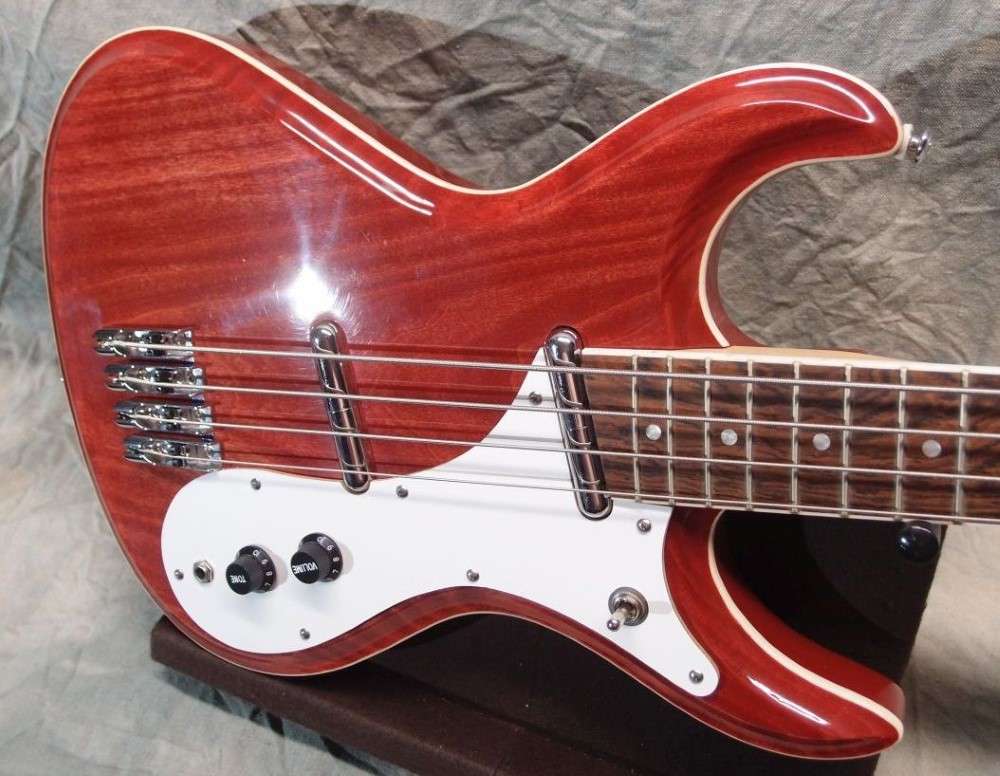
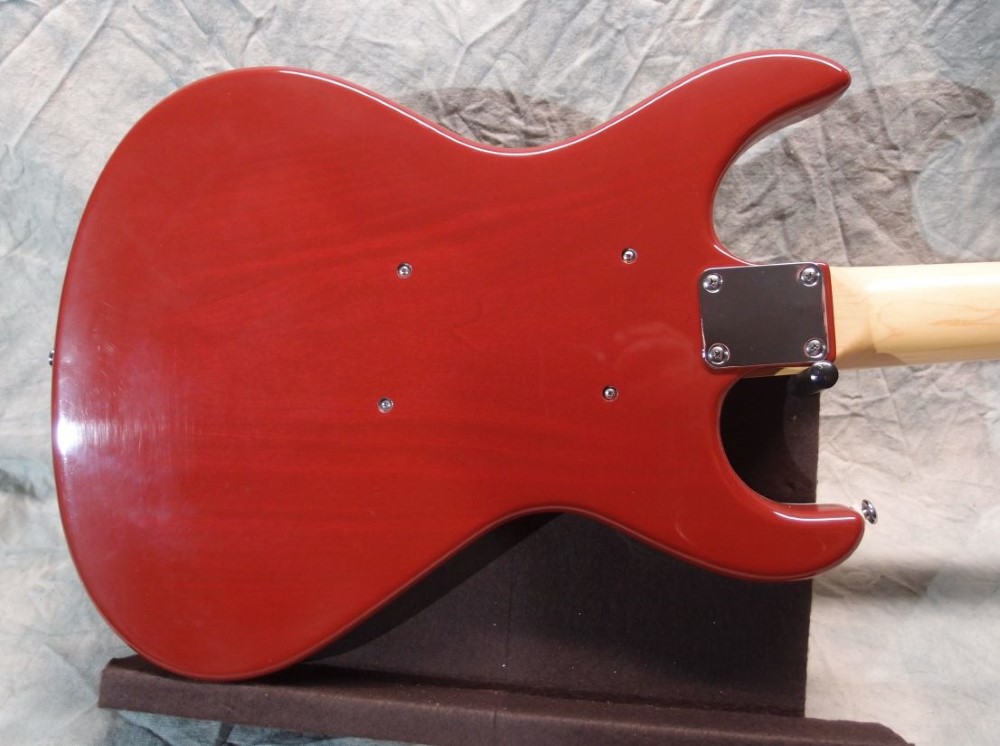
Red-on-Red Burst

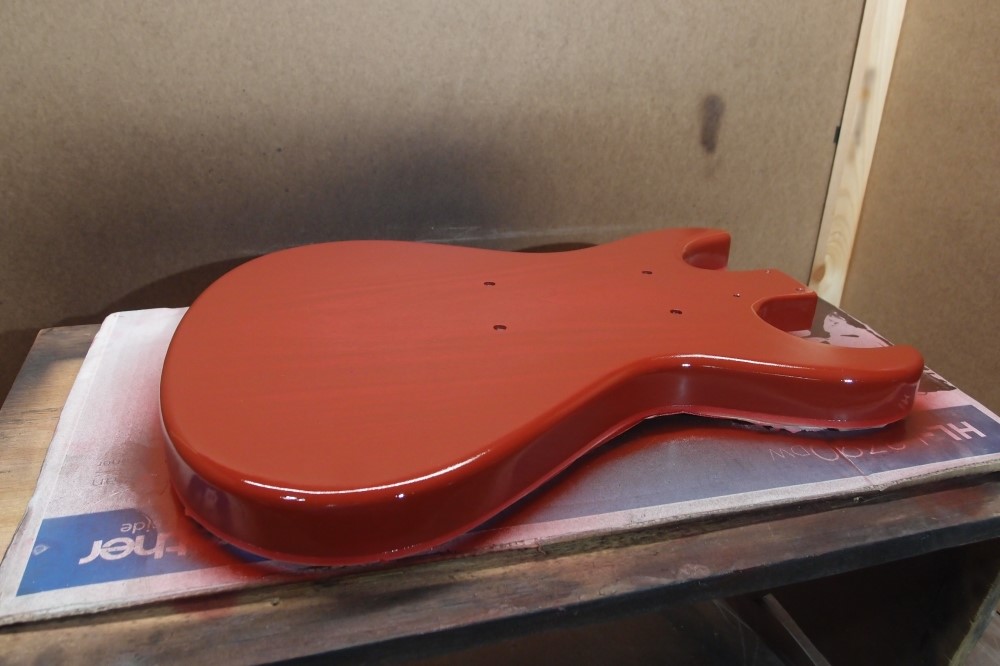
I smoothed down the brushed poly on this body and was dissatisfied with the result. The shape, with binding and German carve, is rather complex to sand, and the brushed-on finish required an excessive amount of sanding. The foam brush made no difference. Another bad idea from talk_ass, which is an endless spring of bad ideas. I will never again try to brush on a finish - there is no reason, I have excellent spray facilities.

So I made a mix of equal parts stain and poly, masked off the binding, and shot the sides opaque red, feathering into the center, where the grain is still visible. When this is dry, I'll do the same around the front.


"RetroBrite" is a name for a process that restores old yellowed plastics to new. Many plastics yellow or darken over time. RetroBriting can reverse this aging, but with a number of caveats that, in my opinion, make it pretty useless. While the process actually does work - it reverses the discoloration - the effect is temporary. After a few months, the plastic will return to its yellowed state. When this happens, you can repeat the treatment, but at some point the chemicals involved are going to start to degrade the plastic.

My first experiment was whitening some yellowed tuner knobs, and it did work. With nothing more than sunshine and hydrogen peroxide, the knobs lightened considerably. That was several years ago, and today the knobs are as yellow as ever.

What causes this yellowing? It is variously attributed to sunlight, oxygen, bromine content, and other causes. While all of these things can contribute to it, none of them are necessary. Some plastics simply turn yellow with age, and nothing will stop it. In my experience, the real culprit is simply bad plastic, and the only real solution is replacement.