Doing Things Wrong

Alice Bass Strings

Today I got my set of Alice bass strings, 105-85-65-45. They were packed in individual sealed plastic sleeves, similar to every other kind of string. The diameters are all within 0.001" of spec. The lengths are as follows:

  • E: 37-1/2" ball to leader, 42-1/2" overall
  • A: 37-1/8" ball to leader, 44-1/2" overall
  • D: 46" overall
  • G: 48" overall

This should fit almost all instruments. The strings are bright and shiny. So far, so good.
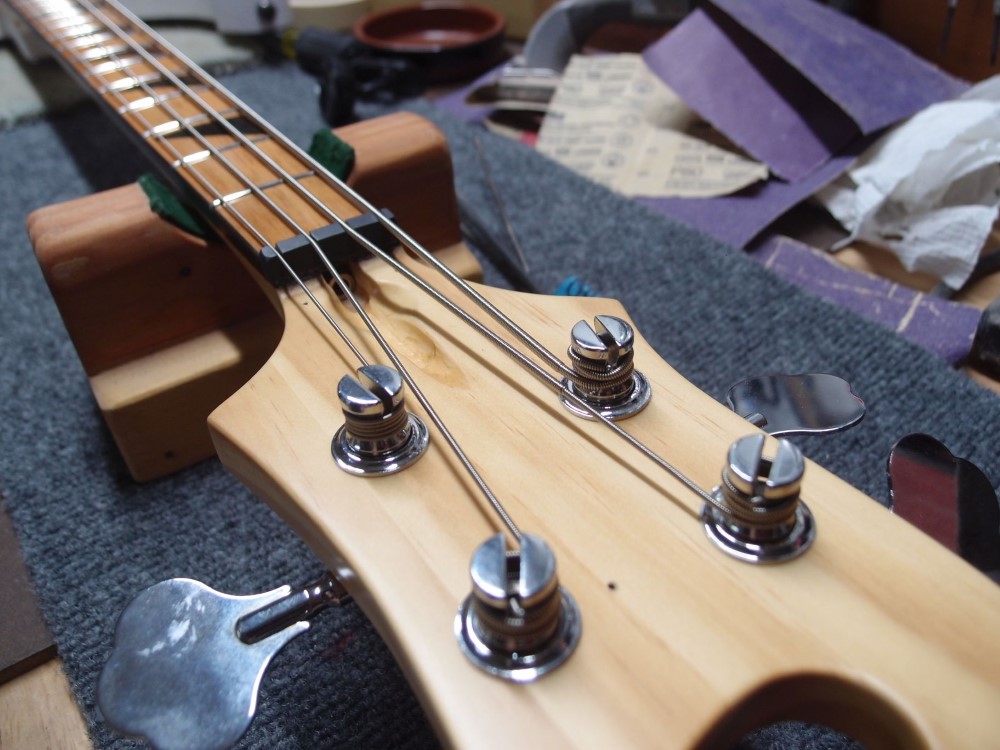
The strings went on with no problems, and seem ok unplugged - no buzzing or dead ones.

To be continued ...


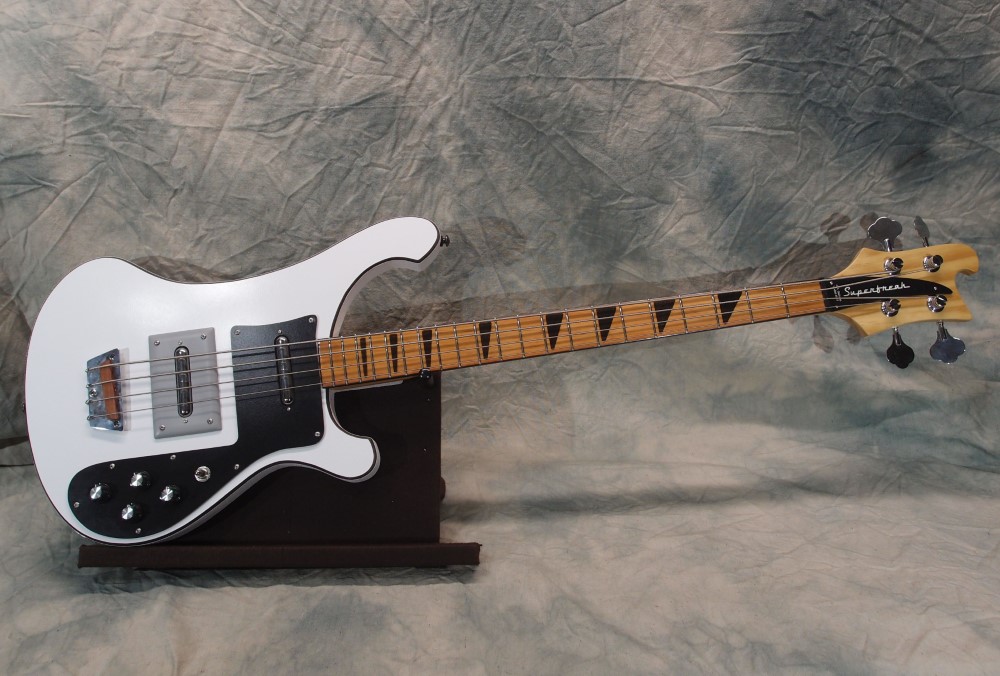
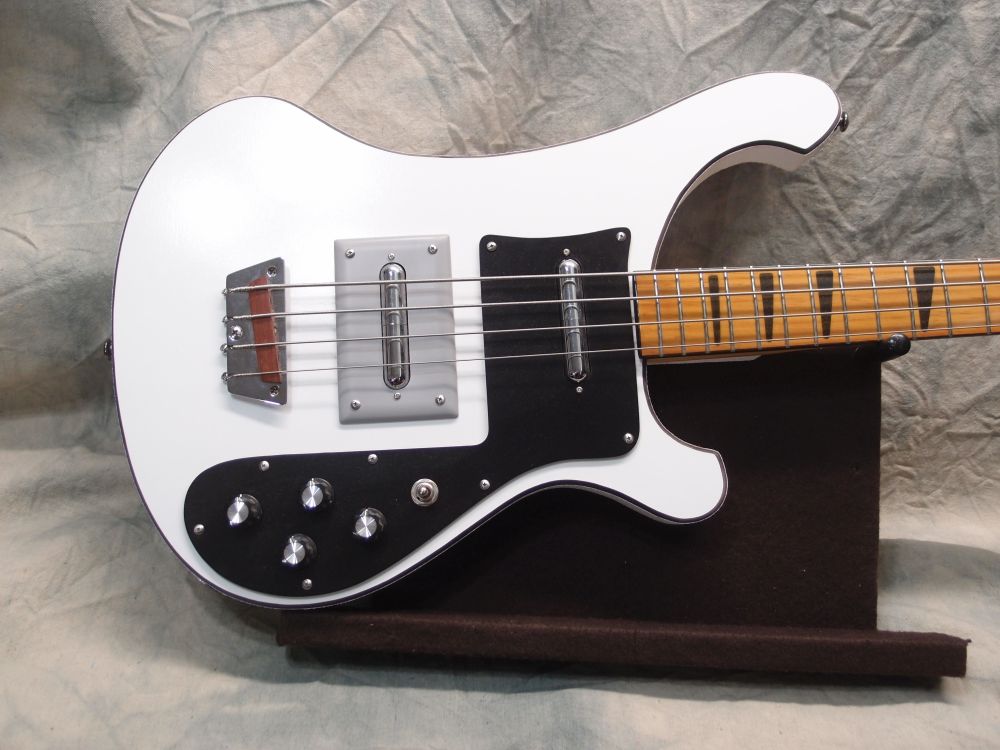
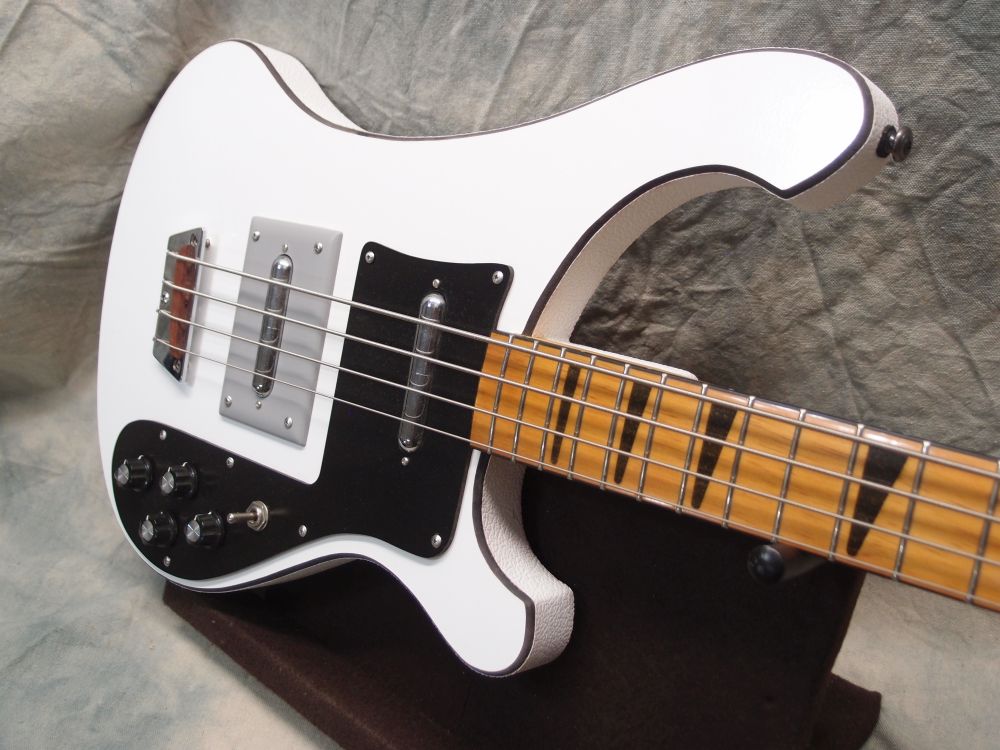
There are two components to intonation. The first is simple - locating the bridge at the right spot. You'd think that would be obvious, you'd be surprised how often it is gotten wrong. Like my Rickenbacker. The second part is the additional length or 'compensation' needed for each string beyond the scale length. That derives from the string's mechanical resistance to bending, or its stiffness, which is proportional to its diameter. That's why the low fat strings need more compensation than the thinner ones - shortening the string increases its relative stiffness, or the ratio of diameter to length, and causes it to go sharp as you go up the neck. I have never seen a negative compensation, I think theoretically it should not exist.