November 13, 2019
KMise Tremolo Pedal
November 13, 2019
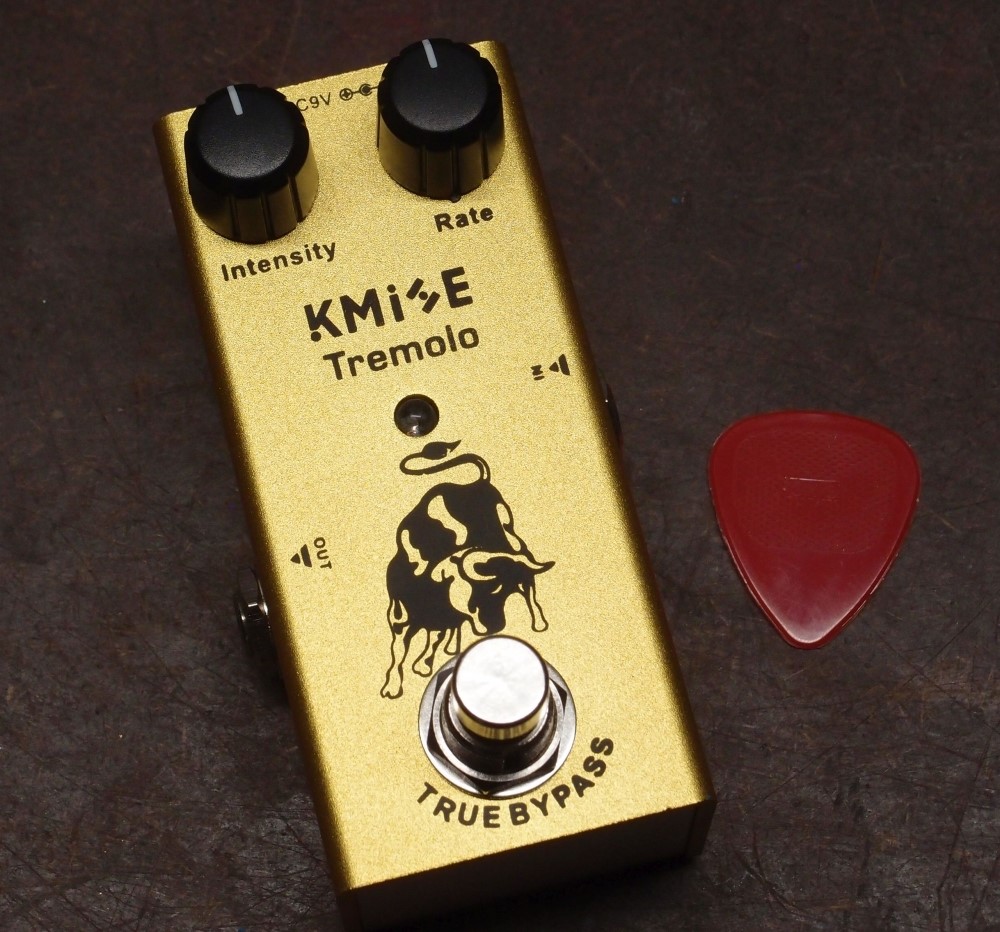
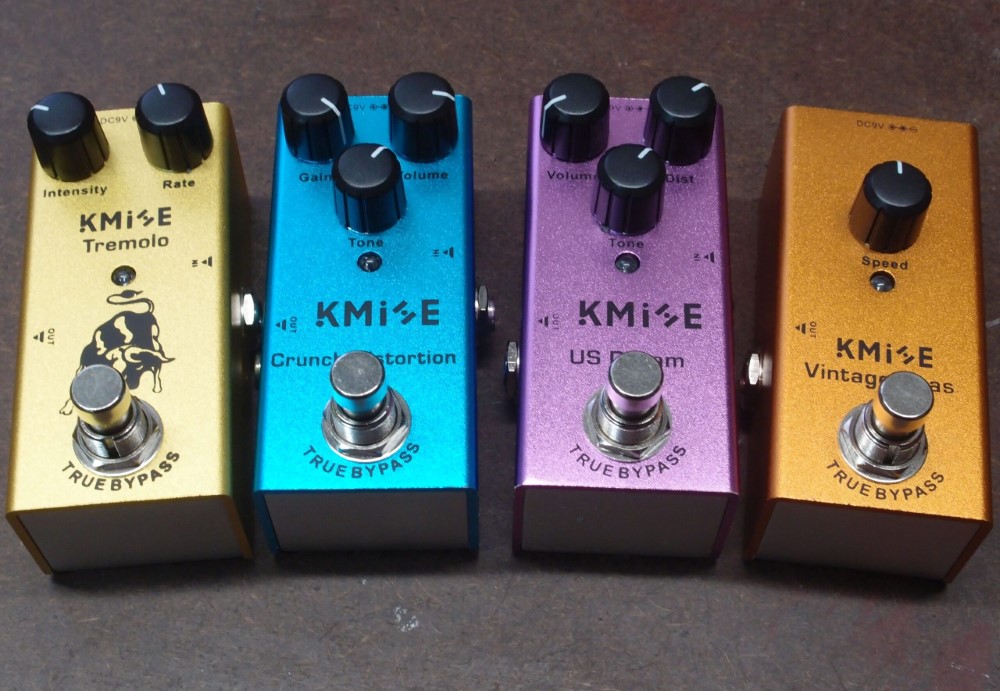
First, I am bound to state that I received this pedal at no cost for review. Having gotten that out of the way …
What is a tremolo? As relates to electric guitar, tremolo is a modulation in the volume of the sound. That's all. Back in the way early days, this was an effect that could be implemented very inexpensively using the often-unused half of a pre-amp tube in an amp. This made it a popular feature for amp manufacturers, which in turn led to its use by musicians, especially back when there were basically no other effects.
I have several old tube amps with tremolo, and this pedal does a pretty good imitation of the genuine article. The tremolo effect varies from almost undetectable to a full underwater warble kind of sound. I also have some more modern tremolo effects, and I think blindfolded you would be hard-pressed to tell the difference. The pedal is true bypass, the full signal goes through with the power disconnected. When the effect is enabled, the volume does go up a bit, but with basically no additional noise.
I've seen some complaints that this pedal doesn't really kick in until you have the intensity halfway up. Actually, more like 1/3 the way up, and that is pretty much how an old tube tremolo worked. To turn an old built-in tube tremolo off, you simply turn it all the way down, there is no switch. As far as the rate goes, this pedal is also comparable to the real thing.
For the price, this pedal is surprisingly well made, with an all-metal case, and solid-feeling switch. The pots are smooth and quiet, but the shafts are plastic, not metal, and the knobs come off rather easily. The jacks are tight. There is no provision for a battery, you will need a 9-volt power supply. I use a 1Spot. The lack of a battery does not bother me at all, I never use batteries in effects. Modern batteries are awful, they all leak, you are asking for trouble.
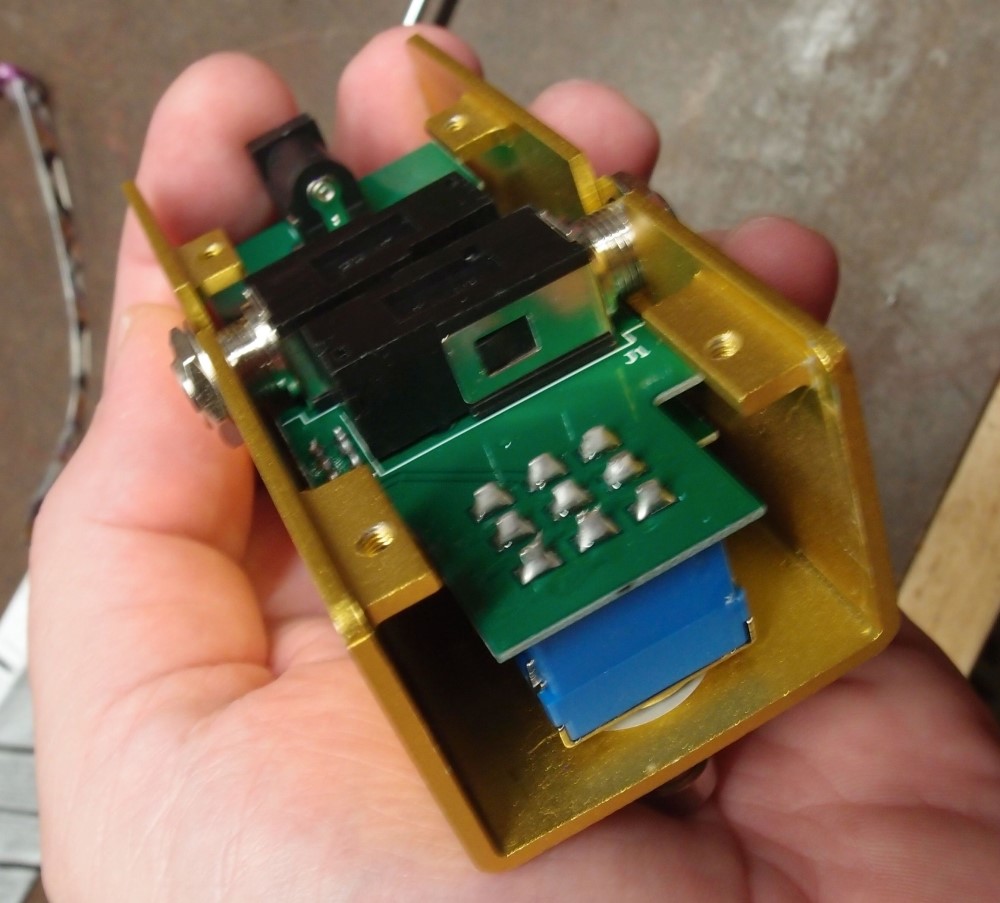
Inside, there are two stacked circuit boards, one for the electronics, and the other for input/output/power/etc. All the components are modern miniature surface-mount, everything is very neat. The jacks, switch, and pots are supported solidly by the sturdy metal case, not the circuit boards.
I'm not a cork-sniffer. You can spend $200 on a tremolo pedal. Would that be better? I hope so !!! This pedal does everything you could want from it for $20. It is a terrific value - well-made, quiet, and sounds fine. I would not take it out on the road and stomp it every night with hob-nailed boots, not with those plastic pot shafts. But for bedroom or studio use, it is perfectly good, and a great way to pick up an old-time effect.
Summary: I like this pedal.
Buy on Amazon: