August 3, 2020
Setting Up the Mosrite
August 3, 2020
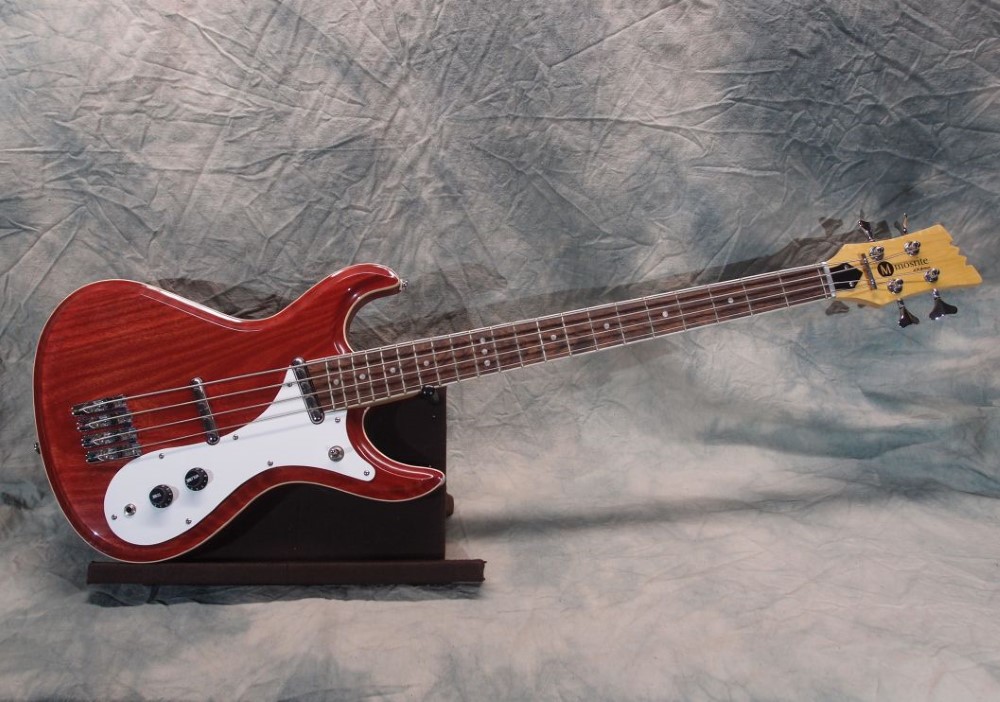
I like to let a new build lie for a month or two to settle-in before doing any serious setup work. I have four projects now that need to be set up. The first to go on the operating table will be the Mosrite bass.
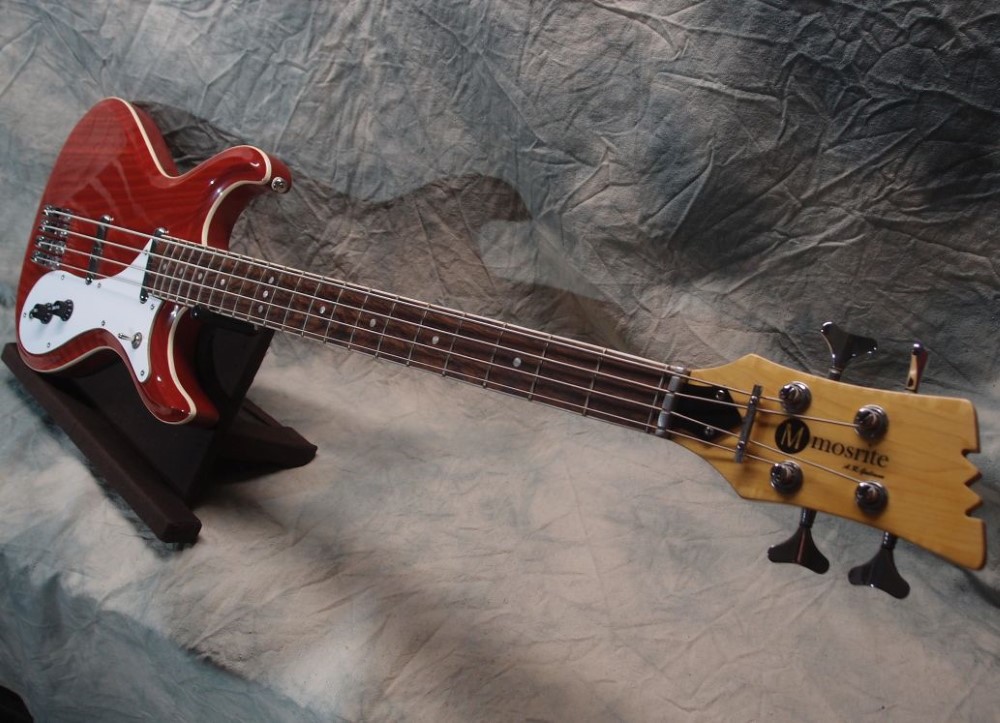
There is something odd about this one. The neck has a lot more bow on the bass side than the treble side. I tightened the truss rod, but it remains. It is not a twist, it is an even bow. This has never happened to me before. I have built lots of necks from this ordinary maple, but this is the first time I have used bocote for a fretboard. Bocote is extremely hard and strong, and I suspect the bend is induced by the fretboard overpowering the maple. I have another piece of bocote, and it is not terribly bent. Maybe it's a bad piece of maple.
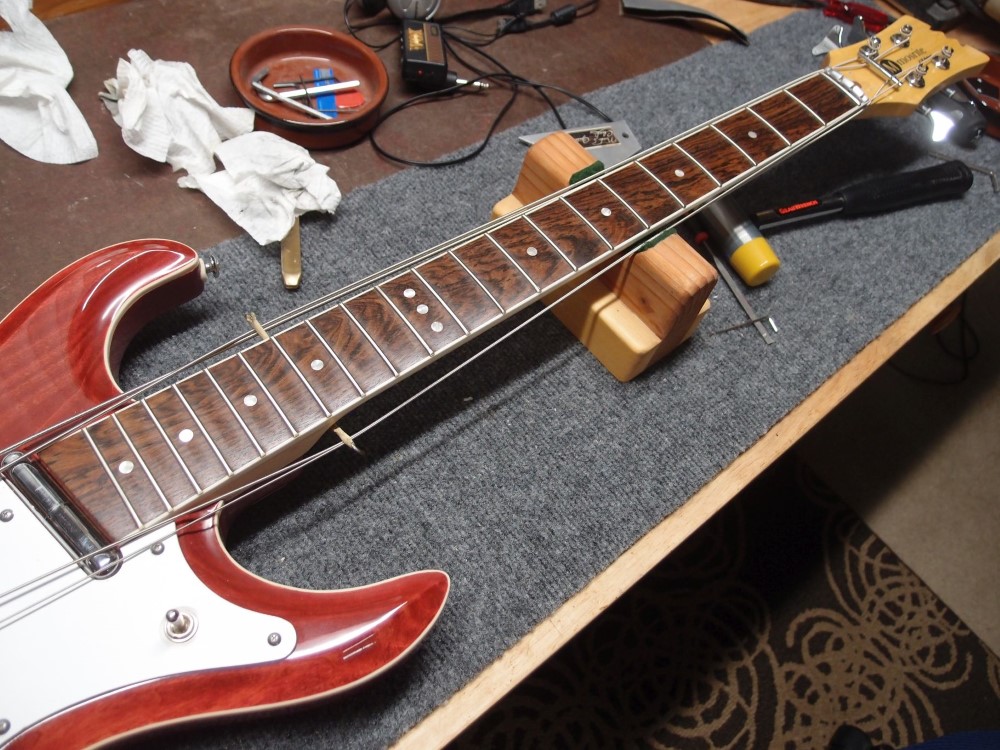
At any rate, if you were designing a neck with custom relief for each string, this is exactly how you would do it, so it is not actually a problem. ( Yet - who knows what might happen in the future. ) After adjusting the truss rod and doing some very minor final fret leveling, I put it back together. I polished the frets with 1000 and cleaned/oiled the fretboard with linseed oil, the photo above. The intonation was already set, I brought the action down a good deal, and it is ready to play.
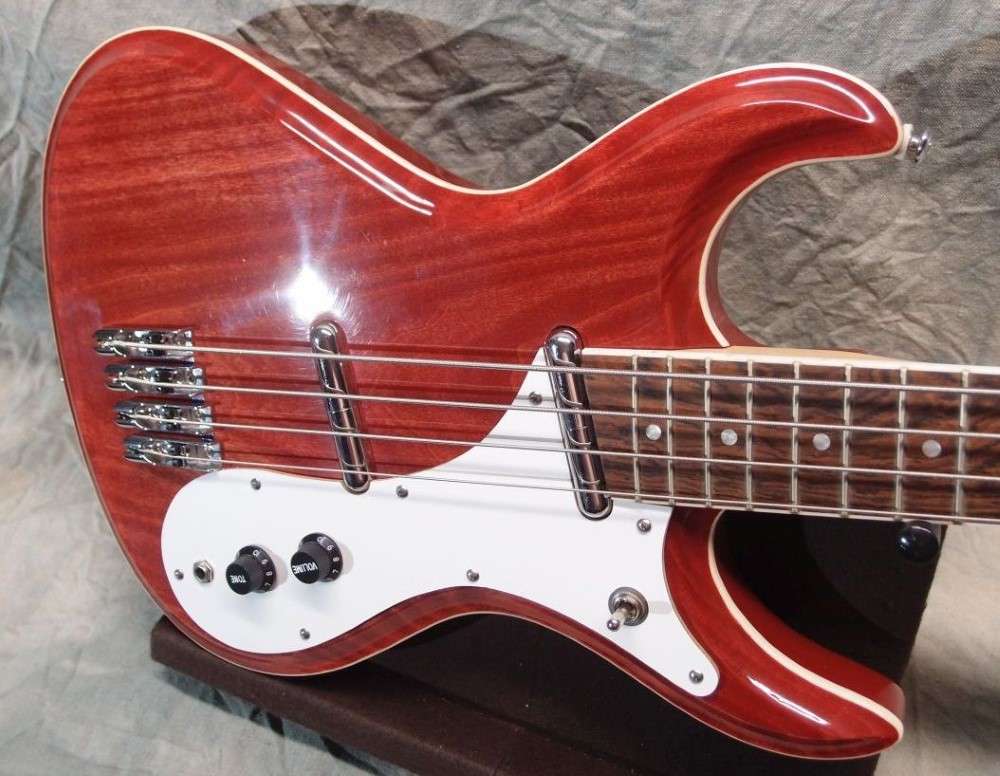
The sound is nice and punchy, as you would expect from the pickup placement. The lipsticks are clear and quiet. I find the neck pickup alone to be a little dull, but the combination (series) and bridge alone sound great. Then I tried the controls, and didn't like what I found.
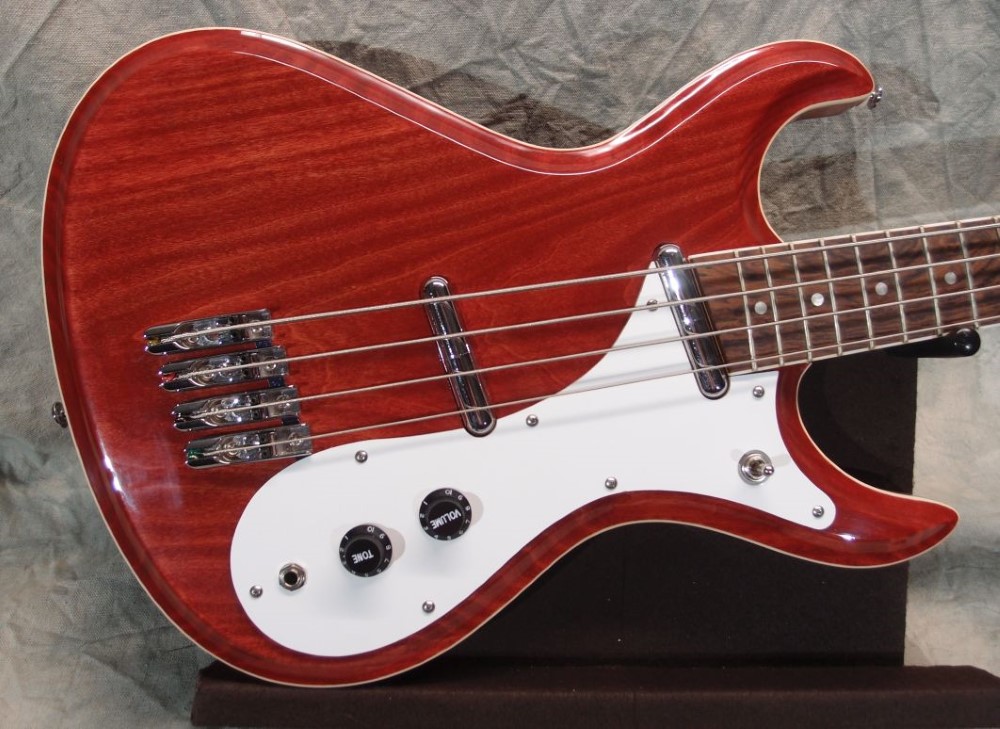
The volume drops to nothing between 10 and 8, while the tone does nothing until you get down to 2. I pulled the pickguard and found an A500 for volume and a B500 for tone. I don't remember why I did that. This is not the first time I have had 500k pots do this, so I replaced them with 250k pots and got a much smoother more graduated response from both.
Update 8/10/20

This thing is finally ready to rise from The Slab (TM). Things got a little crazy at The Lab (TM) last week. An honestly not very bad storm ( despite what the news reporters were saying ) knocked out the power for 4 days. That is because the utility company here is awful, they do absolutely no preventative maintenance, and get caught flat-footed every time. I have first hand experience with this: For years I have been trying to get them to do something about a half-dead pine tree that leans over the power lines, and for years they have come up with all kinds of creative ways of doing nothing. The tree is still there, because thankfully, this storm wasn't that bad. Only 80% of their customers lost power. That's better than 90%, like last time.
Anyway, back to loothery. The slight twist in this neck made the setup trickier. As I said, the twist is actually in a good direction, if it was opposite, I'd be throwing this neck away. ( I'd salvage the truss rod and other parts, and maybe even the fretboard, and start over with a new piece of maple. ) After some fret filing, as well as the saddle for the G-string, and a lot of fiddling, the action is now as good as my Japanese Jazz Bass, with no buzzing anywhere.
It plays great. The sound is tight and punchy. That is a result of pickup placement with very un-muddy lipstick pickups. I did not install a thumbrest as I want to get used to using the E-string instead, and this one will force that. Now I have two more basses and a guitar to set up. I thought I'd be done with all of them by now, but Mother Nature and the greedy idiots at the power company intervened.